How to Split a Hunting Lease With a Group
Trying to manage a hunting lease on your own in Texas can feel like trying to lasso a wild longhorn – expensive, exhausting, and sometimes just plain overwhelming. Between the rising costs of land, feeders, and blinds, many of us find ourselves wondering if there's a better way to experience the great outdoors. This guide is all about making that experience more accessible and enjoyable by breaking down exactly how to successfully split a hunting lease with a group, ensuring everyone has a fair shake and a great season.
The Lure and Logic of Splitting a Hunting Lease in Texas
There's no denying the appeal of having your own slice of Texas wilderness to hunt, but for most of us, that's a dream that remains just out of reach due to financial realities. That's where group leases come in, offering a fantastic compromise that brings together camaraderie, shared responsibilities, and, most importantly, affordability. Yet, while the idea sounds great on paper, anyone who’s ever tried to coordinate more than two people knows it comes with its own set of potential headaches.
Why Texans Choose Group Leases: Beyond Just Cost Savings
Let's be real: the number one reason most hunters in Texas consider a group lease is the cost. With prime deer leases in the Hill Country or South Texas running thousands, sometimes tens of thousands of dollars, a year, splitting that burden with a few buddies makes it feasible for the average working person. Think about it – if a lease costs $15,000 annually, dividing that among five members instantly drops your individual outlay to a much more palatable $3,000. This financial relief opens up access to higher quality properties that would otherwise be unattainable. You can learn more about specific expenses in our guide on How Much Does a Deer Lease Cost in Texas?.
But it’s not just about the money, is it? There's an undeniable social aspect. Hunting with friends, family, or even a well-vetted group of new acquaintances can significantly enhance the experience. Sharing stories around a campfire, helping each other track game, and celebrating successes builds bonds that last a lifetime. Plus, the workload of maintaining a lease – from filling feeders to maintaining roads and blinds – becomes far less daunting when you have extra hands. Instead of spending every non-hunting moment doing chores, you can actually enjoy your time out there.
The Hidden Challenges of Shared Territory
While the benefits are clear, anyone who’s been part of a less-than-stellar group lease will tell you it can quickly turn into a nightmare if not managed properly. Picture this: one member consistently brings uninvited guests, another neglects their feeder responsibilities, and suddenly, what was supposed to be a relaxing escape becomes a source of stress and resentment.
Common issues include unequal contributions of time or money (despite equal payments), differing opinions on game management or hunting pressure, and conflicts over prime hunting spots or dates. Sometimes it's as simple as one person wanting to run thermal at night for hogs while another insists on traditional daylight deer hunting, leading to scheduling conflicts. If these issues aren't addressed head-on and proactively, they can fester, leading to strained friendships and the eventual collapse of the lease. That's why establishing clear expectations and ground rules from the very beginning is absolutely paramount.
Forging Your Group Lease Agreement: The Foundation of a Successful Season
The most critical step in creating a successful group hunting lease is developing a comprehensive, written agreement. Seriously, don't skip this step. A handshake deal might work for some things, but when it comes to thousands of dollars, shared resources, and everyone's precious hunting time, you need something concrete. Think of this agreement as your group's constitution, outlining how everything will operate.
Laying Out the Financials: Contributions, Costs, and Contingencies
Money is often the biggest source of contention, so be painstakingly clear about it. Your agreement should detail the total annual cost of the lease and each member's exact share. It’s not just the lease payment, either. What about communal expenses like feed, trail cameras, or even a shared tractor for maintaining food plots? Will there be an annual fund for these? How will unexpected costs, like a sudden repair to a water well or a shared side-by-side, be handled?
Consider setting up a dedicated lease bank account that all members contribute to. This keeps personal and lease finances separate and transparent. Decide on due dates for payments and what happens if someone is late. Will there be a late fee? Will their hunting privileges be suspended? What if a member has to pull out mid-season? Will they get a refund? Who is responsible for finding a replacement, and how will their share be covered until then? Having these difficult conversations and writing down the answers before you sign anything will save you untold grief later.
Establishing Fair Use and Access Rules
This is where the rubber meets the road when it comes to enjoying the lease without stepping on toes. Define specific rules around access and usage. For example:
- Guest Policy: Can members bring guests? If so, how many, how often, and do guests count against a member's bag limit? Are there restrictions on who can be a guest (e.g., no children under 10 with firearms unless supervised)?
- Hunting Days/Times: Will there be a scheduling system for prime dates like opening weekend? Some groups assign specific weeks or weekends, while others use a first-come, first-served calendar. What are the quiet hours when nobody should be driving around the property?
- Bag Limits & Harvest Quotas: Beyond TPWD regulations, will the group impose stricter limits to manage the herd or ensure everyone has a chance at a harvest? If you're on an MLDP property, how will tags be allocated among members?
- Target Animals: Will certain species be off-limits? For example, some groups might prioritize deer hunting and discourage predator hunting during peak deer season.
- Off-Season Access: Can members visit the lease for scouting, shed hunting, or maintenance outside of hunting season? Are there specific rules for these visits? Utilizing tools like onX Hunt can be invaluable here, allowing you to mark property lines, stand locations, and even areas that are off-limits for certain activities, and then share those maps with the entire group.
Defining Roles, Responsibilities, and Decision-Making
A group lease needs leadership and clear lines of responsibility. Who will be the primary contact with the landowner? Who manages the finances? Who coordinates workdays? You don't necessarily need a formal hierarchy, but assigning specific tasks can prevent things from falling through the cracks.
Decision-making processes are also crucial. Will all major decisions (e.g., new protein feeder, lease renewal) require a unanimous vote, a majority vote, or will a designated "lease manager" have final say? For instance, deciding on the best deer feeder setup for Texas might be a group discussion, but purchasing it could be left to one person. Document how amendments to the agreement will be made and how new members will be brought in (and old ones potentially removed, though hopefully it never comes to that!). Transparency and clear communication, possibly through a dedicated group chat or email list, will be your best friend.
Sample Group Lease Agreement Checklist
| Category | Key Items to Address |
|---|---|
| Financials | Annual lease cost, individual share breakdown, due dates, communal expense fund, handling of unexpected costs, late payment penalties, refund policy for early exit, new member buy-in. |
| Membership & Renewal | Number of members, duration of agreement, process for lease renewal, criteria for new members, process for member removal, consequences of breach of agreement. |
| Access & Usage | Guest policy (number, frequency, cost, rules), scheduling system for prime dates/spots, designated hunting zones, off-season access rules, vehicle usage restrictions (e.g., no driving in wet fields), firearm/weapon restrictions. |
| Harvest & Game Mgmt. | Group bag limits (if stricter than state), antler restrictions (beyond legal minimums), harvest reporting requirements within the group, feeder placement rules, food plot responsibilities, management of game cameras (who can move them, access footage). |
| Maintenance & Work | Designated workdays, assignment of tasks (feeders, blinds, roads, gates), responsibility for common equipment (tractor, shredder), maintenance of shared facilities (camp, skinning rack), trash disposal. |
| Communication & Mgmt. | Primary contact for landowner, designated lease manager (if any), decision-making process (majority, unanimous, manager's discretion), dispute resolution process, communication channels (group chat, email), annual meeting schedule. |
| Safety & Conduct | Mandatory safety briefings, alcohol/drug policy on lease, respect for property boundaries, handling of wounded game, landowner relations, general conduct and etiquette. |
| Liability | Acknowledgment of risks, agreement on personal liability, consideration for hunting lease insurance (which is a good idea for any lease, single or group). |
Day-to-Day Harmony: Practical Management on a Shared Texas Lease
Once the lease agreement is solid, the next challenge is ensuring smooth operations and a harmonious environment on the property. This involves smart spatial planning, shared responsibility for resources, and consistent, open communication.
Dividing Hunting Zones and Stand Locations
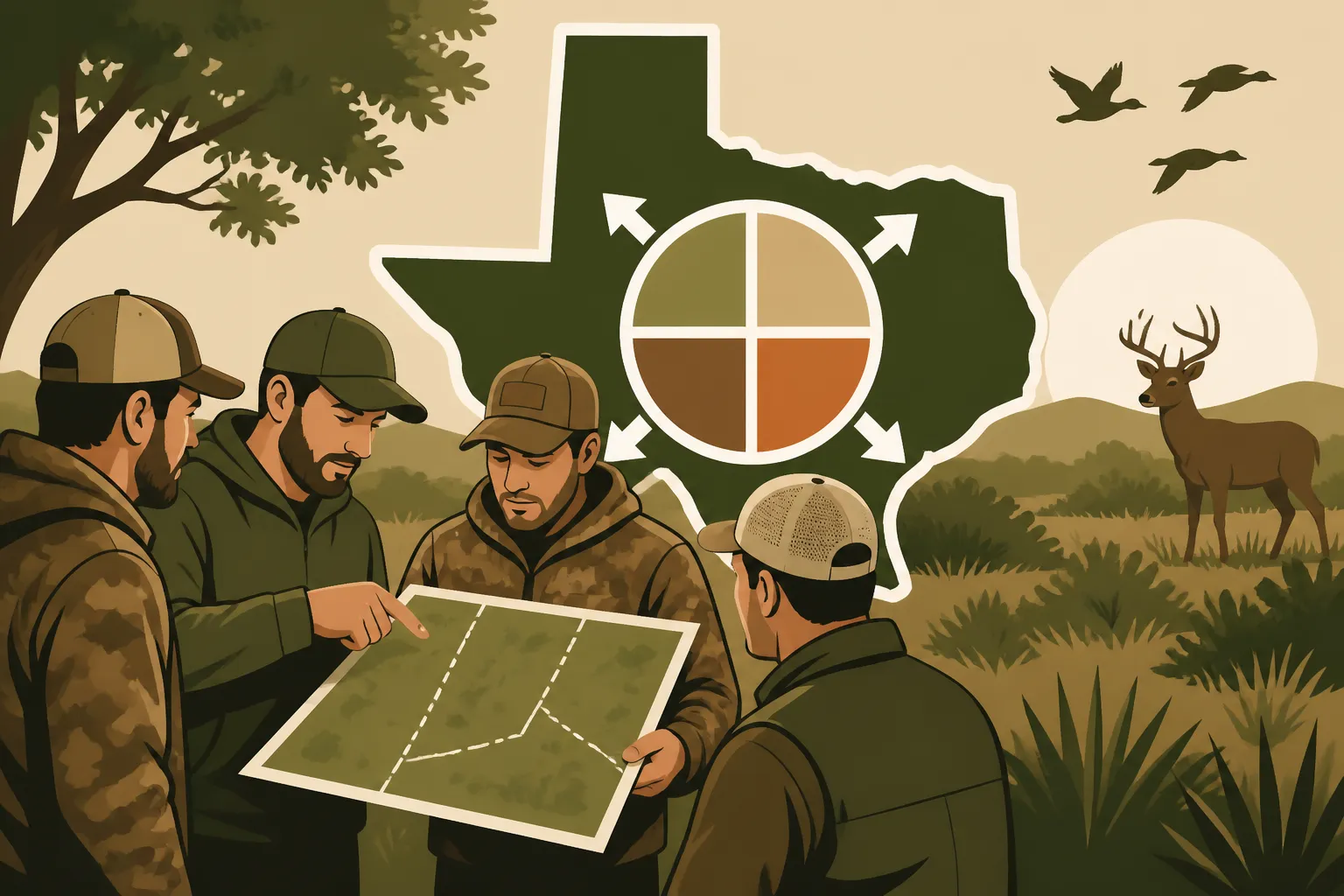
Imagine everyone rushing to the same prime food plot on opening morning – chaos, right? To prevent this, it's wise to establish a system for dividing up hunting areas or specific stand locations. Some groups literally draw straws for prime spots, while others develop a rotational system that ensures everyone gets a turn in the best areas over the course of the season or year after year.
Using detailed maps is essential. Services like onX Hunt or GoHunt allow you to precisely map out the property, mark all established stand locations, food plots, water sources, and even game trails. This digital overlay can be shared with all members, making it clear where everyone is and where they plan to hunt. You can designate specific "no-go" zones around another hunter's setup during their hunt times, preventing accidental disturbances. This mapping can also be crucial for setting up a new box blind vs tripod vs ground blind, ensuring optimal placement and avoiding overlapping fields of fire. For instance, if one member is bowhunting, you might want to establish quieter zones around their setup.
Managing Game, Feeders, and Common Areas Together
Shared responsibility for the overall health of the lease and its wildlife is key. This includes tasks like keeping feeders topped off (you might be interested in our guide on Best Deer Feeder Setup for Texas), maintaining roads, and ensuring blinds are in good repair. Many groups establish a "work day" or two before the season kicks off, where everyone pitches in. This builds camaraderie and ensures the work gets done efficiently.
Game management is another collaborative effort. If the group has agreed on certain harvest goals (e.g., only bucks over a certain age or antler size), everyone needs to be on board and respect those rules. Trail cameras become a valuable shared resource, providing intelligence on deer movement and patterns. However, clear rules about who checks cameras, downloads footage, and shares information must be in place. Consistency in protein feeding deer for bigger antlers or using specific types of corn for deer feeders in Texas should also be agreed upon to avoid confusing the local wildlife.
Communication is Key: Keeping Everyone on the Same Page
You can have the most detailed lease agreement in the world, but without open and honest communication, it's just a piece of paper. Establish clear channels for day-to-day communication. A group text message, a shared Google Calendar for scheduling hunts, or even a dedicated messaging app can work wonders.
Regular check-ins, especially before and after major hunting periods, are vital. Did someone see a monster buck in area C? Did a feeder jam? Did a new hog sounder show up? Share that information. Transparency prevents misunderstandings and fosters a sense of teamwork. It also allows you to address minor issues before they escalate. For tips on navigating shared spaces, our article on Texas Hunting Lease Rules & Etiquette can offer some great insights.
Navigating Disagreements and Member Changes: When Things Get Tricky
Even with the best intentions and a rock-solid agreement, conflicts can arise, and circumstances can change. How your group handles these inevitable bumps in the road will define the long-term success of your shared hunting venture.
Resolving Conflicts Before They Escalate
It’s almost guaranteed that at some point, a disagreement will pop up. Maybe someone feels another member isn’t pulling their weight, or there’s a difference of opinion on whether to pursue a particular deer. The key is to address these issues quickly and respectfully, relying on your pre-established agreement as a guide.
Encourage open dialogue in a neutral setting, away from the heat of the moment or the pressure of a hunt. If necessary, appoint a mediator from within the group (if one is universally respected) or even a neutral third party if things get really sticky. The goal isn't to "win" an argument, but to find a resolution that keeps the group cohesive and the hunting experience positive for everyone. Remember the spirit of collaboration that brought you together in the first place. If the issue is serious, like a member repeatedly violating the lease rules, refer back to your agreement's section on consequences and, if necessary, the process for member removal.
Handling Departures and Welcoming New Members
Life happens. A job change, family commitments, or simply a shift in priorities might mean a member needs to leave the lease. Your agreement should clearly outline the process for departures, especially concerning financial implications. Will the departing member be responsible for finding a replacement? What's the timeline? Is there a waiting list of potential new members?
When bringing in new blood, it's crucial to ensure they're a good fit for the existing group culture and willing to abide by the established rules. Don't just pick the first person who offers to pay. Involve all current members in the vetting process. A new member should ideally be someone who shares similar hunting ethics, values, and a willingness to contribute equally. Take the time to sit down with them, review the entire lease agreement, and answer any questions they might have. They should understand what to look for in a Texas hunting lease, not just what they're getting into financially. A good fit can reinvigorate a group, while a bad one can quickly unravel years of camaraderie. For those interested in joining a lease as a novice, our guide on How to Get on a Hunting Lease as a Beginner can provide valuable insights.
Disclaimer
Please remember that hunting regulations and land lease agreements can be complex and are subject to change. Always consult the most current Texas Parks and Wildlife Department (TPWD) Outdoor Annual and consider seeking legal counsel when drafting or signing lease agreements to ensure full compliance and protection for all parties involved. This information is for educational and informational purposes only and does not constitute legal advice.