Where to Hunt Aoudad in Texas
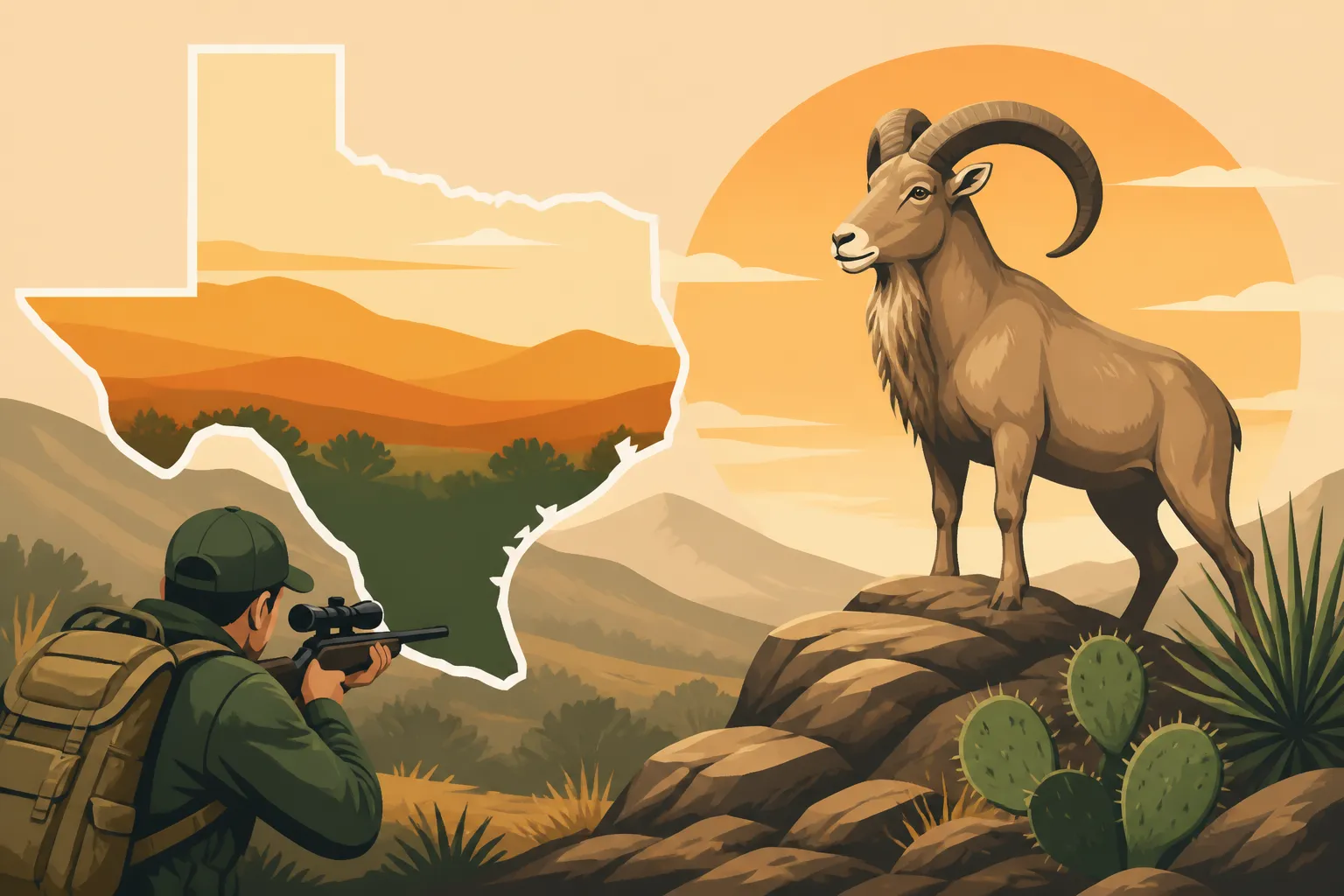
Hunting aoudad in Texas can feel like trying to find a ghost in a dust storm. These majestic, wild sheep thrive in some of the most unforgiving landscapes our state has to offer, making them incredibly challenging but equally rewarding to pursue. This guide is dedicated to shedding light on the prime locations and essential strategies for successfully hunting aoudad in Texas, helping you navigate the rugged terrain and elusive nature of these impressive animals.
Understanding Aoudad Habitats in Texas
Aoudad, often called Barbary sheep, aren't native to Texas, but they've established a significant free-ranging population, primarily in the western reaches of the state. They’re incredibly resilient, perfectly adapted to arid, rocky environments, and their camouflage blends seamlessly with the broken topography. Understanding their preferred stomping grounds is the first step to finding them.
The Rugged Trans-Pecos Region: Core Habitat
When most hunters think of free-ranging aoudad in Texas, their minds immediately go to the vast, rugged expanses of the Trans-Pecos. This region, a land of mountains, canyons, and sparse vegetation, is the undisputed heartland for aoudad hunting. Counties like Hudspeth, Culberson, Jeff Davis, Presidio, Brewster, Pecos, and Terrell are prime territories.
Imagine the Glass Mountains in Brewster County, or the towering peaks of the Guadalupe Mountains and Davis Mountains. These aren't gentle rolling hills; we're talking about steep, rocky canyons, sheer cliffs, and unforgiving deserts where temperatures can swing wildly. Aoudad thrive here because the terrain offers excellent cover from predators (like mountain lions, which are also found in this region) and hunters, along with critical elevation for spotting danger. They are masters of navigating these treacherous slopes, moving with surprising agility across rocky outcrops that would make a seasoned mountaineer pause. The vegetation, though scarce, provides enough forage for them, consisting mainly of grasses, shrubs, and cacti. If you're looking for a truly wild, challenging hunt, the Trans-Pecos is where you'll find it. However, prepare for significant physical exertion and a hunt that demands grit and determination.
Expanding Populations and Hill Country Presence
While the Trans-Pecos remains the stronghold, aoudad populations have been expanding and establishing themselves in other parts of Texas, albeit often in more fragmented pockets or on high-fence operations. The Edwards Plateau, also known as the Texas Hill Country, has seen a growing presence of aoudad. Here, they utilize the region's rocky canyons, cedar breaks, and rolling hills, which offer similar, albeit less extreme, challenging terrain.
It's not uncommon to find populations in counties further east, such as Kerr, Mason, Llano, and Gillespie, especially on larger ranches. However, in these areas, you're more likely to encounter them within high-fenced properties where they were initially introduced for exotic game hunting. Free-ranging numbers in the Hill Country are generally lower and more dispersed compared to the Trans-Pecos. Nevertheless, if you’re exploring opportunities for exotic hunting in Texas, especially within the Hill Country, an aoudad hunt could certainly be on the menu. While the scenery might be a bit greener, don’t underestimate the difficulty; aoudad in any setting are notoriously wary and tough to approach.
Public Land Opportunities for Aoudad Hunters
Hunting aoudad on public land in Texas is undeniably one of the most demanding, yet incredibly rewarding, experiences a hunter can undertake. It's not for the faint of heart, but for those who succeed, the feeling of accomplishment is unparalleled.
Black Gap WMA: The Premier Public Land Option
Without a doubt, the Black Gap Wildlife Management Area (WMA) is the place to go if you're set on hunting free-ranging aoudad on public land in Texas. Located deep in the Trans-Pecos, adjacent to Big Bend National Park, this immense WMA sprawls across over 100,000 acres of incredibly wild, rugged, and remote terrain. We're talking about mountains, deep canyons, and desert flats that truly test a hunter's endurance and resolve.
Black Gap hosts a special drawn hunt for aoudad, typically held in the fall. Getting a permit for this hunt is highly competitive, and for good reason—it offers one of the only legitimate chances for a public land aoudad hunt in the state. If you're fortunate enough to draw a tag, be prepared for a physically gruelling adventure. You'll need excellent physical conditioning, top-tier optics, and a strong will. Success rates are generally low, reflecting the difficulty of the terrain and the elusiveness of the animal, but the experience itself is truly epic. Hunters often spend days glassing canyon walls, hiking miles through rough country, and perfecting their Spot-and-Stalk Hunting in Texas (Exotics & Mule Deer) skills. This hunt embodies the spirit of wild hunting, demanding patience, skill, and sheer determination.
Other Public Lands and Drawn Hunts
Beyond Black Gap, public land opportunities for aoudad become exceedingly rare and often sporadic. While the Texas Parks and Wildlife Department (TPWD) manages several WMAs across the state, very few of them hold established free-ranging aoudad populations that are regularly hunted. Occasionally, through the Texas Drawn Hunts & Public Hunt Draw 2027 system, other WMAs or state parks might offer a limited number of drawn hunts for exotics, and aoudad could potentially be included if they have a localized population.
However, these opportunities are few and far between, and their availability can change year to year based on population surveys and management goals. For example, some units within Big Bend Ranch State Park might have occasional aoudad sightings, but specific hunts for them are not a regular offering. The reality is that the vast majority of Texas' huntable aoudad population, particularly free-ranging herds, are concentrated on private lands in the Trans-Pecos. If public land is your only avenue, focus your efforts on learning everything you can about the Black Gap WMA drawn hunt, as it represents your best—and almost only—shot.
Navigating Private Land and Outfitters for Aoudad
Given the challenges and limited opportunities on public land, most aoudad hunting in Texas takes place on private ranches. This opens up a wider range of possibilities, from do-it-yourself lease hunts to fully guided, all-inclusive experiences with top-tier outfitters.
Finding Leases and Day Hunts
Hunting on private land gives you more control and often higher success rates. The two primary ways to access private land for aoudad are through leases or day hunts.
A hunting lease, especially a longer-term one in the Trans-Pecos or even some Hill Country areas, can provide consistent access. This means you can scout, set up blinds (if applicable, though aoudad are not typically hunted from traditional blinds), and really learn the terrain and animal patterns. The cost of a lease can vary wildly depending on location, amenities, and the game available. For aoudad, you'd typically look for leases specifically advertising exotic game, often requiring a higher investment than a typical deer lease. You might find a spot to How to Hunt Aoudad Sheep on a Texas Lease directly by networking with landowners or through online lease listings.
Day hunts, on the other hand, offer a quicker, often more affordable, entry point. Many ranches in the Trans-Pecos and Hill Country offer guided or semi-guided day hunts for aoudad. These hunts are generally priced per animal or per hunter per day, and can be a fantastic option for those who don't want the commitment of a full lease. The advantage here is that the landowner or guide will usually know where the aoudad are frequenting, saving you significant scouting time. However, ensure you clarify what's included in the price – guide fees, lodging, meals, trophy prep, etc. can all add up.
Reputable Outfitters and Their Offerings
For many, especially those new to aoudad hunting or who prefer a high-success, comfortable experience, booking with a reputable outfitter is the way to go. Texas is home to many excellent exotic hunting ranches and outfitters that specialize in aoudad. These operations offer a variety of hunt styles and packages to suit different preferences and budgets.
When looking for an outfitter, consider a few key things:
- Free-Range vs. High-Fence: Decide whether you want to pursue free-range aoudad, which are almost exclusively found in the Trans-Pecos, or if a high-fence hunt is acceptable. High-fence hunts typically offer higher success rates and less physical demand, while free-range hunts are often more challenging but offer a truly wild experience.
- Hunt Style: Most aoudad hunts are Spot-and-Stalk Hunting in Texas (Exotics & Mule Deer) due to the terrain. Make sure the outfitter's style aligns with your expectations. Some might incorporate vehicle access for glassing, followed by long stalks on foot.
- Inclusions: What's covered? Most good outfitters will include a professional guide, lodging, meals, and field dressing of your animal. Some might even offer caping and quartering services.
- References and Reviews: Always ask for references and check online reviews. A reputable outfitter will have satisfied clients.
Brands like GoHunt, known for their mapping and hunting research tools, can be an invaluable resource when planning such a hunt. While GoHunt itself doesn't directly offer hunts, its platform can help you research hunt areas, understand game populations, and even connect you with outfitters or lease opportunities, providing essential information to prepare for your Aoudad Sheep Hunting in Texas. Good outfitters ensure a safe, ethical, and memorable experience, often providing the expertise needed to navigate the demanding terrain and locate these elusive animals.
Essential Scouting and Tactics for Texas Aoudad
Hunting aoudad is a true test of a hunter’s skill, patience, and physical fitness. These animals are incredibly wary, have phenomenal eyesight, and thrive in terrain that challenges even the most seasoned outdoorsmen. Success hinges on thorough preparation and employing smart tactics.
Pre-Hunt Preparation: Maps, Optics, and Research
Before you even step foot in aoudad country, extensive pre-hunt preparation is crucial. This is where modern tools and good old-fashioned research pay off big time.
First, mapping tools are non-negotiable. Whether you're using a handheld GPS or a powerful app like GoHunt or onX Hunt, having detailed topographical maps is essential. These maps will help you identify potential travel corridors, water sources, bedding areas on steep slopes, and glassing points. GoHunt’s detailed satellite imagery and property boundary overlays can be particularly useful if you're hunting private land, allowing you to virtually scout the terrain and understand the lay of the land before you arrive. Study elevation changes, draw lines, and potential escape routes for the aoudad.
Second, optics are your best friends in aoudad hunting. You absolutely need high-quality binoculars (10x or 12x are common, but even higher magnification can be useful) and a spotting scope. Remember, you’ll be glassing vast, distant mountain faces and canyon systems, searching for a tan speck that might be an aoudad. Good optics, like those from Swarovski, Leica, or Vortex, make all the difference in spotting these camouflaged animals. A rangefinder is also critical for ethical shot placement in steep country. Check out our guide on Best Hunting Optics for Texas: Scopes, Binos & Rangefinders for more detailed recommendations.
Finally, research about Aoudad Sheep Hunting in Texas behavior is key. Understand their feeding habits (they typically feed in the early morning and late evening), bedding locations (often on ledges or steep slopes where they can see danger), and their incredible ability to hold still and blend in. While Texas doesn't have a traditional Aoudad Sheep Season & Bag Limit in Texas like whitetail, understanding their patterns during different times of the year can still be beneficial. Knowledge of the specific area you're hunting—local weather patterns, water availability, and general game movement—will dramatically increase your chances.
Effective Hunting Strategies: Spot-and-Stalk is Key
Aoudad hunting is almost exclusively a spot-and-stalk endeavor. There's no effective way to pattern them to a feeder, and setting up a traditional blind in their vast, open habitat is generally futile.
Here's how to approach it:
-
Early Morning Glassing: Get to your glassing point before first light. Aoudad are most active in the early morning, moving from bedding areas to feed. Position yourself with a good, expansive view of canyon systems, ridges, and slopes. Use your binoculars and spotting scope to systematically pick apart every patch of terrain. Look for movement, distinct shapes, or anything that seems out of place. This phase requires immense patience; you might spend hours glassing before spotting anything.
-
The Stalk: Once an aoudad or a herd is located, the real challenge begins. Aoudad have incredible eyesight and can pick up movement from astonishing distances. The stalk will be physically demanding, requiring you to navigate rough, often steep and loose terrain, while remaining completely undetected. Use terrain features—ridges, draws, large rocks, and vegetation—to conceal your approach. Pay extreme attention to the wind; aoudad have an excellent sense of smell. Go slow, move deliberately, and be prepared to pause for long periods if the animals become agitated or move into a more exposed position. This is where that understanding of Spot-and-Stalk Hunting in Texas (Exotics & Mule Deer) truly shines.
-
Shot Placement: Aoudad are incredibly tough animals. Once you're within shooting range, often 200-400 yards or more in these open environments, precise shot placement is paramount. Aim for the vitals (heart/lungs) just behind the shoulder. Because of their thick hide, heavy bone structure, and sheer resilience, a well-placed, powerful shot is essential for a quick and ethical harvest. Practice shooting at longer ranges and from unconventional positions before your hunt. Always remember to account for shot angle, especially when shooting up or down steep terrain.
-
Post-Shot Recovery: Due to the challenging terrain and the toughness of aoudad, blood trails can be minimal. Mark your shot location precisely and spend time observing the animal after the shot. If it runs, try to mark its last known direction and speed. Recovery can be difficult, so take your time and be thorough. Having a hunting partner is invaluable for this phase, as two sets of eyes are better than one. And don't forget your Best Hunting Knife for Field Dressing and the knowledge of How to Cool a Deer Fast in Texas Heat, as you'll likely be a long way from a cooler.
Hunting aoudad in Texas is truly an adventure. It demands respect for the animal, the land, and your own physical limits. With the right preparation, tools, and a healthy dose of perseverance, you can experience one of the most fulfilling hunts Texas has to offer.
| Aspect | Public Land (e.g., Black Gap WMA) | Private Land (Lease/Outfitter) |
|---|---|---|
| Accessibility | Limited, competitive drawn hunts | Easier, more options for day hunts or leases |
| Cost | Lower (permit fee), higher prep costs (gear) | Moderate to High (lease fees, day hunt, outfitter pkg) |
| Success Rate | Very Low (due to difficulty & terrain) | Moderate to High (depending on outfitter/lease quality) |
| Physical Demand | Extremely High (rugged, remote, self-supported) | High (still spot-and-stalk), but often more amenities |
| Experience | Raw, wilderness, truly wild | Comfortable, guided, more focused on harvest |
| Flexibility | None (fixed dates, specific rules) | More flexible (can schedule based on preference) |
| Typical Terrain | Trans-Pecos mountains, canyons, desert | Trans-Pecos, Hill Country (rugged, but sometimes less extreme) |
Disclaimer
Please note that hunting regulations, seasons, and permit requirements can change. Always consult the most current Texas Parks and Wildlife Department (TPWD) Outdoor Annual or their official website before planning any hunting trip to ensure you are compliant with all state laws and regulations.