Hill Country Hunting in Texas
The Texas Hill Country beckons with its rugged beauty, rolling hills, and abundant wildlife, but if you've ever tried to hunt here, you know it presents its own unique set of challenges. From deciphering dense cedar breaks to understanding the intricate antler regulations, it can feel like a maze. This guide is here to cut through the confusion, offering a comprehensive look at what it truly takes to succeed when hunting in the iconic Texas Hill Country, covering everything from habitat to the best tactics and gear.
Understanding the Hill Country's Unique Ecosystem for Hunters
The Texas Hill Country isn't just a picturesque landscape; it's a dynamic and often challenging environment that profoundly impacts hunting strategies. Understanding its geological features, vegetation, and water patterns is absolutely crucial for any hunter hoping to fill a tag here. It's not like the South Texas brush country or the expansive plains; it demands a different approach entirely.
Rugged Terrain and Geological Features
The Hill Country, a sub-region of the Edwards Plateau, is defined by its limestone bedrock, deeply incised river valleys, and distinct elevation changes. While not mountainous, the "hills" are steep, rocky, and often covered in a dense mosaic of juniper (often called cedar), oaks, and various brush species. Walking through this terrain can be brutal on your boots and your patience. Expect uneven ground, loose rocks, and sudden drops, which make tracking game and even just moving quietly a significant challenge. This ruggedness also creates natural travel corridors and bedding areas that game animals instinctively use, and learning to identify these features on a mapping application like onX Hunt can give you a real advantage. The broken topography also means that sound carries differently, and thermals can be tricky to predict, making wind awareness even more critical.
The limestone geology leads to a lot of karst topography, with caves, sinkholes, and underground springs, which are vital for water sources in an otherwise arid landscape. This means that surface water can be scarce in many areas, forcing game animals to congregate around the few reliable tanks, creeks, or seep springs. Understanding these geological nuances allows you to predict game movement patterns more accurately. It's not just about looking for deer; it's about looking for the natural features that dictate where deer, hogs, and turkeys will be.
Dense Vegetation and Cover
One of the most defining characteristics of the Hill Country is its often impenetrable vegetation, particularly the widespread Ashe juniper (cedar). While this dense cover provides excellent thermal and escape cover for deer, it can be a nightmare for hunters. Visibility is often limited to mere yards in many areas, making long-range shooting opportunities rare and forcing hunters to adapt to close-quarters encounters. This also means that still-hunting or spot-and-stalk tactics, while possible, require extreme patience and stealth.
Beyond cedar, you'll find live oaks, shin oaks, mesquite, persimmon, and various browse species that provide critical forage. The composition of this vegetation directly influences where deer will feed and bed. For instance, areas with a good mix of oaks can be hotspots during acorn drops, while dense cedar thickets will be prime bedding grounds, especially on north-facing slopes providing shelter from the prevailing southerly winds. Knowing your plants and their seasonal importance is key to unlocking the secrets of the Hill Country's game movements.
Water Sources and Their Importance
Water is life, and in the Hill Country, reliable water sources are paramount. Rivers like the Llano, Guadalupe, and Pedernales, along with their numerous tributaries, carve through the landscape, providing consistent water. However, away from these major arteries, smaller creeks, stock tanks, and natural seeps become critical. During dry spells, these isolated water points can be absolute magnets for all types of wildlife.
Savvy hunters will spend significant time scouting for water, especially before the season or during droughts. A small, overlooked seep in a canyon bottom could be the most productive hunting spot on your entire lease. Game trails leading to and from these water sources are often well-worn and can be excellent ambush points. Don't underestimate the power of even a small puddle or a leaky trough; animals need water, and they will go out of their way to find it.
Key Game Species in the Hill Country
The Texas Hill Country is renowned for its diverse wildlife, offering hunters a chance at everything from classic whitetail deer to numerous exotic species and abundant feral hogs. Each species presents its own unique challenges and requires specific strategies to successfully hunt them.
Whitetail Deer: Challenges and Opportunities
The Hill Country is arguably the epicenter of whitetail deer hunting in Texas, boasting one of the highest deer densities in North America, particularly in counties like Kerr, Gillespie, and Mason. However, don't let the sheer numbers fool you; these deer are typically smaller-bodied than their South Texas counterparts due to the less nutrient-rich browse, and mature bucks are notoriously wary. The dense cedar and rocky terrain make glassing difficult, often requiring hunters to rely more on trail cameras, keen observation of trails, and listening for movement.
A significant challenge for many hunters is understanding and adhering to the region's specific antler restrictions. The "13-inch rule" is prevalent in many Hill Country counties, meaning a buck must have an inside spread of at least 13 inches to be legal. This rule can be tricky to judge in the field, especially with a quick look. It forces hunters to be patient and make careful decisions, often passing on younger bucks that might look good but don't meet the legal requirements. Successful whitetail hunting here often revolves around meticulous scouting, understanding deer movement between bedding and feeding areas, and leveraging natural funnels. For more on navigating these rules, check out our guide on Texas Antler Restrictions: 13-Inch Rule & Counties.
Exotic Game: A Unique Draw
Beyond whitetails, the Hill Country has become synonymous with exotic game hunting. Thanks to private ranches and the region's suitable climate, species like Axis deer, Blackbuck antelope, Fallow deer, Aoudad sheep, and Sika deer roam freely or within high-fenced operations. These animals offer year-round hunting opportunities and unique culinary experiences. Axis deer, in particular, are highly sought after for their delicious venison and impressive antlers, which they can shed at any time of year, making them a true wild card.
Hunting exotics often requires different tactics than whitetails. Many exotics, like Axis or Blackbuck, prefer open, grassy areas where they can see predators, making spot-and-stalk a more viable option than in dense whitetail cover. Aoudad sheep, on the other hand, thrive in the most rugged, mountainous parts of the Hill Country, demanding physically demanding hunts often involving extensive glassing and long-range shooting. Many hunters seek out specialized guides and outfitters for exotic hunts, as these experts possess deep knowledge of the animals' behavior and the best areas to find them. Our guide to Exotic Hunting in Texas: Axis, Aoudad, Blackbuck & More offers more detailed insights.
Feral Hogs and Rio Grande Turkey
Feral hogs are an omnipresent force across the entire state of Texas, and the Hill Country is no exception. These intelligent and destructive creatures offer hunters a thrilling, year-round pursuit with no bag limits or closed seasons on private land. Hogs can be hunted day or night, often over feeders, with thermal optics, or through trapping. They are opportunistic omnivores and can quickly devastate food plots and natural forage, making their control a priority for many landowners.
The Hill Country is also prime habitat for the Rio Grande turkey, one of the most popular game birds in Texas. Spring turkey season here is a beloved tradition, with hunters attempting to call in wary gobblers using a variety of yelps, clucks, and purrs. The open oak savannas interspersed with cedar thickets provide ideal roosting and strutting areas. Fall turkey season offers another opportunity, often focusing on flock dynamics and more opportunistic harvesting. Understanding turkey vocalizations and habitat preferences is key to a successful hunt, and our guide on Rio Grande Turkey Hunting in Texas can help you prepare.
Finding Your Spot: Public vs. Private Lands
One of the biggest hurdles for any hunter, especially in a popular region like the Hill Country, is securing a place to hunt. Texas is predominantly private land, meaning access often comes with a price tag or a significant network of contacts. However, public hunting opportunities do exist for the persistent and informed hunter.
The Allure of Private Leases
For many, a private hunting lease is the quintessential Texas hunting experience. These leases, ranging from a few hundred to thousands of acres, offer exclusive access for a season or a full year. In the Hill Country, leases can vary widely in price depending on location, amenities, and game potential. Popular counties like Mason, Kimble, and Edwards often command higher prices due to their reputation for quality deer. While a private lease provides consistent access and the ability to manage game over time, it also comes with responsibilities, including habitat management, feeder maintenance, and shared camp duties.
Finding a good lease often requires networking, using online lease listing services, or sometimes just old-fashioned driving around and looking for "Hunting Lease Available" signs. It's a competitive market, and patience is a virtue. When evaluating a lease, consider factors like water sources, existing infrastructure (blinds, feeders), game sign, and critically, the specific rules and expectations of the landowner. Be sure to read our comprehensive guide on Hunting Leases in Texas: Complete Guide (Cost & How to Find) for more detailed information on navigating this competitive landscape.
Public Hunting Opportunities
While private land dominates, Texas Parks and Wildlife Department (TPWD) manages various public hunting lands, including Wildlife Management Areas (WMAs) and properties accessible through the Annual Public Hunting Permit (APH). The Hill Country hosts several popular WMAs, such as the Kerr Wildlife Management Area and portions of the James E. Daughtrey WMA, which offer opportunities for deer, turkey, and hog hunting through drawn hunts. The draw system can be competitive, but successful applicants gain access to some truly prime hunting ground.
The APH permit provides year-round access to designated public hunting lands for various species. These areas are often more challenging to hunt due to increased pressure and smaller tracts, but they offer an accessible entry point for hunters without private land access. Success on public land typically demands extensive scouting, often utilizing mapping tools like onX Hunt to identify boundaries, terrain features, and potential bottlenecks. Stealth, early morning starts, and a willingness to hike deeper than others are often rewarded on public lands. Don't overlook the opportunity to scout these areas off-season to learn animal patterns and discover less-pressured pockets. Learn more about public hunting options in our guide on Public Hunting in Texas: WMAs & Annual Public Hunting Permit.
Day Hunts and Outfitters
For hunters who can't commit to a full lease or prefer a guided experience, day hunts and reputable outfitters offer excellent alternatives. Many Hill Country ranches specialize in offering single-day or weekend hunts for whitetail deer, exotic species, or hogs. These hunts typically include a guide, meals, lodging, and often game retrieval and initial processing. They're an excellent way to experience Hill Country hunting without the long-term commitment and investment of a lease.
When choosing a day hunt or outfitter, research is paramount. Look for established operations with good reviews, transparent pricing, and clear expectations regarding success rates and game quality. Ask for references and don't hesitate to inquire about their land management practices, guide experience, and what's included in the price. Some outfitters, like YO Ranch Headquarters, offer a variety of exotic species and have decades of experience guiding hunters in the region. These hunts can range from very affordable hog hunts to premium exotic packages, catering to different budgets and experience levels.
Navigating Regulations and Licenses for Hill Country Hunting
Hunting in Texas, especially in a diverse region like the Hill Country, requires a solid understanding of the state's regulations and licensing requirements. Ignorance of the law is never an excuse, and a misstep can quickly turn a memorable hunt into a costly mistake. Staying informed is paramount.
Antler Restrictions and Bag Limits
The Hill Country is synonymous with Texas's unique antler restrictions, primarily the "13-inch rule" for white-tailed bucks. This rule aims to promote the harvest of younger bucks and allow older bucks to reach their full potential, contributing to a healthier deer population and improved age structure. In counties under this regulation, a legal buck must have an inside spread of 13 inches or greater, or have an unbranched antler. This means you need to be able to accurately judge a buck's spread in the field, which can be challenging, especially in low light or dense cover. Always carry a reference (like an ear-tip-to-ear-tip measurement from a previous buck or a printed guide) to help you make an informed decision.
Beyond antler restrictions, you need to be aware of county-specific bag limits for both bucks and does. These limits are set by TPWD to manage local deer populations effectively. For instance, many Hill Country counties allow a maximum of two bucks and two does per hunter per season, but these numbers can fluctuate, especially if a county participates in programs like the Managed Lands Deer Permit (MLDP), which often provides additional harvest opportunities. Always consult the current year's Texas Outdoor Annual before you head to the field, as regulations can change. Our guide, Texas Deer Season 2026-2027: Dates by Zone, provides a good overview of the season structure.
Licensing and Permits
Before you even step foot in the woods, you'll need the proper Texas hunting license. For residents, the Super Combo license is often the most cost-effective option, covering general hunting, freshwater and saltwater fishing, and several endorsements needed for migratory game birds. Non-residents have several license options, depending on the species they plan to hunt. Remember, you'll also need specific endorsements like the Archery Endorsement for bowhunting or a Migratory Game Bird Stamp (and HIP certification) for dove and turkey.
For those planning to hunt on public lands, the Annual Public Hunting Permit (APH) is typically required in addition to your general hunting license. Drawn hunts, which are popular for deer and turkey on WMAs, require a separate application and fee for each specific hunt category you apply for. It's crucial to apply well in advance, as deadlines are firm, and competition can be stiff. Ensure all your required tags are properly filled out and attached to any harvested game immediately after the kill, as per TPWD regulations. You can find detailed information on licenses and how to buy them in our article, Texas Hunting License: Cost, Types & How to Buy (2026).
CWD Zones and Concerns
Chronic Wasting Disease (CWD) is a serious neurological disease affecting deer and elk, and it has been detected in various parts of Texas, including some Hill Country counties. TPWD has established CWD Zones with specific rules for carcass movement, sampling, and feeding. If you're hunting in or near a CWD Zone, you must be aware of these regulations. This typically means mandatory CWD testing for harvested deer, restrictions on transporting whole carcasses out of the zone, and specific guidelines for processing.
The goal of these regulations is to monitor and contain the spread of CWD. It's a communal responsibility to comply, even if it adds an extra step to your hunt. Always check the latest CWD map and regulations on the TPWD website before your hunt, as zone boundaries and rules can be updated. Understanding the impact of CWD and your role in prevention is critical for the long-term health of the deer herd.
Essential Gear and Tactics for Success
Hunting the Texas Hill Country effectively requires more than just a rifle and some camo; it demands specialized gear and adaptable tactics to overcome the unique environmental challenges. From dense cover to rocky terrain, your equipment and approach need to be tailored for this distinct landscape.
Optics and Scouting Tools
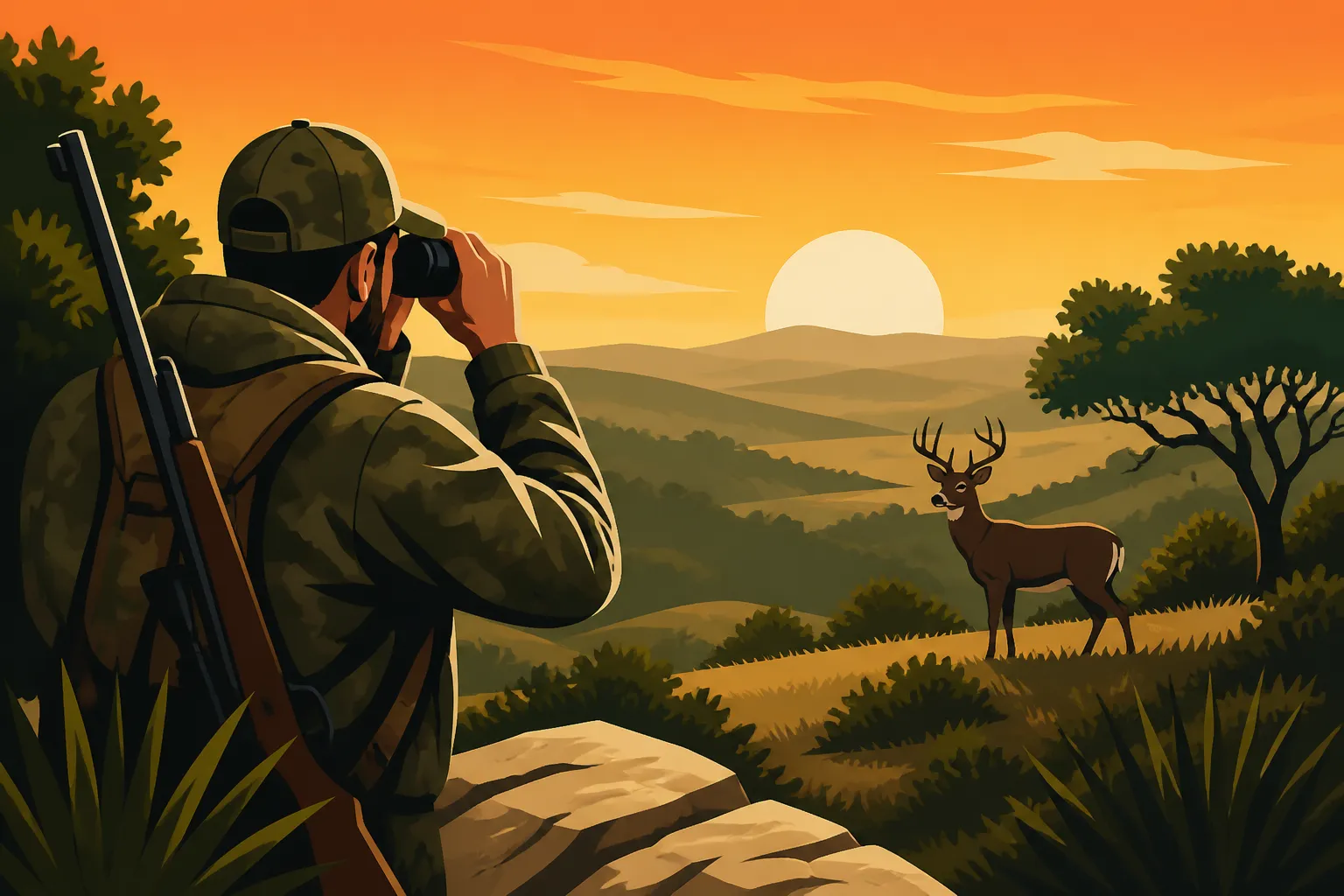
In the Hill Country's dense cedar and undulating terrain, quality optics are not a luxury; they are a necessity. While long-range glassing opportunities can be limited compared to West Texas, spotting a subtle flick of an ear or a hidden antler tine in the brush requires excellent resolution. A good pair of 10×42 binoculars is essential for scanning openings, creek bottoms, and the edges of cedar breaks. A reliable rangefinder is also crucial, as the rolling hills can play tricks on your depth perception, making judging distances accurately a challenge. For exotic hunting, where animals might be in more open pastures, even more powerful binoculars or a spotting scope can be incredibly useful. Brands like Vortex, Leupold, and Zeiss offer excellent options for various budgets.
Trail cameras are arguably one of the most vital scouting tools in the Hill Country. Given the thick cover and the sheer number of deer, patterning animals solely by observation can be frustrating. Cellular trail cameras, like those from Tactacam or Moultrie, allow you to monitor activity in real-time from afar, saving countless hours and reducing human pressure on your hunting grounds. Strategically placing cameras on game trails, near feeders, and at water sources will provide invaluable intelligence on animal movement, preferred feeding times, and buck patterns. Check out our detailed comparison in Tactacam Reveal vs Moultrie Edge: Best Cellular Cam?. Additionally, mapping apps like onX Hunt or GoHunt are indispensable for identifying property lines, terrain features, water sources, and potential bedding areas. They allow you to drop pins for observations, plan stalk routes, and navigate dense areas with confidence.
Blinds, Stands, and Patience
Given the dense vegetation, hunting from a static position in a blind or stand is often the most effective tactic in the Hill Country. Box blinds offer comfort and concealment, especially important for long sits during warm Texas days or when hunting with kids. They provide a stable shooting platform and protection from the elements. Look for blinds that blend into the rocky, cedar-heavy landscape. Tripod stands or elevated tower blinds can also be effective, offering a better vantage point over thick brush, which is crucial for spotting game earlier and getting a clearer shot.
Ground blinds are another versatile option, particularly for bowhunters or for quick setups in new areas. The key to any blind or stand placement in the Hill Country is concealment and wind direction. Never place a blind directly in the open if you can avoid it. Utilize natural cover like large oak trees or the edge of a cedar thicket to break up its silhouette. Patience is perhaps the most important "tactic" here; Hill Country hunting is often a game of waiting for that brief window of opportunity when a buck steps out of the impenetrable cover. For more details on choosing the right setup, check out Best Box Blinds & Tripod Blinds for Texas.
Calling and Decoy Strategies
While less common for whitetail deer than in some other regions, calling can still be effective in the Hill Country, particularly during the rut. Rattling antlers can simulate a buck fight, drawing in curious or aggressive bucks looking to challenge rivals or check out the action. Grunt tubes can be used to mimic a challenging buck or a social grunt, and fawn bleats can sometimes lure in does, which might bring a buck along. Knowing when to rattle for bucks in South Texas, or any region, is a skill developed over time, often dependent on the phase of the rut.
For Rio Grande turkeys, calling is absolutely central to the hunting experience. A good slate call, box call, and diaphragm call are essential for imitating hens and gobblers. Learning various calls – yelps, clucks, purrs, and gobblers – and knowing when to use them can mean the difference between seeing a turkey fly off and having one strut into range. Decoys, especially realistic hen and gobbler decoys, can further enhance your turkey calling setup, giving wary birds a visual to commit to. For detailed turkey calling advice, refer to How to Call Rio Grande Turkeys in Texas. For hogs, while not a common calling strategy, some hunters report success with distress calls, though this is often more effective for predators like coyotes.
Seasonal Considerations and Best Times to Hunt
The Hill Country's hunting seasons offer diverse opportunities throughout the year, but understanding the nuances of each period can significantly impact your success. The Texas climate plays a huge role, dictating animal behavior and requiring hunters to adapt their strategies accordingly.
Early Season Heat and Deer Habits
The general deer season in the Hill Country typically kicks off in early November for firearms, though archery season often starts even earlier in October. These early weeks can still be quite warm, with temperatures often pushing into the 70s or even 80s degrees Fahrenheit. This heat means deer activity, especially mature bucks, will be concentrated during the cooler hours of dawn and dusk. Midday movement is minimal, with deer bedding down in the densest cover available.
During the early season, deer are heavily focused on food sources. Areas with abundant acorns, browse, or active feeders will be primary drawing points. Hunters should concentrate their efforts near these food sources and reliable water points. Scent control is absolutely critical in warm weather, as human odor can hang in the air for longer. Setting up blinds with good morning and evening sun protection, and ensuring quiet entry and exit routes, are also vital to avoid spooking deer during these sensitive times.
The Rut: Prime Time in the Hill Country
The whitetail rut is arguably the most exciting and productive time to hunt in the Hill Country. While the exact timing can vary slightly by year and specific location, the peak rut in much of the Hill Country typically falls from mid-November through early December. During this period, bucks become much more active, often throwing caution to the wind as they search for does. This increased activity makes them more visible and vulnerable to hunters.
Strategies during the rut shift from food-focused to territory and breeding-focused. Bucks will be seen cruising through bedding areas, checking scrapes and rubs, and scent checking does. This is the prime time for rattling, grunting, and using doe bleats to pique a buck's curiosity or challenge. Hunting travel corridors between known doe bedding and feeding areas can be highly effective. The increased daytime movement during the rut also makes midday hunts more worthwhile. For precise timing, consult our guide, The Texas Rut: When Do Bucks Rut by Region().
Late Season Strategies
As the rut winds down in mid-to-late December and into January, deer behavior changes again. Bucks are often worn out from the rut, having lost significant body weight, and shift their focus back to replenishing their energy reserves. Temperatures drop significantly, making cold fronts a key factor in triggering deer movement. Food sources that were ignored during the rut (like corn at feeders) become highly attractive again.
Late season hunting often requires a return to food-centric strategies, focusing on dependable forage or supplemental feeding sites. Deer might also be more concentrated as some natural food sources become depleted. Hunters need to be prepared for colder weather, and patience remains paramount. Look for deer moving from dense thermal cover to food plots or feeders. For some hunters, the late season, with its colder weather and often reduced hunting pressure, can offer excellent opportunities for a wary old buck that survived the rut.
Ethical Hunting and Conservation in the Hill Country
Hunting in the Texas Hill Country isn't just a recreational pursuit; it's a vital component of wildlife management and conservation. Adhering to ethical practices and contributing to the long-term health of the ecosystem ensures that future generations can enjoy the same opportunities we do today.
Respecting Wildlife and the Land
Ethical hunting begins with respect: respect for the animals you pursue, the land you hunt on, and your fellow hunters. This means making clean, humane shots, knowing your effective range, and passing on marginal opportunities. It also means committing to retrieving any animal you shoot, no matter how difficult the terrain or how late the hour. In the Hill Country's rugged environment, tracking a wounded animal can be a strenuous task, but it is an absolute ethical obligation.
Respect for the land means leaving no trace, packing out all your trash, and minimizing your impact on the environment. It also entails being a good steward of private land, honoring agreements with landowners, closing gates, and reporting any suspicious activity. If you're hunting on public land, adhere strictly to all WMA rules and be considerate of other users, whether they are hunters, hikers, or birdwatchers. Remember, responsible behavior reflects positively on the entire hunting community.
Game Management and Population Health
Given the high deer density in many parts of the Hill Country, active game management is crucial for maintaining healthy populations. Overpopulation can lead to habitat degradation, increased disease transmission (like CWD), and smaller, less healthy deer. TPWD regulations, including antler restrictions and bag limits, are designed to help landowners and hunters manage their herds responsibly.
Many private landowners in the Hill Country participate in programs like the Managed Lands Deer Permit (MLDP), which allows them to work with TPWD biologists to implement tailored harvest recommendations based on scientific data. This often involves selective harvesting of does and specific buck classes to improve herd health and antler quality. Hunters on these properties play a direct role in conservation by adhering to these plans. By understanding the principles behind game management and contributing to balanced harvest, hunters ensure the long-term vitality of the Hill Country's iconic wildlife.
Supporting Conservation Efforts
Beyond individual hunting practices, supporting broader conservation efforts is essential. This includes purchasing your hunting license and endorsements, as a significant portion of these funds goes directly to TPWD for wildlife research, habitat improvement, and law enforcement. Consider joining or donating to conservation organizations like the Texas Wildlife Association (TWA) or Ducks Unlimited, which actively work to preserve and enhance wildlife habitats across the state.
Conservation isn't always about grand gestures; it can be as simple as planting a food plot in Texas that works in the heat, controlling invasive species like feral hogs, or participating in habitat improvement projects on your lease. Educating new hunters and the non-hunting public about the positive role of hunting in conservation also strengthens our collective efforts. By being active participants and advocates, we ensure the Texas Hill Country remains a wild and vibrant place for all.
Hill Country Game Species Overview
To help you visualize the opportunities, here's a quick look at some key Hill Country game species:
| Species | Primary Season (Private Land) | Typical Method | Unique Hill Country Considerations | Average Harvested Size |
|---|---|---|---|---|
| Whitetail Deer | Nov-Jan (Archery Oct) | Stand, Feeder, Spot-and-Stalk | High density, 13" antler rule common, smaller body size, dense cedar cover | Bucks 120-150 lbs, Does 80-100 lbs |
| Axis Deer | Year-round | Spot-and-Stalk, Feeder | Antlers can be shed any time, excellent venison, wary, open areas | Bucks 175-250 lbs, Does 100-150 lbs |
| Feral Hogs | Year-round | Thermal, Feeder, Trapping | Abundant, destructive, nocturnal, no bag limit | Varies greatly, 50-300+ lbs |
| Rio Grande Turkey | Spring (late Mar-May), Fall | Calling, Decoys, Ambush | Roost in oaks/cedar, strut in open fields, sharp eyesight | Gobblers 18-25 lbs |
| Aoudad Sheep | Year-round | Spot-and-Stalk, Long-range | Extremely rugged terrain, highly nomadic, excellent eyesight | Rams 200-300+ lbs |
| Blackbuck Antelope | Year-round | Spot-and-Stalk, Feeder | Very fast, prefer open fields, distinct color phases | Bucks 80-100 lbs |
Disclaimer
Please remember that hunting regulations, season dates, and specific rules are subject to change. Always consult the most current Texas Parks and Wildlife Department Outdoor Annual and any county-specific regulations before planning and executing your hunt. The information provided here is for general guidance only.