Texas Antler Restrictions: 13-Inch Rule & Counties
Staring through a pair of foggy binoculars at a buck that’s standing just at the edge of the brush is a universal experience for Texas hunters, but that excitement quickly turns into a nerve-wracking math equation when you start wondering if his inside spread hits that magic number. This guide is designed to strip away the confusion surrounding the 13-inch rule, providing a clear roadmap of which counties are affected and how to accurately field judge a buck so you never have to worry about a game warden's tape measure.
Understanding the Origin and Purpose of the 13-Inch Rule
The implementation of antler restrictions wasn't just a random decision made in a boardroom in Austin; it was a response to a very real problem facing our deer herds several decades ago. In many parts of Texas, particularly the Post Oak Savannah and the Pineywoods, hunters were traditionally harvesting a massive percentage of yearling bucks. This led to a skewed age structure where very few deer ever reached their prime, meaning hunters rarely saw a mature four or five-year-old animal. By the late 1990s, the herd was young, and the quality of the hunting experience was beginning to suffer.
When the Texas Parks and Wildlife Department first experimented with these restrictions in six counties back in 2002, the goal was simple: protect the younger bucks so they could reach older age classes. The biological need for age diversity is the backbone of a healthy ecosystem. Older bucks play a crucial role in the social hierarchy of the herd, and their presence can actually lead to a more intense and condensed rutting season. When you have a balanced age structure, the competition for breeding is more natural, which is a fascinating thing to witness from your Box Blind vs Tripod vs Ground Blind in Texas.
The shift from quantity to trophy quality has been one of the most successful conservation stories in the state. Within just a few years of the rule's implementation, the number of mature bucks in the harvest began to climb significantly. Hunters who were initially skeptical started seeing more "wall-hangers," and more importantly, they started seeing a more natural buck-to-doe ratio. It’s about creating a sustainable environment where the deer have a chance to show their full genetic potential before being removed from the population.
How hunter satisfaction changed the game cannot be overstated. While there was initial pushback from those who wanted to fill their freezer with any legal buck, the community eventually realized that letting those young six and eight-pointers walk meant they’d be seeing ten and twelve-pointers in the seasons to follow. This shift in mindset transformed the culture of Texas deer hunting from one of "if I don't shoot it, my neighbor will" to a collective effort in herd management. Understanding these Texas Whitetail Population & Density by Region helps you realize why your specific county might be under these rules.
Decoding the Rule: What Exactly is a Legal Buck
Navigating the legalities of the Texas Antler Restrictions: 13-Inch Rule & Counties can feel like reading a foreign language the first time you crack open the Outdoor Annual. In a restricted county, the bag limit is usually two bucks, but only one can have an inside spread of 13 inches or greater. This means you can't go out and shoot two giant trophy bucks in the same season in these specific counties. The second buck in your bag must be an "unbranched antler buck," which most of us commonly refer to as a spike.
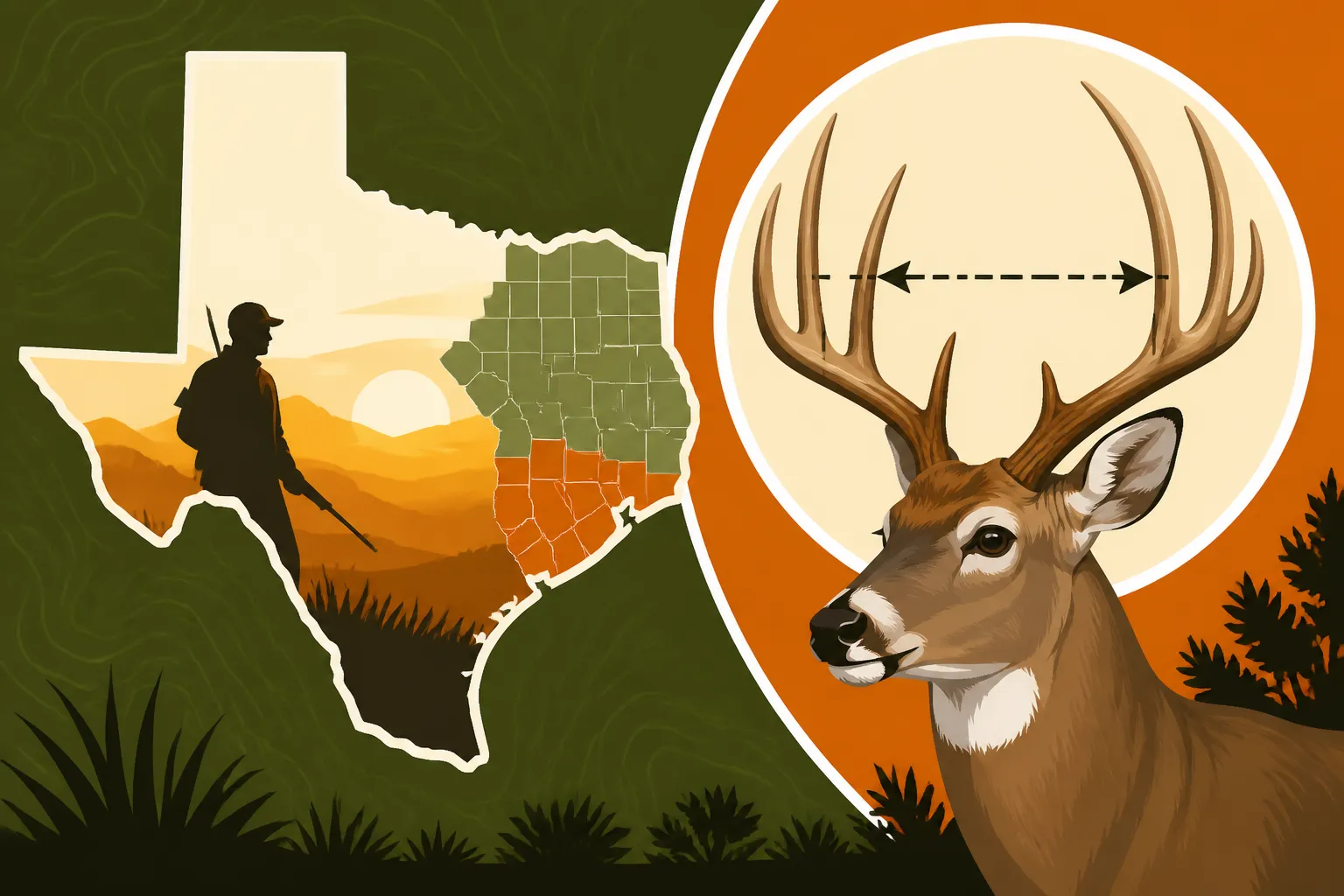
The 13-inch inside spread requirement is measured between the main beams at the widest point. It is a strict line in the sand. If a buck is 12 and 7/8 inches, it is technically an illegal harvest in a restricted county unless it meets the unbranched antler criteria. This is why field judging is so critical. You aren't just looking for "big antlers"; you are looking for a specific physical dimension. This rule forces you to slow down and really study the animal, which often leads to a more rewarding and ethical hunting experience.
The unbranched antler clause is the "safety valve" of the regulation. An unbranched antler buck is defined as a buck with at least one antler that has no points coming off the main beam. This allows for the harvest of spikes and certain older deer that may have regressed antlers or poor genetic potential for spread. It ensures that hunters still have the opportunity to take a deer for the freezer even if they haven't seen a wide, mature buck. It’s important to check your specific Texas Deer Bag Limit by County because even within restricted zones, the number of "doe days" or antlerless permits can vary.
There are also exceptions and special management designations to keep in mind. For example, if you are hunting on a property that is part of the Managed Lands Deer Program (MLDP), these state-wide antler restrictions usually do not apply. Instead, you follow the specific harvest recommendations provided by a TPWD biologist for that specific piece of land. This allows for more intensive management that the standard 13-inch rule might hinder. If you aren't on an MLDP ranch, you are bound by the general Texas White-Tailed Deer Hunting Regulations 2026.
Mastering Field Judging: Is He 13 Inches
The most common question every Texas hunter asks is, "How do I know he's 13 inches wide?" The gold standard for field judging in the Lone Star State is using the ears as a ruler. On an average Texas whitetail buck, the distance from ear tip to ear tip when the ears are in an alert, outward position is approximately 13 inches. If the main beams of the buck’s antlers extend beyond the tips of the ears, he is almost certainly a legal buck. If the antlers are tucked inside the ear tips, you are in the danger zone.
Imagine you are sitting in your stand in East Texas, and a buck steps out at 100 yards. He’s looking right at you. This is the perfect time to evaluate his spread. If his antlers look like they are "pinched" inside his ears, let him walk. If the sweep of the beams clearly goes past the ears, you can reach for your rifle. However, keep in mind that a buck can "flick" his ears or hold them back, which can distort your perception. Always wait for that alert, ears-forward pose before making your final decision on a Best Hunting Method for White-Tailed Deer in Texas.
Eye-to-eye measurements and facial geometry offer another layer of verification. The distance between the centers of a buck's eyes is usually around 4 to 4.5 inches. You can use this as a mental scale to estimate how many "eye-widths" the antlers extend past the head. Additionally, the length of a buck's snout can help you judge the height of the antlers, but for the 13-inch rule, the horizontal spread is your primary concern. Practice this during the off-season by looking at photos or using your Best Cellular Trail Cameras for Texas (2027) to study the deer on your property.
Evaluating the buck from multiple angles is non-negotiable. A buck might look incredibly wide from the front, but when he turns profile, you realize his beams are thin and short. Conversely, a buck might look narrow from a 45-degree angle but show that legal spread when he looks directly at your blind. Never shoot based on a single glance. Spend time watching him move. This patience is a key part of White-Tailed Deer Hunting Tactics for Texas and will save you from a very uncomfortable conversation with a game warden.
| Buck Category | Antler Characteristic | Legality in Restricted County |
|---|---|---|
| Legal Trophy | Inside spread ≥ 13 inches | Legal (Limit 1 per season) |
| Unbranched Buck | At least one antler with no branches | Legal (Can be the 2nd buck) |
| Illegal Buck | Spread < 13 inches with multiple points | Illegal |
| Spike | Two single-point beams | Legal as an unbranched buck |
| Button Buck | No visible antler breaking skin | Classified as Antlerless |
The List of Texas Antler Restriction Counties
The 13-inch rule currently applies to over 110 counties in Texas, covering a massive portion of the state’s best deer hunting ground. The Pineywoods and Post Oak Savannah were the first regions to fully embrace these rules. Counties like Anderson, Angelina, Bowie, and Cass have seen a dramatic transformation in their deer populations. In these areas, the thick brush and pine plantations can make it difficult to see a buck clearly, making the use of high-quality Best Hunting Optics for Texas: Scopes, Binos & Rangefinders even more important.
The Cross Timbers and Edwards Plateau have also seen a shift toward these restrictions. While the Hill Country is known for high deer density, the quality was often hampered by over-harvesting young bucks. By bringing counties like Gillespie, Llano, and Mason under the restriction umbrella, the state is attempting to balance that density with better age structures. When you are looking at Hill Country Hunting in Texas, you need to be aware that even in high-density areas, the 13-inch rule remains the law of the land unless stated otherwise in the annual regulations.
Regional differences in bag limits can sometimes trip up hunters who travel across the state. For instance, in some North Texas counties, you might have a 5-deer bag limit, but the antler restrictions still dictate that only one of your bucks can be 13 inches or wider. In contrast, some South Texas counties have different rules entirely or are not part of the 13-inch restriction because their management practices (and naturally larger spreads) don't require the same legislative intervention. Always cross-reference the Texas Deer Season 2026-2027: Dates by Zone with the county-specific regulations.
It’s also worth noting that the list of counties can change. The TPWD periodically reviews harvest data and may add or remove counties based on the health of the local herd. This is why staying up to date with Texas Hunting Regulations Changes for 2026 is a mandatory part of your pre-season ritual. Just because a county wasn't restricted five years ago doesn't mean it isn't now. Always check the specific rules for the county where your lease or public land is located.
Consequences of an Illegal Harvest
We’ve all heard the stories of the "oops" buck—the one where the hunter pulls the trigger, walks up to the deer, and realizes the tape measure only hits 12 and a half inches. The difference between self-reporting and getting caught can be the difference between a slap on the wrist and losing your hunting privileges. If you make an honest mistake, the best course of action is to contact your local game warden immediately. They often appreciate the honesty and may show leniency, though you will still likely lose the deer.
Civil restitution and legal fines are the standard penalties for an illegal harvest. Texas takes its wildlife conservation seriously. When a deer is taken illegally, the state calculates a "recovery value" for that animal, which can range from several hundred to several thousand dollars depending on the size and score of the buck. This is in addition to any criminal fines imposed by a judge. You could end up paying a very expensive price for a buck that you can't even keep. Understanding How Do Texas Deer Tags Work is the first step in avoiding these legal nightmares.
The impact on your hunting license can be long-lasting. For serious or repeated violations, the state has the authority to revoke your hunting license for a period of years. Texas is also a member of the Interstate Wildlife Violator Compact, meaning if your license is revoked here, it is likely revoked in nearly every other state in the country. A single moment of poor judgment or rushing a shot can end your hunting career for a long time. This is why learning How to Field Judge a 13-Inch Buck is the most valuable skill you can develop.
Beyond the legal and financial hits, there is the social stigma within the hunting community. We pride ourselves on being stewards of the land. Taking an undersized buck in a restricted county isn't just a "mistake"; it's a setback for the management goals of everyone on the surrounding properties. It takes away a buck that could have been a trophy for someone else—or you—in a year or two. This is why Texas Hunting Lease Rules & Etiquette often include strict penalties for undersized bucks that go beyond what the state requires.
Advanced Tactics for Hunting Restriction Counties
Hunting in a restricted county requires a different psychological approach than hunting in open zones. "Let them walk" becomes your mantra. You have to be okay with passing up a beautiful 2.5-year-old eight-pointer that might score 110 inches but only has a 12-inch spread. It can be agonizing, especially on the last day of your trip, but this selective harvest is what builds a legendary hunting property. Emphasizing this mindset is a huge part of How to Hunt Whitetail Deer in Texas (Step by Step).
Using trail cameras for pre-season identification is the most effective way to eliminate guesswork. If you have photos of a buck from multiple angles throughout the summer and fall, you can measure him against known objects in the frame or simply get a feel for his frame compared to his ears. By the time opening day rolls around, you should have a "hit list" of bucks you know are legal. This takes the pressure off during that split-second window when a buck walks into a shooting lane. This is a core component of How to Pattern Bucks With Trail Cameras.
Managing your herd outside of state regulations can take your property to the next level. The 13-inch rule is a "floor," not a "ceiling." Many top-tier leases implement their own rules, such as "8 points or better" or "minimum 4.5 years old." By setting your own standards higher than the state's, you ensure that even more bucks reach maturity. This works best when you also focus on Food Plots in Texas: What Works in the Heat to provide the nutrition these older bucks need to grow those wide, heavy antlers we all dream about.
Finally, consider the timing of your hunt. During the early season, bucks are often more predictable, coming to Hunting Over Feeders & Corn in Texas (Legal Guide). This gives you ample time to study them. However, during the rut, a new buck you’ve never seen before might chase a doe across your field. These "stranger" bucks are the ones that lead to the most illegal harvests because the hunter gets excited and rushes the shot. When you're Rut Hunting Tactics: Rattling & Grunting in Texas, you must be twice as disciplined with your field judging.
Frequently Asked Questions and Misconceptions
One of the most frequent questions I get is: "Does the rule apply on MLD properties?" As mentioned earlier, usually it does not. MLD (Managed Lands Deer) properties are managed under a specific site-specific plan. If you are a guest on such a ranch, always ask the ranch manager or owner what the specific harvest rules are before you head to the stand. They have their own tags and their own biological goals, which often prioritize age over a simple spread measurement. You can learn more about this in our guide on MLDP Tags in Texas: How They Work.
Another common frustration is the "old but narrow" buck. You might see a five-year-old buck with massive mass and long tines, but his genetics simply don't allow him to grow past 12 inches in width. Under the current state-wide antler restrictions in restricted counties, that buck is still illegal unless he has an unbranched antler. While this seems counter-intuitive to "age-based" management, the 13-inch rule is designed to be a simple, blanket regulation that is easy for the average hunter to follow and for a game warden to enforce.
There are also many myths about spikes and management bucks. Some hunters believe that "once a spike, always a spike," and they want to cull every unbranched buck they see. Biological studies have shown that many spikes are simply late-born fawns or deer that had a poor nutritional start, and they can grow into impressive bucks later in life. However, the state allows their harvest to provide opportunity. Deciding whether to take a spike is a personal choice and often depends on the specific Best Tactics for Late-Season Deer in Texas you are employing.
Finally, remember that the 13-inch rule only applies to white-tailed deer. If you are lucky enough to be Mule Deer Hunting in Texas: Panhandle & Trans-Pecos, the rules are entirely different. Mule deer have their own set of antler restrictions in certain counties, often focusing on a 20-inch main beam spread. Mixing up the species regulations is a fast way to get into trouble. Always identify your target species with 100% certainty before even considering the antlers.
Disclaimer
The information provided in this guide is for educational and informational purposes only. While every effort has been made to ensure accuracy based on the 2026 regulations, hunting laws in Texas are subject to change by the Texas Parks and Wildlife Department. Always consult the official Texas Outdoor Annual and verify specific county regulations and bag limits before heading into the field. The author and publisher are not responsible for any legal issues arising from the misinterpretation of hunting laws.