Pineywoods & East Texas Hunting
Hunting in the Pineywoods and East Texas can feel like stepping into a completely different world compared to the vast, open spaces of West Texas or the dense brush of the South. The thick timber, humid air, and often swampy terrain present unique challenges that can frustrate even seasoned hunters used to other parts of the state. This guide is here to walk you through everything you need to know to successfully navigate and hunt this truly special region, from understanding its distinct environment to finding game and adapting your tactics.
Understanding the Pineywoods Ecosystem and Its Impact on Hunting
The East Texas Pineywoods, stretching from the Louisiana border west towards the Post Oak Savannah and north towards Oklahoma, is a verdant, densely forested region that dramatically differs from the scrubland or Hill Country many Texas hunters are accustomed to. It's characterized by towering loblolly and shortleaf pines, interspersed with hardwoods like oaks, sweetgum, and hickories, creating a rich, diverse habitat.
The Dense Canopy and Understory
The most striking feature of the Pineywoods is its dense canopy, which can make it feel perpetually shady and cool, even on a warm day. This canopy limits the amount of sunlight reaching the forest floor, influencing the understory vegetation. Instead of wide-open vistas, you'll often find thickets of yaupon, muscadine vines, and various shrubs that provide incredible cover for wildlife but can be a nightmare for hunters trying to spot game or move silently. This dense cover means shot opportunities are often close-range and quick, demanding different hunting styles than those used in more open terrain. Understanding the layout, even with tools like onX Hunt, becomes paramount for effective navigation and anticipating animal movement through these thick areas.
Water Features and Their Influence
East Texas is also defined by its abundance of water. Numerous rivers, creeks, bayous, and oxbow lakes crisscross the landscape, often creating swampy areas and bottomland hardwood forests. These water features are vital to the ecosystem, providing water sources for game, creating natural travel corridors, and influencing vegetation patterns. However, they also present challenges for hunters, from navigating muddy terrain to dealing with swarms of mosquitoes and other insects. Understanding how game uses these water features – whether for bedding, feeding, or escape routes – is key to successful hunting here. It’s not uncommon to find deer, hogs, and even turkeys favoring specific creek bottoms or the edges of cypress swamps.
Key Game Species to Hunt in East Texas
While the species list might seem familiar, the behavior and preferred habitats of game animals in the Pineywoods often differ significantly from their counterparts in other Texas regions. Adapting your approach to these nuances is crucial for success.
White-Tailed Deer in the Timber
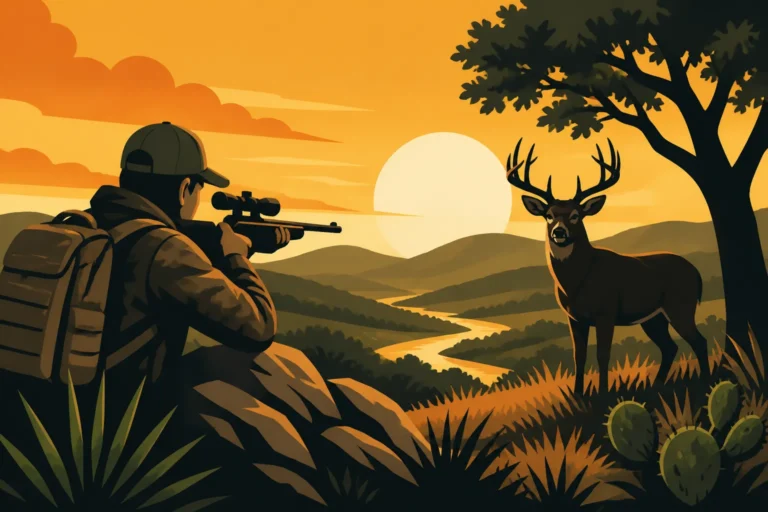
White-tailed deer are the undisputed kings of the Pineywoods, but hunting them here isn't like sitting over a senderos in South Texas. East Texas deer tend to be smaller-bodied, though mature bucks can still sport impressive antlers. Their patterns are heavily influenced by the dense cover and fragmented food sources. Instead of large, sprawling agricultural fields, deer often browse on native forbs, acorns, and the tender shoots found in clear-cuts or along forest edges.
You'll want to focus on areas where the timber transitions to younger growth, or where logging operations have opened up the canopy, allowing sunlight to reach the forest floor and stimulate new plant growth. Creek bottoms and areas near water sources are also magnets for deer, especially during dry spells. Remember, deer here often travel through the thickest cover, using it as both sanctuary and a secure travel lane. Learning to scout these subtle trails, often indicated by rubs and scrapes that are harder to spot in dense foliage, is a skill honed through experience. For a broader overview, check out our guide on White-Tailed Deer Hunting in Texas: Complete Guide.
Feral Hogs: A Year-Round Pursuit
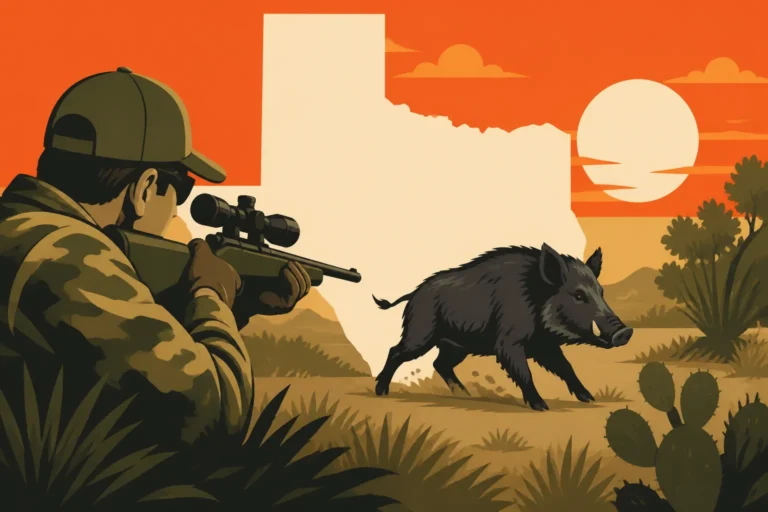
If there's one animal that thrives in the East Texas environment, it's the feral hog. With abundant water, dense cover, and diverse food sources, the Pineywoods is prime hog habitat. Hogs here can be found almost anywhere – from deep in the swamps to foraging in pine plantations and agricultural fields. They are prolific breeders and destructive to the ecosystem, making them a popular target for hunters year-round.
Hunting hogs in East Texas often involves still-hunting through thick brush, setting up ambushes near wallows or feeding areas, or utilizing thermal optics at night. Remember, hogs are highly intelligent and will quickly adapt to hunting pressure. Moving quietly and paying attention to wind direction is paramount. For more detailed strategies, our article on Feral Hog Hunting in Texas: Year-Round Guide offers excellent insights.
Rio Grande and Eastern Turkeys
East Texas offers a unique opportunity to hunt both Rio Grande and the elusive Eastern turkey. While Rios are more common in the central and western parts of the state, they do extend into the western fringes of the Pineywoods. However, the true gem of East Texas for turkey hunters is the Eastern subspecies, found primarily in the heavily forested counties of the far eastern side of the state. Eastern turkeys are notoriously wary and prefer vast tracts of mature timber, making them a challenging but rewarding quarry.
Calling tactics for Easterns differ somewhat from Rios; they tend to be less vocal and respond to more subtle calls. You'll need patience and stealth, often setting up in areas with good visibility within the dense woods, or along clear-cut edges where turkeys might emerge to feed. Learning their specific roosting and strutting areas is critical, which often requires extensive scouting. Our guide on Rio Grande Turkey Hunting in Texas provides a good foundation, but remember to adapt your calls for the more reserved Easterns.
Squirrels, Rabbits, and Waterfowl
Beyond big game, East Texas offers fantastic opportunities for small game and waterfowl. Squirrels (fox and gray) are abundant in the hardwood bottomlands, providing a fun and accessible hunt, especially for beginners or those looking for a relaxed outing. Rabbits, primarily cottontails and swamp rabbits, are also plentiful in brushy areas and along field edges.
Waterfowl hunting, particularly for ducks, is excellent in the myriad lakes, rivers, and flooded timber areas of the region. Mallards, wood ducks, gadwall, and teal are common. Setting up decoys in flooded timber or along brushy shorelines can yield fantastic results. For specific strategies, consult Duck Hunting in Texas: Decoys & Blinds.
Public Land Hunting Opportunities in the Pineywoods
One of the biggest draws of hunting in East Texas is the extensive network of public lands available through the U.S. Forest Service and Texas Parks and Wildlife Department (TPWD). These lands offer incredible access, but also require careful planning and understanding of specific regulations.
National Forests and Their Vast Acreage
The largest and most prominent public hunting areas in the Pineywoods are the four National Forests: Sam Houston, Davy Crockett, Angelina, and Sabine. Together, these forests comprise hundreds of thousands of acres open to public hunting. They are managed for multiple uses, including timber production, recreation, and wildlife habitat.
Hunting in these National Forests requires an Annual Public Hunting Permit (APH) in addition to your regular hunting license. While the sheer size offers vast opportunities, it also means you'll encounter a wide range of habitat types, from dense pine plantations to mature hardwood bottoms. Expect thick brush, often requiring still-hunting or carefully planned ambush points. Scouting is vital, and an app like onX Hunt can be indispensable for identifying property boundaries, topographic features, and potential access points, helping you navigate the sometimes confusing network of trails and roads. A great starting point is our National Forest Hunting in Texas guide, with specific details for the region in Sam Houston National Forest Hunting Guide.
Wildlife Management Areas (WMAs)
In addition to the National Forests, TPWD manages several Wildlife Management Areas (WMAs) in East Texas, offering diverse hunting experiences. Some notable WMAs include Alazan Bayou WMA, Moore Plantation WMA, and Bannister WMA. Many of these WMAs participate in the Public Hunting Program, requiring an APH permit, while others are part of the drawn hunt system.
WMAs are actively managed to enhance wildlife habitat, often resulting in higher game densities and better hunting success rates than general public lands. However, they also see more hunting pressure. It's crucial to check the specific regulations for each WMA you plan to hunt, as rules regarding allowed species, hunting methods, and access can vary significantly. Some might have designated seasons for specific game, or even require sign-in/sign-out procedures. Always refer to the Texas Outdoor Annual for the most current information.
Drawn Hunts and Special Opportunities
TPWD also offers numerous drawn hunts for deer, turkey, hogs, and other species on various public lands and private ranches across East Texas. These hunts often provide access to areas with exceptional game quality or unique hunting experiences. While the odds of drawing a permit can be low for popular hunts, applying is always worthwhile.
Special youth hunts are also often available on WMAs and through private landowners, providing invaluable opportunities for younger hunters to gain experience in a managed environment. These hunts are a fantastic way to introduce the next generation to the joys of Texas Hunting.
Private Land and Hunting Leases
While public land offers extensive access, the vast majority of prime hunting land in East Texas remains privately owned. Securing access to private land, whether through a traditional lease or a day hunt, can significantly increase your chances of success, especially for trophy animals.
Finding a Hunting Lease in the Pineywoods
Hunting leases are a deeply ingrained part of Texas hunting culture, and East Texas is no exception. Leases here vary widely in size, cost, and amenities. You might find a small, rustic lease focused solely on deer, or a larger, more expensive option that includes lodging, hog control, and even turkey opportunities.
When looking for a lease in the Pineywoods, consider factors like proximity to your home, desired game species, and the overall quality of the habitat. Websites, local classifieds, and word-of-mouth are common ways to find available leases. Be prepared for varied terrain, from upland pine forests to low-lying creek bottoms. Understand the terms of the lease, including game limits, access rules, and any specific timber or agricultural activities that might impact your hunting. Our comprehensive guide on Hunting Leases in Texas: Complete Guide (Cost & How to Find) can offer valuable tips for navigating this process.
Day Hunts and Guided Opportunities
For hunters without a long-term lease, day hunts and guided trips are excellent alternatives. Many outfitters and landowners in East Texas offer guided deer, hog, and turkey hunts. These options often provide a more structured experience, with guides who know the local terrain and game patterns intimately.
Day hunts can be a great way to experience a specific property or target a particular species without the year-round commitment of a lease. Costs vary based on the species, amenities, and duration of the hunt. Research reputable outfitters and read reviews to ensure a positive experience. Look for operations that are transparent about their pricing, game expectations, and what's included in the package. Brands like GoHunt, while often catering to Western big game, can sometimes provide resources for finding reputable outfitters more broadly across different regions, though direct Pineywoods-specific listings might be limited.
Building Relationships with Landowners
One of the most rewarding ways to gain private land access is by building relationships with landowners. Many smaller landowners, especially those who aren't primarily interested in hunting themselves, might be open to allowing ethical hunters access in exchange for help with property maintenance, predator control (like feral hogs), or simply building a friendly connection.
This approach often takes time and effort but can lead to long-term hunting opportunities on properties that might not be formally leased. It also strengthens the bond between hunters and landowners, fostering a greater appreciation for wildlife management and ethical hunting practices.
Essential Gear and Tactics for Pineywoods Hunting
Hunting in the dense, often wet environment of East Texas demands specific gear and tactics to maximize success and ensure comfort. Don't show up with your open-country setup and expect the same results!
Clothing and Footwear for the Elements
The Pineywoods can be hot and humid, especially during early seasons, and prone to sudden downpours. Lightweight, breathable, moisture-wicking clothing is a must. Camouflage patterns that break up your silhouette in dense foliage are ideal. Layers are crucial for adapting to temperature swings.
Footwear is perhaps the most critical gear consideration. Snake boots are highly recommended due to the prevalence of venomous snakes like timber rattlesnakes, copperheads, and cottonmouths, especially near water. Waterproof boots are also essential for navigating muddy trails, creek crossings, and swampy areas. Brands like LaCrosse and Rocky offer excellent options for both snake protection and waterproofing. For more detail, check out our guide on Best Snake Boots for Texas Hunting.
Optics and Firearms for Close Quarters
Unlike wide-open plains where long-range shots are common, most Pineywoods hunting occurs at closer ranges, often under 100 yards. A quality rifle scope with a wide field of view and lower magnification (e.g., 1-4x, 2-7x, or 3-9x) is usually more practical than high-power optics. A good set of binoculars (8×42 or 10×42) is helpful for scanning dense cover for subtle movements.
For firearms, brush guns in calibers like .30-30, .45-70, or even a good 12-gauge slug gun are highly effective. Many hunters also favor bolt-action rifles in popular calibers like .308 Win, .270 Win, or 6.5 Creedmoor, understanding that shot opportunities are generally close. Bowhunting is particularly well-suited for the dense cover, allowing for stealthy approaches and close-range encounters. Consider a crossbow for easier maneuverability in tight spots. Check out Bowhunting in Texas: Archery Season Guide for more on archery.
Scouting and Trail Cameras
Scouting is paramount in the Pineywoods. The dense cover means game sign can be harder to spot, and animals have countless places to hide. Look for subtle deer trails, rub lines, and scrapes. Pay close attention to food sources like acorn flats or areas with heavy browsing pressure.
Trail cameras are invaluable for patterning game in this environment. Place them on well-used trails, near known food sources, or along creek crossings. Cellular trail cameras like those from Tactacam or Moultrie can provide real-time intelligence, allowing you to monitor activity without disturbing the area. For tips on maximizing their use, read about How to Pattern Bucks With Trail Cameras.
Still-Hunting and Stand Placement
Still-hunting – moving slowly and deliberately through the woods, stopping frequently to observe – is an incredibly effective tactic in the Pineywoods. The key is to be patient, quiet, and constantly scan for movement. Pay attention to wind direction to avoid spooking game.
For stand hunting, strategically placed ground blinds or elevated box blinds can be very productive. Focus on pinch points, funnels between different habitat types (e.g., pine plantation merging with a hardwood bottom), or along primary travel corridors. Remember, visibility will often be limited, so choose a spot where you have clear shooting lanes within your expected range. For ground blinds, consider setting them up well in advance to allow game to get accustomed to their presence.
Navigating Regulations and Seasons in East Texas
Understanding Texas hunting regulations is essential, and East Texas has its own set of nuances, particularly regarding antler restrictions and specific season dates for certain species. Always consult the Texas Outdoor Annual before heading afield.
General Texas Hunting License Requirements
No matter where you hunt in Texas, you'll need a valid hunting license. Residents and non-residents alike must purchase the appropriate license. Additionally, specific endorsements might be required for certain game, such as a Migratory Game Bird Endorsement for dove or duck hunting, or an Upland Game Bird Endorsement for quail or turkey.
Hunter education is mandatory for most hunters born on or after September 2, 1971. Always keep your license and any required endorsements with you while hunting. Our guide to the Texas Hunting License: Cost, Types & How to Buy (2026) has all the details.
Deer and Turkey Seasons by Zone
Texas is divided into different hunting zones, and East Texas primarily falls within the "East Texas" deer zone for white-tailed deer and the "Eastern Turkey" zone for turkey. Deer seasons typically run from early November through January, with an earlier Archery Season and a late Youth Season. Specific dates can vary slightly year to year, so always confirm with the Outdoor Annual or our resource on Texas Deer Season 2026-2027: Dates by Zone.
For Eastern turkeys, hunting opportunities are usually limited to a short spring season, with bag limits often restricted to one gobbler. Rio Grande turkeys, where present, may have longer seasons and higher bag limits. Always double-check the specific regulations for your county.
Antler Restrictions in East Texas
Many counties in East Texas operate under antler restrictions designed to improve the age structure and quality of the deer herd. While the infamous "13-inch rule" (a buck must have at least one unbranched antler or an inside spread of at least 13 inches) is common in South Texas, East Texas counties often have their own specific rules.
Typically, in antler-restricted counties, a hunter may harvest no more than two bucks, and only one of those bucks may have an inside spread of 13 inches or greater. The other buck must have an inside spread of less than 13 inches, or an unbranched antler. However, some counties have more specific or relaxed regulations. It is absolutely crucial to know the rules for the specific county you are hunting in to avoid penalties. Our guide on Texas Antler Restrictions: 13-Inch Rule & Counties can help you decipher these rules.
CWD and Carcass Movement Restrictions
Chronic Wasting Disease (CWD) is a serious concern for deer populations across Texas, and several East Texas counties have been designated as CWD Zones or CWD Containment/Surveillance Zones. If you're hunting in a CWD-affected county, there will be strict regulations regarding the movement of deer carcasses, often requiring heads to be left at the check station or certain parts disposed of on-site.
These rules are in place to help prevent the spread of CWD. Always check the latest CWD regulations and zones before your hunt, especially if you plan to transport a harvested deer out of the area. Information on CWD in Texas: Zones, Rules & Carcass Transport is vital for any hunter.
Overcoming Unique Challenges of Pineywoods Hunting
Hunting in East Texas isn't without its unique set of challenges that can make or break a hunting trip. Being prepared for these can turn a frustrating situation into a successful outing.
Navigating Dense Terrain and Limited Visibility
The thick woods and dense undergrowth of the Pineywoods significantly reduce visibility, making it difficult to spot game from a distance. This means hunters need to be exceptionally observant, looking for subtle movements, flicking ears, or patches of hide. Slow, deliberate movements are key.
An excellent map and GPS device, such as those found on the onX Hunt app, are invaluable for navigating these dense areas. It's easy to get disoriented, even on familiar ground, when everything looks similar. Use your GPS to mark your stand location, truck, and any points of interest. Don't rely solely on your sense of direction.
Dealing with Heat, Humidity, and Insects
East Texas weather can be brutal, especially during early seasons. High temperatures, oppressive humidity, and swarms of mosquitoes, ticks, and chiggers are common. Proper hydration is critical. Lightweight, breathable clothing and insect repellent are your best friends. Thermacell devices can also be very effective at keeping mosquitoes at bay, particularly when sitting in a blind or stand.
Be extra vigilant for ticks, checking yourself thoroughly after every outing. Long pants and sleeves, treated with permethrin, can provide an extra layer of protection. This is also where those snake boots come in handy, offering a barrier against undergrowth and potential insect bites. Our article on Best Early-Season Camo for Texas Heat has more gear tips.
Processing Game in Warm Weather
With the often-warm temperatures, prompt and proper field dressing is essential to preserve your harvested game meat. The faster you can cool down the carcass, the better the meat quality will be. This often means field dressing immediately and, if possible, getting the animal to a cooler or processor quickly.
Having a game cart can be incredibly useful for hauling deer or hogs out of the dense woods, especially when alone. If you're far from a vehicle, quartering the animal in the field might be necessary. Planning your extraction route and having the right tools (sharp knife, game bags) ready can make all the difference. For practical advice, see How to Field Dress a Deer in Hot Weather.
Seasonal Hunting Strategies for the Pineywoods
Understanding how game behavior changes throughout the different hunting seasons is paramount in the Pineywoods. Each phase brings its own opportunities and challenges.
Early Season: Heat and Food Sources
The early season, typically September for doves and October for archery deer, is characterized by persistent heat and high humidity. Game animals are often focused on accessible water sources and readily available soft mast like acorns, muscadines, and various berries.
For deer, focus your scouting efforts around natural food plots created by logging activities, creek bottoms, and areas with plentiful browse. Movement will often be concentrated during the cooler morning and late evening hours. Stand placement near bedding areas that offer good airflow or along trails leading to water will be productive.
Mid-Season: The Rut and Acorn Crops
As temperatures cool, typically in November and early December, the deer rut begins. This is often the most exciting time to hunt bucks, as they become less cautious and more active in their pursuit of does. The timing of the rut can vary slightly across East Texas, but generally peaks in mid-November.
Prime locations during the rut include traditional scrape lines, rub clusters, and areas where does are known to frequent. Grunting and rattling can be effective in drawing out curious bucks, especially during the peak of breeding activity. Beyond the rut, consistent acorn crops can dictate deer movement for much of the fall, making mature oak stands highly desirable hunting spots.
Late Season: Pressure and Winter Browse
By late December and January, hunting pressure has often increased, and remaining game animals can be warier. Food sources may become scarcer, pushing deer and hogs to rely more heavily on browse and any remaining hard mast.
Focus on thick cover where deer might seek refuge from pressure, often found in dense pine thickets, creek bottoms, or areas bordering private sanctuaries. Pay attention to subtle food sources that might be overlooked, such as green briar or honeysuckle, which provide essential winter browse. Still-hunting becomes increasingly effective as animals often move less and hold tighter in cover. Finding undisturbed pockets of habitat can be the key to success. For some great general advice, look at Best Tactics for Late-Season Deer in Texas.
| Species | Primary Season | Typical Habitat | Best Tactics | Key Challenges |
|---|---|---|---|---|
| White-tailed Deer | Nov-Jan (Archery Oct) | Pine/Hardwood Mix, Creek Bottoms, Clear-cuts | Stand Hunting, Still-hunting, Scouting Food Sources | Dense Cover, Heat/Humidity (early), Antler Restrictions |
| Feral Hog | Year-Round | Swamps, Creek Bottoms, Pine Plantations | Thermal/Night Hunting, Baits, Spot & Stalk | Abundance, Nocturnal Habits, Damage to Habitat |
| Eastern Turkey | Spring (limited) | Mature Hardwoods, Roosting Sites near Water | Calling (subtle), Ambush, Scouting | Wary Nature, Limited Range, Low Density |
| Squirrel | Sep-Feb | Hardwood Bottoms, Oak Stands | Still-hunting, Spot & Stalk | Quick Movement, Dense Canopy |
| Duck | Nov-Jan (Sep Teal) | Rivers, Lakes, Flooded Timber, Ponds | Decoy Spreads, Blind Hunting | Weather-Dependent, Specific Regulations |
Disclaimer
Please remember that hunting regulations, seasons, and licensing requirements can change. Always consult the most current Texas Outdoor Annual published by the Texas Parks and Wildlife Department (TPWD) before planning any hunting trip. This guide is for informational purposes only and does not supersede official regulations.