Best Early-Season Camo for Texas Heat
There’s nothing quite like the excitement of early hunting season in Texas. The anticipation builds, the calls are tuned, and the blinds are set. But let's be real, that beautiful September morning can quickly turn into a sweltering, sweat-drenched nightmare if you’re not prepared. Standard, heavy-duty camo designed for colder climates will make you miserable and compromise your hunt. This guide is all about helping you understand how to choose the best early-season camo for Texas heat, keeping you cool, concealed, and comfortable so you can stay focused on the game.
Understanding the Unique Challenge of Texas Early Season Heat
If you've spent any time outdoors in Texas, you know our "early season" can feel a lot like peak summer in other places. It’s not just warm; it’s hot, often with humidity that clings to you like a wet blanket. Dressing for success isn't about layering up for warmth, but strategically layering (or un-layering!) for maximum airflow and moisture management.
The Brutal Reality of September Mornings
Think about that crisp, cool feeling when the sun first starts to peek over the horizon on opening day. It’s glorious, right? But then the sun climbs, and suddenly, what felt like a perfect morning quickly morphs into a sauna. By 9 AM, the temperature can soar into the 80s, often with high humidity, making everything feel even hotter. Traditional cotton camo, which might be fine for a brisk November morning, quickly becomes saturated with sweat, heavy, and incredibly uncomfortable. It holds moisture against your skin, trapping heat and preventing the natural cooling process your body relies on. This isn't just an inconvenience; it's a genuine challenge that can cut your hunt short. You need gear that can breathe with you, not suffocate you.
Impact on Hunter Performance
Being uncomfortable in the field isn't just about feeling a bit warm; it actively degrades your hunting performance. When you're constantly sweating, fidgeting, and trying to pull away sticky fabric, your focus shifts from scanning for game to managing your discomfort. This lack of focus can lead to missed opportunities, whether it's not spotting that subtle movement in the brush or making a noisy adjustment that spooks a wary buck. Furthermore, excessive sweating dramatically increases your scent signature. Even with scent-control sprays, if your clothing isn't allowing sweat to evaporate, that accumulated moisture becomes a prime breeding ground for odor-causing bacteria. Animals, especially deer and hogs, have an incredibly keen sense of smell, and a hunter radiating heat and sweat is an easy target for detection. You might be perfectly hidden by your Best Box Blind for Hot Texas Weather, but if your scent is wafting downwind, your cover is blown. It’s a holistic problem, and your camo is a critical part of the solution.
Essential Fabric Technologies for Hot Weather Camo
The days of simply throwing on any old cotton fatigues for hunting are long gone, especially when dealing with intense Texas heat. Modern camo is designed with advanced fabric technologies that actively work to keep you cool and dry. Understanding these innovations is key to making smart gear choices.
Moisture-Wicking Magic
This is perhaps the most critical feature for early-season Texas camo. Moisture-wicking fabrics are engineered to draw sweat away from your skin and transfer it to the outer surface of the fabric, where it can evaporate more easily. Think of it like a sponge, but instead of holding water, it moves it. This process, known as capillary action, is what allows your body's natural evaporative cooling system to work effectively. Without it, sweat sits on your skin, making you feel clammy and hot, and preventing your body from regulating its temperature. Look for materials like synthetic polyesters, nylons, or even blends with a bit of spandex for stretch, which excel at wicking. Brands like Sitka Gear, Kuiu, and Kryptek have built their reputations on developing highly effective moisture-wicking systems. When you're trekking through the South Texas brush or sitting in a blind waiting for doves on a Dove Hunting in Texas: The Sept 1 Opener Guide, staying dry from your own sweat is just as important as staying dry from rain.
Breathability and Airflow
Beyond just moving moisture, your camo needs to allow air to circulate freely around your body to dissipate heat. Highly breathable fabrics are often loosely woven or feature specific ventilation zones, like mesh panels under the arms or across the back. This isn't just about feeling a breeze; it's about continuously exchanging the warm, humid air trapped against your skin with cooler, drier air from the outside. When a fabric is breathable, it helps prevent that stifling, oven-like feeling that can build up under heavy, dense materials. Consider how a technical hunting shirt feels compared to a heavy cotton work shirt – the difference in airflow is immediately noticeable. This is especially important for active hunting styles, like walking dove fields or even just setting up your gear in the pre-dawn humidity. Good airflow means less heat trapped, less sweat, and ultimately, a more comfortable and prolonged hunt.
Quick-Drying Capabilities
Let’s face it, in Texas, you're going to sweat. A lot. And even if the fabric is wicking moisture away, it still needs to dry out quickly. Quick-drying fabrics are essential because they prevent your clothing from becoming saturated and heavy, which would then negate the benefits of moisture-wicking and breathability. Imagine getting caught in a pop-up shower or just plain drenching your shirt in sweat – if it takes hours to dry, you’re stuck in heavy, clammy clothing, which can lead to chafing, discomfort, and even a chill if the temperature unexpectedly drops in the late afternoon. Polyester and nylon blends are typically excellent at quick-drying. Merino wool, while fantastic for odor control and temperature regulation, can take longer to dry than its synthetic counterparts. For early season, where wetness from sweat is almost a guarantee, prioritizing quick-drying ensures you’re not carrying around unnecessary moisture weight or constantly feeling soggy.
Strategic Camo Patterns for Early-Season Texas Environments
Choosing the right camo pattern is more than just picking something that looks "hunter-y." It's about scientifically disrupting your outline and blending seamlessly into the specific environment you're hunting in. The early season in Texas presents a unique visual challenge, as foliage is typically lush and green, but also features the browns and tans of drying grasses and tree trunks.
Matching the Greenery and Brownery
Early in the season, particularly during the September dove opener or early deer archery season, much of Texas is still quite green. The mesquite, huisache, and cedar are in full leaf, and agricultural fields might still have standing crops or green stubble. Therefore, patterns that incorporate a significant amount of green, often mixed with natural browns, tans, and greys, are ideal. You're trying to mimic the dappled light and shadow created by dense foliage. Patterns like Sitka's Optifade Subalpine or Open Country, Kuiu's Verde, or Kryptek's Highlander are designed with sophisticated macro and micro patterns that break up your form at various distances.
A "macro pattern" uses large, blobby shapes that confuse the eye at long range, mimicking natural shadows and open spaces. The "micro pattern" consists of smaller, more intricate details that help you disappear into the texture of nearby vegetation. For the thick, thorny brush of South Texas or the dense woodlands of East Texas, a pattern with good depth and a mix of greens and browns will be far more effective than an all-brown or all-grey pattern. For example, if you're hunting hogs during the day in a creek bottom, the green canopy above and the brown leaf litter below dictate a varied pattern. When you’re researching gear, don't just look at how the pattern looks on a hanger; try to visualize it against the actual plants you'll be hiding in. GoHunt's gear reviews often include field photos that can help you gauge how patterns perform in real-world scenarios.
Breaking Up the Human Silhouette
The primary goal of any camo pattern is to break up the distinct, easily recognizable outline of the human form. Animals are masters at spotting anomalies in their environment. A solid block of color, even a natural one, stands out like a sore thumb. Effective camo uses irregular shapes, contrasting colors, and depth perception techniques to make you appear as part of the natural background rather than a distinct, upright predator.
Consider the common mistake of wearing an older "stick and leaf" pattern that, at a distance, might just blend into a muddy-looking blob. Modern digital or organic patterns are designed to create a sense of depth and randomness that tricks the eye. For instance, in areas with sparse cover, like the Rolling Plains or parts of the Edwards Plateau, patterns with more open, lighter elements can prevent you from looking like a dark, unnatural shape against a brighter background. If you're setting up a Deer Feeder Timer Settings in Texas in a wide-open sending, your pattern choice becomes even more critical for stealth. Even though you might be behind a blind, any movement outside or even through the windows requires your clothing to blend in. The human silhouette, especially against the sky or a contrasting background, is a dead giveaway, and proper camo is your best defense against being spotted.
Lightweight Layering: The Unexpected Necessity
When people think of layering for hunting, they often envision bundling up against the cold. But in Texas, especially during the early season, layering takes on a completely different, yet equally crucial, role: managing heat and moisture. It's about adapting to the intense swings in temperature that can occur from pre-dawn to midday.
Base Layers: Your First Line of Defense
Even when it's scorching hot, a good base layer is paramount. This isn't about adding warmth; it’s about actively managing sweat. A thin, lightweight, moisture-wicking base layer worn directly against your skin is your first and most important step in staying comfortable. Materials like synthetic polyester or lightweight merino wool are excellent choices. As you start to sweat, this layer will pull that moisture away from your skin, moving it to the outer surface where it can evaporate. This keeps your skin feeling drier, preventing that clammy, sticky feeling, and allowing your body to cool itself more efficiently.
Think of it this way: without a proper base layer, your sweat just sits on your skin, soaking into your outer clothing and trapping heat. With a good base layer, you create a microclimate around your body that facilitates cooling. Even if you're planning on Bowhunting Hogs in Texas: Tips, where you'll be exerting a lot of energy, a good base layer will keep you from overheating too quickly. Many hunters might scoff at the idea of "layering" when it's 90 degrees, but a well-chosen base layer is actually designed to make you feel cooler and more comfortable by improving your body's natural thermal regulation. It's a foundational piece of gear for any serious early-season Texas hunter.
Outer Layers for Variable Conditions
While the base layer handles moisture, your outer layer provides concealment and a degree of protection, all while maintaining breathability. For early season, your outer layer should be lightweight, feature good ventilation, and still have those crucial moisture-wicking properties. You're not looking for insulation; you're looking for sun protection, bug protection, and an effective camo pattern.
Often, you might find yourself starting the day in a long-sleeve outer layer that's light enough to prevent overheating, but provides coverage from the sun and thorns. As the day heats up, you might even shed this layer, if conditions allow (e.g., in a completely enclosed blind), or choose one with zip-off sleeves or large mesh vents. The key is adaptability. A proper outer layer for this time of year won't feel heavy or restrictive. It should move with you, provide UV protection, and feature a pattern that blends with the prevailing early-season vegetation. The Texas sun is relentless, so a light, breathable outer layer can also protect your skin from harmful UV rays during long hours in the field. When planning your Texas Hunting Seasons: Complete Calendar by Species, remember that early season often means prolonged exposure to the sun, so sun protection woven into your outer layers is a smart choice.
Beyond the Shirt: Critical Hot Weather Camo Gear
Choosing the right shirt and pants is a great start, but true comfort and effectiveness in the Texas heat extend to every piece of gear you wear. From your head to your feet, each item plays a role in keeping you cool, concealed, and protected from the elements unique to our state.
Headwear and Handwear
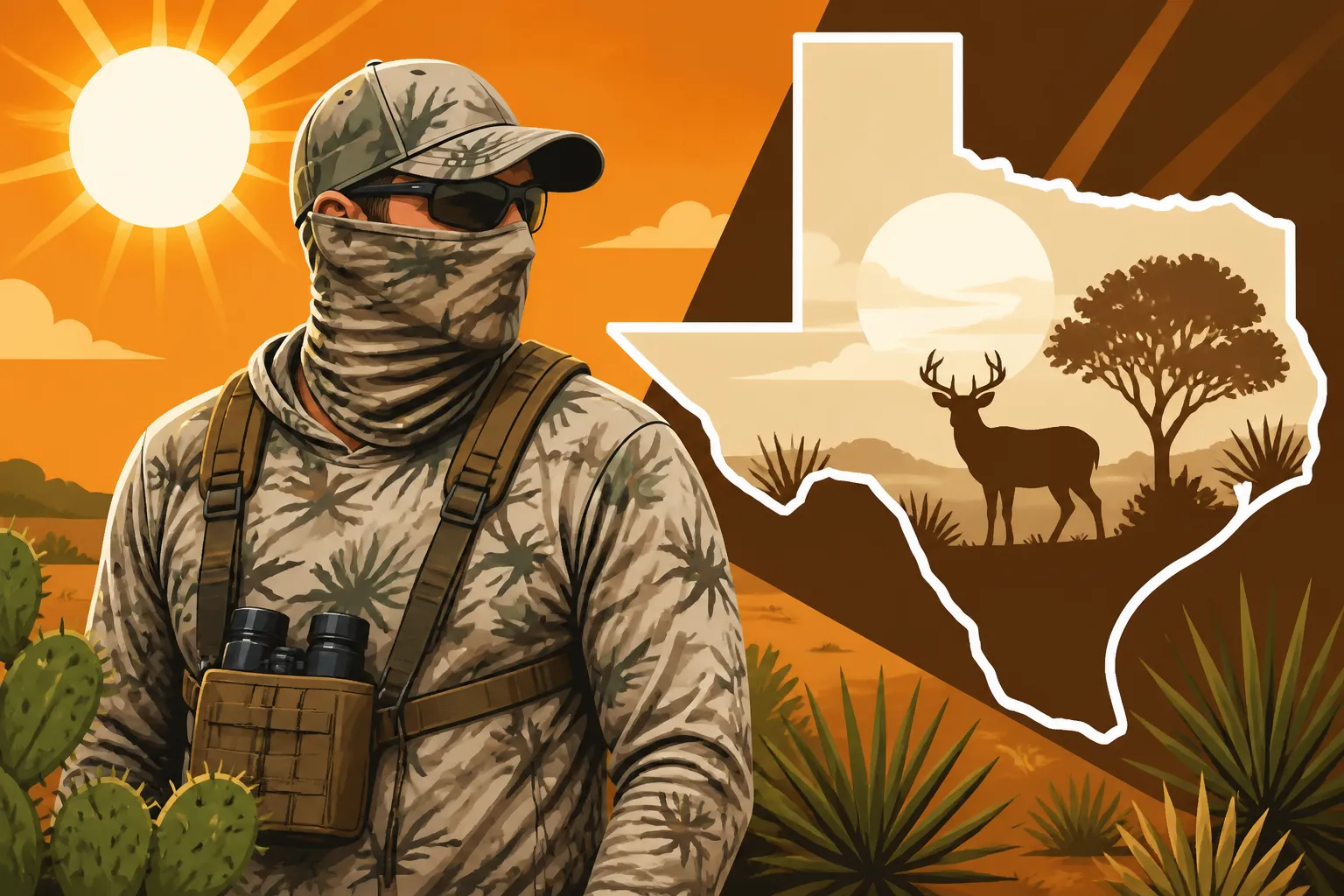
The sun in Texas is no joke, and a significant amount of body heat can be lost or gained through your head. For early season, a lightweight, breathable cap or wide-brimmed hat in a matching camo pattern is crucial. This will shield your face and neck from the relentless sun, preventing sunburn and helping to keep you cooler. Look for hats with mesh panels or made from moisture-wicking fabric that can dry quickly if you sweat through them. A good hat also helps break up the distinct outline of your head.
Similarly, a thin, breathable face mask or neck gaiter can offer excellent concealment and sun protection for your face and neck. Many hunters prefer a lightweight mesh balaclava that can be pulled up over the nose or lowered as needed. This prevents glare from exposed skin and helps to hide any facial movements. When it comes to handwear, lightweight hunting gloves, even in the heat, serve multiple purposes. They offer concealment, protect your hands from thorns and abrasions, and can help manage sweat for a better grip on your weapon. Brands like Sitka and Kuiu offer lightweight mesh or synthetic gloves designed for hot weather that don't add bulk or excessive heat, making them perfect for handling gear or calling in game. These small details can make a huge difference in staying concealed and comfortable.
Footwear That Won't Cook Your Feet
Your feet are often the first to suffer in hot weather hunting, and uncomfortable feet can quickly ruin a hunt. Standard insulated hunting boots, while great for winter, are a recipe for disaster in early-season Texas. You need footwear that is breathable, supportive, and offers protection from the harsh terrain and abundant hazards.
Look for uninsulated or lightly insulated boots with good ventilation. Many modern hunting boots incorporate mesh panels or waterproof-breathable membranes like Gore-Tex that allow sweat vapor to escape while keeping external moisture out. The sole should be rugged enough to handle rocky terrain, muddy bottoms, and the pervasive thorns of the Texas brush country. Ankle support is key, especially if you’re traversing uneven ground while Spot-and-Stalk Hunting in Texas (Exotics & Mule Deer). Perhaps most importantly for Texas, consider snake boots. The early season heat means snakes are incredibly active, and stepping into a cottonmouth in a creek bed or a rattlesnake under a mesquite is a real concern. Investing in high-quality Best Snake Boots for Texas Hunting that are also breathable and comfortable for long walks in the heat is a non-negotiable for many Texas hunters. Brands like Lacrosse and Rocky offer models designed to be snake-proof without being overly bulky or insulated, making them suitable for the warmer months. Pair these with moisture-wicking socks, and your feet will thank you.
Top Considerations When Choosing Early Season Camo
Navigating the vast world of hunting gear can be overwhelming. When it comes to early-season camo for Texas, you're not just looking for a cool pattern; you're looking for a system that genuinely enhances your hunting experience by keeping you comfortable and effective. Here are some key factors to keep in mind.
Comfort is King
This might seem obvious, but it’s often overlooked in the quest for the latest pattern or brand. If your camo isn't comfortable, you won't wear it, or you'll be constantly fidgeting, which is a surefire way to spook game. In the context of Texas heat, comfort means several things:
- Fit: It shouldn't be too tight, restricting movement or airflow, nor too baggy, catching on brush or creating excess noise. An athletic, but not constrictive, fit is usually ideal.
- Stretch: Fabrics with a slight stretch allow for a full range of motion, whether you're climbing into a blind, drawing a bow during Texas Archery Season Dates, or scrambling through thick brush.
- Seam Placement: Pay attention to where seams are. Flatlock seams reduce chafing, which becomes a huge issue when sweat is involved.
- Hand Feel: Does the fabric feel soft against your skin, or is it rough and scratchy? This can make a big difference over a long day.
- Weight: Lightweight fabrics reduce overall fatigue. Every ounce counts when you're hiking in the heat.
Ultimately, if you're comfortable, you're more likely to stay still, stay focused, and remain in the field longer, increasing your chances of success. Don't sacrifice comfort for any other feature. Try on gear, move around in it, and simulate hunting movements before you buy.
Durability vs. Weight
Texas terrain is notoriously tough on gear. Thorns, abrasive brush, rocky ground, and frequent use demand durable clothing. However, early-season camo also needs to be lightweight to combat the heat. This often creates a tricky balance. You don't want paper-thin material that rips on the first mesquite thorn, but you also don't want heavy canvas that turns into a sweat lodge.
Modern fabric technology has made significant strides in combining these two attributes. Look for ripstop weaves in synthetics like nylon or polyester, which are designed to prevent small tears from spreading. Reinforced stress points, such as knees, elbows, and seat areas, add longevity without adding excessive bulk. While a full canvas pant might be incredibly durable, it's likely too heavy and hot for early season. Conversely, an ultra-light trail running pant, while breathable, might not withstand the rigors of the Texas brush. Brands like GoHunt often feature gear reviews that specifically address the durability of various camo systems, offering insights into how they hold up in demanding environments. For example, if you're planning on How to Hunt Mule Deer in Texas (Step by Step) in the rugged Trans-Pecos or stalking whitetail in the dense South Texas brush, you need gear that can take a beating while still keeping you cool. Choose items that offer a good balance: robust enough to handle the abuse, but light enough to keep you from overheating.
Scent Control in the Heat
As we discussed, sweat equals scent, and in the Texas heat, you're going to produce a lot of it. Managing human odor is paramount for success, especially for species with highly developed senses of smell. Many modern camo systems incorporate scent-control technologies directly into the fabric.
These technologies typically work in one of two ways:
- Antimicrobial Treatments: These treatments inhibit the growth of bacteria that cause odor. Silver ions or other compounds are integrated into the fabric, neutralizing odor-causing microbes.
- Adsorbent Materials: Some fabrics use activated carbon or other adsorbent materials to trap odor molecules. While highly effective, these often require specific care to "recharge" their adsorbent properties.
Even with built-in scent control, good hygiene is still essential. Showering with scent-free soap before a hunt, using scent-free deodorant, and storing your hunting clothes in airtight containers (like a plastic tote with cedar branches or activated carbon packets) can significantly reduce your odor profile. When Field Dressing & Processing Game in Texas Heat, you'll be exerting yourself, and your natural scent will be amplified. A good scent-control system in your camo acts as another layer of defense, giving you an edge in getting close to wary animals. For early season, where heavy sweating is inevitable, investing in camo with effective scent control can mean the difference between a successful stalk and an animal bolting before you even knew it was there.
| Fabric Type | Key Properties | Pros | Cons | Best Use Case in Texas Early Season |
|---|---|---|---|---|
| Polyester | Moisture-wicking, quick-drying, durable, synthetic | Excellent sweat management, affordable, colorfast | Can retain odor if untreated, less quiet than natural | Active hunting, base layers, outer shells |
| Nylon | Extremely durable, abrasion-resistant, lightweight | Very tough, resists snags, good for heavy brush | Can be less breathable than polyester, potentially noisy | Outer layers for dense cover, pants |
| Merino Wool | Natural odor control, temperature regulating, quiet | Superb comfort, highly breathable, excellent odor control | More expensive, slower drying than synthetics, delicate | Base layers, cooler mornings, scent-sensitive hunting |
| Bamboo | Very soft, highly breathable, odor-resistant, natural | Silky feel, great for sensitive skin, sustainable | Less durable than synthetics, slower drying, can stretch | Base layers, casual comfort in the blind |
| Cotton (Avoid) | Absorbent, inexpensive | Soft initially | Absorbs and holds sweat, heavy when wet, slow-drying, no wicking | Avoid for active or hot weather hunting! |
Maximizing Your Camo's Lifespan and Effectiveness
You've invested time and money into finding the perfect early-season camo for Texas. Now, the next step is ensuring it lasts and performs its best hunt after hunt. Proper care and maintenance aren't just about making your gear last longer; they're about preserving its technical capabilities, like moisture-wicking and scent control.
Proper Washing and Drying Techniques
Caring for your technical hunting apparel is different from washing your everyday clothes. You can't just toss it in with a load of jeans and call it a day. Here's what you need to know:
- Read the Label: Always start by checking the care tag on each garment. Specific blends or treatments might have unique requirements.
- Scent-Free Detergent: Use a dedicated scent-free, non-UV brightening detergent. Regular detergents contain chemicals, dyes, and brighteners that can leave a scent trail and make your camo more visible to game. Products like those from Atsko Sport-Wash or Dead Down Wind are formulated for hunting apparel.
- Cold Water Wash: Wash in cold water on a gentle cycle. Hot water can degrade synthetic fibers and treatments over time.
- Avoid Fabric Softeners and Bleach: Fabric softeners can clog the pores of moisture-wicking fabrics, severely reducing their performance. Bleach is an absolute no-go, as it can damage fibers and fade patterns.
- Separate Loads: Wash your hunting clothes separately from your regular laundry to prevent contamination from household detergents, perfumes, and other scents.
- Air Dry or Low Heat: Whenever possible, air dry your camo. Hang it outdoors in a shaded, scent-free area. If you must use a dryer, use the lowest heat setting or tumble dry on "no heat" to avoid damaging delicate fibers or melting any adhesive treatments. High heat can also cause elastic components to break down.
Proper washing maintains the integrity of the fabric's wicking properties, breathability, and any integrated scent-control technologies. Neglecting these steps can render your expensive, high-performance camo no more effective than a cotton t-shirt. For instance, if you're getting ready for How to Hunt Hogs During the Day in Texas and you've been particularly sweaty, a proper wash will ensure your gear is ready to perform again.
Storage and Field Maintenance
Beyond the wash cycle, how you store and maintain your camo in the field also impacts its effectiveness and longevity.
- Scent-Free Storage: Once clean and dry, store your camo in airtight containers (like plastic totes) with a few cedar chips, activated carbon packets, or even fresh earth from your hunting area. This keeps it free from foreign odors and allows it to "acclimatize" to natural scents. Avoid storing it in your closet with mothballs or perfumed dryer sheets.
- Quick Repairs: Keep a small sewing kit or a roll of camo repair tape in your hunting pack. A small tear from a barb wire fence or a sharp branch can quickly become a large one. Addressing minor damage promptly can save a garment from being ruined.
- Field Cleaning: For minor scuffs or dirt, a damp cloth can often suffice. Avoid using perfumed wipes or hand sanitizers on your clothing in the field.
- Rotation: If you hunt frequently, having a few sets of early-season camo can be beneficial. Rotating your gear allows each set to be properly cleaned and dried, extending its overall lifespan. This also gives you a backup if one piece gets wet or damaged during a hunt.
By treating your camo like the specialized tool it is, you ensure that it continues to perform at its peak. This attention to detail can give you an edge in the field, keeping you concealed, comfortable, and ready to capitalize on those precious hunting opportunities, whether it's setting up for Best Lightweight Camo for September Dove Hunting or going on a scouting trip for deer before the main season starts.
Disclaimer
Hunting is an inherently dangerous activity. Always prioritize safety, follow all local and state regulations, and ensure you have the proper training and licensing. The information provided in this guide is for informational purposes only and should not replace professional advice or personal judgment based on your specific hunting conditions and experience.