Spot-and-Stalk Aoudad in West Texas
There's a raw, untamed beauty to West Texas that calls to the adventurous hunter, but when you set your sights on a majestic Aoudad ram, you quickly realize you're entering a whole new league of challenge. The vast, rugged mountains of the Trans-Pecos don't give up their secrets easily, and chasing these wary sheep with nothing but your feet and keen eyesight is a truly humbling experience. This guide is here to walk you through the nitty-gritty of successfully spot-and-stalking Aoudad, helping you prepare for the physical and mental gauntlet that awaits.
Understanding Aoudad Behavior and Habitat in West Texas
Aoudad, also known as Barbary sheep, are native to North Africa but have thrived in the arid, mountainous regions of West Texas. They are incredibly well-adapted to this harsh environment, making them one of the most challenging exotic species to hunt. Their acute senses and preference for rough terrain mean you can't just wander out and expect to stumble upon them.
Aoudad Preferences and Movement Patterns
Aoudad are creatures of habit, but their habits are built around survival in a land of sparse resources and ever-present danger. They primarily feed on grasses, forbs, and browse, often utilizing a wide variety of vegetation that other species might ignore. You'll find them grazing most actively during the cooler parts of the day – early morning and late afternoon – making these prime times for spotting. During the heat of midday, especially in summer, they seek shade in caves, under overhangs, or dense brush, often on north-facing slopes to escape direct sunlight.
Water is a critical factor for Aoudad, and while they can go for extended periods without direct water sources, relying on moisture from vegetation, they will frequent springs, seepages, or troughs when available. Identifying these water sources on a map or through scouting can give you a significant advantage, as they often create travel corridors. Aoudad are also known for their incredible agility and climbing ability, easily navigating treacherous cliffs and steep slopes that would deter most other animals, and certainly most hunters. Their herd dynamics, with a dominant ram often leading smaller groups of ewes and younger animals, influence their movement. Solitary rams, especially older, larger ones, can be incredibly elusive, often holding tight in extremely rugged cover.
Key West Texas Terrain Features
The West Texas landscape, particularly the Trans-Pecos region, is defined by its dramatic and imposing features. We're talking about the Davis Mountains, the Chisos Mountains in Big Bend, and various smaller ranges and mesas that rise sharply from the desert floor. This isn't your gently rolling Hill Country; this is high desert with significant elevation changes, deep canyons, and expansive, open vistas. The vegetation is typically sparse, consisting of scrub brush like creosote and mesquite, various cacti, and hardy grasses.
The challenges posed by this terrain are immense. Visibility can be both a blessing and a curse. While you can often see for miles, Aoudad have evolved to blend seamlessly into the rocky, buff-colored slopes, making them incredibly difficult to pick out, even with powerful optics. The ground itself is often loose rock, shale, and gravel, making silent movement difficult and demanding on your footing. Elevation gains can be significant, sometimes thousands of feet in a single stalk, testing your cardiovascular endurance and leg strength. Understanding how wind currents move through these canyons and over ridges is also crucial, as swirling thermals can betray your presence in an instant.
Seasonal Impact on Aoudad Location
Just like any other wild game, Aoudad behavior shifts with the seasons in West Texas. While there isn't a specific hunting season for Aoudad on private land, their patterns change throughout the year, affecting your hunting strategy. During the scorching summer months, from June to August, Aoudad will be even more tied to shade and water. They'll minimize movement during the hottest parts of the day, often bedding down early and moving late. This can make mid-day glassing unproductive, forcing you to focus on first and last light.
Come fall and winter, as temperatures cool, Aoudad become more active throughout the day. Their coats thicken, making them more resilient to the cold desert nights. This is often considered prime time for Aoudad hunting, as rams are more focused on breeding (typically peaking in late fall/early winter), which can make them slightly less cautious. You'll find them more spread out, and their daily routines might involve longer feeding periods. However, winter storms can bring sudden, drastic drops in temperature and even snow to higher elevations, creating new challenges but also potentially pushing animals into more accessible areas as they seek food. Planning your hunt around the cooler seasons can greatly increase your chances of finding active rams.
Essential Gear for Spot-and-Stalk Aoudad Hunting
Heading into the Trans-Pecos without the right gear is like bringing a spoon to a knife fight – you're just not prepared for the realities of the situation. Aoudad hunting, especially the spot-and-stalk variety, demands specialized equipment that can stand up to the rugged terrain and unpredictable weather, while also giving you the edge you need to locate and close the distance on these elusive animals.
Optics: The Spotter's Best Friend
In the vast, expansive landscapes of West Texas, your optics aren't just an accessory; they are your primary hunting tool. Without high-quality binoculars and a spotting scope, you might as well stay home. The "glassing, not walking" mantra is paramount here. You'll spend hours, possibly days, behind your binos, systematically picking apart mountain ranges, canyon walls, and distant plateaus. A good pair of 10×42 or 12×50 binoculars are essential for wide-area scanning and initial spotting. They should be clear, durable, and comfortable for extended use.
Once you spot something that looks promising, or if you're trying to determine if that distant speck is indeed a ram and not a ewe, a powerful spotting scope (20-60x or higher) on a sturdy tripod becomes indispensable. This is how you'll judge horn length, age, and determine if an animal is even worth pursuing. Remember, Aoudad blend in incredibly well with their surroundings, so a crystal-clear image is crucial. A compact, lightweight tripod for both your binos (with an adapter) and spotting scope is non-negotiable for stability in windy conditions. Skipping on quality here is a common and costly mistake many hunters make.
Weaponry and Ammunition Choices
Given the wide-open spaces and the Aoudad's tendency to stay in inaccessible areas, long-range shots are often the norm. This means your rifle and ammunition choice are critical. You need a flat-shooting caliber that can carry energy effectively out to 400-600 yards, or even further if you're comfortable with those distances. Popular calibers often include the .270 Winchester, .30-06 Springfield, .300 Win Mag, 7mm Rem Mag, and 6.5 Creedmoor. The key is choosing a caliber you can shoot accurately and consistently at extended ranges.
Equally important is your ammunition. You'll want high-quality hunting bullets designed for controlled expansion and deep penetration to reliably take down a tough animal like an Aoudad. Look for bullets that retain weight well and perform consistently at various impact velocities. Practice, practice, practice is the only way to gain confidence in your setup. Know your ballistic data cold, use a rangefinder religiously, and be prepared for shots at steep uphill or downhill angles, which can drastically affect bullet trajectory. A well-zeroed rifle with a reliable scope that has a good reticle or dialing capabilities is a must.
Backcountry Clothing and Footwear
The West Texas climate can swing wildly, from scorching hot days to freezing nights, sometimes within the same 24-hour period. Layering is not just a suggestion; it's a survival strategy. Start with moisture-wicking base layers, add insulating mid-layers like fleece or puffy jackets, and top it off with a windproof and water-resistant outer shell. Camouflage patterns that blend with the rocky desert environment, like tan, grey, or multi-terrain patterns, are ideal. Avoid anything too dark or green, which will stand out against the sun-bleached landscape.
Your footwear, however, is arguably the most critical clothing item. You need sturdy, high-ankle hiking boots with excellent support, aggressive tread, and ideally, a waterproof membrane. The terrain is relentless, filled with loose rock, thorns, and uneven surfaces that will punish your feet and ankles. Many experienced hunters also opt for snake boots or snake gaiters. While Texas is home to many venomous snakes, including rattlesnakes, that's not the only reason. The thorns from mesquite, prickly pear, and various other desert plants can be brutal on unprotected shins and ankles. Investing in quality boots that are well broken-in before your hunt will prevent blisters and potentially serious injuries. If you're looking for extra protection, consider something like a durable pair of snake boots for South Texas brush, which offers similar challenges.
Navigation and Communication Tools
Venturing into the vastness of West Texas for an Aoudad hunt means you'll likely be in areas with little to no cell service. Reliable navigation and communication are not optional; they are essential for safety and success. A handheld GPS device or a robust hunting app on your smartphone (like onX Hunt or HuntStand) is a must. Download offline maps of your hunting area before you go, including topo lines, private/public land boundaries, and potential access points. These tools will help you track your route, mark important waypoints like water sources or downed game, and navigate back to camp in the dark or fog.
Beyond navigation, consider a satellite communication device like an inReach or a Garmin Zoleo. These devices allow you to send and receive text messages, track your location, and, most importantly, send an SOS signal in an emergency, even when you're miles from any cell tower. Having a way to reach out for help in a remote, dangerous environment provides immense peace of mind, not just for you but for your loved ones back home. Don't forget a compass and paper maps as a backup, because electronics can fail, and knowing how to use traditional navigation methods can be a literal lifesaver.
Mastering the Spot-and-Stalk Technique for Aoudad
Spot-and-stalk hunting for Aoudad is a game of patience, stealth, and acute observation. It's less about covering vast distances quickly and more about carefully dissecting the landscape with your eyes, then executing a flawless approach. This method is incredibly rewarding because it directly pits your hunting skills against the animal's natural defenses in their home turf.
Effective Glassing Strategies
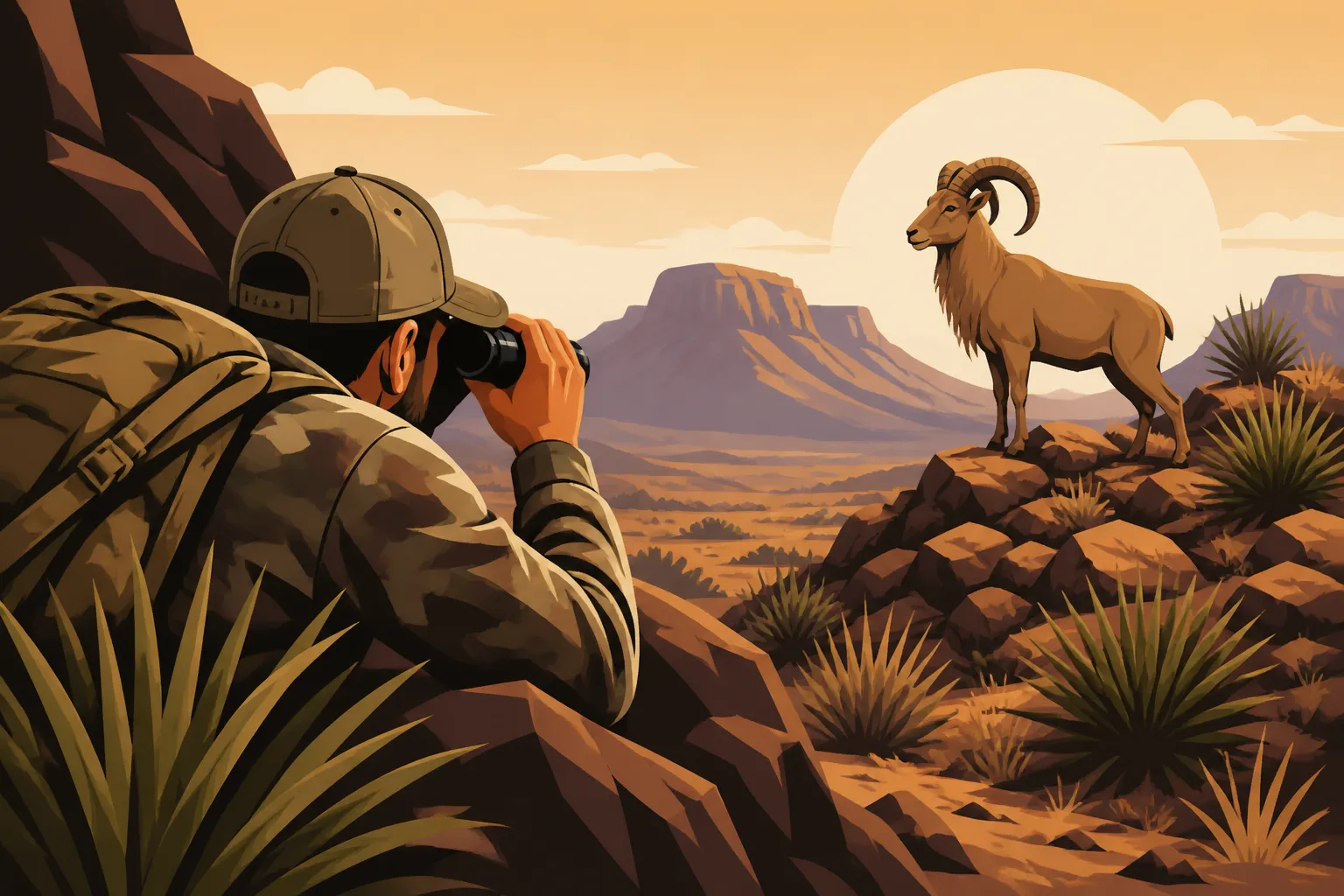
The first and most critical phase of any Aoudad spot-and-stalk hunt is glassing. You could walk for days and never see an Aoudad if you're not glassing effectively. Find a vantage point that offers a wide, unobstructed view of the terrain you want to hunt. This often means climbing to a high ridge or mesa, sometimes before first light. Use your binoculars on a tripod (yes, even binos benefit from a tripod for stability) to systematically scan the landscape. Start with the closest areas, then slowly work your way further out, covering every inch methodically. Divide the area into grids, and sweep each grid slowly, looking for anything that seems out of place: a patch of fur, the glint of a horn, a horizontal line in a vertical world, or a subtle movement.
Pay close attention to bedding areas – sheltered ledges, caves, dense brush, or north-facing slopes, especially during warmer months. Remember that Aoudad blend in incredibly well, so don't just look for an entire animal; look for pieces of one. A flicker of an ear, a dark shadow, or the curve of a horn can be all you see. Use the rising or setting sun to your advantage, as its low angle can highlight contours and animals that might otherwise be invisible. Patience is key; you might glass the same hillside for an hour before an Aoudad shifts, revealing itself. Once you spot something, switch to your spotting scope for a closer look to confirm it's an Aoudad and, more importantly, a mature ram worth pursuing. This meticulous approach is the cornerstone of successful Spot-and-Stalk Aoudad in West Texas.
The Art of the Approach
Once you've identified your target ram, the real challenge begins: the stalk. This is where your skills as a hunter are truly tested. Before you even take a step, plan your route. Consider the terrain between you and the animal: are there ravines, ridges, or rock formations you can use for cover? Aoudad have incredibly keen eyesight, making direct approaches nearly impossible. You'll need to use every fold in the earth, every mesquite bush, and every rock for concealment.
Wind direction is paramount. Aoudad have an excellent sense of smell, and a shifting wind can instantly blow your cover. Always try to keep the wind in your favor, either in your face or quartering into you. If the wind is swirling or unpredictable, it might be best to wait for more stable conditions or choose a different approach. Movement must be slow, deliberate, and quiet. Loose shale and rocks are everywhere in West Texas, so test each step before committing your weight. Avoid any sudden movements that could catch an Aoudad's eye. Pay attention to the sun's position as well; you don't want to silhouette yourself against the sky or have the sun directly in your eyes during the final approach. This is often where hunters lose their cool, rushing the last few hundred yards only to spook the animal. Sometimes, a successful stalk might mean backtracking significantly to get into a more favorable position, adding hours to your approach, but it's often the only way.
Ethical Shot Placement and Range Consideration
When you finally get within shooting range, often after a grueling stalk, maintaining your composure is vital for an ethical harvest. Aoudad are tough animals, and proper shot placement is crucial. Aim for the classic "boiler room" – just behind the shoulder, slightly low, to hit the heart and lungs. Their bone structure is robust, so a well-placed shot with adequate energy is necessary for a quick, humane kill. Due to the mountainous terrain, you might encounter steep uphill or downhill shots. Understand how these angles affect bullet trajectory; a shot aimed directly at the vitals might hit high or low if you don't compensate. Practice these types of shots at a range if possible.
Range estimation is another critical factor. Always use a laser rangefinder to confirm the exact distance to your target. "Guesstimating" in wide-open country is a recipe for disaster. Once you have the range, use your ballistic knowledge or scope's turrets/reticle to compensate for bullet drop. If you're not confident in your shot at a given range or angle, it's always better to wait for a better opportunity, or to try and close the distance further. Pushing the limits of your ethical shooting range only increases the chance of wounding an animal, which is the last thing any responsible hunter wants. Knowing your personal limits and respecting the animal is paramount.
Overcoming Challenges in Aoudad Spot-and-Stalk
Aoudad hunting in West Texas is not for the faint of heart. It presents a unique set of challenges that can quickly humble even the most experienced hunters. From the extreme weather to the physical demands of the terrain, being prepared for these hurdles is as important as having the right gear or a solid plan.
Dealing with West Texas Weather Extremes
The weather in West Texas is notorious for its unpredictability and extremes. You might start your day bundled up against a freezing pre-dawn chill, only to be sweating profusely in a short-sleeved shirt by midday. Summers are brutally hot, with temperatures easily exceeding 100 degrees Fahrenheit. This intense heat can lead to rapid dehydration, heat exhaustion, and even heatstroke if you're not careful. Carrying plenty of water, electrolytes, and wearing lightweight, breathable clothing are essential. Remember to factor in your internal core temperature when Field Dressing & Processing Game in Texas Heat.
Conversely, winter can bring sharp cold fronts, sometimes dropping temperatures below freezing, especially at higher elevations. Snow and ice, though less common, can occur and make already treacherous terrain even more dangerous. Strong, persistent winds are a constant companion, especially on exposed ridges. These winds can make glassing difficult, chilling you quickly, and making accurate long-range shooting a nightmare. Always check the forecast before you go, but be prepared for anything. Pack layers, carry emergency supplies for both hot and cold conditions, and understand when it's safer to shelter in place or call off a stalk rather than push through dangerous conditions.
Physical Demands and Conditioning
If there's one thing Aoudad hunting demands, it's physical fitness. This is not a casual stroll through the woods. You will be hiking miles, often with significant elevation gain, over uneven, rocky, and steep terrain, all while carrying your pack, rifle, and optics. Imagine climbing the equivalent of several flights of stairs, then doing it for hours, then trying to hold still for a shot. This isn't just tiring; it's a monumental effort that can push your body to its limits.
Successful Aoudad hunters spend months preparing physically. This means focusing on cardiovascular endurance (running, cycling, stair climbing), leg strength (squats, lunges), and core stability. Don't underestimate the strain on your ankles and knees from navigating rocky slopes. Backpacking with weight similar to what you'll carry on the hunt is an excellent way to prepare your body. The better your physical condition, the more enjoyable and successful your hunt will be, allowing you to focus on the animals rather than your aching muscles. Neglecting this aspect is one of the quickest ways to end your hunt prematurely, or worse, put yourself in a dangerous situation.
Managing Long Distances and Recovery
So, you've spotted your ram, made a perfect stalk, and taken a clean shot. Congratulations! Now comes another significant challenge: recovery. Aoudad often inhabit remote, difficult-to-access areas, and getting a 200-300 pound animal (or more!) off a mountain can be a monumental task. This isn't a short drag to the truck; it could be miles over rough terrain.
Before you even pull the trigger, consider your recovery plan. Do you have a game cart that can handle rugged terrain, or are you prepared to quarter the animal and pack it out piece by piece? Bringing a quality hunting knife for Field Dressing & Processing Game in Texas Heat is crucial. If you're on public land, access can be extremely limited, meaning you'll be relying solely on your own two feet and maybe a buddy. If you're on a private ranch with vehicle access, identify those points ahead of time. The sheer physical exertion of packing out an Aoudad can be as demanding as the hunt itself, and often occurs after you're already exhausted from the stalk. Having a plan, and the necessary tools and manpower (if possible), is vital to ensure your hard-earned trophy doesn't go to waste.
Planning Your West Texas Aoudad Hunt
The dream of harvesting an Aoudad in West Texas starts long before you ever set foot in the field. Careful planning, understanding the regulations, and knowing your options for where and how to hunt are crucial steps toward making that dream a reality.
Public vs. Private Land Opportunities
Hunting Aoudad in Texas offers both public and private land opportunities, each coming with its own set of advantages and challenges. Public land Aoudad hunting is undoubtedly the most physically demanding and often the most rewarding for those seeking a true wilderness experience. The Black Gap WMA in the Trans-Pecos region is perhaps the most well-known public land option for Aoudad. These hunts are typically drawn hunts, meaning you'll need to apply through the Texas Drawn Hunts & Public Hunt Draw 2026 program and hope your name is selected. The odds can be long, and success rates are generally low due to the vast, rugged terrain and the Aoudad's inherent wariness. However, the satisfaction of a public land Aoudad is immense.
Private land hunting, primarily on large ranches in the Trans-Pecos and sometimes the Hill Country, offers a higher success rate and often less strenuous hunting, though that can vary greatly by outfitter. Many ranches manage their Aoudad populations, and some even offer high-fence hunts, which are less about the stalk and more about finding a quality animal within a defined area. This can be a good option for hunters with physical limitations or those who prioritize a guaranteed opportunity over the raw wilderness challenge. Prices for private land hunts can range widely depending on the size of the ram, the outfitter's reputation, and the amenities provided.
| Feature | Public Land (e.g., Black Gap WMA) | Private Land (Ranches) |
|---|---|---|
| Access | Limited, often by drawn hunt permit | Easier, through booking with an outfitter/ranch |
| Cost | Low (license, permit application fee) | High (outfitter fees, trophy fees) |
| Difficulty | Extremely high, very physically demanding | Varies, generally higher success rate, but still challenging |
| Success Rate | Low (often <10-20%) | Higher (often >50-80%) |
| Crowd Levels | Very low | Varies by ranch, can be more guided groups |
| Trophy Quality | Potentially exceptional, truly wild | Varies by management, can be very high |
| Physical Demands | Extreme | Moderate to high, depending on the ranch and terrain |
| "Wild" Experience | Unparalleled wilderness adventure | Varies, can range from true free-range to high-fence |
Permitting and Regulations
Unlike native game species in Texas, Aoudad are classified as an exotic species. This means that on private property, there is generally no closed season and no bag limit, and they do not require specific tags in addition to a general Texas Hunting License: Cost, Types & How to Buy. However, if you plan to hunt them on public lands managed by the Texas Parks and Wildlife Department (TPWD), such as the Black Gap WMA, specific regulations apply. These public hunts are part of the state's drawn hunt system, which means you need to apply for a specific permit for a limited number of hunters.
Always consult the most current Texas Parks and Wildlife Outdoor Annual for the latest regulations, especially if hunting on public land or if you have any doubts. While exotics typically don't fall under the same strict regulations as whitetail deer or turkey, understanding the nuances of the law ensures you're hunting legally and ethically. Pay attention to any specific county rules or land ownership requirements, as these can impact your hunt, even for exotics.
Hiring a Quality Outfitter
For many hunters, especially those new to Aoudad hunting or those seeking a higher probability of success, hiring a quality outfitter for exotic hunting in Texas can be a smart move. An experienced outfitter will have access to private land with good Aoudad populations, know the terrain intimately, and provide guidance on spotting, stalking, and recovery. They can save you years of trial and error, increasing your chances of finding a mature ram.
When choosing an outfitter, do your homework. Look for outfitters with a proven track record, positive testimonials, and guides who specialize in Aoudad. Ask about success rates, what's included in the price (guides, meals, lodging, field dressing, caping), and any additional fees (trophy fees, non-hunter fees). Discuss the style of hunting – do they primarily do spot-and-stalk, or is it more of a sit-and-wait type hunt? Ensure their approach aligns with your hunting ethics and expectations. A good outfitter will be transparent about the challenges and realistic about the opportunities, helping you prepare for a memorable and successful hunt.
Disclaimer
Hunting involves inherent risks, including but not limited to injury or death from firearms, falls, wild animals, and extreme weather. Always prioritize safety, adhere to all local, state, and federal hunting regulations, and ensure you have the necessary licenses and permits. The information provided in this guide is for informational purposes only and should not replace professional advice or personal judgment. Be prepared, be responsible, and always hunt ethically.