How to Hunt Aoudad in Texas (Step by Step)
Chasing Aoudad in Texas isn't your typical deer hunt. These incredible, free-ranging sheep offer one of the most physically demanding and rewarding hunting experiences you can find, often leaving even seasoned hunters humbled by their keen senses and the rugged landscapes they call home. If you've been dreaming of tackling one of these majestic animals but aren't sure where to begin, this step-by-step guide is designed to walk you through everything you need to know, from understanding their habits to executing a successful hunt in the vast Texas wilderness.
Understanding the Aoudad: A True Texas Challenge
Before you even think about packing your bags, you've got to understand the adversary. Aoudad, also known as Barbary sheep, are not native to Texas; they were introduced from North Africa in the 1950s and have since established thriving populations, particularly in the rugged western and central parts of the state. These aren't just any sheep; they are incredibly adaptable, tough, and possess a suite of senses that would make most whitetail deer envious.
Aoudad Characteristics and Behavior
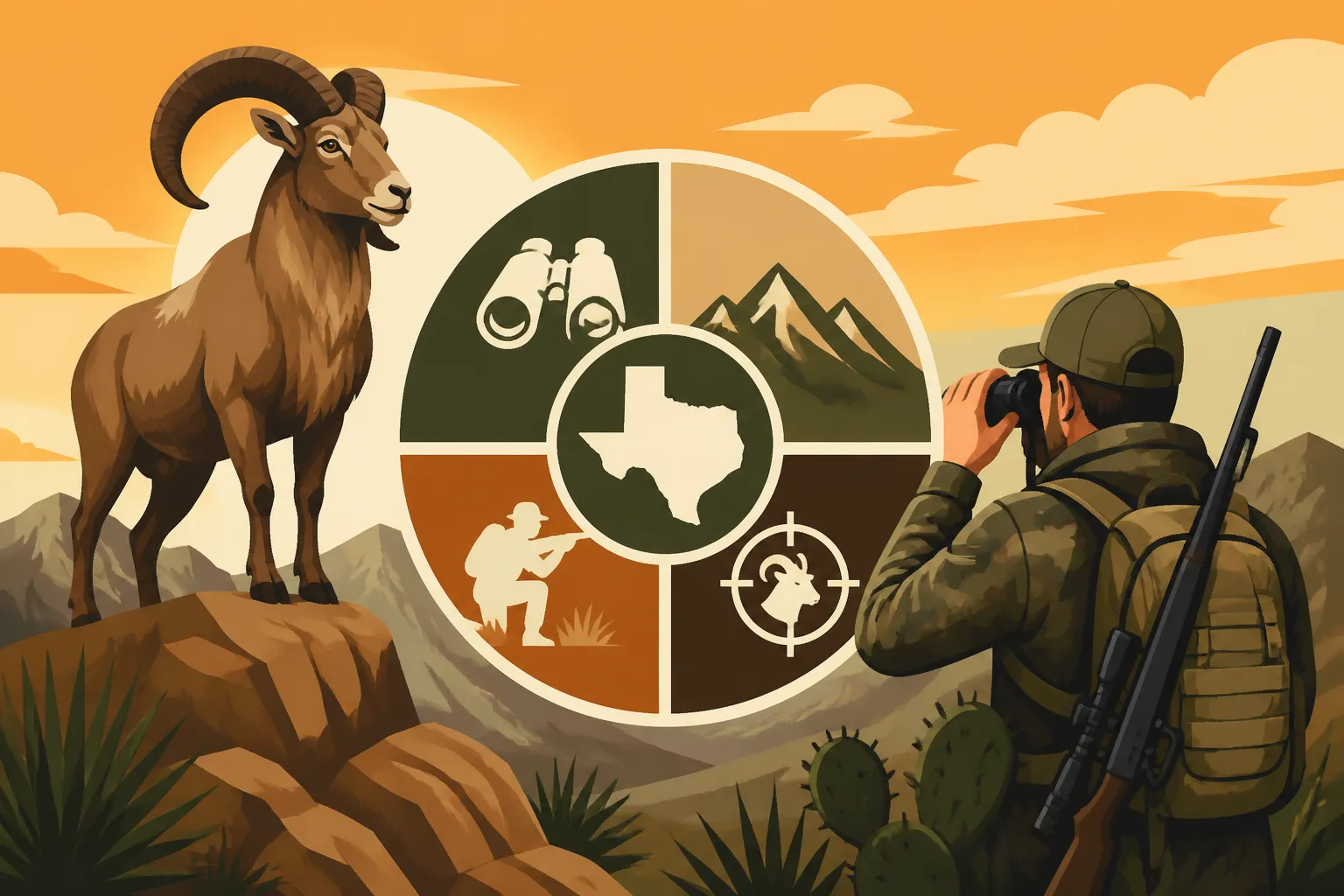
Imagine an animal perfectly sculpted by evolution for survival in harsh, arid, mountainous terrain. That's an aoudad. They're typically a sandy brown color, which provides excellent camouflage against rocks and dirt. Both males (rams) and females (ewes) have impressive horns that sweep back and outward, with rams often sporting much thicker, longer sets. These horns grow continuously throughout their lives, making age assessment a key part of judging a trophy. Rams can weigh anywhere from 200 to over 300 pounds, making them substantial animals to haul out of rough country.
Their most formidable defenses are their eyesight and hearing. An aoudad ram can spot movement from an incredible distance, often picking up on a hunter long before the hunter ever sees them. Their hearing is equally sharp, and the slightest unnatural sound can send them bounding away over impossible terrain. They also have a highly developed sense of smell, though wind direction is often less critical than stealth and visual concealment when hunting in wide-open, rocky environments.
Aoudad are primarily grazers and browsers, feeding on grasses, forbs, and shrubs. They are incredibly agile climbers, preferring steep, rocky canyonlands, mesas, and remote mountain ranges where they can find both food and escape cover. They are often most active during cooler parts of the day, moving in the early morning and late afternoon, but they can be found moving at any time, especially if undisturbed.
Prime Aoudad Habitat in Texas
While aoudad can be found in various parts of Texas, their strongholds are truly the western and central regions. When you're looking to hunt aoudad, you're primarily looking at two distinct geographical areas, each presenting its own unique challenges and opportunities.
The first and most iconic region is the Trans-Pecos, specifically areas like the Davis Mountains, Glass Mountains, and the breaks of the Rio Grande. This is true mountain country, with vast expanses of public land and large private ranches. The terrain here is unforgiving, characterized by steep canyons, rocky outcrops, and sparse vegetation. If you're looking for a truly wild, free-range experience, this is the place to be. The animals here are constantly on the move, and the sheer scale of the landscape can be overwhelming. Understanding the unique challenges of hunting in the Trans-Pecos Hunting in Texas region is crucial for success.
The second significant region is the Edwards Plateau, or what most folks call the Texas Hill Country. While not as dramatically mountainous as the Trans-Pecos, the Hill Country still offers plenty of rugged canyons, cedar breaks, and rocky hills that aoudad thrive in. Counties like Val Verde, Crockett, and Sutton are known for good aoudad populations. While many hunts in the Hill Country might be on high-fenced ranches, there are also free-range opportunities. The density of deer and other exotics can sometimes mean more competition for resources, but the aoudad here are just as challenging to hunt. If you're familiar with Edwards Plateau Hunting: Highest Deer Density, you'll appreciate the rugged beauty.
Essential Gear and Physical Preparation
Hunting aoudad is not a casual stroll in the woods; it's a marathon, not a sprint, and your gear and physical condition need to be up to the task. Many hunters underestimate the physical toll an aoudad hunt can take, especially when pursuing them free-range in the Trans-Pecos.
Optics: Your Most Important Tool
Seriously, I can't stress this enough: your optics are your primary hunting tool for aoudad. You're not looking for deer in dense timber; you're glassing vast, open landscapes, trying to pick out a tan speck against a tan mountain at hundreds or even thousands of yards.
A quality pair of 10x or 12x binoculars is non-negotiable. Don't skimp here. Brands like Swarovski, Zeiss, Leica, and even some Vortex and Maven models offer incredible clarity and light gathering, which are critical for picking out detail at extreme distances, especially in the low light of dawn and dusk. You'll want to mount these on a sturdy tripod for extended glassing sessions. Hand-holding binoculars for hours will lead to fatigue and missed animals.
Beyond binoculars, a spotting scope (20-60x or 20-70x) is absolutely essential. Once you've spotted something with your binoculars, the spotting scope allows you to confirm it's an aoudad, judge its size, and determine if it's a ram or a ewe, and if it's a shooter. This saves you countless hours of hiking towards unidentifiable blurs. Again, a good, stable tripod is a must for your spotting scope. To learn more about selecting the right gear, check out our guide on Best Optics for Hunting Exotics in Texas.
| Gear Item | Recommended Specification | Why It's Crucial |
|---|---|---|
| Binoculars | 10×42 or 12×50, high-quality glass | Essential for wide-area scanning and initial animal detection. Clarity means seeing details further away. |
| Binocular Tripod | Lightweight, sturdy, quick-release plate | Stabilizes binoculars for extended glassing, reduces eye strain, and allows for precise scanning. |
| Spotting Scope | 20-60x or 20-70x, angled eyepiece often preferred | Confirms species, judges trophy quality, and saves strenuous hikes to investigate false positives. |
| Spotting Scope Tripod | Sturdy, lightweight, ideally carbon fiber | Provides a rock-solid platform for the spotting scope, allowing for precise evaluation of distant animals. |
| Rangefinder | 1,000+ yard capability, angle compensation | Crucial for accurate shot placement on steep terrain where distances can be deceiving. |
Rifle, Ammunition, and Shooting Skills
Aoudad are tough animals. When you finally get a shot, you want to make it count. This isn't the time for under-gunned calibers. Popular choices include cartridges like the .270 Win, .30-06 Springfield, .300 Win Mag, 7mm Rem Mag, and .308 Win. The key is to use a quality, heavy-for-caliber bullet that will retain energy and penetrate deeply. Think bonded bullets or monolithic projectiles.
Accuracy is paramount. You might be shooting at distances from 100 yards to 400 yards, or even further depending on the situation and your comfort level. Practice shooting from various field positions – prone, kneeling, and using a backpack as a rest. These animals live in country where a bench rest is a fantasy. Make sure your rifle is zeroed and you know your ballistic data out to ethical shooting distances. Understanding your rifle's performance in wind is also incredibly important, as the high desert winds can be notorious.
Physical Fitness and Footwear
This is where many hunters hit a wall. Aoudad hunting demands serious physical conditioning. You will be hiking miles, often uphill, over loose rock, through thick brush, and across uneven terrain. You'll be climbing in and out of canyons, all while carrying your rifle, optics, water, and emergency gear.
Start training months in advance. Focus on cardio, leg strength, and endurance. Hiking with a weighted pack, stair climbing, and long walks are excellent preparation. Don't forget flexibility and core strength, which will help prevent injury on uneven ground.
Your footwear is absolutely critical. Invest in high-quality, broken-in hiking boots with excellent ankle support and a stiff sole. Waterproofing is a bonus, but durability and comfort are king. Many hunters also opt for Best Snake Boots for Texas Hunting due to the prevalence of rattlesnakes in these rocky environments. Remember, blisters will end your hunt faster than anything else.
Hunting Methods and Tactics for Aoudad
The primary method for hunting aoudad in Texas, especially free-range, is Spot-and-Stalk Hunting in Texas (Exotics & Mule Deer). This involves patiently glassing vast areas to locate animals, then planning and executing a strategic approach to get within ethical shooting range.
The Art of Glassing
This is the foundation of aoudad hunting. Find a high vantage point that offers expansive views of suitable aoudad habitat. Set up your binoculars on a tripod and meticulously scan every rock, every shadow, every cedar break. Don't just glance; scrutinize. Look for subtle movements, a horizontal line in a vertical world, a patch of color that seems out of place, or the gleam of an horn.
Break the landscape into grids and systematically scan each section. Take your time. It’s often said that aoudad hunting is 90% glassing and 10% heart-pounding action. This methodical approach will pay off. Once you spot something, switch to your spotting scope to confirm and evaluate.
The Stalk: Stealth and Strategy
Once an aoudad is located and deemed a shooter, the real work begins. This is where your understanding of the terrain, wind, and the aoudad's senses comes into play.
- Plan your approach: Identify cover that will conceal your movement. This might be a ridge line, a deep draw, or a cluster of larger rocks or cedars. Avoid skylining yourself on ridges.
- Use the wind: While not as critical as for deer, understanding wind direction is still important to keep your scent from drifting towards the animals.
- Go slow and be silent: Every step should be deliberate. Loose rocks and crunching brush will give you away instantly. Wear quiet clothing.
- Stay low: Utilize whatever terrain features you can to keep a low profile. Crawling on your hands and knees or even belly crawling might be necessary in open areas.
- Be patient: Aoudad can be bedded down for hours. If they're not moving, use that to your advantage for the stalk. However, if they start moving, you might need to adjust your plan quickly.
- Find a shooting rest: When you get into position, establish a solid shooting rest. A bipod, backpack, or even a sturdy rock can provide the stability needed for a precise shot on a difficult angle.
Aoudad are notorious for being able to "ghost" hunters. You might be perfectly set up, look away for a second, and when you look back, they're gone. Their ability to blend in and move silently over broken country is astounding.
Public vs. Private Land Hunting
Texas offers both public and private land opportunities for aoudad, each with its own set of considerations.
Private Land Hunts: Many ranches in the Trans-Pecos and Edwards Plateau offer guided aoudad hunts. These often provide higher success rates due to intense scouting by guides, familiarity with the terrain, and sometimes less pressured animals. You'll pay a premium for these hunts, but they can be an excellent option for beginners or those seeking a more comfortable experience. These hunts are generally year-round as aoudad are exotic species.
Public Land Hunts: For the truly adventurous and budget-conscious hunter, Texas offers opportunities on public lands through the Public Hunt Drawing System. WMAs like Black Gap WMA and Elephant Mountain WMA are prime destinations for free-range aoudad. These hunts are incredibly challenging, often requiring multiple scouting trips and extreme physical exertion, but the reward of harvesting an aoudad on public land is immense. You'll need to apply for specific drawn hunts; information can be found on the Texas Parks and Wildlife Department (TPWD) website. Understanding How to Apply for Texas Drawn Hunts Online is the first step. For more details on a specific area, you might look into Elephant Mountain WMA Hunting & Draw Info.
Regulations and Seasons
Unlike native game species, aoudad are considered exotics in Texas. This means that on private property, there is typically no closed season or bag limit. You'll still need a valid Texas Hunting License: Cost, Types & How to Buy (2026), but beyond that, regulations are much looser than for whitetail or mule deer.
On public lands managed by TPWD (like the WMAs), aoudad hunting is strictly controlled through drawn hunts, with specific seasons and bag limits set for each hunt period. Always consult the current year's Texas Outdoor Annual or the TPWD website for the most up-to-date regulations before planning any public land hunt. Reviewing the Texas Hunting Seasons: Complete Calendar by Species will give you a general idea of exotic regulations.
Post-Harvest: Field Dressing and Recovery
You’ve made a successful shot, and the aoudad is down. Now the real work (and a new kind of challenge) begins. Getting an aoudad out of the terrain they live in can be as difficult as the hunt itself.
Field Dressing in Rough Country
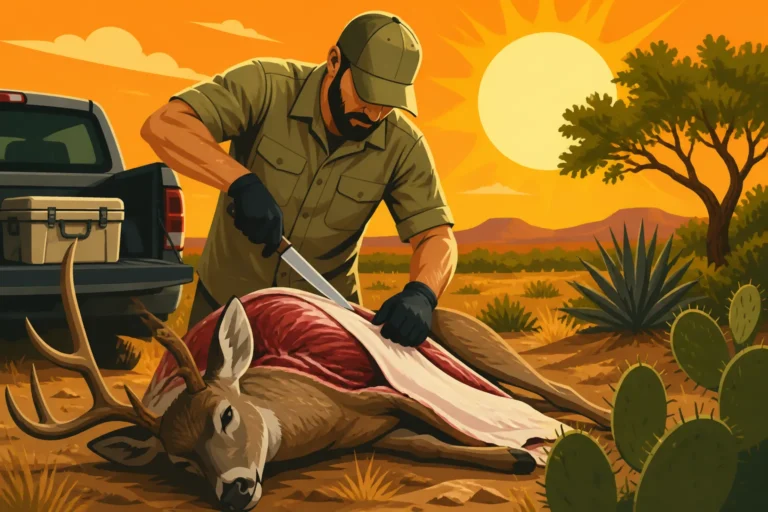
The priority is to cool the meat as quickly as possible, especially if you're hunting in warmer weather, which is common in Texas. Field dress the animal where it falls. This means removing the entrails to allow the carcass to cool down internally. Carry a sharp, reliable hunting knife for this task. You might even consider having two, or a sharpening stone. If you're planning on a shoulder mount, be mindful of your cuts for caping. For more detailed instructions, you can refer to resources like How to Field Dress a Deer in Hot Weather, as many of the principles apply to any large game in warm climates.
If you’re far from your vehicle, you’ll likely need to quarter the animal to pack it out. This involves breaking down the carcass into manageable pieces (front shoulders, hind quarters, backstraps, tenderloins). A good game bag is essential to keep the meat clean and protected during the pack-out.
The Pack-Out: A Test of Endurance
This is often the most physically grueling part of an aoudad hunt. A mature ram can weigh well over 200 pounds, and you're hauling that weight over uneven, steep, and rocky terrain.
- Have a plan: Before you even pull the trigger, consider how you'll get the animal out. Mark the location on your GPS.
- Buddy system: If hunting with a partner, sharing the load is crucial. Even with two people, it will be tough.
- Game cart (limited use): In some less extreme terrains, a heavy-duty game cart might be an option, but in true mountain country, it's usually not feasible.
- Take breaks: Don't try to be a hero. Take frequent breaks, hydrate, and assess your energy levels. Pushing too hard can lead to injury.
- Stay hydrated: Carry plenty of water, even more than you think you’ll need. Dehydration is a real danger in the Texas heat and rugged environment.
Bringing an aoudad off the mountain is a monumental task, but the satisfaction of doing so, knowing you earned every ounce of that meat, is unparalleled.
Final Thoughts on Your Aoudad Adventure
Hunting aoudad in Texas is a unique pursuit that offers a deep connection to the wild and pushes your physical and mental limits. It's a hunt that demands respect for the animal and the harsh environment it inhabits. Whether you choose the vast public lands of the Trans-Pecos or a private ranch in the Hill Country, a successful aoudad hunt is a badge of honor that truly sets it apart. Embrace the challenge, prepare thoroughly, and you might just earn yourself one of the most incredible trophies Texas has to offer.
Disclaimer
Please note that hunting regulations, seasons, and licensing requirements can change. Always consult the official Texas Parks and Wildlife Department (TPWD) website and the current Texas Outdoor Annual before planning any hunting trip to ensure you are in compliance with all state laws. This guide is for informational purposes only and does not supersede official regulations.