How to Call Coyotes at Night in Texas
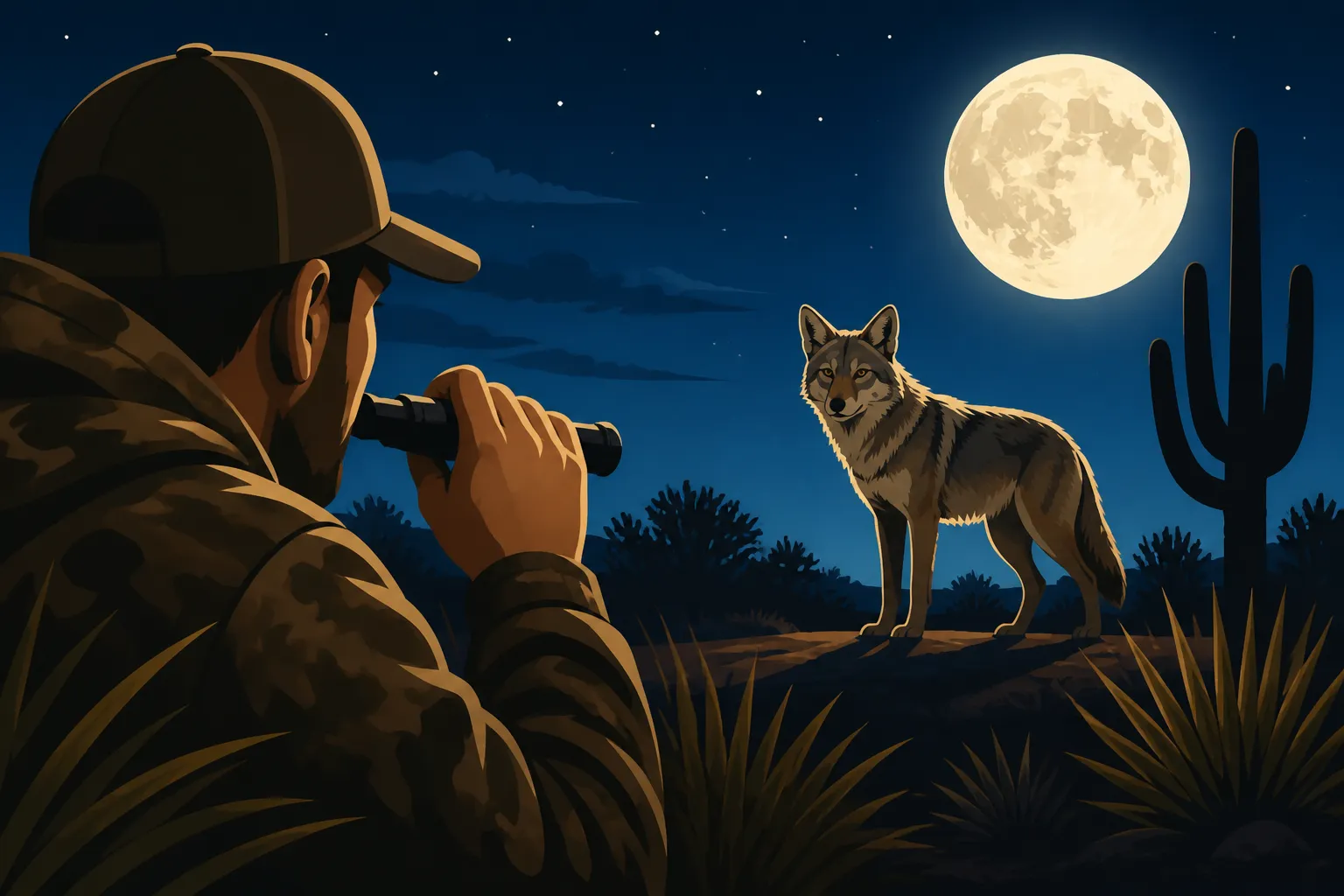
There's nothing quite like the frustration of hearing coyotes yipping and howling around your property at night, knowing they're preying on livestock, deer, or even domestic animals, but feeling powerless to stop them under the cover of darkness. Trying to effectively call and hunt these elusive predators when the sun goes down adds a whole new layer of challenge. This guide is dedicated to helping you master the art of calling coyotes at night in Texas, covering everything from the critical gear you'll need to the specialized tactics that will increase your success when the stars are out.
Why Hunt Coyotes at Night in Texas?
Hunting coyotes at night isn't just about the thrill; it's often a necessity for landowners and wildlife managers across Texas. These adaptable predators are incredibly active after sundown, making night hunting an exceptionally effective method for population control and protecting vulnerable animals. The sheer number of coyotes can overwhelm local wildlife, impacting deer fawn survival, quail populations, and even smaller livestock like goats and sheep. When you hear those incessant howls, it’s a clear sign that a proactive approach is needed, and night hunting often yields better results than daylight efforts as coyotes feel safer and move more freely under the cloak of darkness.
Understanding Coyote Behavior in the Dark
Coyotes, much like many other wild canids, are largely crepuscular and nocturnal, meaning they are most active during twilight hours and throughout the night. This isn't just a preference; it's a survival strategy. The cooler temperatures of the night in Texas make it easier for them to travel and hunt without overheating, especially in the sweltering summer months. Furthermore, the cover of darkness provides them with an advantage against their prey and helps them avoid human interaction.
When you're out there after dark, you'll notice coyotes often move along fence lines, natural travel corridors like dry creek beds, or the edges of dense brush where they can quickly disappear if threatened. They rely heavily on their sense of smell and hearing, which are both amplified in the quiet of the night. Their eyesight, while not true night vision, is adapted to low light, allowing them to navigate and detect movement more efficiently than humans without artificial aids. This means that to be successful, you need to understand these adaptations and use technology that gives you a comparable advantage. They are constantly listening for the sounds of distress from potential prey, which is precisely why calling at night can be so incredibly effective, drawing them in close to investigate what might be an easy meal.
Legal Considerations for Night Hunting
Before you even think about heading out after dark, it’s absolutely crucial to understand the legal landscape for night hunting coyotes in Texas. The good news is that coyote hunting at night is generally legal in Texas, often with fewer restrictions than hunting game animals. Unlike white-tailed deer or feral hogs, there's no closed season or bag limit for coyotes, as they are considered nuisance animals. However, this freedom comes with important caveats you must be aware of to avoid legal trouble.
One of the biggest questions people have, and rightly so, is about using artificial light or thermal imaging. Texas law permits the use of artificial light, including headlamps, spotlights, and weapon-mounted lights, to hunt coyotes on private land. This is a significant advantage for night hunters. Additionally, the use of thermal and night vision devices is also entirely legal for hunting coyotes and other non-game animals, making these tools incredibly popular and effective. For those wondering about the specifics, a quick check on Is Thermal Hunting Legal in Texas? will give you detailed insight into the regulations.
However, never assume that simply because it's legal for coyotes, it's legal for everything else. Always double-check the Texas Parks and Wildlife Department (TPWD) Outdoor Annual for the most current regulations, especially if you plan to hunt other species. For instance, while thermal is legal for coyotes, its use for deer or turkey would be a completely different story. It’s also important to remember that you must have a valid Texas hunting license, even for non-game animals like coyotes, unless you are on your own land or land where you have written permission from the landowner and you're within 25 miles of your residence. Always prioritize safety and ensure you have permission to be on the land you're hunting.
Essential Gear for Calling Coyotes at Night
When it comes to calling coyotes at night, your gear setup is arguably more critical than in daylight hours. The darkness changes the playing field entirely, demanding specialized equipment to locate, identify, and ethically harvest these wary animals. You simply can't rely on your naked eye and a flashlight if you want consistent success. Investing in the right tools will not only increase your chances but also make the experience safer and more enjoyable.
Thermal and Night Vision Optics
This is where the game really changes for night hunters. Trying to spot a coyote in the pitch black with just a regular scope and a spotlight is like trying to find a needle in a haystack—blindfolded. Thermal and night vision optics are truly transformative. Thermal devices detect heat signatures, allowing you to see animals even when they're hidden in dense brush or tall grass, as long as their body heat is radiating. This means you can spot a coyote at hundreds of yards, even if it's just a warm blob against a cold background. For a deeper dive, check out Best Thermal Scopes for Hog Hunting in Texas, as many of these models are equally effective for coyotes.
Night vision, on the other hand, amplifies ambient light (like moonlight or starlight) to create an image. It excels in areas with some ambient light and offers a more detailed, traditional "green" view, making target identification often clearer once an animal is in range. Many hunters use a combination: a thermal monocular for scanning and spotting targets from afar, then switching to a night vision scope or a thermal rifle scope for accurate shot placement. Understanding the differences is key, and our guide on Thermal Scope vs Night Vision for Hog Hunting provides an excellent comparison that applies equally well to coyote hunting. These technologies drastically level the playing field, giving you the edge you need to hunt these nocturnal predators effectively.
E-Callers and Decoys
Forget shouting into the darkness or using basic mouth calls for night hunting; electronic callers (e-callers) are your best friend here. E-callers allow you to project realistic sounds at high volumes, which is crucial for reaching coyotes that might be a quarter-mile away or more. The beauty of modern e-callers is the sheer variety of sounds they offer—everything from a cottontail in distress to fawn bleats, pup howls, and even adult coyote vocals.
When selecting an e-caller, look for models with a remote control that allows you to change sounds and adjust volume without moving, which is paramount when trying to remain undetected at night. Brands like Foxpro and Primos are staples in the predator calling world, offering robust units designed for harsh conditions. Pair your e-caller with a decoy, especially one with subtle motion like a twitching tail or flapping wings. Coyotes are incredibly curious, and a visual stimulus can often be the final nudge they need to commit to the call, especially if they're hesitant. A simple, battery-operated motion decoy placed near your caller can be the difference between a hang-up and a coyote coming straight into your lap. For more tips on effective calling techniques and gear, our article on Best Game Calls for Texas Hunting can provide additional insights.
Weapons and Ammunition
Your choice of weapon for night calling coyotes needs to be accurate, reliable, and capable of ethical shot placement in challenging conditions. The most common choices are rifles chambered in calibers like .223 Remington/5.56 NATO, .204 Ruger, .22-250 Remington, or even 6.5 Grendel. These calibers offer a flat trajectory, good velocity, and enough energy to humanely take down coyotes at typical calling ranges, which can vary from 50 to 300 yards.
For optics, if you're not running a dedicated thermal or night vision scope, a good quality low-light rifle scope with an illuminated reticle is essential. Many hunters choose a standard rifle with a Best Rifle Scope for Hog Hunting (Day & Night) and pair it with an attachable night vision or thermal clip-on device. When it comes to ammunition, focus on V-Max, Hornady's SST, or similar varmint-specific bullets designed for rapid expansion. These bullets are engineered to transfer maximum energy upon impact, ensuring a quick and humane kill while minimizing the risk of ricochet. Shotguns, particularly 12-gauge with buckshot, can also be effective in thick brush at very close ranges, but for most night calling scenarios, a rifle is the preferred tool for its precision and reach.
Calling Tactics for Night Coyotes
Calling coyotes at night isn't just about making noise; it's a strategic dance between sound, setup, and patience. The darkness actually enhances certain aspects of calling, as coyotes feel less exposed and rely more heavily on their acute hearing. However, it also means your movements and scent are magnified, demanding a more disciplined approach.
Strategic Setup and Wind Consideration
Your setup location is paramount for night calling. Unlike daylight hunting where visual concealment is key, at night, your silhouette and scent are your biggest concerns. Always try to set up so the wind is blowing from where you expect the coyotes to approach, towards you. This allows your scent to blow behind you, not into the calling area. Coyotes have an incredible sense of smell, and if they catch a whiff of you, the hunt is over, no matter how good your call.
Position yourself with a dark background if possible, like a thick tree line or the shadow of a hill. Avoid setting up on open ridges where you might be silhouetted against the night sky. Choose an elevated position if available, as this can help with sound projection and target identification. When using an e-caller, place it 50-100 yards upwind of your position. This draws the coyote's attention and approach path away from you, giving you an extra buffer. If you're using a motion decoy, place it right next to the e-caller to give the coyote a visual focal point. Once you're set up, minimize movement, talk, and any light that isn't absolutely necessary. Patience and discipline in your setup will directly correlate with your success rate.
Effective Calling Sequences and Sounds
The sounds you choose and how you deploy them can make or break your night hunt. Coyotes are looking for easy meals, so distress calls are often your bread and butter. A classic cottontail distress or jackrabbit distress is incredibly effective across Texas. Start with a series of loud, frantic calls for about 30-60 seconds, then go silent for 2-3 minutes. This initial burst grabs attention, and the silence allows coyotes to move in without being able to pinpoint your exact location from the continuous sound.
Vary your calls if nothing responds after 10-15 minutes. Try a fawn distress, a bird distress, or even pup distress. Sometimes, a series of challenge howls or interrogation howls can provoke a response from territorial coyotes, especially during cooler months or if you know there's a den nearby. The key is to mimic the sounds of their world. Don't be afraid to experiment! Many e-callers come pre-loaded with dozens of sounds, so spend time learning what works in your specific hunting area. Our guide on Predator Calling for Coyotes in Texas offers even more strategies for effective calling sequences.
Here's a sample calling sequence to get you started:
| Phase | Call Type | Duration & Volume | Notes |
|---|---|---|---|
| 1 | Cottontail Distress | 30-45 sec (Loud) | Mimics a rabbit in pain, grabs attention. |
| 2 | Silence | 2-3 min | Coyotes will start moving in, listening intently. |
| 3 | Fawn or Bird Distress | 20-30 sec (Medium-Loud) | Introduces a new, appealing prey sound. |
| 4 | Silence | 2-3 min | Gives them time to close the distance. |
| 5 | Interrogation Howl | 10-15 sec (Medium) | Challenges territorial coyotes, often elicits a vocal response. |
| 6 | Silence | 5-10 min (Scanning) | Be alert! Coyotes may be closing in silently, especially after howls. |
| 7 | Soft Whimpers / Squeaks | 10-15 sec (Soft) | For close-in coyotes that are hanging up, mimics a dying animal. |
Remember to scan continuously with your thermal or night vision during silence periods. Coyotes are masters of sneaking in, and the majority of your shots will come during these quiet intervals as they try to locate the source of the sound.
Post-Call Action and Shot Placement
Once you've called in a coyote at night, the real challenge begins: making the shot. With thermal or night vision, you'll likely spot them at a distance. As they approach, maintain minimal movement and prepare your shot. If using an e-caller, allow the coyote to focus on the caller and decoy, not on you. Many hunters aim for a broadside shot, targeting the heart-lung area, which offers the largest vital zone. With thermal, this is often a clearly visible hot spot just behind the shoulder.
Accuracy is paramount, especially at night when follow-up shots can be more difficult. Take a steady rest, whether it's a tripod, bipod, or shooting sticks. Make sure your illuminated reticle is clear and your range is known. Coyotes often stop and look directly at the sound source before committing, offering a good ethical shot opportunity. If they are quartering away, aim slightly forward to penetrate the vitals. If they're coming straight in, wait until they turn slightly or pass the caller to offer a broadside or quartering-away shot. Always know your backstop, even at night. The last thing you want is a stray round traveling to an unknown area.
Safety and Ethical Considerations
Hunting coyotes at night, while exciting and effective, comes with its own set of responsibilities and safety protocols. The darkness inherently increases risks, making careful planning and adherence to ethical practices even more crucial. You're not just protecting yourself, but also fellow hunters, landowners, and the reputation of the sport.
Partner Hunting and Communication
Never, ever hunt coyotes at night alone. The risks associated with navigating unfamiliar terrain, dealing with potential equipment malfunctions, or even just dragging a harvested animal out of thick brush are exponentially higher in the dark. Always go with at least one, preferably two, trusted hunting partners. This allows for an extra set of eyes and ears, improved safety, and shared workload.
Establish clear communication protocols before you even leave the truck. Discuss shot zones, lines of fire, and how you'll move through the area. Use a low-power red or green headlamp only when necessary, and communicate its use to your partners. Have a plan for what to do if a coyote comes in from an unexpected direction, or if you need to quickly change positions. Radios can be incredibly useful for silent communication, but ensure they are on a private channel and used sparingly to avoid spooking animals. Being able to rely on a partner to help spot, call, or recover an animal makes the entire experience much safer and often more successful.
Responsible Shot Placement and Recovery
Ethical hunting demands a clean, humane kill. At night, this means being even more disciplined about shot placement. Just because you can see a heat signature with thermal doesn't mean you should take a risky shot. Always aim for the vital organs—the heart and lungs. If a coyote is running, or if the shot is too far or obscured, it's always better to hold your fire. A wounded animal, especially a coyote, can be incredibly difficult to track and recover in the darkness, leading to unnecessary suffering.
After a shot, even if the coyote drops on the spot, give it a few minutes before approaching. If it runs, mark the last spot you saw it clearly and begin your search methodically with your partners. Use your thermal or night vision to scan the area for a heat signature, or a blood trail if visible with a good light. Be aware of your surroundings; a wounded coyote can be dangerous. Proper recovery ensures that your hunting efforts are respectful to the animal and uphold the ethical standards of hunting.
Environmental Awareness and Property Respect
Part of being a responsible night hunter means being acutely aware of your surroundings and respecting the property you're hunting on. Before the hunt, scout the area during daylight hours. Identify potential hazards like fences, ravines, roads, and buildings. Knowing the terrain inside and out will help you navigate safely and avoid accidental property damage or trespass.
Remember that noise carries further at night. Be mindful of residences and other properties nearby. While coyotes are often hunted as nuisance animals, your actions can still impact public perception of hunters. Pack out everything you pack in, including spent shell casings. Leave no trace of your presence other than the absence of a few coyotes. Building good relationships with landowners through respectful behavior and good communication is key to securing future hunting opportunities, not just for you but for other hunters in Texas.
Disclaimer
Please note that hunting regulations, seasons, and licensing requirements can change. Always consult the latest Texas Parks and Wildlife Department (TPWD) Outdoor Annual or their official website before any hunting activity to ensure you are fully compliant with current state and local laws. This guide is for informational purposes only and does not supersede official regulations.