Best Hunting Method for Sandhill Crane in Texas
Hunting the "Ribeye in the Sky" is one of the most rewarding yet humble-pie-inducing experiences a Texas waterfowler can have. You are dealing with a bird that has prehistoric instincts and vision that can spot a poorly tucked boot from a mile away. This guide provides the blueprint for the most effective hunting methods to ensure those wary Sandhill Cranes actually finish in your spread instead of flaring at the last second.
The Strategic Foundation: Why Sandhill Cranes Are Different
If you approach a crane hunt like a standard duck or goose hunt, you are likely going to spend a lot of time watching birds circle at 80 yards and never come closer. Sandhill Cranes are notoriously suspicious. Unlike a mallard that might commit to a mediocre spread if the wind is right, a crane needs everything to be perfect. They have incredible eyesight and a social structure that relies on constant communication. When one bird in a flock senses something is off, the entire group reacts instantly.
In Texas, we primarily see these birds in the Panhandle and along the Coastal Prairie. Each region offers its own challenges, but the bird’s behavior remains the same. They are looking for safety in numbers and a clear line of sight to spot predators. This is why the Sandhill Crane Decoy Setup in Texas is so critical. You aren't just putting out plastic birds; you are creating a narrative of safety and abundance that overcomes their natural paranoia.
The biggest mistake hunters make is underestimating the bird's intelligence. I have sat in muddy fields in the Texas Panhandle, shivering in a layout blind, only to have a single glint off a spent shell casing ruin a three-hour setup. Success starts with a deep respect for their senses and a commitment to total concealment.
The Most Effective Method: Tactical Field Decoying
The undisputed best method for hunting Sandhill Cranes in the Lone Star State is field hunting over a high-quality decoy spread. While some people try to pass-shoot them near roosts, that is a quick way to blow the birds out of the area for the rest of the season. True crane hunting happens in the grain fields—corn, milo, or wheat—where the birds come to feed in the morning.
Scouting for the X
You cannot just pick a random field and hope for the best. You must find "The X," which is the exact spot the birds were feeding the day before. Because cranes are creatures of habit, they will return to the same spot until the food is gone or they are pushed off. Spend your evenings driving the backroads with a pair of Best Hunting Optics for Texas: Scopes, Binos & Rangefinders to track their flight paths from the water to the fields.
Watch where they land and, more importantly, how they are positioned. Are they spread out? Are they bunched up? Use your phone to drop a pin on the exact location. If you can’t get on the exact spot, you’ll need a much larger decoy spread to "traffic" them, which is significantly harder. While you can find affordable binoculars on Amazon for scouting, the clarity of high-end glass helps you see if the birds are relaxed or nervous before you ever step foot in the field.
Decoy Selection and Placement
When it comes to cranes, quality beats quantity almost every time. Many hunters find success using a mix of silhouettes and full-body decoys. The silhouettes provide the illusion of movement as the birds fly over, while the full bodies provide the realism needed to finish them. Some veterans even use "stuffers" (taxidermy birds), though these are incredibly fragile and difficult to transport.
When setting your spread, pay attention to the wind. Cranes, like all large birds, must land into the wind. Leave a wide "landing hole" right in front of your blinds. Unlike geese, cranes don't like to fly over other cranes to land, so keep your decoys in small pods rather than one big mass. This is a fundamental part of the Best Gear for Sandhill Crane on a Texas Lease strategy.
| Decoy Type | Pros | Cons |
|---|---|---|
| Silhouettes | Lightweight, easy to transport, creates "flicker" effect. | Can look thin from certain angles; lacks 3D realism. |
| Full Bodies | High realism, stands up to wind, great for finishing. | Bulky, expensive, takes more time to set up. |
| Wind Socks | Provides great movement in light breeze. | Can look unnatural if the wind dies down; less detail. |
| Stuffers | The ultimate realism; birds cannot tell the difference. | Extremely fragile, heavy, susceptible to rain damage. |
Concealment and the Art of the Layout Blind
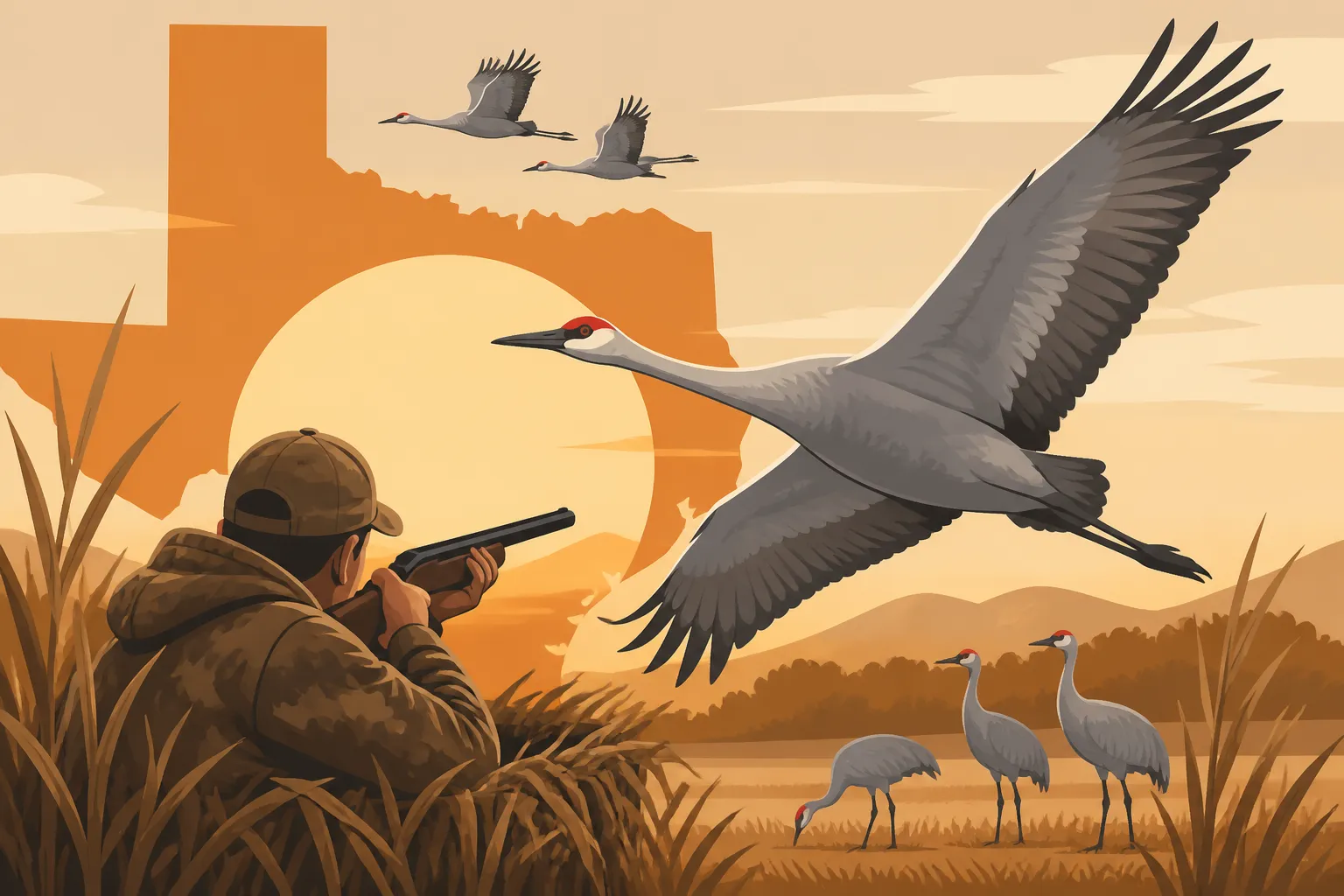
Concealment is where 90% of crane hunts fail. You are dealing with a bird that stands nearly four feet tall and looks down into your spread. If your blind looks like a hump in a flat field, the hunt is over before it begins. The best method involves using layout blinds that are "mudded" and "brushed" to match the exact texture and color of the field you are hunting.
Mudding and Stubbling
A brand-new layout blind has a sheen that reflects UV light, which cranes can see. You need to take that blind out into the driveway, cover it in actual field mud, and let it dry. Then, use the local vegetation to "stubble" the blind. If you are in a harvested cornfield, you need corn stalks. If you are in a wheat field, you need wheat straw. While you can buy artificial raffia grass in bulk on Amazon to fill in the gaps, there is no substitute for the natural cover found on-site.
Managing Movement
Movement inside the blind is a killer. When those birds are circling, you must remain absolutely still. Even the slight turn of a head to watch them can flare a flock. This is why having a caller who can see the birds while everyone else stays tucked is vital. If you are hunting with kids or beginners, remind them that the "stare down" is part of the game. If you're looking for a setup for the family, check out the Best Ground Blind for Hunting With Kids in Texas for some alternative ideas, though layout blinds remain king for cranes.
Calling and Shot Execution
Calling cranes is a specialized skill. They don't quack or honk; they make a guttural, prehistoric trill. You can buy specialized crane calls, but many hunters use their own voices or even modified owl hooters. The goal isn't to talk them into the spread from miles away, but rather to keep their attention focused on the decoys as they get closer.
Knowing When to Call
If the birds are locked in and coming your way, shut up. Let the decoys do the work. If they start to drift or look like they might bypass your spread, a few well-timed trills can bring them back on line. Understanding the Texas Sandhill Crane Season & Free Permit requirements is the first step, but mastering the trill is what puts meat on the table.
Shot Placement and Loads
Cranes are big birds with massive wingspans, which often makes them look closer than they actually are. This leads to many hunters shooting behind the bird. You need to lead them more than you think. Because they are tough, I recommend using 3-inch or 3.5-inch shells with BB or #2 shot. Some hunters prefer tungsten or bismuth loads for the extra knockdown power at a distance.
Always keep your gear clean; the dust in West Texas can jam an action in minutes. Picking up a high-quality cleaning kit on Amazon to keep those gears smooth is a small investment that prevents a heartbreaking malfunction when a "Grey Giant" is hovering at 20 yards. If you're new to the technical side of waterfowling, reading up on How to Hunt Ducks in Texas (Step by Step) can give you a good foundation in wing-shooting mechanics.
Legal Requirements for Texas Crane Hunting
Before you head out, you must ensure you are legally compliant. Texas takes its migratory bird laws very seriously. You cannot simply buy a Texas Hunting License: Cost, Types & How to Buy (2026) and head out. There are specific endorsements and permits required for Sandhill Cranes.
- Federal Duck Stamp: Even though you are hunting in a field, cranes are migratory waterfowl.
- Texas Migratory Bird Endorsement: This is a requirement for all migratory bird hunting in the state.
- HIP Certification: You must be HIP certified (Harvest Information Program).
- Sandhill Crane Permit: This is a specific, free permit required by the Texas Parks and Wildlife Department (TPWD). You can obtain it online or at any license tether.
- Zone Knowledge: Texas is divided into three zones (A, B, and C) for crane hunting. Each has different Texas Sandhill Crane Season Dates 2026 and bag limits.
Make sure you have your Texas Migratory Bird Endorsement & HIP Certification fully updated on your digital license or paper copy. If you are hunting on a lease, ensure you are familiar with the How to Hunt Sandhill Crane on a Texas Lease protocols regarding property lines and neighborly etiquette.
Final Tactics for a Successful Harvest
The most successful crane hunters are those who are willing to adapt. If the birds are flaring, don't just sit there and complain—change something. Move the blinds, adjust the landing hole, or add more natural cover. Sometimes the Best Duck Decoy Spread for Texas Coast techniques can even be adapted for crane hunting in the marshier southern regions where they might be loafing near water.
Cranes are wary, but they are also incredibly delicious. Often referred to as the "Ribeye in the Sky," the meat is lean, red, and tastes remarkably like a high-end steak. Taking the time to master the decoys, the concealment, and the scouting is well worth the effort when you finally sit down to a meal of fresh Texas crane. Whether you are hunting the wide-open spaces of the Panhandle or the salty prairies of the coast, these birds will test your patience and your skill every single time you step into the field.
Disclaimer
Hunting regulations, including season dates, bag limits, and permit requirements, are subject to change by the Texas Parks and Wildlife Department and federal authorities. Always consult the official Texas Outdoor Annual and ensure you have all required permits and permissions before hunting. This guide is for informational purposes and does not guarantee hunting success.