AGM vs RIX Thermal Scope for Hogs
Choosing the right thermal scope for hog hunting in Texas can feel like navigating a maze, with so many options promising the world. It’s tough to know where to put your hard-earned money when you're looking for that crucial edge in low-light conditions. This guide aims to break down the debate between AGM and RIX thermal scopes, giving you a clear, empathetic comparison to help you make the best decision for your Texas hog hunting adventures.
Understanding Thermal Technology for Texas Hog Hunting
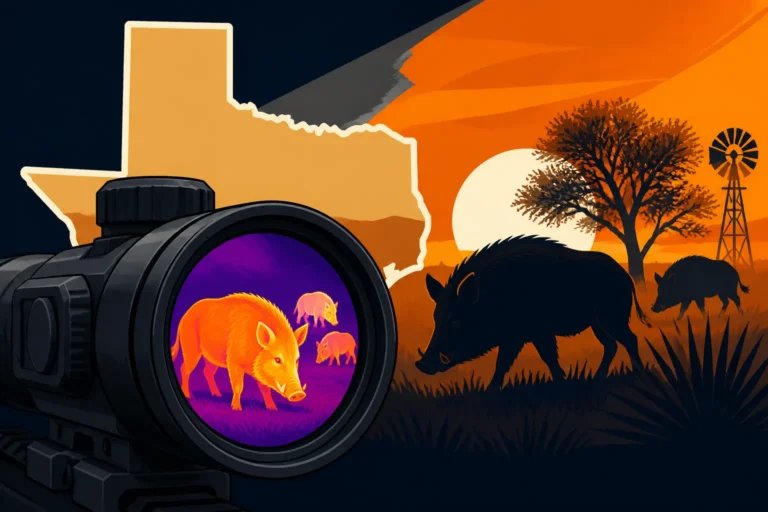
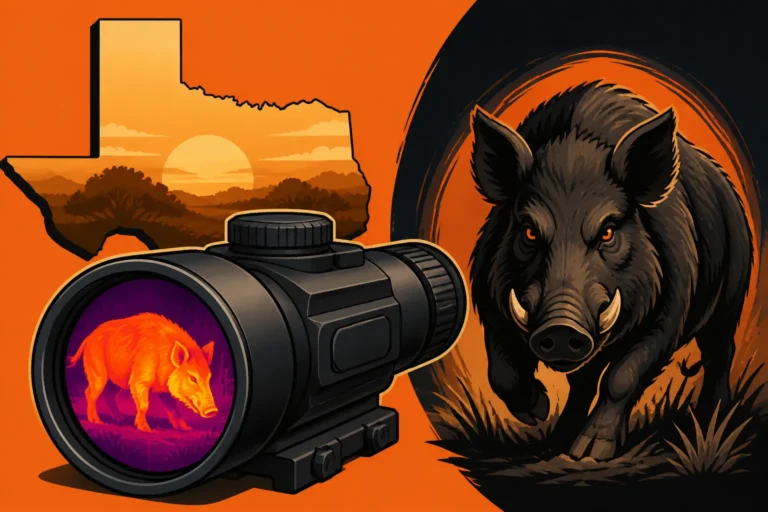
Thermal optics have utterly revolutionized how we approach hunting feral hogs, especially after dark. If you’ve ever tried to hunt these intelligent, nocturnal animals without the aid of thermal, you know the frustration of limited visibility and the sheer challenge of spotting them in thick brush or open fields under moonlight. Thermal technology cuts through the darkness, allowing you to "see" the heat signature of an animal, making it an indispensable tool for effective hog control.
Why Thermal is a Game-Changer for Hogs
Texas is home to an estimated 2.6 million feral hogs, and they cause billions of dollars in agricultural damage annually. Their destructive habits, coupled with their rapid reproduction rate, mean that hunting them is not just a sport but a vital part of land management. The problem is, hogs are primarily crepuscular and nocturnal, meaning they're most active during twilight hours and throughout the night when traditional optics are useless. This is where thermal shines. It allows hunters to identify hogs by their body heat, even when they're hidden in tall grass, behind brush, or moving through dense woods.
Without thermal, night hunting for hogs would often involve bright lights, which can spook animals and aren't always legal or practical. Thermal provides a stealthy, ethical way to hunt these pests, allowing for better target identification and shot placement, which is absolutely critical. Imagine trying to identify a sow from a boar in total darkness with just a flashlight – it’s a recipe for misidentification. Thermal helps you make those distinctions, ensuring you're taking the shots you intend. If you're looking to dive deeper into the tactics, our guide on Thermal Hog Hunting in Texas offers more insights.
Key Thermal Scope Metrics
When you're comparing thermal scopes, you'll hear a lot of technical jargon. But what really matters for busting Texas hogs?
- Sensor Resolution: This is probably the most critical factor, dictating how clear and detailed your image will be. Common resolutions are 384×288 or 640×512. Higher resolution generally means better image quality and the ability to distinguish details at longer ranges.
- Pixel Pitch: Measured in micrometers (µm), this refers to the size of individual pixels on the thermal sensor. Smaller pixel pitch (e.g., 12µm) allows for more pixels on a smaller sensor, often resulting in a sharper image and greater detection range for a given objective lens size.
- Refresh Rate: This is how many times per second the image updates, typically 30Hz or 50Hz. A higher refresh rate means smoother motion, which is crucial for tracking moving hogs. Trust me, nothing is more frustrating than a choppy image when a sounder of hogs is running across a field.
- Detection, Recognition, and Identification (DRI) Range: These three metrics tell you how far out you can (D) see an object, (R) determine what kind of animal it is (e.g., hog vs. deer), and (I) confidently identify specific features (e.g., size, sex, specific shot placement).
- Magnification: Thermal scopes come with base optical magnification and digital zoom. While digital zoom can extend your view, it often sacrifices image quality, so pay more attention to the optical magnification and how well it pairs with the sensor resolution.
- Battery Life: Texas hog hunts can go on for hours, sometimes through the entire night. Good battery life, or easily swappable/rechargeable options, is non-negotiable.
- Durability and Weather Resistance: You'll be out in the unpredictable Texas elements – dust, humidity, rain, and extreme temperatures. Your scope needs to be tough enough to handle it all.
- User Interface and Ergonomics: Can you easily navigate the menus in the dark? Are the buttons intuitive? Can you quickly switch reticles or color palettes? These small details make a huge difference when adrenaline is pumping.
Understanding these metrics will empower you to compare thermal scopes beyond just the price tag. It helps you assess how a scope will actually perform when you’re out in the Texas brush country or across the open plains trying to get a bead on a moving sounder.
Deep Dive into AGM Thermal Scopes
AGM Global Vision has quickly carved out a significant niche in the thermal optics market, largely by offering a strong balance of performance and value. They’ve become a go-to for many Texas hog hunters who want reliable thermal capability without completely breaking the bank.
Popular AGM Models and Features
AGM's lineup features a couple of prominent series that are popular among hunters:
- AGM Rattler Series: This is arguably their most well-known line, offering a range of thermal scopes with various sensor resolutions (from 256×192 up to 640×512) and objective lens sizes (19mm to 50mm). The Rattler TS models, especially the V2 versions like the AGM Rattler V2 Thermal Scope Review, are celebrated for their user-friendly interface and impressive image quality for their price point. They generally feature a 12µm pixel pitch, giving a decent balance of field of view and magnification. Battery life on the newer Rattler V2 models has also seen significant improvements, often offering 8-10 hours of continuous operation on a single charge or with easily accessible CR123A batteries.
- AGM Adder Series: The Adder scopes are designed to mimic traditional daytime rifle scopes in form factor, making them comfortable and familiar for many hunters. They boast excellent battery life, often exceeding 15 hours, thanks to a combination of internal and replaceable batteries. The Adder series also comes in both 384×288 and 640×512 sensor options, with features like onboard recording and Wi-Fi streaming.
Many hunters appreciate AGM for providing robust, field-ready optics. They're designed to be straightforward, getting you on target quickly and reliably. Their systems, like the Rattler V2, are built with a focus on durability and ease of use, which are huge advantages when you're dealing with the chaos of a hog hunt.
Real-World Performance and User Experience
In the unpredictable environment of a Texas hog hunt, an AGM scope generally performs admirably.
- Clarity and Detection: For typical hog hunting ranges (100-250 yards), the 384-resolution Rattler models offer good detection and recognition. You can clearly spot hogs, identify if it's a lone boar or part of a sounder, and get a good estimate of size. The 640-resolution models, as expected, provide superior detail and extended range, allowing for earlier detection and more confident identification, especially important when considering your Best Shot Placement for Hogs.
- Ease of Use: AGM scopes are known for their intuitive controls. The button layout is usually sensible, and navigating the menu to adjust settings or change reticles is relatively quick, even in the dark with gloves on. Zeroing an AGM scope is also generally a simple process, often involving a one-shot zero feature that gets you sighted in with minimal fuss.
- Durability: These scopes are built tough. They can withstand the bumps and scrapes of being hauled through the brush and hold up well to the recoil of common hog hunting calibers like .308, 6.5 Creedmoor, or even 30-06. The IP67 waterproof rating on most models means they’re ready for a sudden Texas downpour or dusty conditions.
- Battery Management: While some older models had shorter battery life, the newer generations have significantly improved. Many hunters carry spare external battery packs that can be plugged into the USB-C port for extended hunts, offering incredible flexibility for those long nights out.
One hunter I know, Mark from Rocksprings, swears by his AGM Rattler TS35-384. He hunts mule deer in the Panhandle and hogs down in South Texas, and he says the AGM is his workhorse. "It's not the fanciest, but it's reliable," he told me, "and for the money, you just can't beat the image quality. It's seen its share of abuse on my UTV and still holds zero." For hunters looking for a solid thermal scope that delivers consistent performance without an exorbitant price tag, AGM frequently hits that sweet spot.
Deep Dive into RIX Thermal Scopes
RIX Optics is a relatively newer player in the thermal scope arena, but they’ve quickly made a name for themselves by pushing the boundaries of technology and offering some truly innovative features. They often appeal to hunters who prioritize cutting-edge performance and don't mind investing a bit more for advanced capabilities.
Notable RIX Models and Features
RIX has focused on bringing higher-end features to the market, often with a premium feel and advanced image processing.
- RIX Optics RICO Series: The RICO-HD series, for example, often showcases larger, high-resolution AMOLED displays for a more immersive viewing experience. They prioritize exceptional image quality with advanced thermal sensors and sophisticated image algorithms that enhance detail and clarity. Many RICO models feature higher optical magnification and boast impressive detection ranges, often outclassing scopes in similar price brackets from other brands.
- RIX Leap Series: While perhaps less universally known than RICO, RIX also offers other series that focus on specific form factors or feature sets. Their focus remains on sensor performance, often integrating higher NETD (Noise Equivalent Temperature Difference) values, which translates to better thermal sensitivity and the ability to detect smaller temperature differences, resulting in a more detailed image.
What sets RIX apart is often their commitment to integrating top-tier sensors and processing power. They tend to have features like advanced reticle options, multiple color palettes, and robust recording capabilities. When you're talking about Best Thermal Scopes for Hog Hunting in Texas, RIX often comes up in conversations about superior image fidelity.
Field Performance and Practical Considerations
RIX scopes aim to provide a premium user experience in the field, making them attractive to hunters who demand the best possible image.
- Image Quality and Range: The standout feature of RIX scopes is often their image quality. Many users report a noticeably clearer, crisper image compared to similarly priced competitors, especially with their 640-resolution models. This enhanced clarity aids significantly in positive target identification and precise shot placement, even at extended ranges. When a sounder is 300 yards out, that extra clarity can be the difference between a clean kill and a missed opportunity. This clarity also helps distinguish between a mature boar and a younger one, or even other species that might be in the vicinity.
- User Interface and Features: RIX scopes often pack a lot of features, which can sometimes mean a slightly steeper learning curve compared to simpler interfaces. However, once mastered, these features—such as built-in ballistic calculators, advanced picture-in-picture modes, or unique hot-track capabilities—can be incredibly beneficial. Their intuitive controls often allow for quick adjustments in the heat of the moment, which is key when you're hunting fast-moving hogs.
- Battery Solutions: RIX typically uses proprietary battery packs, which often offer solid run times. While carrying spares might be less straightforward than with scopes using common AA or CR123A batteries, these integrated solutions often mean a more streamlined design and better power delivery.
- Durability and Aesthetics: RIX scopes are built with a premium feel and robust construction. They are designed to withstand the rigors of hunting, offering good recoil resistance and weatherproofing. The aesthetics often lean towards a more modern, tactical look.
My buddy, David, who runs a hog eradication service near Bryan-College Station, recently upgraded to a RIX scope. He constantly raves about the image quality, especially when scanning large agricultural fields for hogs. "The detail is just incredible," he told me. "I can pick out a hog at 400 yards and know exactly what it is before I even think about moving in. It really ups my confidence for those long shots." For hunters who prioritize top-tier image quality and advanced features, RIX presents a compelling option for their Feral Hog Hunting Tactics for Texas.
Side-by-Side Comparison and Decision Factors
When it comes down to AGM vs. RIX, you're looking at a choice between excellent value and robust performance (AGM) versus cutting-edge image quality and advanced features (RIX). Both brands offer fantastic thermal solutions for hunting, but they cater to slightly different priorities and budgets.
Key Differences and Similarities
Let's break down how these two stack up across critical factors:
| Feature/Spec | AGM Thermal Scopes | RIX Thermal Scopes |
|---|---|---|
| Sensor Resolution | Widest range (256×192 to 640×512) | Primarily higher-end (384×288 to 640×512, often 12µm) |
| Image Quality | Very good for the price, clear and functional | Often superior, crisper, more detailed, especially at range |
| User Interface | Generally simple, intuitive, easy to navigate | Feature-rich, slightly more complex, but powerful |
| Form Factor | Traditional scope designs (Rattler), classic (Adder) | Modern, often sleeker, sometimes with integrated rangefinders |
| Battery Life | Improved, often 8-10+ hours (Rattler V2), 15+ hours (Adder) | Good, often proprietary packs, sometimes 8+ hours |
| Durability | Robust, field-ready, IP67 rated | Premium construction, often IP67/IPX7 |
| Price Point | Excellent value, more budget-friendly options | Generally higher, premium pricing for advanced features |
| Warranty | Typically 3-5 years, good customer service | Strong warranties, often 5 years |
| Special Features | Onboard recording, Wi-Fi, Picture-in-Picture | Advanced image processing, built-in LRF (on some), ballistic calculators |
While both offer features like onboard video recording and picture-in-picture modes, RIX tends to push the envelope with more sophisticated digital enhancements and often integrates hardware features like laser rangefinders on specific models, which can be incredibly useful for precise shooting.
Making the Right Choice for Your Hunt
Deciding between an AGM and a RIX scope really boils down to your personal hunting style, priorities, and budget.
- Budget Considerations: If you're working with a tighter budget but still want powerful, reliable thermal performance, AGM is incredibly hard to beat. Models like the AGM Rattler V2 TS35-384 provide an exceptional bang for your buck, allowing you to effectively hunt hogs at night without needing to refinance your house. They offer a great entry point into quality thermal optics.
- Image Fidelity vs. Practicality: If you are a hunter who values the absolute best image quality, wants to detect and identify targets at maximum possible range, and appreciates cutting-edge features, then investing in a RIX scope might be the way to go. The improved clarity can lead to quicker, more confident decisions in the field and potentially more successful hunts, especially if you're frequently taking longer shots or hunting in challenging environments.
- Hunting Distances and Terrain: For close to mid-range hog hunting (under 200 yards) in thick South Texas brush, an AGM Rattler often provides more than enough capability. The subtle nuances of higher resolution are less critical when you’re in close quarters. However, if you’re hunting vast open fields in the Texas Panhandle or looking across cleared senderos, where longer shots are common and early detection is key, a RIX with its superior image and detection range might give you a noticeable advantage.
- Ease of Use vs. Features: If you prefer a simpler, more intuitive interface that gets the job done without too many bells and whistles, AGM is often favored. If you're tech-savvy and want to leverage every advanced feature available to fine-tune your hunting experience, RIX might be more appealing. Many experienced hunters, after years of trial and error, find that resources like GoHunt offer detailed comparative reviews that help them weigh these exact pros and cons before committing to a purchase.
- Battery Life and Logistics: Consider how you'll power your device. AGM's flexibility with standard batteries and external power banks can be a big plus for extended trips or when access to charging is limited. RIX's integrated battery solutions are often efficient but might require more planning for spare packs.
Ultimately, both AGM and RIX produce high-quality thermal optics that can significantly enhance your hog hunting success in Texas. For hunters just getting into the world of thermal, or those prioritizing value and robust performance, AGM provides an excellent foundation. For those who demand the absolute best in image clarity, advanced features, and are willing to invest more for a premium experience, RIX offers top-tier solutions. Make sure to consider your primary use case, typical hunting conditions, and how much you value those incremental gains in image quality and features. Whichever you choose, getting good thermal optics is a game-changer for How to Hunt Feral Hog in Texas (Step by Step), especially after dark.
Disclaimer
Hunting is an inherently dangerous activity. Always adhere to all local, state, and federal hunting regulations. Ensure you have the proper licenses and permits before engaging in any hunting activity. Practice responsible firearm handling and be aware of your surroundings and target at all times. The information provided here is for informational purposes only and should not replace proper training or legal consultation.