SPYPOINT Flex Trail Camera Review
There's nothing quite as frustrating as investing in a new piece of hunting tech, especially a cellular trail camera, only to have it underperform or fail when you need it most. We've all been there: eagerly checking our phones for updates from the back forty, only to find no signal, blurry night photos, or worse, dead batteries after just a few weeks. This guide is all about giving you a straight-shooting, honest look at the SPYPOINT Flex trail camera, helping you decide if it's the reliable scouting partner you need for your Texas hunting adventures.
Why Trail Camera Performance Matters for Texas Hunters
Texas is a beast of its own when it comes to hunting. The vast, diverse terrain, the scorching heat, the sudden downpours, and the sheer variety of game demand gear that can truly stand up to the challenge. A trail camera isn't just a gadget; it's your eyes and ears in places you can't always be, gathering crucial intelligence that can make or break your season.
Battling the Texas Heat and Elements
If you've spent any time hunting in Texas, you know that the weather doesn't play nice. Summers are brutal, with temperatures regularly soaring past 100 degrees Fahrenheit, and even the mild winters can have sudden cold snaps. Then there are the thunderstorms that pop up out of nowhere, dumping inches of rain in minutes. A trail camera deployed in these conditions needs to be an absolute tank. It's not just about surviving; it's about performing consistently, day in and day out, without moisture creeping into the lens or electronics frying in the heat.
Many cameras promise "weatherproof" durability, but the reality often falls short when exposed to the sustained extreme conditions of a Texas summer or the humidity of the coast. Hunters rely on these devices to continue gathering data even when the mercury is pushing the limits, capturing that early morning bachelor group of bucks or the nightly hog invasion. When a camera fails due to heat or moisture, it's not just a lost camera; it's lost scouting time, missed opportunities, and the headache of driving back to a remote lease just to troubleshoot.
The Importance of Reliable Connectivity
Let's be honest, one of the biggest draws of a cellular trail camera is the ability to receive images and videos straight to your phone, saving countless trips to the property. But what good is a cellular camera if it can't find a signal? Texas is enormous, and cell service can be spotty at best once you get off the main highways and deep into the brush country or the vast expanses of the Panhandle. This is where network flexibility truly shines, and it's a feature that separates the contenders from the pretenders.
Traditional cellular cameras are often tied to a single carrier, like AT&T or Verizon. If your hunting lease happens to be in a dead zone for that specific carrier, your expensive cellular camera is suddenly just a glorified SD card camera. The frustration of setting up a camera, driving home, and then realizing you're getting no transmissions is a tale as old as cellular cameras themselves. Reliable connectivity means your camera can automatically switch between networks to find the strongest available signal, maximizing its uptime and ensuring you get those precious updates whether you're chasing whitetails in the Hill Country or trying to pattern hogs on a river bottom.
Capturing Critical Data for Scouting
At its core, a trail camera's job is to gather intelligence. You need clear, crisp images and videos, quick trigger speeds, and a good detection range to effectively pattern game. Whether you're trying to figure out the exact time a big buck is hitting your feeder, monitoring the activity around a specific scrape, or assessing the size and movement patterns of a sounder of feral hogs, the quality of the data makes all the difference.
Blurry night photos make antler identification a guessing game. Slow trigger speeds mean you might only catch the tail end of a deer walking by, missing the critical shot of its rack. A narrow detection zone means animals can walk right past without being recorded. For a Texas hunter, gathering this kind of precise, actionable data is essential for planning hunts, from understanding a deer's natural travel corridors to identifying the peak activity times for your chosen species. The best trail cameras provide a consistent stream of high-quality information, allowing you to make informed decisions and truly understand the habits of the game on your property. Knowing the subtle nuances of animal behavior, perhaps gleaned from a series of high-quality camera images, can be as important as understanding the optimal season dates found in the Texas Hunting Seasons: Complete Calendar by Species.
A Deep Dive into the SPYPOINT Flex Trail Camera's Features
The SPYPOINT Flex arrived on the scene with a lot of promises, particularly around its network flexibility and improved performance. Let's break down what this camera brings to the table and how those features translate into real-world benefits for the Texas hunter.
Image and Video Quality
When it comes to image quality, the SPYPOINT Flex boasts impressive specifications. It can capture 36-megapixel photos and 1080p videos with sound. Now, megapixel counts can sometimes be a bit misleading, as the actual image sensor and processing are more important, but in the case of the Flex, the images are generally very sharp and detailed, especially in daylight. You'll be able to zoom in and count antler points or identify specific markings on a hog with ease.
Night vision is where many cameras falter, but the Flex utilizes infrared LEDs to provide good illumination without spooking game. The night photos are surprisingly clear, offering decent contrast and detail out to a respectable range. For video, the 1080p quality is a significant upgrade from many competitors, allowing you to get a much better sense of animal movement and behavior. The addition of sound to video is also a nice touch, giving you an extra layer of information, whether it's the crunch of hooves on gravel or the grunts of a feeding hog. This level of detail is invaluable when you're trying to figure out How to Pattern Bucks With Trail Cameras and truly understand their habits.
Cellular Connectivity and Network Flexibility
This is arguably the SPYPOINT Flex's headline feature: its ability to automatically connect to the strongest cellular network in the area. Instead of being locked into a single carrier, the Flex comes with a pre-installed SIM card that can connect to any major cellular provider (like AT&T, Verizon, T-Mobile, etc.) that offers the best signal. This is a game-changer for hunters in remote Texas locations where one carrier might have a weak signal, but another might come through strong. You don't have to guess or buy specific carrier models; the camera handles it for you.
Setting it up is surprisingly straightforward. You activate the camera through the SPYPOINT app, and it does the work of finding the optimal network. This multi-carrier capability significantly reduces the headache of "no signal" issues that have plagued cellular trail cameras for years. For hunters who have leases spanning multiple counties or who move cameras between different properties, this flexibility means fewer worries about losing connectivity. While the SPYPOINT app excels at managing your camera and photos, many experienced hunters also use robust mapping tools like GoHunt to overlay their camera locations with property boundaries, topographical maps, and other critical scouting data, creating a holistic view of their hunting grounds.
Power Management and Battery Life
Battery life is always a hot topic with cellular cameras because transmitting data consumes a lot of power. The SPYPOINT Flex is designed to be efficient, typically running on 8 AA batteries. Many users report solid battery performance, often lasting several weeks to a few months depending on activity, transmission frequency, and environmental conditions. Of course, extreme cold can drain batteries faster, but for most of the Texas hunting season, the Flex holds its own.
For those who want to extend battery life even further, SPYPOINT offers compatible 12V external power packs and solar panels. These accessories are a smart investment, especially if you plan to deploy your cameras in high-traffic areas or leave them out for extended periods. Combining the Flex with a solar panel can mean virtually unlimited battery life, as long as you get adequate sunlight, which isn't usually an issue in Texas. This kind of extended run-time is particularly beneficial when trying to monitor a feeder where animals are active around the clock, like when setting up the Best Deer Feeder Setup for Texas.
Design and Durability for Texas Conditions
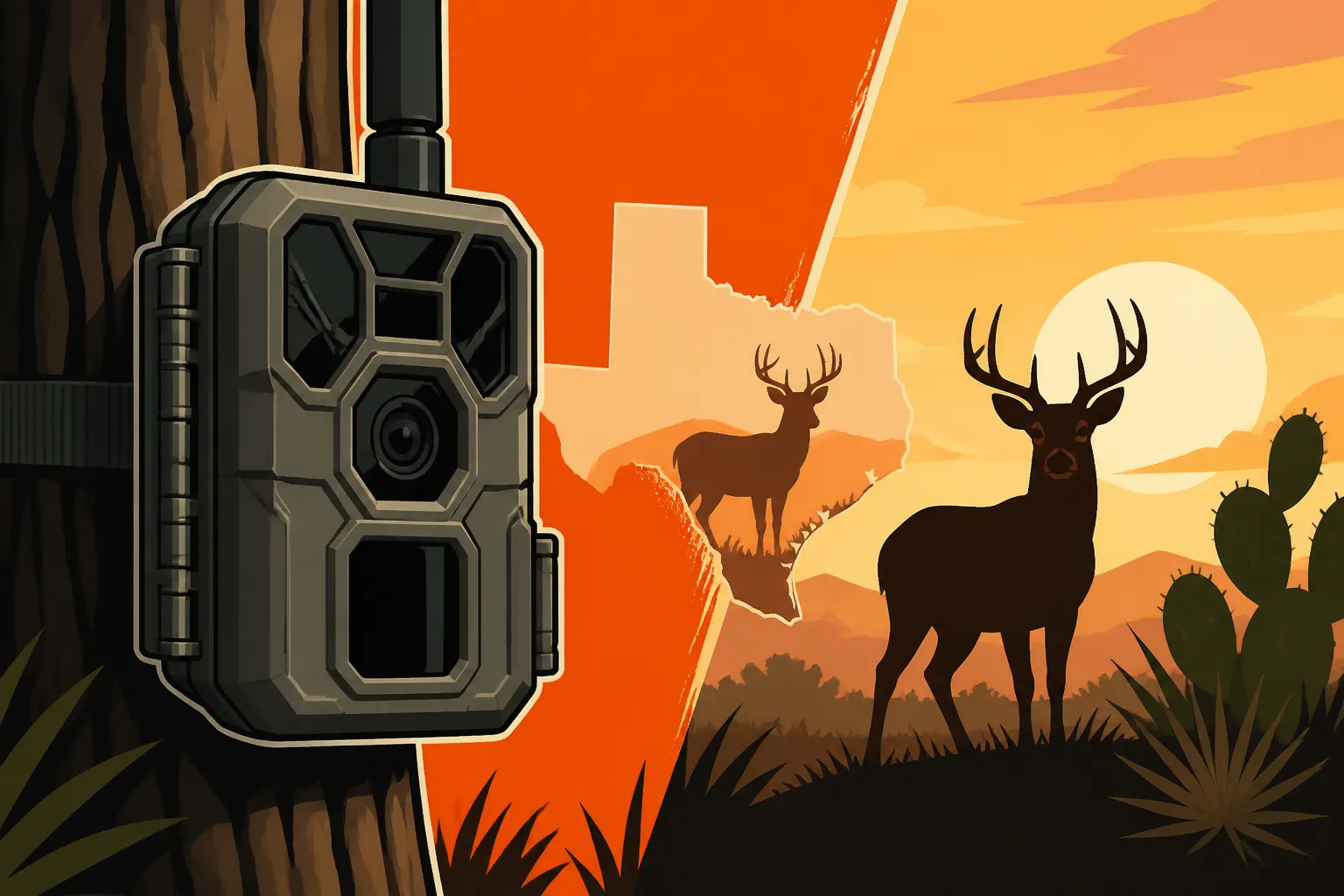
The physical build of the SPYPOINT Flex is robust. It features a sturdy, camouflage-patterned casing that feels substantial and well-sealed. It's designed to withstand the elements, which is critical for the often harsh Texas environment. The latch is solid, and the camera door seals tightly, helping to prevent moisture and dust intrusion. While no camera is truly indestructible, the Flex appears to be built with longevity in mind.
The antenna is external and flexible, which is a good design choice, making it less prone to breaking if snagged by brush or an curious animal. Its compact size also makes it easy to conceal and mount in various locations, whether on a tree, a feeder pole, or a fence line. Its discreet design can be especially useful if you’re scouting for specific game like Axis deer. To learn more about hunting exotic species, check out our guide on Axis Deer Hunting in Texas (Free-Range vs High-Fence).
Real-World Performance and User Experience
Moving beyond the spec sheet, how does the SPYPOINT Flex actually perform when it's out in the wild, doing the gritty work of scouting in Texas?
Setup and Ease of Use
One of the most common complaints about cellular trail cameras has historically been the complicated setup process. Thankfully, SPYPOINT has made significant strides in this area with the Flex. The initial setup is remarkably simple: download the SPYPOINT app, create an account, scan the camera's barcode, and follow the prompts. The multi-carrier automatic selection truly simplifies the process, as you don't have to fiddle with manual network selection or worry about buying the "right" carrier version.
Once activated, mounting is standard with a strap, and navigating the camera's settings via the app is intuitive. You can adjust photo and video settings, transmission frequency, and detection modes from the comfort of your home. This remote management is a huge benefit, as it means fewer trips to the camera itself, reducing disturbance to your hunting area. Even for beginners, getting the Flex up and running usually takes less than 15 minutes. This ease of use makes it a great option for anyone looking for the Best Hunting Gear for Beginners in Texas.
Data Plans and Cost Considerations
The SPYPOINT Flex operates on data plans, which are crucial to factor into your budget. SPYPOINT offers a range of plans, from a free basic plan that includes 100 photos per month (which is honestly quite limited for active scouting) to various paid plans with higher photo/video counts and monthly or annual subscription options.
| Plan Tier | Monthly Photos | Video Transmissions | Monthly Cost (approx.) | Best For |
|---|---|---|---|---|
| Free | 100 | No | $0 | Very low activity, occasional checks |
| Basic | 250 | Yes (reduced res) | $5 – $7 | Light scouting, smaller properties |
| Standard | 1,000 | Yes | $10 – $15 | Regular scouting, moderate activity |
| Premium | Unlimited | Yes | $15 – $20 | Intensive scouting, high traffic areas |
(Note: Pricing can vary and is subject to change by SPYPOINT. Annual plans typically offer a discount.)
While the cost of the camera itself is a one-time investment, the ongoing data plan is an important consideration. For serious hunters, the free plan is usually insufficient, and a paid plan becomes necessary to get meaningful data. It's important to choose a plan that aligns with your scouting needs and budget. For example, if you're trying to monitor Feral Hog Hunting in Texas: Year-Round Guide with multiple cameras in high-traffic areas, an unlimited plan might be the most cost-effective in the long run.
Pros and Cons for the Texas Hunter
Let's distill the experience with the SPYPOINT Flex into a balanced view for those of us navigating the Texas brush.
Pros:
- Multi-Carrier Flexibility: This is the biggest selling point. The ability to connect to any major cellular network is invaluable in Texas, dramatically increasing the chances of reliable signal in remote areas. This is a huge relief when you've been burned by single-carrier cameras before.
- Good Image and Video Quality: 36MP photos and 1080p videos with sound provide clear, detailed intelligence, day or night. This means better identification of bucks, hogs, or other game.
- User-Friendly App and Setup: The SPYPOINT app is intuitive, and the setup process is streamlined, even for those new to cellular cameras. Remote management through the app is efficient.
- Solid Durability: The camera feels well-built and seems capable of withstanding the harsh Texas elements, from extreme heat to heavy rain.
- Good Battery Life (with caveats): While dependent on settings and activity, the Flex generally offers competitive battery performance, and the option for external power is a big plus.
Cons:
- Data Plan Costs: While competitive, the ongoing subscription costs can add up, especially if you have multiple cameras or need unlimited photo/video transmissions. The free plan is quite restrictive.
- App Glitches (occasional): Like many apps, the SPYPOINT app can occasionally have minor bugs or slower loading times, though updates often address these. It's generally stable but not flawless.
- Detection Range/Speed: While good, it might not always capture the fastest-moving animals at the extreme edges of its detection zone, especially at night. It's solid, but not always instant.
- Customer Support: Experiences with SPYPOINT customer support can be a mixed bag, with some users reporting excellent service and others experiencing delays. This is something to consider if you anticipate needing technical assistance.
Comparing the SPYPOINT Flex to Other Top Cameras
The trail camera market is crowded, and the SPYPOINT Flex isn't operating in a vacuum. It faces stiff competition from other reputable brands that have made their mark in the cellular camera space. When considering the best cellular trail cameras for Texas, hunters often compare the Flex to other popular models.
SPYPOINT Flex vs. Other Leading Cellular Cameras
When stacked against competitors like the Moultrie Edge or Tactacam Reveal models, the SPYPOINT Flex often holds its own, especially regarding its multi-carrier capabilities. Many other cameras, while offering good image quality and battery life, are still often tied to a single network or require you to purchase different carrier-specific versions. This is where the Flex truly differentiates itself, offering a "set it and forget it" approach to network connectivity that is a huge advantage in areas with unpredictable cell service. You can learn more about these comparisons in our article about the Tactacam Reveal vs Moultrie Edge: Best Cellular Cam?.
Image quality is competitive across the board, with most modern cellular cameras offering good daylight photos. The Flex's 36MP is certainly at the higher end, providing excellent detail. Night vision performance is also strong, often outperforming older generations of cameras. Trigger speed and recovery time are generally fast enough to capture most game movement effectively.
Where some hunters might find other brands appealing is in their specific app interfaces or slightly different pricing structures for data plans. For instance, some apps might offer more advanced mapping features built-in, though a dedicated hunting app like GoHunt often bridges that gap by allowing users to integrate data from various sources for a comprehensive scouting strategy. Ultimately, the choice often comes down to prioritizing either the multi-carrier flexibility of the Flex or potentially minor differences in app functionality or raw image upload speed offered by a competitor. However, for sheer ease of setup and broad signal compatibility in Texas, the Flex is a very strong contender. Its ability to get a signal in more places simplifies the process of getting consistent data from your lease, complementing other scouting efforts like checking your Best Deer Feeder Setup for Texas or identifying prime locations for Hog Trapping in Texas: Methods That Work.
Final Verdict and Recommendation
So, after digging into the SPYPOINT Flex, where does it land for the Texas hunter? It's safe to say that the Flex is a robust, reliable option that addresses many of the common frustrations associated with cellular trail cameras. Its standout feature, the multi-carrier auto-connect, is a genuine advantage for scouting in Texas's vast and often signal-challenged landscapes. This feature alone can save you immense frustration and wasted time compared to cameras that might only work with one specific network provider in your area.
For hunters who prioritize ease of use, strong image and video quality, and especially reliable connectivity across varying terrains, the SPYPOINT Flex is an excellent choice. It’s particularly well-suited for anyone managing a remote hunting lease where cell service can be spotty, or for those who move cameras between different properties with different network coverages. The upfront investment in the camera and the ongoing data plan should be considered, but the value it provides in terms of saved travel time and consistent intelligence gathering is substantial.
If you're tired of guessing games with your trail camera's signal or dealing with fuzzy night photos, the SPYPOINT Flex offers a comprehensive solution that can genuinely enhance your scouting efforts and ultimately improve your hunting success in Texas. For an even deeper dive into scouting techniques, consider resources like How to Scout for Deer Before Season in Texas to pair with your camera data. And don't forget essential items like a Best Cooler to Hold Ice in Texas Heat for when you do connect with that trophy!
Disclaimer
The information provided in this article is for general informational and educational purposes only. While we strive to offer accurate and up-to-date content, hunting regulations, product specifications, and prices can change. Always consult the latest official Texas Parks and Wildlife Department (TPWD) regulations and product manufacturer guidelines before making any decisions or purchases. Hunting involves inherent risks, and safety should always be your top priority.