Bowhunting Hogs in Texas: Tips
Texas bowhunters often face a unique blend of excitement and frustration when targeting feral hogs with archery gear. These notoriously tough, intelligent, and often nocturnal creatures can be incredibly elusive, leading to many silent stalks and missed opportunities that leave even seasoned hunters scratching their heads. This guide is here to unravel the complexities of bowhunting these challenging animals, providing you with practical tips and strategies to increase your success rate and truly master the art of pursuing hogs with a bow in the Lone Star State.
Understanding Texas Hogs for Bowhunting
Before you even nock an arrow, truly understanding the feral hog is paramount. These aren't just wild pigs; they're an ecological force in Texas, adapting and thriving in almost every habitat imaginable. Their behavior, anatomy, and sheer resilience demand a specialized approach, especially when you're limited to the range and power of a bow.
Hog Behavior and Habitat in Texas
Feral hogs are incredibly adaptable, making them prevalent across most of Texas, from the dense Post Oak Savannah to the rugged Trans-Pecos region. They prefer areas with dense cover, reliable water sources, and abundant food. Think thickets, creek bottoms, riverine areas, and dense brush lines bordering agricultural fields. They are opportunistic omnivores, meaning their diet can shift drastically with the seasons, impacting where you'll find them. They'll root for tubers and grubs, munch on acorns, feast on cultivated crops like corn and peanuts, and even scavenge carrion. Understanding their diet can help you predict their movements.
Hogs are primarily crepuscular or nocturnal, meaning they are most active during dawn, dusk, and throughout the night, especially in hotter months. This nocturnal tendency makes daytime bowhunting a significant challenge, often requiring hunters to shift their strategies to low-light conditions or even embrace the full night hunt. During the heat of a Texas summer, you'll find them bedding down in the coolest, densest cover they can find, only venturing out after the sun dips below the horizon. They live in social groups called sounders, which can range from a few individuals to dozens, typically led by an older sow. Solitary boars, especially mature ones, are also common and often more elusive. Learning to How to Pattern Hogs on Your Lease using trail cameras can give you invaluable insight into their daily routines and preferred travel corridors, allowing you to position yourself for success.
Key Differences Between Hog Hunting and Deer Hunting with a Bow
While both whitetail deer and feral hogs can be hunted with a bow, the similarities often end there. Hogs are, quite simply, built differently and react differently to pressure. For starters, their skin is incredibly thick, often reinforced with a tough "shield" of gristle and mud on older boars, especially around the shoulder area. This shield can dramatically reduce arrow penetration, making precise shot placement even more critical. Deer, while muscular, lack this natural armor.
Another major difference is their reaction to a perceived threat. A deer will typically bound away, often stopping a short distance off to assess the situation. A hog, on the other hand, might charge, squeal, or scatter in all directions, making follow-up shots incredibly difficult. Their dense build and low-to-the-ground profile mean that shot angles you might take on a deer are often not viable for a hog. You need a completely different understanding of their anatomy to ensure a lethal hit. Unlike deer, which have a fairly distinct rut season, Is There a Season for Feral Hogs in Texas?, meaning they can breed year-round, adding another layer to their unpredictable movements and behavior patterns. Because of their invasive status and the damage they cause, hog hunting regulations are also vastly different from those for deer, offering more flexibility in terms of season, methods, and bag limits.
Essential Gear for Bowhunting Texas Hogs
Going into the brush after hogs with a bow requires confidence in your equipment. These animals are notoriously tough, and a marginal setup will likely lead to heartbreak and lost animals. You need gear that's up to the task, from your bow to your broadheads, and especially when considering night hunting.
Bow and Arrow Setup for Hogs
When it comes to your bow, reliability and sufficient kinetic energy are key. Most modern compound bows set at 60-70 pounds draw weight with properly spined arrows will generate enough energy for hogs. However, consistency and accuracy trump raw power every time. Ensure your bow is well-tuned, and you can consistently shoot tight groups out to your maximum ethical hunting range. For recurves and longbows, a draw weight of 50 pounds or more is generally recommended to ensure adequate penetration.
The arrow itself is just as important. A heavy arrow (400-500+ grains total weight) coupled with a sharp, durable broadhead will maximize penetration. Forget the light, fast setups favored by some deer hunters; mass and momentum are your friends when punching through a hog's hide and gristle. As for broadheads, mechanical broadheads can work, but they must be robust, reliable, and have a wide cutting diameter. However, many experienced hog bowhunters prefer fixed-blade broadheads. The reason? Fixed blades have no moving parts to fail and are designed for maximum penetration, which is often crucial for hogs. Look for two or three-blade designs with a strong tip, like a tanto or chisel point, and an overall solid construction. Brands like GrizzlyStik, Iron Will Outfitters, and QAD Exodus are popular choices known for their durability and penetration.
Optics and Lighting for Night Hunts
Since hogs are often most active after dark, integrating night hunting into your bowhunting strategy can be incredibly effective. This means you'll need specialized optics and lighting. Thermal scopes and night vision devices have revolutionized hog hunting, allowing hunters to detect animals from great distances and navigate in the dark. For bowhunting, a thermal monocular is invaluable for scanning and locating hogs, while a green or red hunting light mounted to your bow or headlamp can illuminate your target at closer ranges for the shot. These colored lights are less disturbing to hogs than white light.
If you're considering a more advanced setup, some hunters even use thermal or night vision sights mounted directly onto their bows, though this requires significant practice and specialized equipment. Keep in mind that Is Thermal Hunting Legal in Texas? for feral hogs, which opens up many opportunities. However, remember that using any light source for hunting migratory game birds and deer is generally prohibited, so be absolutely clear on what you're hunting and the regulations surrounding it. You can explore options like the Pulsar Thermion or AGM Rattler series for thermal devices, which offer excellent clarity for detection. When integrating lights, practice shooting with them in various conditions to ensure they don't impact your aim or create glare.
Strategic Approaches to Bowhunting Hogs
Successfully bowhunting hogs requires more than just good gear; it demands shrewd strategy and an understanding of how to exploit their habits and habitat. Whether you're sneaking through the brush or waiting patiently, every move counts.
Stalking and Ambush Tactics
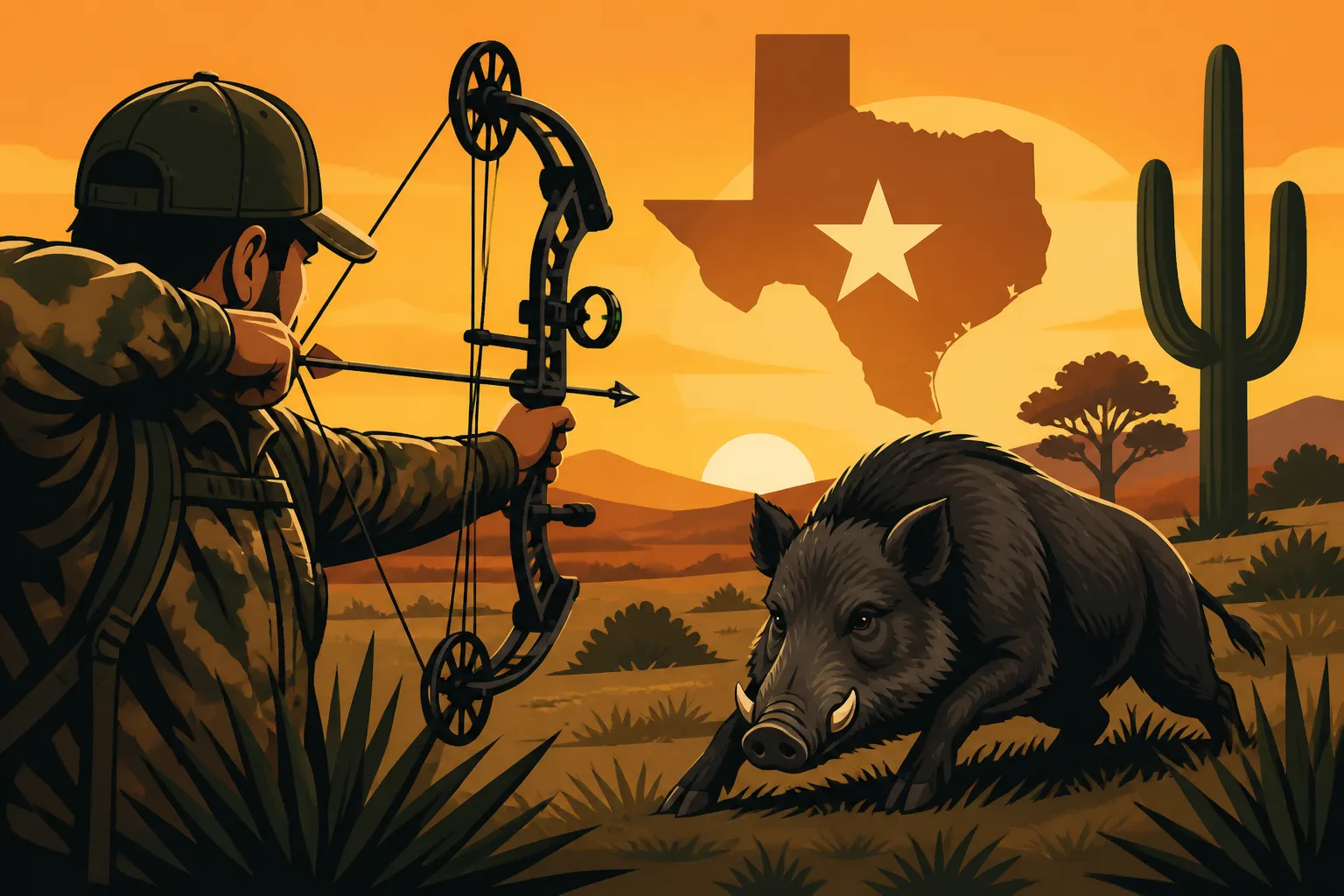
Stalking hogs with a bow is one of the most thrilling and challenging ways to hunt them. It requires extreme stealth, patience, and a keen understanding of wind direction. Hogs have an incredible sense of smell, rivaling or even exceeding that of a whitetail. Playing the wind is non-negotiable. Always approach from downwind, using natural cover to break up your silhouette. Their eyesight is not their strong suit, but they are very sensitive to movement, so slow, deliberate motions are crucial.
Look for fresh sign like tracks, rootings, and droppings to determine active areas. Creek beds, dense brush lines, and the edges of agricultural fields are prime stalking locations. When you spot hogs, take your time. Observe their patterns, identify potential shooting lanes, and plan your approach carefully. Often, you'll need to crawl on your hands and knees to get within bow range, which is typically 20-30 yards for most bowhunters. Be prepared for multiple attempts; hogs are easily spooked. Ambush tactics, on the other hand, involve setting up near known travel routes between bedding areas, feeding zones, or water sources. This is where scouting with trail cameras shines, helping you pinpoint exact crossing points or narrow funnels where hogs are likely to pass. Consider setting up a ground blind or even a simple natural blind made from brush to conceal your presence.
Hunting Over Feeders and Water Sources
Hunting over a feeder or a consistent water source is arguably the most popular and often the most successful method for bowhunting hogs in Texas. Hogs are creatures of habit, and if they find a reliable food source, they will return to it, sometimes several times a night. This provides a consistent opportunity for close-range bow shots. Setting up a Best Deer Feeder Setup for Texas specifically for hogs involves using durable feeders that can withstand their destructive nature, often elevated to deter them or encased in a robust cage.
Corn is the most common bait, but soured corn, rice bran, or even specific hog attractants can increase effectiveness. Ensure your feeder is set up to distribute feed at consistent times, ideally during the late evening or early morning to coincide with prime hog activity. When Hunting Over Feeders & Corn in Texas (Legal Guide), it's important to remember that while legal for hogs, you must be careful not to illegally bait for deer. This typically means ensuring the feeder is broadcasting for hogs during times and in areas where deer hunting is not active, or that you're only targeting hogs. Water sources are another magnet, especially during the hot Texas summers. Placing a blind near a secluded pond, creek crossing, or even a man-made wallow can be highly effective. The key is consistency and patience. Just like deer, hogs can become wary of new setups, so give them time to get accustomed to your presence.
Shot Placement and Tracking Hogs
One of the most critical aspects of bowhunting hogs is understanding their anatomy for proper shot placement. Their dense build and thick shield mean that a shot that would be lethal on a deer might only wound a hog, leading to a long and often unsuccessful tracking job.
Anatomy and Vital Zones
A hog's vitals are positioned differently than a deer's. Their lungs and heart sit further forward and lower in the chest cavity, behind that thick shoulder shield. A common mistake is to aim for the shoulder blade area as you would on a deer. For a hog, the ideal shot is often referred to as the "ear-hole" shot for the brain, or more commonly, the "pocket" behind the ear, or a bit further back, targeting the crease right behind the front leg and low in the chest. This aims for the heart and lungs, bypassing the thickest part of the shoulder shield.
Aiming too high or too far back will often result in a gut shot, which is rarely fatal quickly and leads to a difficult, often fruitless, track. Always aim for an exit wound. This means visualizing where the arrow will exit the animal. A double lung or heart shot will drop a hog quickly or leave a short, heavy blood trail. A clean pass-through is critical for creating two holes, increasing blood loss and trackability.
Here’s a simplified breakdown of vital zones:
| Shot Zone | Target | Description | Bowhunter's Approach |
|---|---|---|---|
| Heart/Lung | Behind front leg, low in chest | This is the primary kill zone. Aim for the "pocket" directly behind the shoulder, roughly a third of the way up from the belly. | Wait for a broadside or slightly quartering-away shot. Avoid quartering-to. |
| Brain | Behind the ear | A small target but instantly incapacitating. Only attempt on stationary, very close hogs with perfect shot discipline. | Extremely precise shot, often used on trapped or snared hogs or at very close range. |
| Spine | Along the back | Can drop a hog instantly but is a difficult target to hit consistently with a bow. Can also paralyze without killing immediately. | Avoid as a primary target; potential for crippling shot. |
When you shoot, watch the hog's reaction carefully and listen for sounds. A solid "thwack" often indicates a good hit, while a muffled thud might mean less penetration.
Post-Shot Protocol and Tracking
After the shot, patience is your best friend. Resist the urge to immediately jump up and pursue the hog. Give the animal time to bleed out and expire, especially if the shot wasn't perfect. A general rule of thumb is to wait at least 30 minutes for a suspected heart or lung shot, and an hour or more for a less-than-ideal hit. If you push a wounded hog too soon, it can travel much further, making tracking incredibly difficult.
Before you start tracking, mentally mark the exact spot where the hog was standing, its direction of travel, and look for any immediate blood, hair, or arrow fragments. When you begin tracking, move slowly and methodically. Look for blood on both sides of the trail, on leaves, grass, and even elevated on brush, which can indicate the height of the wound. Hogs have dense, dark blood, and often their fat can plug entry or exit holes, making blood trails sparse, especially on tough hides. This is where patience and persistence truly pay off. If the blood trail peters out, expand your search in circles or grids around the last known blood. Consider bringing a tracking dog if available, as they can greatly increase your chances of recovery, especially with a difficult trail. If you recover the hog, remember that How to Field Dress a Deer in Hot Weather provides principles that apply to hogs too, especially given Texas's warm climate, to ensure the meat doesn't spoil quickly.
Safety and Regulations
Bowhunting hogs in Texas is a fantastic experience, but like any hunting activity, it comes with important safety considerations and legal requirements that you absolutely must adhere to. Ignoring these can lead to dangerous situations or legal trouble.
Bowhunting Safety Considerations
Safety should always be your number one priority. When bowhunting hogs, particularly when stalking or hunting at night, the risks can be elevated. Always know your target and what's beyond it. While hog hunting often has higher bag limits or no limits at all, you still need to be aware of other hunters, livestock, and property lines. If hunting on a lease or private land, always inform others of your hunting location and expected return time.
When stalking in dense brush, wear appropriate snake boots or gaiters, as Texas is home to several venomous snake species that frequently inhabit hog country. Be mindful of your footing, especially in uneven terrain or near water. Tree stand safety is also paramount if you're hunting from elevated positions; always use a safety harness. If hunting at night, be extra cautious with your movements and shot selection. Thermal optics help identify animals, but they don't always distinguish between different species or even people, so positive identification with a white light (if legal for your species) before taking a shot is crucial. Always carry a well-stocked first-aid kit, a reliable flashlight (even if using thermal), and a communication device.
Legal Aspects of Hog Hunting
Feral hogs are not considered game animals in Texas, meaning they can be hunted year-round with no closed season and no bag limit. This makes them a prime target for continuous hunting pressure. However, while you don't need a specific tag for hogs, you generally still need a valid Texas hunting license to hunt feral hogs, especially on public lands or if you are combining it with other game hunting. For specific details on licenses, refer to Texas Hunting License: Cost, Types & How to Buy (2026).
The methods allowed for hog hunting are also quite broad, including archery, firearms, trapping, and even aerial hunting. However, there are nuances. For instance, while it is generally legal to hunt hogs at night with thermal or artificial light, certain public lands or specific regulations may have restrictions. Always check the current Texas Parks and Wildlife Department (TPWD) Outdoor Annual or the specific regulations for the property you are hunting on. Remember that while Hog Hunting at Night in Texas: Is It Legal? (Yes), using artificial light or thermal for deer or other game animals is strictly regulated. Being informed about current regulations is your responsibility as a hunter.
Post-Harvest Care and Meat Processing
Successfully harvesting a hog with a bow is a rewarding experience, but the job isn't done once the animal is on the ground. Proper post-harvest care is crucial, especially in the Texas heat, to ensure the meat is safe and delicious.
Field Dressing in Texas Heat
Texas is notorious for its heat, and this heat can quickly spoil game meat if not handled correctly. Field dressing a hog swiftly and thoroughly is absolutely essential. As soon as possible after the kill, get to work. The primary goal is to remove the internal organs to allow the carcass to cool down as quickly as possible. Make your cuts carefully, opening the body cavity from the sternum to the pelvis. Be mindful of the gut contents, as they can contaminate the meat.
Once opened, remove all internal organs, including the heart, lungs, liver, and intestines. If you plan to salvage any organs, ensure they are cooled immediately. Prop the cavity open to allow air circulation. If water is available, rinsing the cavity can help remove excess blood and debris, but make sure to dry it thoroughly afterward. If you're far from a processing facility, consider skinning the hog in the field and quartering it to reduce bulk and allow for faster cooling. Placing the quarters in game bags and then into a cooler filled with ice is the best way to preserve the meat until you can get it to a processor or your home. Always try to keep the meat off the hot ground.
Utilizing Your Harvest
Feral hogs can provide an abundance of delicious, lean meat. Don't let the "feral" label deter you; much like wild deer, the quality of the meat can vary depending on the hog's diet, age, and sex. Younger hogs and sows generally yield more tender, milder-flavored meat than older boars, which can sometimes have a strong "boar taint" if not castrated quickly after harvest. However, proper care from field to freezer can make even a larger boar's meat palatable.
Common cuts include chops, roasts, ground meat, and sausage. Many hunters opt to turn a significant portion of their hog into sausage due to its versatility and ability to mask any strong flavors. Freezing the meat quickly after processing is key. Consider vacuum sealing to prevent freezer burn and extend shelf life. There are numerous recipes for wild hog, from slow-cooked pulled pork to spicy chorizo. Embracing the entire process, from ethical harvest to the dinner table, truly completes the bowhunting experience. After all, the challenge of bowhunting is greatly amplified when you know the reward will be a delicious meal shared with family and friends.
Disclaimer
Hunting is an inherently dangerous activity. This guide provides general information and tips; however, local regulations, conditions, and personal abilities vary. Always prioritize safety, consult the most current Texas Parks and Wildlife Department regulations, and seek professional guidance when necessary. The author and publisher are not responsible for any accidents, injuries, or legal infractions incurred while hunting.