Dove Hunting Tactics: Field Setup & Shooting
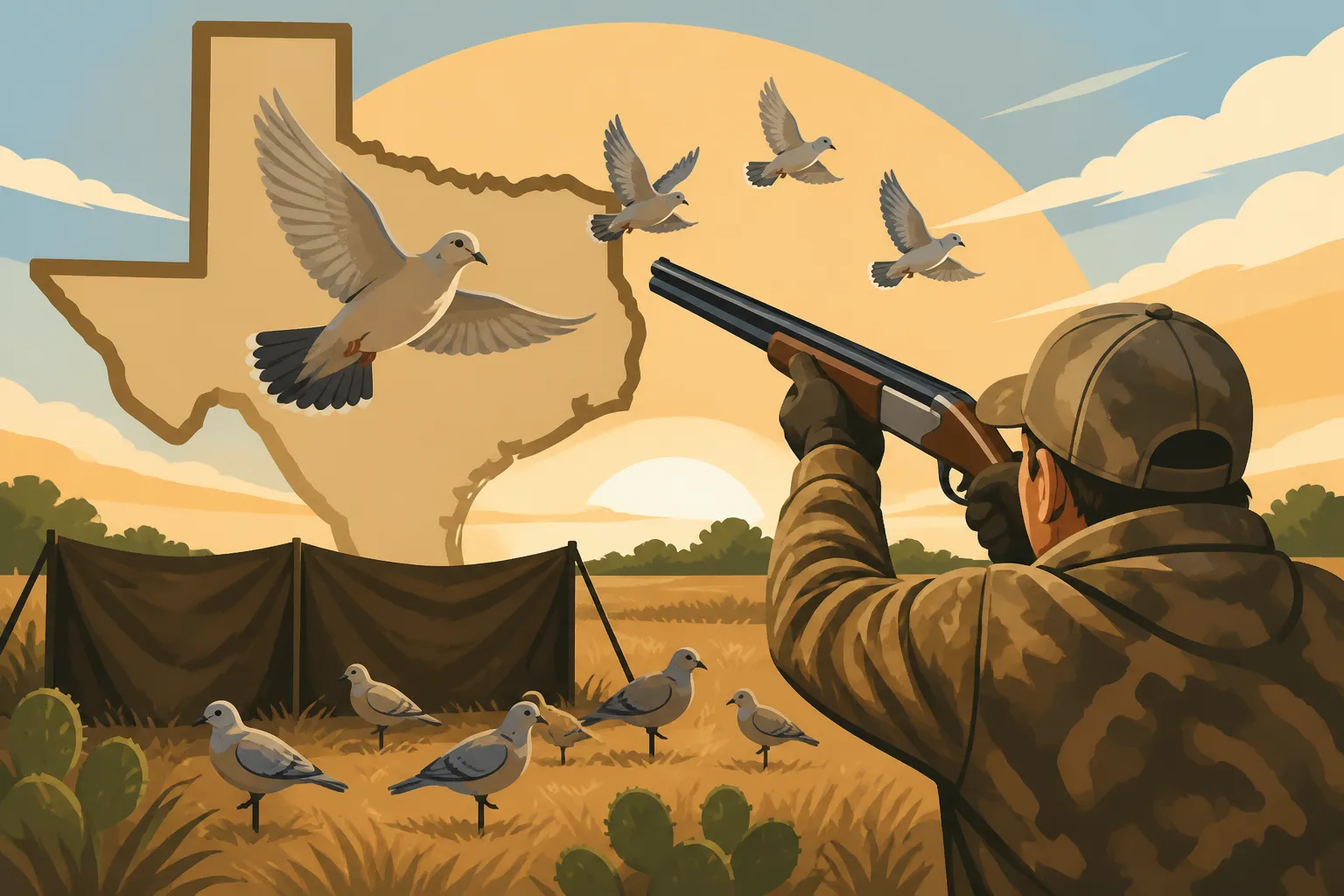
Standing in a sun-baked Texas field on September first with sweat soaking through your camouflage while watching hundreds of mourning doves dart just out of range is a special kind of frustration. You burn through three boxes of shells, come away with two birds, and wonder what went wrong while your buddy down the fence line caps his limit in an hour. Successful dove hunting is not about wild luck or burning up barrels; it is a game of understanding roosting flights, wind direction, decoy placement, and disciplined wing-shooting. This guide breaks down the complete tactical blueprint to turn those frustrating afternoons into heavy game bags across every corner of the Lone Star State.
Scouting and Selecting the Ultimate Texas Dove Field
Scouting is the single most critical factor in consistent dove hunting success, yet it is the one step most hunters skip. Doves are absolute creatures of habit, operating on a rigid daily schedule governed by light, hunger, thirst, and the need for digestive grit. If you simply pull up to a ranch gate near Uvalde or Katy on opening afternoon and set up wherever looks comfortable, you are gambling with your hunt. Finding the specific corridor birds use to move between roosts, feeding grounds, and water sources transforms a mediocre afternoon into an unforgettable shoot.
To scout effectively, you need to be in the field at first light or during the final two hours before sunset. Park on a high vantage point near agricultural land or brush corridors and use high-quality optics to watch the sky. Do not just look for where birds are sitting; track their flight lines. Doves prefer to travel along natural environmental contours, such as fence lines, creek beds, lines of transmission towers, and tree margins. Once you map out these aerial highways, positioning your setup becomes a matter of intercepting their established flight path rather than praying they fly over your chair.
Understanding Dove Feeding and Flyway Habits
Doves operate on a distinct circadian rhythm throughout the day. Shortly after daylight, they leave their roosts—which are typically thick stands of mesquite, live oak, cedar elm, or powerlines—and fly straight to feeding fields. They spend several hours feeding on seeds before searching for grit to help break down those seeds in their gizzards. By mid-day, as Texas heat peaks, birds retreat to shaded loafing cover in dense timber or brush to rest and digest.
In the late afternoon, usually between four o’clock and sunset, birds repeat this process in reverse. They head back out to feed, hit a water source for a final drink, and fly back to their roosting sites before darkness falls. Recognizing where birds are in this daily cycle allows you to adapt your strategy. If you are hunting a feeding field in the evening, you need to understand that birds are coming in with purpose, looking for safe landing zones where food is abundant and easily visible on the ground.
When analyzing flyways, pay attention to how birds interact with wind conditions. Doves prefer to land and take off directly into the wind, as it provides maximum lift and flight control. On windy days, birds fly much lower to the ground to utilize natural windbreaks like tree lines, terrace rows, and brush piles. If you position yourself along the downwind edge of a grain field or brush line on a breezy day, you will enjoy much lower, slower shots compared to hunting open pasture where the wind pushes birds at blinding speeds.
Evaluating Natural Foods vs Agricultural Crops
Doves are strict granivores, consuming seeds from a wide array of native plants and cultivated crops. Knowing what doves are eating in your specific region of Texas during early autumn is essential for selecting the right property. In agricultural heavyweights like the Panhandle or the Coastal Prairie, harvested grain fields dominate the dove’s diet. Stubble fields of grain sorghum (milo), sunflowers, corn, sesame, and wheat are absolute magnets for birds. Doves cannot scratch at deep litter, so they require bare, clear ground where seeds fall loosely and can be easily spotted.
In areas dominated by rangeland, such as the South Texas Brush Country or the Rolling Plains, natural seed production dictates bird movements. Key native plants include croton (commonly called doveweed), sunflower, ragweed, pigweed, and various native grasses. Croton fields are particularly famous among veteran hunters; a dry pasture covered in mature croton will draw birds from miles away, often out-performing managed agricultural crops.
- Grain Sorghum (Milo): Offers high caloric content; preferred when fields have been harvested and shredded, leaving clean ground beneath the stubble.
- Commercial & Wild Sunflowers: High-oil seeds that doves prefer above all else; outstanding for early season shooting.
- Croton (Doveweed): The ultimate natural food source in native pastures; easily recognized by its grayish-green foliage and tiny, oil-rich seeds.
- Sesame & Millet: Specialized cultivated crops that drop abundant seeds late in the summer, creating ideal landing areas for large flocks.
When inspecting potential hunting spots, walk the edge of the field and look at the bare earth between rows or crop stubble. If you see abundant fallen seed on clean dirt alongside dove droppings and loose feathers, you have found an active feeding site. If the field has heavy ground clutter, tall grass, or dense weed growth covering the soil, doves will avoid it regardless of how much seed is present because they feel vulnerable to ground predators like coyotes and bobcats.
Locating Essential Water Sources and Gravel Grits
Water is the great equalizer in Texas dove hunting, especially during hot, dry Septembers. Doves require water daily to digest dry seeds, but they are exceptionally picky about where they drink. Unlike songbirds, doves will not land in thick brush right at the water’s edge. They require a wide, open shoreline free of vegetation where they can land on bare dirt or gravel, walk to the water, drink quickly, and maintain clear sightlines to spot approaching predators.
Stock tanks, caliche pits, muddy puddle edges, and gravelly riverbeds are prime afternoon water setups. Doves prefer water sources that feature nearby perching limbs—such as dead trees (snags) or overhead powerlines—where they can sit and survey the water before committing to fly down. Setting up within shooting range of an open shoreline snag at five o’clock in the afternoon is often far more productive than hunting over a hundred-acre crop field.
Grit is another critical requirement that hunters routinely overlook. Because doves swallow seeds whole, they must consume small pebbles, coarse sand, or caliche grit to grind the tough seed hulls inside their muscular gizzards. Caliche roads, gravel farm tracks, exposed dry creek bottoms, and public dirt roads bordering fields serve as grit collection spots. Birds frequently make a brief stop on a dusty county road or pipeline right-of-way right before heading into a feed field or water hole. Locating a site that combines a feed field, nearby grit, and a clean watering tank within a half-mile radius gives you a world-class hunting spot.
Strategic Field Setup and Concealment Tactics
Once you have identified a productive field, your physical setup determines whether birds fly directly into your pattern or flare out of range at eighty yards. Doves possess exceptional color vision and are finely tuned to detect motion and unnatural silhouettes against the landscape. A common mistake is standing out in the open wearing bright clothes, moving around constantly, or sitting in a shiny lawn chair without any surrounding cover.
Proper field setup requires blending seamlessly into the environment while maintaining an unobstructed field of fire and safe shooting lanes for everyone in your hunting group. Mastering these tactical adjustments makes the difference between consistent limits and empty game bags, which is why studying Dove Field Setup: Where to Stand before walking onto a property pays enormous dividends.
TYPICAL DOVE FIELD TACTICAL SETUP
- Wind Direction: South to North
- Dead Tree / Perch: Decoys on Ground
- Powerline / Fence: Decoys on Wire
- Flying Into Wind
- Landing Zone
- Hunter Blind (Sun at Back / Shade Cover)
Choosing the Right Position Relative to Wind and Sun
Wind direction and solar angle should dictate exactly where you place your stool or blind. Always position yourself so the sun is directly behind you or to your side, forcing incoming birds to fly with the sun straight in their eyes. When birds look toward your setup, they will be blinded by glare, making it much harder for them to spot your movement or outline. Conversely, sitting with the sun in your eyes makes tracking fast-moving targets nearly impossible and creates dangerous visibility issues.
Wind management is equally crucial for predicting shot opportunities. Doves almost always decelerate and turn into the wind when dropping altitude to land or feed. Position yourself downwind of where you want the birds to land, or set up parallel to a major flyway so that birds beating into a headwind slow down directly in front of your position.
When you encounter crosswinds, remember that birds will drift sideways and accelerate rapidly when turning downwind. Set your stool so that your natural body swing covers the area where birds enter the decoy spread into the prevailing breeze. If you are right-handed, it is significantly easier to swing your shotgun from right to left; structure your seating angle so incoming birds cross from your right side to your left side across your front field of view.
Utilizing Natural Brush vs Portable Blinds
While waterfowl hunters spend hours constructing elaborate hides, dove hunters often under-utilize quality concealment. Natural cover is always your best option when available. Standing inside the shadow line of a brushy fence row, crouching beside a thick mesquite tree, or tucking yourself into high sunflowers blends you directly into the surrounding habitat. Shadows are your best friend; staying in deep shade renders you virtually invisible to high-flying birds overhead.
When natural cover is sparse—such as in short crop stubble or freshly disked dirt—a portable pop-up blind, panel blind, or simple camouflage netting stretched between metal T-posts is essential. A simple burlap or mesh blind that breaks up your lower body profile and hides your feet and gear makes a massive difference. Make sure your blind material matches the surrounding terrain: yellow straw and tan mesh for harvested corn or milo, and deep woodland or brush camo for green fence lines and river bottoms.
- Natural Shade Lines: Move your chair as light shifts throughout the day to stay locked inside tree or brush shadows.
- Low-Profile Bucket Stools: Keeps your sitting height low to the ground while providing internal storage for shells and harvested game.
- Camouflage Mesh Blinds: Lightweight and highly portable; sets up in seconds to break up body outlines in wide-open fields.
- Matching Camo Patterns: Ditch dark woods camo in bleached-out dry fields; opt for dry brush, tan, or open-field camouflage prints.
Regardless of whether you use natural or artificial cover, motion control is mandatory. Doves spot movement faster than almost any other game bird. Sit completely still until incoming birds drop their gear, set their wings, and commit to your spread. The second you mount your shotgun, do so in one smooth, fluid motion without making sudden, jerky movements with your head or barrel.
Establishing Safety Zones and Field Etiquette
Dove hunting is inherently a social sport, often involving multiple shooters spread out across a single agricultural field. Because of this high density of hunters and fast-moving targets, safety and etiquette are paramount. Before anyone loads a shotgun, establish clear shooting zones for every person in the field. A standard rule of thumb is that no hunter should ever swing their barrel past a 45-degree angle relative to their neighbors, and no low-flying bird shots should ever be taken.
When walking to your spot, communicate clearly with other hunters about where you intend to sit. Maintain a safe distance between stations—typically 75 to 100 yards apart—to prevent peppering each other with falling lead or steel shot and to ensure everyone has an adequate pocket of airspace to work incoming birds. If another hunter has set up a decoy spread and actively called birds into their pocket, respect their setup and avoid shooting at birds clearly dropping into their spread.
Communication during the hunt keeps everyone safe and informed. Calling out incoming birds (“Dove coming low from the left!” or “High birds over the middle!”) helps fellow shooters prepare without creating chaos. Always keep your action open when moving between locations or walking through the field to retrieve downed birds. Wearing safety glasses and a brimmed hat is non-negotiable; falling shot from distant hunters is a common occurrence in crowded public fields or popular leases, and eye protection prevents serious injuries.
Decoy Strategies That Pull In Leery Birds
Decoys are standard equipment for serious dove hunters. While doves will fly over a field on their own, strategic decoy spreads create visual confidence, drawing passing birds off their main flight path and pulling them directly into comfortable shooting range. Doves are social birds that naturally seek the company of others; a field with a dozen decoys perched on a fence line looks like a safe, food-rich haven to a traveling flock.
To build an effective decoy spread, you need to understand how doves interact visually with their environment. Unlike waterfowl spreads that can require dozens of decoys, a dove setup can be highly effective with as few as four to twelve strategically placed silhouettes, full-body hard plastics, and motion decoys. Understanding How to Use Decoys for Dove Hunting allows you to manipulate incoming flight paths precisely where you want them.
Static Decoy Placement on Fences and Trees
Static, full-body decoys form the backbone of a traditional dove spread. These decoys depict relaxed birds perching or feeding, sending a strong signal of security to high-flying passing flocks. The most effective place to mount static decoys is above ground level. Clipping static decoys onto barbed-wire fences, low tree branches, dead snags, or specialized fiberglass decoy poles mimics natural loafing behavior and makes your spread visible from hundreds of yards away.
When mounting decoys on a barbed-wire fence, space them out unevenly in small groups of two or three. Space individual decoys twelve to eighteen inches apart, facing them into the wind or in random, natural directions. Never string decoys out in an even, mechanical line; natural flocks cluster organically. Placing a few static decoys on the top strand of a fence right where it intersects a brush line creates an irresistible target for birds navigating along that boundary.
- Tree/Snag Mounting: Clip decoys on bare, leafless top branches of mesquite or oak trees where they stand out sharply against the skyline.
- Fence Line Spread: Group 3-5 decoys near fence corners or gaps where flight lines cross over cattle guards and pastures.
- Pole Mounts: Utilize collapsible 12-to-16-foot poles to elevate decoys high above crop canopies in flat, featureless fields.
- Ground Clusters: Scatter 4-6 feeding-pose decoys on clean, bare earth beneath elevated perching decoys to complete the illusion.
On the ground, place static decoys in loose clusters on clean, exposed dirt or short stubble. Position them facing into the wind, as feeding birds naturally turn their heads into the breeze while picking up seeds. Leave an open landing gap of ten to fifteen yards right in front of your blind location, flanked by your ground decoys. Incoming birds will aim for that open gap, setting up clean, predictable shots.
Spinning-Wing Decoys and Kinetic Spread Dynamics
The introduction of spinning-wing decoys transformed dove hunting tactics over the last two decades. The flashing contrast of white and dark gray on rotating decoy wings mimics the strobe effect created by a real dove flapping its wings upon landing or taking off. This flash draws the eye of distant doves long before they can distinguish the physical shape of a static decoy, pulling birds from hundreds of yards away off their established flight paths.
Position spinning-wing decoys prominently. Set them on metal stakes so they hover twelve to twenty-four inches above the top of the crop canopy or ground cover. Place your primary motorized decoy approximately twenty to twenty-five yards directly in front of your blind, slightly to the windward side. This creates a clear focal point; incoming birds will lock onto that flashing motion and fly directly toward it, bringing them into your primary kill zone.
Using multiple motorized decoys creates kinetic spread dynamics that look like an active, feeding flock. Setting two spinning-wing decoys fifteen yards apart—flanking a small cluster of ground static decoys—simulates one bird landing while another takes flight. On bright, sunny days, the wing flash is extremely intense and visible across vast distances. However, on heavily hunted public lands late in the season, birds can grow wary of spinning wings; if you notice incoming flocks flaring away at eighty yards, turn off the motor or switch to simple wind-driven spinners to tone down the flash.
Combining Water-Hole Spreads With Land Setups
Water-hole decoy spreads require a specialized setup distinct from feeding field layouts. When hunting a stock tank or caliche pit, your primary goal is to simulate birds comfortably perched near the water before drinking. Doves almost never fly straight from high altitude directly into the water; they stop at a high perching site first, drop down to the dry shoreline, take a quick drink, and launch back out.
Place static decoys on high bare branches or artificial poles positioned around the water-hole perimeter. Next, clip two or three decoys directly onto low fence lines or brush piles near the shoreline. On the shoreline itself, place static decoys on bare gravel or mud, ensuring they are sitting several feet away from the water line on dry ground.
Place a spinning-wing decoy very low to the ground—just a foot above the mud line—right at the spot where the shore offers the cleanest, widest approach for landing. Incoming birds circling the tank will spot the flashing wings against the dark mud or shimmering water and drop straight down to the edge. Keep yourself hidden inside nearby brush or shade twenty-five yards back from the bank, allowing incoming birds to decelerate completely as they level off over the water.
Mastering Shooting Techniques and Lead Calculation
Wing-shooting a erratic, fast-flying dove is one of the most challenging feats in shotgunning. Doves can fly at speeds exceeding 45 miles per hour, accelerating rapidly, diving, and swooping with the slightest breeze or sudden movement below. Most missed shots are not caused by bad shotguns or poor patterns; they stem from incorrect lead calculation, stopping the gun barrel during the swing, or lifting your cheek off the stock to watch the bird fall before pulling the trigger.
Developing consistent shooting mechanics requires converting instinctive spatial awareness into a repeatable physical routine. Whether you are learning How to Hunt Mourning Dove in Texas or targeting high-speed white-wings, mastering swing dynamics, calculating leads correctly for various flight angles, and diagnosing your misses will instantly boost your hit ratio.
The Fundamental Mechanics of Shooting Flying Birds
Consistent shotgunning relies on gun fit, body mount, proper stance, and smooth follow-through. Unlike rifle marksmanship, which requires static stability and careful trigger squeezing, wing-shooting is an athletic, continuous motion. You do not aim a shotgun with front-sight precision; you point it using your dominant eye while tracking the moving target with fluid upper-body rotation.
Your stance should be comfortable and balanced, with your weight leaning slightly forward onto your front foot (the left foot for right-handed shooters). When you spot a bird, bring the shotgun stock up to your cheek first, nestling the comb securely under your cheekbone before pressing the buttpad into your shoulder pocket. If you bring the gun to your shoulder first and then drop your head down to find the rib, your alignment will be off, causing you to shoot over or behind the target.
- Sustained Lead: Track the bird from behind, match its speed, swing ahead to establish the calculated lead distance, pull the trigger, and keep moving the barrel.
- Pass-Through Lead (Swing-Through): Start your barrel behind the bird, swing quickly through its body, pull the trigger the second the barrel passes the beak, and continue following through.
- Pull-Away Method: Mount the shotgun directly on the bird’s beak, match its speed momentarily, pull the barrel forward to create the lead gap, and fire.
- Follow-Through: Never stop the movement of your barrel when you pull the trigger; stopping the gun swing is the single most common cause of missing behind.
Follow-through is the absolute key to success. The moment you pull the trigger, your barrel must keep swinging along the flight path of the bird. If your brain signals your arms to stop moving the moment the finger pulls the trigger, the shot column will pass harmlessly behind the bird every single time. Swing through the shot, pull the trigger while maintaining speed, and keep the gun moving through the bird’s path.
Calculating Lead for Crossing, Towering, and Incoming Shots
Understanding how much distance to give a flying dove depends on three primary variables: the bird’s speed, its angle of flight relative to your position, and its distance from your barrel. A dove flying straight across your field of view at forty yards requires significantly more lead than a bird angling slowly toward your decoy spread at twenty yards.
For full-crossing shots at thirty to forty yards, a dove moving at top speed requires a lead of four to six feet ahead of its beak. This visually feels like leaving an open space of several gun-lengths between your front bead and the bird’s head. If you shoot directly at the bird’s body, by the time your shot pattern reaches thirty yards, the dove has already flown completely out of the string.
Incoming shots require a completely different approach. When a bird flies straight toward your head, track the bird downward, cover its body with your barrel so the bird disappears behind your sight rib, and pull the trigger. Covering the bird naturally places your shot string just ahead of its downward or forward flight trajectory.
For towering, overhead passing shots—such as birds clearing tall timber or powerlines—swing your barrel up from behind, pull through the body, pass ahead of the beak into open sky, and pull the trigger while continuing your upward arc.
Overcoming Common Shooting Errors in the Field
The vast majority of missed dove shots fall into three distinct categories: shooting behind, shooting over, and lifting the head off the gun stock. Shooting behind is universally the most frequent mistake. Because doves travel far faster than they appear to, hunters naturally underestimate the required lead distance. If you miss a bird, double your perceived lead on the next similar shot; more often than not, that adjustment breaks the bird immediately.
Shooting over targets frequently occurs on descending or landing birds. When a dove drops its feet and glides down toward decoys, hunters often shoot at where the bird was rather than where it is dropping. On descending targets, you must push your barrel below the bird, shooting into the empty space beneath its breast to intersect its downward path.
Lifting your head off the comb of the stock is an instinctive habit hunters develop because they are eager to see the bird hit the ground. The moment your cheek leaves the wooden or synthetic stock, the rear alignment of your eye rises, which instantly elevates your barrel trajectory, causing your shot pattern to sail several feet above the bird. Keep your cheek firmly glued to the stock until well after the shot is completed and the follow-through is executed.
Essential Gear and Weapon Selection for Texas Dove Season
Preparing for a Texas dove hunt requires careful equipment planning to contend with challenging field conditions. Opening week in Texas frequently brings temperatures pushing past 100 degrees Fahrenheit, punishing sun exposure, and thick, thorny vegetation. Having the right combination of shotguns, ammunition, clothing, and cooling gear keeps you comfortable, focused, and effective in the field.
While you do not need expensive specialized equipment to hunt doves successfully, selecting mismatched gear—such as using overly heavy waterfowl loads or wearing heavy, non-breathable clothing—will quickly ruin an otherwise great outing. Reviewing tactical gear considerations alongside How to Hunt Dove Without a Field helps you tailor your setup to your specific hunting style and physical environment.
Selecting Shotgun Gauges, Chokes, and Shell Loads
Choosing the right shotgun and ammunition combination balances effective pattern density with manageable recoil. Doves are relatively fragile birds; it does not take heavy pellets to bring them down humanely, but it does require a uniform, dense pattern that leaves no open gaps for a small bird to slip through.
The 12-gauge and 20-gauge shotguns are the undisputed kings of the dove field. A 20-gauge semi-automatic is arguably the ideal dove gun: lightweight to carry, fast-handling for quick mounts, and offering light recoil during long shoots. The 12-gauge offers denser shot patterns and longer effective range, which is particularly advantageous on windy days or late in the season when birds fly higher and skittish. Smaller gauges like the 28-gauge or .410 bore are delightful in expert hands during close-range decoy shoots, but they lack the pellet density for consistent success on long crossing shots.
SHOTGUN CHOKE SELECTION GUIDE
| Improved Cylinder | Modified | Full Choke |
|---|---|---|
| Range: 20-30 Yds | Range: 30-40 Yds | Range: 40+ Yds |
| Wide, Open Pattern | Balanced Pattern | Tight, Dense Pattern |
| Best: Early Season / Decoy Setups | Best: All-Around / Windy Days / Passes | Best: Late Season / High Passing Birds |
Choke selection should match field conditions and bird behavior. Early in the season, when young birds decoy close at twenty to thirty yards, an Improved Cylinder choke provides a wide, forgiving pattern. As the season progresses and birds grow leery, switching to a Modified choke tightens your pattern for clean kills at thirty-five to forty-five yards. Avoid using Full chokes for close-range hunting; a Full choke at twenty yards will either shred the bird completely, rendering the meat useless, or result in clean misses.
Shot sizes #7.5 and #8 are the gold standard for dove hunting. A standard 1-ounce load of #8 shot fired from a 20-gauge or a 1-1/8-ounce load from a 12-gauge contains hundreds of lead pellets, creating a dense pattern wall. Ensure your ammunition velocity sits between 1,200 and 1,300 feet per second (fps). Ultra-high-velocity heavy loads generate excessive shoulder recoil without providing meaningful advantages over lightweight target loads.
Managing High Heat, Clothing, and Hydration
Texas early-season dove hunting presents serious thermodynamic challenges. Sweating profusely in high heat causes fatigue, decreases mental focus, and can quickly lead to heat exhaustion or heatstroke if unmanaged. Dressing appropriately in lightweight, moisture-wicking technical fabrics is just as important as choosing the right choke tube.
Avoid heavy cotton t-shirts and heavy denim jeans. Cotton holds sweat, becomes heavy, restricts movement, and prevents evaporative cooling. Opt instead for ultra-lightweight, ventilated long-sleeve hunting shirts made from synthetic polyester blends with built-in UPF sun protection. Long sleeves protect your arms from searing sun exposure, biting insects, and sharp mesquite thorns. Pair these with breathable ripstop tactical pants or durable, lightweight upland pants.
- Hydration Strategy: Drink plenty of water starting the night before your hunt; carry an insulated cooler packed with ice, water, and electrolyte drinks directly to your blind.
- Wide-Brimmed Hats & Eyewear: A quality camo hat shields your eyes from direct sun glare; polarized safety glasses protect your eyes from stray falling shot and UV rays.
- Shade Structures: Carry a lightweight sports umbrella or pop-up canopy if hunting wide-open fields with zero natural tree shade.
- Cooling Towels: Evaporative neck towels soaked in ice water provide instant core temperature relief during sweltering mid-afternoon waits.
Never underestimate water requirements for your hunting dogs. Retrievers working in September heat face extreme risk of overheating. Provide your dog with fresh, cool water every fifteen minutes, limit their long retrieves during the hottest hours, and immediately soak their belly and footpads in cool water if they exhibit heavy panting, glassy eyes, or sluggish movement.
Equipment for Efficient Bird Retrieval and Shell Management
Keeping your hunting area organized prevents lost birds, clutter, and safety hazards. A dedicated dove belt or dove bucket is a foundational piece of equipment. Standard dove belts feature two wide front canvas pockets for carrying live shells and empty hull hulls, along with a large, mesh-lined rear game pouch for holding downed birds. Mesh pouches allow air to circulate around harvested birds, cooling body heat far better than sealed vinyl bags.
Bring a heavy-duty magnet mounted on a collapsible pole or stick to pick up spent shotgun hulls from the ground without constant bending over. Cleaning up spent shells is essential field etiquette that keeps landowners willing to host hunters year after year.
Invest in a comfortable, portable swivel bucket stool. A 5-gallon bucket topped with a 360-degree padded swivel seat allows you to smoothly rotate your entire upper body toward incoming birds without making noisy, awkward foot adjustments in dry brush. The interior of the bucket provides dry storage for spare ammo, choke tubes, gun oil, bug spray, and snack rations.
Comparative Analysis of Texas Dove Zones and Species
Dove hunting in Texas is not a uniform experience across the state. The Texas Parks and Wildlife Department (TPWD) manages dove hunting across distinct geographical zones—North, Central, and South—each featuring unique season dates, split management frameworks, and species dynamics. Understanding these regional variations and species traits allows you to plan trips that maximize your hunting calendar.
Texas is home to two primary targeted species: the ubiquitous Mourning Dove and the larger, booming White-Winged Dove, alongside invasive Eurasian Collared-Doves, which carry no bag limits and can be taken year-round. Comparing these species and regions highlights key tactical shifts necessary across the state.
| Feature / Trait | Mourning Dove | White-Winged Dove | Eurasian Collared-Dove |
|---|---|---|---|
| Average Weight | 4.0 – 4.5 oz | 5.0 – 6.0 oz | 7.0 – 8.0 oz |
| Primary Habitat | Rural pastures, cropland, native brush | Urban centers, citrus groves, grain fields | Farmsteads, feedlots, grain elevators |
| Flight Characteristics | Erratic, fast, darting, swooping | Linear, steady, flocking, high-altitude | Slow, heavy, predictable, straight line |
| Decoy Response | Highly responsive to wing motion | Excellent response to high elevated spreads | Moderately responsive to static spreads |
| Legal Status | Native game bird (Daily limits apply) | Native game bird (Daily limits apply) | Exotic invasive (No limit / Year-round) |
Mourning Dove vs White-Winged Dove Patterns
Mourning doves are distributed abundantly across all 254 counties in Texas. They are slightly smaller than white-wings, identifiable by their pointed, wedge-shaped tails, light brown coloration, and black spots on their wings. Flight behavior in mourning doves is famously unpredictable; when fired upon, a mourning dove will slip, dive, roll, and accelerate instantly, providing an exceptionally difficult target. They tend to travel individually, in pairs, or in small scattered groups of four to six birds.
White-winged doves are larger, stockier birds characterized by a square tail, a distinctive white band along the leading edge of their wings, and a blue ring around their eyes. Historically restricted to the Rio Grande Valley and South Texas, white-wings have expanded their range dramatically northward over recent decades, establishing massive breeding populations in major urban centers like San Antonio, Austin, Waco, and Fort Worth.
White-wings move in massive, cohesive flocks, traveling along high aerial corridors from suburban roosts out to surrounding agricultural grain fields every morning and evening. Their flight style is much more direct and steady compared to mourning doves, moving in straight, deliberate lines like miniature ducks. When hunting white-wings, place your decoy spreads high and visible, as large flocks fly at high altitudes and require strong visual cues to drop down.
North, Central, and South Zone Tactical Adjustments
Navigating Texas dove management requires consulting official zone maps annually to stay compliant with split season dates. Reviewing the official Texas Dove Season 2026: Zones & Dates and studying the Texas Dove Zones Map (North, Central, South) ensures you hunt within open dates and local zone boundaries.
The North Zone encompasses the Panhandle, Red River border, and northern prairies. Hunting here centers heavily around massive grain sorghum, wheat stubble, and sunflower farming. Early cold fronts in late September can push North Zone mourning doves south rapidly, so early-season hunts are critical. Focus tactics on broad grain fields and farm pond margins.
The Central Zone covers the expansive Hill Country, Blackland Prairies, and East Texas timber margins. Central Zone hunting relies heavily on a mix of agricultural crops and native croton pastures. The terrain offers exceptional flight-line bottlenecks around stock tanks, river valleys, and oak ridges.
The South Zone features a specialized framework, including the popular Special White-Winged Dove Days in early September along the border counties and coastal plains. South Zone hunting remains productive late into the season due to milder winter temperatures holding resident birds alongside vast concentrations of northern migrants wintering in the brush country.
Early-Season Opener Tactics vs Late-Season Survival
Early-season dove hunting—particularly during the first two weeks of September—is characterized by vast bird populations, young naive doves, heavy hunter pressure, and hot weather. Early-season tactics focus on positioning near obvious food and water sources. Decoys work like magic early on, as birds have not yet been educated by gunfire. Simply finding an active feed field and setting out a basic decoy spread almost guarantees shooting opportunities.
Late-season hunting, which takes place during the second split in November, December, and January, presents a totally different sport. By late autumn, surviving birds are mature, fully feathered, highly educated, and extremely skittish. Flocks group up into massive, nervous mega-flocks that flare at the slightest hint of danger or unnatural movement.
- Late-Season Concealment: Upgrade your camouflage completely; sit deeper inside brush cover and eliminate all shiny equipment or exposed skin.
- Tighten Chokes: Switch from Improved Cylinder to Modified or Full chokes to handle longer forty-plus-yard shots at high-passing birds.
- Increase Shot Size: Step up from #8 shot to heavier #7.5 shot to deliver punchier energy through dense late-season winter feathers.
- Tone Down Motion: Turn off high-flash motorized decoys if birds flare; rely instead on subtle static setups tucked into natural perches.
Late-season doves feed aggressively to maintain body heat during cooler weather, making high-calorie grain fields and undisturbed afternoon water tanks top-tier hunting locations. If you adapt to these leery birds, late-season shoots offer fast-paced action without the oppressive summer heat.
Post-Hunt Care and Field Processing in the Heat
Your hunt does not end when you reach your fifteen-bird bag limit. In the punishing Texas heat, wild game meat deteriorates at an alarmingly fast rate if left unattended. Taking immediate, disciplined steps to cool and process your birds preserves the rich, delicate flavor of dove meat, ensuring an incredible meal at the dinner table rather than spoiled game.
Proper field handling connects directly to overall game management standards detailed in Field Dressing & Processing Game in Texas Heat. Applying rapid cooling techniques ensures your harvest stays fresh from the dusty field to your kitchen counter.
POST-HUNT GAME CARE FLOWCHART
- Bird Down in Field
- Retrieve Immediately (Do Not Leave in Sun / Pockets)
- Open-Mesh Game Bag (Allows Air Flow / Body Cooling)
- Ice Chest Cooler Transfer (Place on Top of Ice Layer / Drain Open)
- Field Dressing / Breasting (Rinse in Cold Water / Vacuum Seal)
Rapid Cooling and Preservation Tactics
The moment a bird hits the ground, the clock starts ticking. Never stuff fresh, warm doves into airtight plastic bags or squeeze them tightly inside hot, rubberized game pockets while actively walking fields. Trapping body heat accelerates bacterial growth and causes meat to sour quickly.
Keep downed birds in open-mesh game pouches that allow ambient air to circulate around the carcasses. If you are sitting in a static blind or bucket setup, place your harvested birds directly into the shade on top of a clean towel or mesh rack.
As soon as you return to your vehicle or camp, transfer birds into an ice chest. Maintain a dedicated game cooler packed with crushed ice. Place a layer of cardboard or a plastic cutting board on top of the ice so the birds rest directly above the cold layer without soaking in dirty melted ice water. Keeping birds cold and dry preserves meat quality perfectly during the drive home.
Step-by-Step Field Dressing and Breasting
Breasting out doves is the most common, efficient method for processing birds in the field, taking less than thirty seconds per bird once you master the technique.
- Pluck Breast Feathers: Grasp the bird firmly by the legs or wings. Use your thumbs to push against the grain of the feathers on the breast, stripping away the feathers down to bare skin from the throat down to the abdomen.
- Expose the Breastbone: Insert your thumbs into the skin right at the base of the sternum (breastbone) and pull outward to tear open the thin skin, completely exposing the raw breast meat.
- Insert Thumb Under Keel: Slip your thumb under the bottom edge of the breastbone (keel bone) where it meets the abdomen.
- Pry Upward and Forward: Firmly leverage your thumb upward toward the bird’s head, separating the entire breast structure away from the ribcage, internal organs, and spine in one clean pull.
- Shear Away Wings: Pull the breast completely free from the body frame. Use game shears or shears to cut off the wing joints right at the base of the breast meat, leaving a clean, bone-in dove breast ready for processing.
If you prefer cooking whole birds—which is outstanding for roasting or smoking—pluck the entire bird clean of feathers, make a small horizontal slit across the lower abdomen, pull out the internal organs cleanly, clip off the head, feet, and wing tips with shears, and wash the cavity thoroughly with cold water.
Preparing Dove Meat for the Texas Table
Dove meat is lean, dark, and tender, featuring a rich flavor profile similar to prime beef or duck breast rather than domestic poultry. Because it contains virtually no internal fat, dove meat must be cooked quickly to medium-rare or medium internal temperatures (130°F to 140°F). Overcooking dove turns the tender meat dry, tough, and metallic.
The undisputed classic Texas preparation is the Dove Popper. Halve breast meat off the keel bone, place a slice of pickled jalapeño and a dollop of cream cheese or pepper jack inside, wrap the entire package tightly in thick-cut bacon, secure it with a toothpick soaked in water, and grill over hot mesquite coals until the bacon is crispy and the meat inside remains medium-rare.
Another exceptional culinary approach is searing boneless dove breasts in a piping-hot cast-iron skillet with butter, garlic, and fresh rosemary, then deglazing the pan with red wine or bourbon to create a rich pan sauce served over wild rice. Proper game care guarantees a delicious meal that highlights the best of Texas outdoor traditions.
Integrating Dove Tactics Into Broader Texas Hunting Pursuits
Dove season marks the official kickoff of the Texas autumn hunting calendar. For many outdoorsmen, September dove hunts serve as the vital warm-up for multi-species pursuits spanning the fall and winter months. The field awareness, wing-shooting mechanics, and land access networks you build during dove season pay massive dividends when transitioning into other game pursuits.
Combining early-season dove trips with broader ranch land scouting creates an integrated approach to outdoor management, helping you make the most of every weekend spent out in the field.
Transitioning From Dove Fields to Early Waterfowl
The wing-shooting skills honed in September dove fields translate directly to early autumn waterfowl hunting, particularly the September teal season. Blue-winged teal arrive on the Texas coast and inland stock tanks during mid-to-late September, flying at blistering speeds and buzzing low across water margins much like mourning doves over tank shorelines.
If you hunt dove fields adjacent to major marshlands or large stock tanks, you can easily combine early-morning teal hunts over shallow water with late-afternoon dove hunts over grain stubble. Using the exact same shotgun, similar chokes, and fluid swing-through lead mechanics allows you to stay sharp across both seasons.
- Lead Adjustments: Teal fly at similar speeds to doves but carry more momentum; maintain aggressive swing-through leads over water.
- Concealment Standards: Waterfowl possess even sharper eyesight than doves; upgrade from basic shade sitting to full brush blinds or layout blinds when near water.
- Steel Shot Requirements: Remember that federal law requires non-toxic shot (steel, bismuth, or tungsten) whenever hunting waterfowl or shooting over designated wetland zones.
Leveraging Dove Leases for Off-Season Scouting
A dove lease or day-hunt access agreement offers an incredible opportunity to scout land for big game seasons opening later in the fall. While walking fence lines, retrieving birds, or driving ranch tracks, keep your eyes open for white-tailed deer sign, hog wallows, and predator activity.
Take note of active game trails crossing field edges, rubs on young saplings, scrapes under overhanging oak branches, and heavy hog rooting along creek channels. Setting up trail cameras near water tanks or ranch roads during your September dove hunts provides invaluable intel on buck movement patterns long before bow season begins. If you are managing property, combining dove season with early hog control efforts helps protect crops and habitat—a tactic explored in Best Way to Hunt Hogs in Summer.
Coordinating Multi-Species Early Autumn Hunts
Early autumn in Texas offers unique overlap opportunities where hunters can pursue multiple game species during a single weekend trip. In South Texas and the Hill Country, daytime dove hunting pairs perfectly with thermal predator calling or night hog hunting after the sun goes down.
Because white-tailed deer and exotics share much of the same habitat, spending mid-day hours scouting ranch boundaries or filling feeders sets up a seamless multi-species routine. By coordinating your gear, timing, and field strategy, a September dove shoot becomes the anchor for a comprehensive, action-packed outdoor getaway.
Comparative Tactical Overview for Texas Dove Hunters
To help you quickly choose the right tactical approach based on your specific hunting environment, time of day, and weather conditions, review this quick-reference summary table before heading into the field.
| Field Environment | Prime Time of Day | Ideal Decoy Configuration | Recommended Choke | Primary Target Area |
|---|---|---|---|---|
| Harvested Grain (Milo/Corn) | Morning (7 AM – 10 AM) | 1-2 Motorized + 6-8 Ground Statics | Improved Cylinder | Bare dirt gaps between stubble rows |
| Native Croton / Pasture | Evening (4 PM – Sunset) | 4-6 Clip-on Statics on Fence / Wire | Modified | Low fence line crossings & gaps |
| Stock Tank / Water Hole | Late Afternoon (3 PM – 6 PM) | 1 Low Spinner + 4 Shoreline Statics | Improved Cylinder | Bare mud bank with dead perching trees |
| Late-Season High Passing | All Day (Mid-Day / Evening) | Minimal Motion / Elevated Statics | Modified or Full | High aerial bottlenecks & tree lines |
Summary Checklist for Opening Day Success
Preparing for opening day requires managing dozens of small details that impact your safety, comfort, and success. Run through this pre-hunt checklist before loading your truck:
- Licenses & Endorsements: Confirm your Texas hunting license is active, complete with your Migratory Game Bird Endorsement and HIP (Harvest Information Program) certification.
- Ammunition Supply: Pack at least four to five boxes of #7.5 or #8 shot shells per hunter for each planned outing.
- Hydration & Coolers: Pack double the water you think you need, along with electrolyte packets and plenty of crushed ice for game preservation.
- Gun Maintenance: Clean and oil your shotgun action; verify your choke tube is screwed in tightly and greased.
- Concealment & Comfort: Bring a functional swivel bucket stool, lightweight breathability camo, wide-brimmed hat, polarized eye protection, and ear protection.
- Game Care Gear: Keep game shears, heavy-duty ziplock bags, mesh game pouches, and clean paper towels ready in your ice chest setup.
By focusing on diligent scouting, understanding flight mechanics, placing strategic decoy spreads, and maintaining proper field safety, you can master the dynamic sport of Texas dove hunting. Whether shooting white-wings over South Texas brush or mourning doves over Panhandle grain stubble, applying these practical tactics ensures consistent limits and unforgettable autumn days in the field.
Disclaimer
This article is for general informational purposes only and does not constitute professional advice. Laws, prices and regulations vary by location and change over time. Consult a qualified professional for guidance on your specific situation.