Is Thermal Hunting Legal in Texas?
It's easy to get tangled up in Texas hunting regulations, especially when new technology like thermal optics enters the picture. Many hunters feel confused about whether they can legally use thermal or night vision devices to pursue game, leading to missed opportunities or, worse, unintended violations. This guide is here to untangle that confusion, providing clear, in-depth information on the legality of thermal hunting in the Lone Star State so you can hunt confidently and within the bounds of the law.
Understanding Texas Hunting Regulations for Thermal and Night Hunting
Texas has specific rules about when and how you can hunt, and these rules are primarily designed to manage native game populations responsibly. The introduction of advanced optics has definitely added a layer of complexity to these regulations, but with a bit of clarification, it's pretty straightforward.
The General Rule: Hunting Hours and Exceptions
Generally speaking, for most native game animals in Texas, hunting is restricted to daylight hours. This means you can typically hunt from 30 minutes before sunrise until 30 minutes after sunset. This restriction is in place for species like white-tailed deer, mule deer, turkey, and migratory birds. The idea is to provide a fair chase environment and prevent unfair advantage, ensuring these populations are managed sustainably.
However, Texas is also a state with unique wildlife management challenges and opportunities, which leads to some significant exceptions to this general rule. These exceptions are crucial for understanding why thermal hunting is legal for certain animals while strictly prohibited for others. The Texas Parks and Wildlife Department (TPWD) makes these distinctions clear in their annual Outdoor Annual, which is your go-to source for all legal specifics.
Feral Hogs: The Primary Exception
Ah, the feral hog. If there's one animal that defines night hunting with thermal in Texas, it's these guys. Feral hogs are not classified as game animals by the state; rather, they are considered an invasive, destructive species that poses a significant threat to agriculture, native wildlife, and ecosystems across Texas. Because of this, their population needs to be managed aggressively, and hunting them is actively encouraged.
This designation means there are essentially no closed seasons or bag limits for feral hogs, and crucially, they can be hunted at any time of day or night. This is where thermal and night vision optics become indispensable tools for many hunters. The ability to hunt these animals under the cover of darkness, when they are often most active, is a huge advantage. This flexibility has made Feral Hog Hunting in Texas: Year-Round Guide incredibly popular, with many ranches and outfitters offering dedicated night hunts. If you're wondering Is It Legal to Hunt Hogs at Night With Thermal, the answer is a resounding yes for feral hogs.
Exotic Animals: Another Key Distinction
Beyond feral hogs, Texas also has a thriving industry for exotic game hunting. These are non-native species introduced to the state, often on private ranches, and they are also not classified as native game animals by the TPWD. Think Axis deer, Aoudad sheep, Blackbuck antelope, and Nilgai. Much like feral hogs, these exotic species can generally be hunted year-round and, importantly for our discussion, can often be hunted at night with thermal or night vision devices on private land.
The rules for exotics often align more with general livestock or property management regulations rather than strict game animal laws. This distinction means that if you're on a private ranch with permission, pursuing Exotic Hunting in Texas: Axis, Aoudad, Blackbuck & More like Axis deer, you can typically utilize thermal optics. Always confirm the specific regulations with your outfitter or landowner, as some ranches might have their own operational rules, but state law generally permits it. It's a common and effective method, especially for species like Axis that can be quite nocturnal or active during cooler nighttime hours, particularly in the sweltering Texas summer. For more insights on specific exotics, you might want to check out How to Hunt Axis Deer (Free-Range Tactics).
The Legality of Thermal and Night Vision Devices in Texas
Now that we understand which animals are fair game for night hunting, let's dive into the specifics of the technology itself. The legality isn't just about the animal; it's about the device and the context of its use.
Thermal vs. Night Vision: What's Allowed?
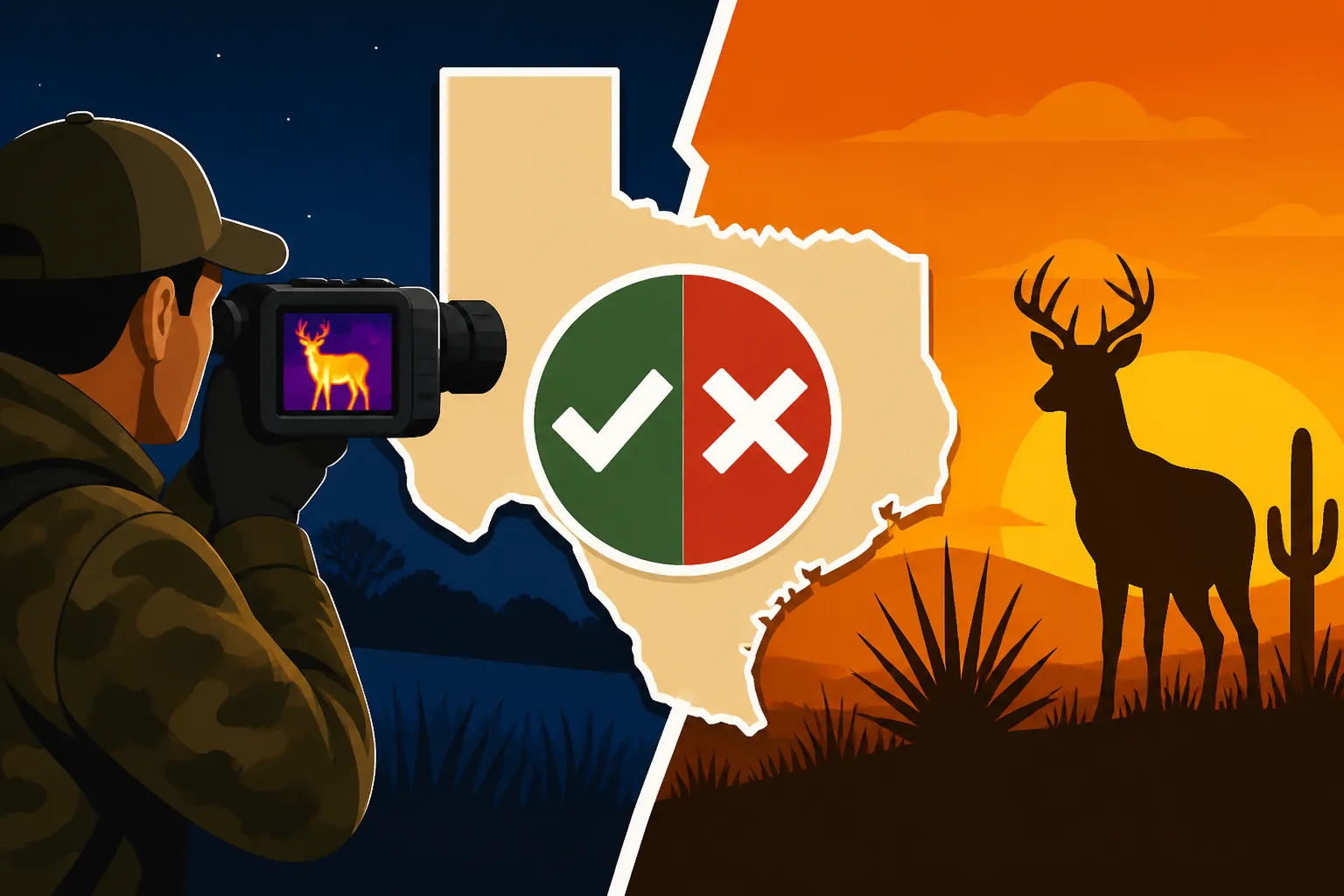
Both thermal imaging devices and traditional night vision optics (image intensifiers) are legal for hunting feral hogs and exotic animals in Texas. There's no statewide prohibition on possessing or using these devices in and of themselves.
- Thermal Imaging: These devices detect infrared radiation (heat signatures) emitted by objects. They don't need ambient light and can "see" through light fog, smoke, or brush, making them incredibly effective for locating warm bodies in complete darkness. A thermal scope mounts directly to your rifle, allowing you to aim precisely at a heat signature. A thermal monocular, on the other hand, is a handheld device used for scanning and spotting. You can learn more about specific gear options in Best Thermal Scopes for Hog Hunting in Texas.
- Night Vision: These devices amplify existing ambient light (like starlight or moonlight) to create a visible image. Some also incorporate an infrared (IR) illuminator to provide their own light source, which is invisible to the naked eye but visible through the night vision device. They generally offer better resolution and detail than thermal in ideal conditions but are limited by the presence of some light.
The key takeaway here is that the devices themselves are perfectly legal to own and use, provided you are using them in a manner consistent with hunting laws for the species you are pursuing.
Legal Restrictions and Prohibitions (Native Game Animals)
This is where you need to pay very close attention. While thermal and night vision are legal for hogs and exotics, their use is strictly prohibited for hunting native game animals. This includes:
- White-tailed deer
- Mule deer
- Pronghorn antelope
- Turkey (Rio Grande, Eastern)
- Quail (Bobwhite, Blue)
- Migratory birds (Doves, Ducks, Geese, Sandhill Cranes)
- Javelina (classified as a game animal in some zones)
- Alligator
- Squirrels and Rabbits (generally, though small game often has broader rules, check your Outdoor Annual for specifics)
You cannot use thermal or night vision scopes, binoculars, or any other device that aids in vision at night to locate, track, or take these native game animals during any hunting season, including legal daylight hours. The spirit of the law here is to ensure ethical hunting practices and fair chase. Violating these rules can lead to significant fines, license suspension, confiscation of equipment, and even jail time. It's a serious offense, so always be absolutely certain of your target species. For a full breakdown of seasons, refer to Texas Hunting Seasons: Complete Calendar by Species.
Specific Scenarios and Device Types
Let's look at some real-world scenarios to make this crystal clear:
- Legal Use: You are sitting in a box blind at night on your South Texas lease, using a thermal scope mounted on your rifle to scan a senderos for feral hogs. You spot a group of hogs, identify them clearly, and harvest one. This is perfectly legal. You might even be using a thermal monocular to scan the treeline for heat signatures before raising your rifle. This is also fine.
- Illegal Use (Example 1): You are deer hunting during the general open season. You have a thermal monocular in your backpack. You spot a large white-tailed buck just before legal shooting light ends, but it's getting dim. You pull out your thermal monocular to confirm it's a buck before shooting with your regular scope. Even though you used your rifle's scope for the shot, using the thermal monocular to aid in the identification of a native game animal outside of legal hours or with artificial light is illegal.
- Illegal Use (Example 2): You are driving your Polaris Ranger through your property at night, and you see a whitetail buck cross the road. You have a thermal scope mounted on your rifle in the gun rack. Even if you don't shoot, the potential to use a prohibited device to hunt a native game animal during illegal hours is a precarious situation. The safest bet is to leave thermal scopes off rifles when hunting or scouting for native game, especially outside daylight hours.
- Dual-Use Challenge: Some hunters have thermal clip-on devices that attach to their daylight scopes. While brilliant for hog hunting, if you're out during daylight hours primarily for deer, having that clip-on attached, even if powered off, could raise questions. The intent behind your setup is critical, but perception matters to game wardens.
Practical Considerations for Thermal Hunting in Texas
Beyond the legalities, there are many practical aspects to consider when embracing thermal hunting. It's an exciting and effective method, but it comes with its own set of responsibilities and equipment needs.
Safety First: Beyond the Legalities
Hunting at night, even with advanced optics, introduces unique safety challenges. Visibility is inherently limited, and the potential for accidents increases if you're not meticulous.
- Target Identification: While thermal clearly shows heat, it doesn't always show fine detail. Is that heat signature a hog, or could it be a cow, a deer, or even a person? Always use a second means of identification, like a powerful white light (legal for hogs and exotics, but never for native game) or traditional night vision, to confirm your target before pulling the trigger. This is paramount.
- Backstops: In daylight, seeing your bullet's trajectory and potential impacts is easier. At night, it's much harder. You must know your shooting lane and what's behind your target. Never take a shot unless you are absolutely certain of your backstop.
- Hunting with Partners: If hunting with others, clear communication and established shooting zones are non-negotiable. Wear reflective gear if you're moving around.
- Property Boundaries: It's easy to get disoriented in the dark. Be intimately familiar with your property lines, especially if you're near a public road or a neighbor's land. Stray bullets traveling onto someone else's property or worse, hitting a person, are catastrophic.
Gear Essentials for a Successful Night Hunt
While the thermal device itself is key, a successful thermal hunt requires a few other crucial pieces of equipment.
- Suppressors: These are game-changers for night hunting. They significantly reduce muzzle blast and recoil, making follow-up shots easier and more accurate. This is especially useful when trying to take multiple hogs from a sounder without them scattering after the first shot. Suppressors also reduce noise pollution for nearby residents and protect your hearing.
- Spotlights/IR Illuminators: For confirming targets when using thermal, a powerful spotlight (again, legal for hogs/exotics) can quickly identify an animal. If using night vision, an IR illuminator can greatly enhance its performance in very dark conditions.
- Reliable Firearm: A dependable rifle chambered in a common caliber like .223/5.56, .308, or 6.5 Creedmoor is ideal. You'll likely be shooting at various ranges, so a flat-shooting, accurate rifle is a must.
- Communication: Radios or fully charged cell phones are vital for staying in touch with your hunting partners or for emergencies.
- Durable Cooler: After a successful night hunt, you'll need a way to cool your game, especially in Texas heat. A high-quality cooler will preserve your harvest. You can read up on How to Cool a Deer Fast in Texas Heat for some general principles that apply to hogs too.
Finding Opportunities for Thermal Hunting
If you're eager to try thermal hunting, Texas offers abundant opportunities, primarily through private land access.
- Private Land Leases: The vast majority of thermal hog hunting occurs on private land. If you're on a Hunting Leases in Texas: Complete Guide (Cost & How to Find) or have permission from a landowner, you're usually good to go for hogs and exotics. Many landowners are keen to have hunters help control hog populations.
- Day Hunts and Outfitters: Numerous outfitters across Texas specialize in guided night hog hunts, providing all the necessary gear, including thermal setups, and experienced guides. These can be a great way to experience thermal hunting without the significant upfront investment in equipment. These operations typically operate on large private ranches.
- Public Land: This is a crucial distinction. While feral hogs can be found on some public lands, hunting regulations on public lands (like Wildlife Management Areas, or WMAs) are much stricter. Night hunting and the use of artificial light or thermal/night vision for any species, including hogs, is almost universally prohibited on public lands in Texas. Always check the specific rules for any WMA or public hunting land you intend to visit. The Annual Public Hunting Permit: What It Covers generally doesn't extend to night hunting for hogs with thermal, so always verify specific site regulations.
| Feature | Native Game Animals (e.g., Deer, Turkey) | Feral Hogs & Exotic Animals (Private Land) |
|---|---|---|
| Hunting Hours | 30 mins before sunrise to 30 mins after sunset | Year-round, 24/7 (No time restrictions) |
| Thermal/NV Use | ILLEGAL | LEGAL |
| Artificial Light | ILLEGAL | LEGAL (for hogs/exotics) |
| Season | Defined seasons by species and zone | No closed season |
| Bag Limit | Specific limits by species and county | No statewide bag limit for hogs; Varies for Exotics |
| License Required | Yes, general hunting license + tags | Yes, general hunting license |
Disclaimer
Please remember that hunting regulations can change. While this guide provides comprehensive and up-to-date information, it is your responsibility as a hunter to consult the most current Texas Parks and Wildlife Department Outdoor Annual or website before heading afield. Ignorance of the law is not a valid defense for violations. Stay safe, hunt ethically, and enjoy your time in the great Texas outdoors!