How to Hunt Feral Hogs in Texas (Step by Step)
Feral hogs in Texas are more than just a nuisance; they're a full-blown ecological and agricultural disaster for many landowners, farmers, and hunters. These intelligent, prolific creatures can decimate crops overnight, root up pastures, contaminate water sources, and spread diseases, leaving a path of destruction that costs millions of dollars annually. If you've ever watched your feeders get torn up or your food plots turn into a ploughed field, you know the frustration. This comprehensive guide is here to walk you through exactly how to hunt feral hogs in Texas, offering practical, step-by-step advice to help you manage these destructive animals and put some wild pork on the table.
Why Feral Hogs are Such a Nuisance
Feral hogs are truly a force of nature, and not in a good way. They're an invasive species that thrives in the diverse Texas landscape, from the dense brush of South Texas to the pine forests of East Texas, and everywhere in between. Unlike many other game animals, they reproduce at an astounding rate, often having multiple litters a year with an average of four to six piglets per litter. This incredible reproductive capacity means that even if you remove a significant number, their population can bounce back quickly. Their sheer numbers are staggering, with estimates suggesting millions roam the state.
The damage they cause is extensive and disheartening. Picture this: you've spent countless hours preparing a beautiful food plot, hoping to attract deer or turkey, only to wake up the next morning to a scene of utter devastation. That's a common story for Texas landowners. Hogs use their powerful snouts to root up the soil, searching for roots, tubers, and insects, destroying crops like corn, wheat, and peanuts, and turning lush fields into barren moonscapes. They also outcompete native wildlife for food resources, putting stress on species like white-tailed deer and wild turkeys. Beyond property damage, they carry diseases such as brucellosis and pseudorabies, posing a risk to livestock, domestic animals, and even humans. Their impact on the ecosystem, agriculture, and local economies is a constant, frustrating battle.
Legalities of Hog Hunting in Texas
One of the few "silver linings" when it comes to feral hogs is that hunting them is largely unregulated in Texas, reflecting the state's aggressive stance on population control. Unlike other game animals, there is no closed season for feral hogs, and there are no bag limits. This means you can hunt them year-round, day or night, and you can take as many as you can reasonably process. This open season approach makes them a prime target for hunters looking to extend their time in the field outside of traditional deer or turkey seasons.
However, "largely unregulated" doesn't mean "no rules at all." While a hunting license is not required to hunt feral hogs on private land in Texas if you are a resident, non-residents do need a hunting license. If you're hunting on public lands, such as Wildlife Management Areas (WMAs) or National Forests, you will need a valid Texas hunting license, along with any necessary permits like the Annual Public Hunting Permit. It's also crucial to remember that general hunting safety regulations, such as respecting property lines and observing local ordinances, still apply. Always verify specific regulations for the area you plan to hunt, especially concerning night hunting or the use of certain equipment, as some counties or public lands might have unique restrictions. It’s always a good idea to consult the most current Texas Outdoor Annual for any updates or specific rules that might apply to your hunting location.
Essential Gear for Your Texas Hog Hunt
Getting ready for a hog hunt is exciting, but having the right gear can make all the difference between a successful outing and a frustrating one. Texas hogs are hardy, smart, and often elusive, so you need equipment that can stand up to the challenge.
Weapons of Choice
When it comes to taking down a feral hog, you need a reliable firearm with enough stopping power. These animals are notoriously tough, with a thick hide and gristle plate around their shoulders, especially on older boars, that can turn away lesser calibers.
- Rifles: For most hog hunters, a rifle chambered in .223/5.56, .308, 6.5 Creedmoor, or even something larger like a .30-06 or .270, will do the trick. The AR-15 platform is incredibly popular for hog hunting due to its reliability, capacity, and modularity, allowing for easy attachment of optics and lights. Shot placement is key, aiming for the ear, vitals (behind the shoulder), or the neck to drop them quickly. A good quality soft-point or bonded bullet is recommended to ensure penetration through that tough hide.
- Shotguns: While not as common for general hog hunting, shotguns loaded with slugs can be incredibly effective in thick brush or at close range. For instance, if you're driving hogs or hunting in very dense cover where shots will be under 50 yards, a 12-gauge slug can deliver a devastating blow. Buckshot can be used in some scenarios, but its effectiveness drops off quickly with distance, and the risk of wounding rather than killing increases.
- Bows: For the traditional hunter, bowhunting for hogs offers an intense, up-close challenge. You'll need a stout setup, typically a compound bow with a draw weight capable of launching a heavy arrow with a sharp, durable broadhead. Fixed-blade broadheads are often favored for their penetration and structural integrity. Learning How to Bowhunt Whitetail in Texas will give you a good foundation, but remember that hog anatomy can be a bit different, requiring precise shot placement for ethical kills.
Optics and Illumination
Hogs are predominantly nocturnal, especially in areas with hunting pressure. This means that embracing night hunting is often the most productive way to encounter them.
- Thermal Scopes: This is where thermal imaging truly shines. Thermal scopes detect heat signatures, allowing you to see hogs clearly even in complete darkness, through light fog, or in thick brush where traditional night vision might struggle. Brands like Pulsar and AGM offer fantastic thermal scopes for hog hunting in Texas, turning the night into your hunting playground. The ability to scan large areas and pinpoint hogs hiding in dense cover gives you a significant advantage. If you're serious about taking out multiple hogs, thermal is a game-changer, and it's completely legal for hogs in Texas. For more details, check out Is Thermal Hunting Legal in Texas?.
- Night Vision: While not as effective at cutting through brush as thermal, modern digital night vision devices are excellent for target identification and navigation in low light. They amplify ambient light (starlight, moonlight), allowing you to see in the dark. Many hunters combine a thermal monocular for scanning with a night vision scope for target acquisition.
- Lights: Red or green hunting lights, mounted on your rifle or helmet, are a budget-friendly option for night hunting. Hogs are generally less wary of red or green light compared to white light, allowing you to identify and aim at them without spooking them immediately. However, their range and clarity are limited compared to thermal or night vision.
Other Must-Have Gear
Beyond weapons and optics, a few other items are critical for a successful and comfortable hog hunt in the Texas environment.
- Snake Boots: Texas is home to several venomous snakes, including rattlesnakes, cottonmouths, and copperheads. Walking through brush, tall grass, or around water sources puts you at risk. Investing in a good pair of snake boots or snake gaiters is not just a recommendation; it's a safety essential. They provide crucial protection against snake bites, letting you focus on the hunt rather than worrying about what's slithering near your ankles.
- Coolers: The Texas heat is no joke, and you need to keep your harvested hog meat cool to prevent spoilage. Large, high-quality coolers are indispensable for this. Brands like Yeti are popular for their ice retention, but there are many other great alternatives. You’ll want enough cooler space to fit several hogs if you're anticipating a successful hunt, especially if you're planning to stay out for a few days. Knowing How to Cool a Deer Fast in Texas Heat can easily be applied to hogs, ensuring your meat stays fresh.
- Traps: Sometimes, hunting with a rifle or bow isn't enough, or the hogs are simply too cagey. This is where hog trapping comes into its own. Modern hog traps, especially large corral traps with smart triggers, can catch multiple hogs at once. They are incredibly effective for reducing populations and can be set up over active feeding areas. Understanding Hog Trapping in Texas: Methods That Work will give you a leg up on designing and deploying effective traps.
Step-by-Step Hog Hunting Methods That Work
Feral hogs are adaptable, which means you need to be too. There are several proven methods for hunting hogs in Texas, each with its own strategies and challenges.
Hunting Over Bait/Feeders
Hunting over bait or a feeder is one of the most popular and effective ways to consistently put hogs down. Hogs are opportunistic eaters and will readily visit reliable food sources.
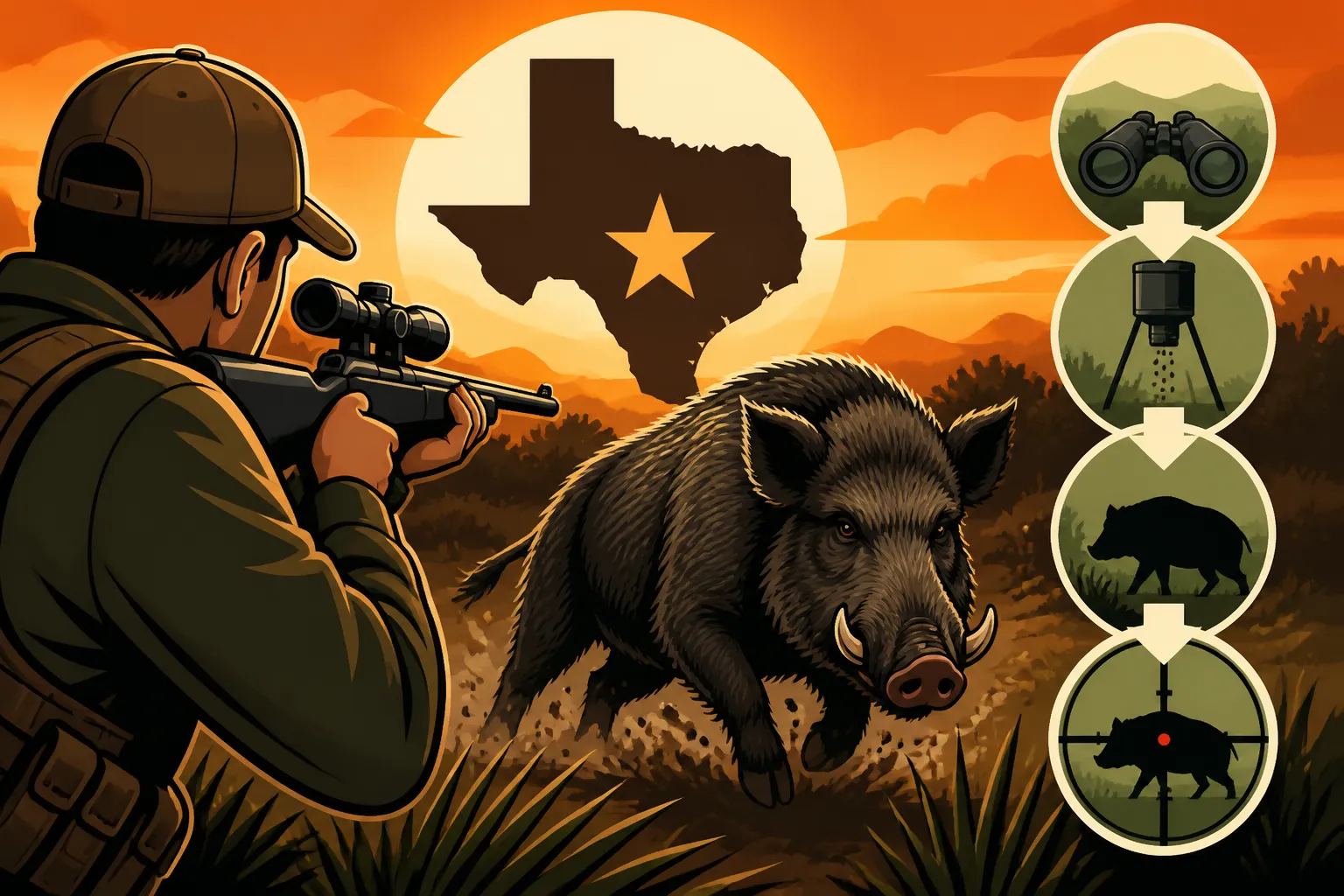
- Scouting: The first step is thorough scouting. Use trail cameras to identify active hog trails and feeding areas. Look for rooting, tracks, and rubs on trees. Once you find a promising spot, observe their patterns: when do they show up? How many? What routes do they take? Knowing How to Pattern Hogs on Your Lease is crucial for this stage.
- Feeder Setup: Install a robust feeder that can withstand hog abuse. A good spin feeder or gravity feeder filled with corn is a hog magnet. Consider elevating your feeder or using panels to make it harder for hogs to access the corn directly, forcing them to spend more time around the drop area. To prevent them from destroying the feeder itself, use heavy-duty materials. For an in-depth look at optimal setups, read Best Setup for Hunting Hogs Over a Feeder. You might even want to explore ways to How to Keep Hogs Out of Your Deer Feeder if they're causing issues for your deer management.
- Timing and Approach: Hogs typically feed most actively during the cooler parts of the day, which often means late evening, overnight, and early morning. Set up your blind or stand downwind from the feeder to prevent them from smelling you. Approach your stand quietly and well before their expected arrival time. Patience is paramount, as hogs can be unpredictable. When they do arrive, wait for a good, clean shot, especially if you're trying to take down multiple animals.
Spot-and-Stalk and Still Hunting
For the more active hunter, spot-and-stalk and still hunting offer an exhilarating challenge. This method relies on stealth, keen observation, and an understanding of hog behavior.
- Locating Hogs: This usually means covering a lot of ground, either on foot, from a vehicle (where legal), or even from an elevated vantage point. Look for signs like fresh rooting, wallows (muddy depressions where they cool off), rubs, and tracks. In denser cover, listen for their distinct grunts and squeals. Water sources and dense bedding areas are excellent places to start.
- Stealth and Wind: The key to both spot-and-stalk and still hunting is being undetected. Hogs have an incredible sense of smell and hearing, though their eyesight is relatively poor. Always approach from downwind, checking the wind constantly. Move slowly and deliberately, using natural cover to break up your silhouette. Wear camouflage that blends into the local environment, and minimize any noise you make.
- Executing the Shot: Once you spot hogs, carefully plan your stalk to get within ethical shooting range. This might mean crawling on your belly, waiting for them to move into a better position, or making a wide detour to get the wind right. For still hunting, find a good ambush point along a known travel corridor or near a food source and wait them out. When the shot presents itself, aim carefully for the vitals or ear.
Trapping Hogs
Trapping is often considered the most efficient way to reduce large hog populations, especially when you're dealing with multiple sounders (groups of hogs) or if hunting pressure has made them extremely wary.
- Identify High-Traffic Areas: Just like with feeder hunting, success in trapping starts with scouting. Find areas with consistent hog activity, such as fence crossings, travel corridors between food and water, or regular rooting spots. Utilize trail cameras to confirm their presence and identify their numbers.
- Choosing and Deploying Your Trap: There are various types of hog traps, but large corral traps are generally the most effective for catching multiple hogs. These traps are typically round or rectangular, constructed from heavy-gauge wire panels, and include a gate system (e.g., guillotine, rooter, or saloon door style). Bait the trap heavily and consistently with corn for several days, initially leaving the gate open to allow hogs to become comfortable entering and exiting. This "pre-baiting" or "conditioning" phase is crucial.
- Triggering and Managing the Trap: Once hogs are regularly entering the trap, set the trigger mechanism. Remote-controlled or cellular-activated gates, often paired with a cellular trail camera inside the trap, allow you to trigger the gate once the entire sounder is inside, maximizing your catch. For more on these advanced methods, refer to How to Hunt Hogs at Night With Thermal which touches on technology applicable to remote trapping. Regularly check your traps (at least once a day) to humanely dispatch caught animals and reset the trap.
Night Hunting with Thermal/Night Vision
Given their nocturnal habits, hunting hogs at night is incredibly productive and a popular method in Texas. It requires specialized equipment but opens up a whole new world of opportunities.
- Permitted Areas and Safety: While legal across most of Texas, always double-check local regulations for any specific property or public hunting area you plan to use. Safety is paramount when hunting in the dark. Know your hunting area intimately, always be aware of your backstop, and positively identify your target before squeezing the trigger.
- Thermal or Night Vision Setup: As discussed earlier, thermal scopes and monoculars are the kings of night hunting for hogs. Mount your thermal scope on your rifle, and use a handheld thermal monocular for scanning the landscape. This allows you to quickly locate hogs and then transition to your rifle for the shot. Many hunters find that combining the scanning ability of a thermal monocular with the precision of a thermal or digital night vision rifle scope is an unbeatable combination for How to Hunt Hogs at Night With Thermal.
- Tactics for Night Success: Hogs are often less wary at night, but they still have keen senses. Use the wind to your advantage, and move slowly and quietly. Scan fields, feeder areas, and timber edges. When you spot hogs, observe their behavior. Are they feeding? Moving? Plan your approach to get into a good shooting position, ideally with a stable rest. Be prepared for follow-up shots, as hogs often scatter quickly after the first shot.
After the Shot: Processing Your Hog
Taking down a hog is only half the battle. Proper field dressing and processing are crucial, especially in the warm Texas climate, to ensure you get high-quality meat.
Field Dressing in the Texas Heat
Texas heat can spoil game meat remarkably fast. Quick, efficient field dressing is non-negotiable.
- Move Fast: As soon as the hog is down and confirmed deceased, get to work. Don't waste time admiring your trophy, especially if temperatures are above 70°F. The goal is to remove internal organs to allow the carcass to cool down as rapidly as possible.
- Basic Field Dressing: Roll the hog onto its back. Make an incision from the sternum to the pelvis, carefully cutting around the anus. Cut through the diaphragm, and reach in to sever the esophagus and trachea. Roll the hog onto its side, allowing gravity to assist in removing all the entrails. Be careful not to puncture the stomach or intestines, as this can contaminate the meat. Remove as much blood as possible.
- Cooling Down: Once field dressed, if possible, hang the hog from a tree or a game hoist to allow air circulation. If you can't hang it, prop the cavity open with sticks to promote airflow. In extreme heat, you might even consider filling the cavity with ice, if available, to start the cooling process immediately. This rapid cooling is essential, and understanding principles from How to Field Dress a Deer in Hot Weather will serve you well here.
Best Practices for Game Recovery and Transport
After field dressing, safely and hygienically recovering and transporting your hog is the next step to getting it to the cooler or processor.
- Hygiene: Always wear gloves during field dressing to prevent contact with potential diseases like brucellosis. After handling the carcass, thoroughly wash your hands and disinfect your knife and tools.
- Transport: Getting a hog, especially a large one, out of the field can be tough. If you're hunting alone, a game cart can be an absolute lifesaver. Dragging a heavy hog across rough terrain is exhausting and can damage the hide and meat. If you have a truck or ATV, try to get it as close to the kill site as possible.
- Cooler Management: Once back at camp or home, get the hog into a cooler packed with ice immediately. For larger hogs, you may need to quarter the animal to fit it into your coolers. Ensure the meat is completely surrounded by ice. Keep the drain plug open to allow water to escape, and replenish ice as needed. This ensures the meat chills properly and remains safe for consumption until you can get it to a processor or process it yourself. For a deep dive into keeping things cold, consider checking out Best Coolers for Texas Hunting (Yeti & Alternatives).
| Hunting Method | Pros | Cons | Best For |
|---|---|---|---|
| Over Bait/Feeders | High success rate, predictable activity, suitable for various skill levels | Requires regular baiting, hogs can become "feeder shy," often attracts smaller hogs | Consistent population control, beginners |
| Spot-and-Stalk/Still | Challenging and rewarding, active hunting, less gear dependent | Low success rate in dense cover, requires skill and patience, physically demanding | Experienced hunters, public land, scouting |
| Trapping | Most effective for large population reduction, catches multiple hogs | Requires significant investment in traps, daily checks, humane dispatching of captured animals | Large property management, high hog densities |
| Night Hunting (Thermal) | Capitalizes on nocturnal habits, excellent visibility in darkness | High initial gear cost, requires practice with optics, potential for quick, scattered shots | Targeted population control, large properties |
Disclaimer
Hunting is an inherently dangerous activity. Always prioritize safety, understand and follow all local, state, and federal laws and regulations, and respect private property. The information provided in this guide is for educational purposes only and should not replace proper hunter education, common sense, or professional guidance.