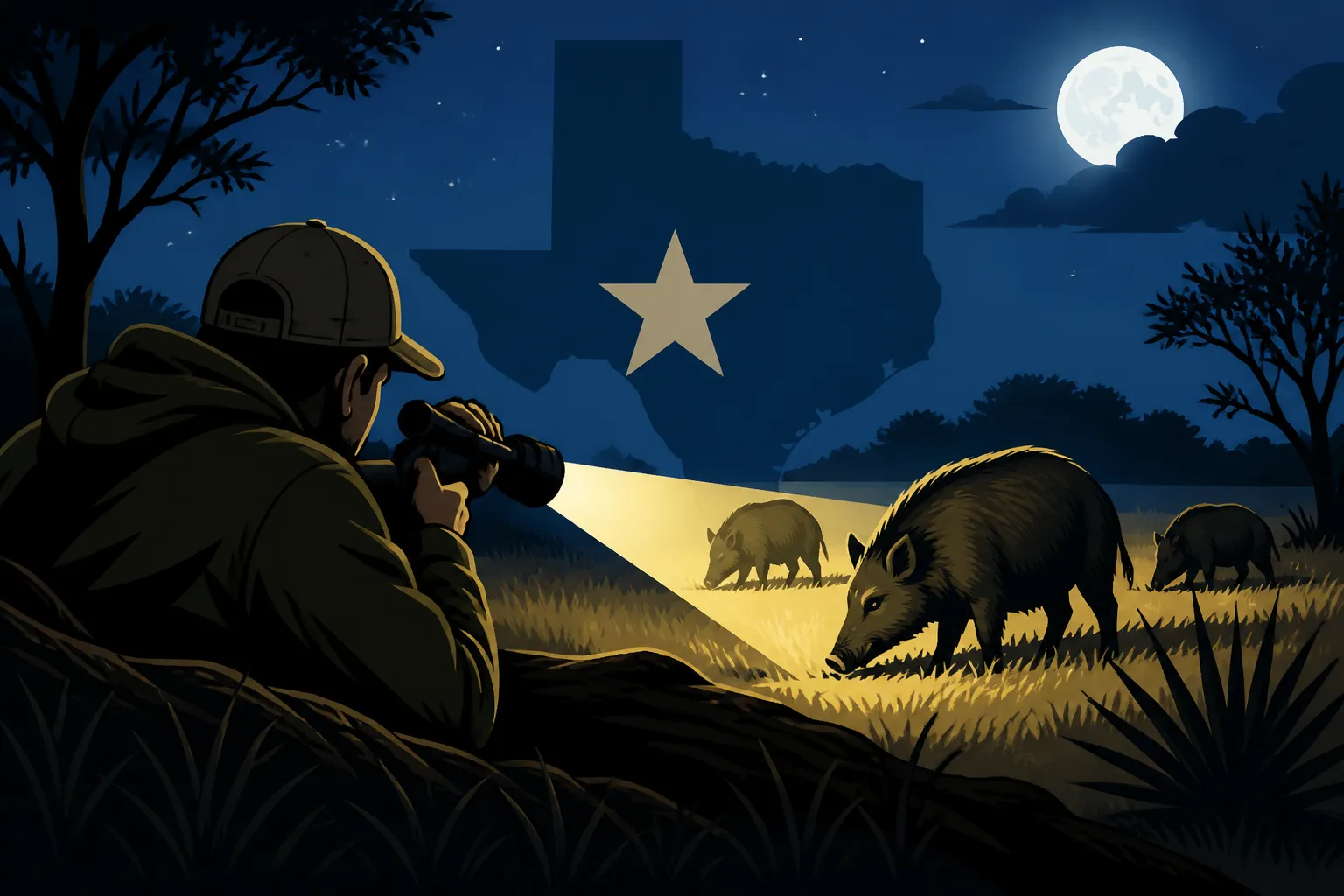
How to Hunt Hogs at Night Without Thermal
Hunting hogs at night in Texas can be incredibly effective, but the high price tag on top-tier thermal optics often puts it out of reach for many hunters. It’s a real bummer when you know those sounders are tearing up your fields under the cloak of darkness, but you feel like you're stuck in the dark yourself without that expensive gear. Well, I’m here to tell you that you absolutely can successfully hunt feral hogs at night without breaking the bank on thermal, and this guide will walk you through exactly how to do it effectively and safely.
The Allure of Night Hunting: Why Hogs Are Different After Dark
Hogs are primarily nocturnal, especially in areas with high human pressure or during the scorching Texas summers. They've learned to associate daylight with danger, making them incredibly wary and difficult to approach during the day. As the sun dips below the horizon, they feel a sense of security, becoming more active, moving freely, and visiting feeders or rooting up fields with less caution. This shift in behavior presents a unique opportunity for hunters willing to embrace the darkness, offering a chance to catch them off guard and make a real dent in their destructive populations.
Understanding Nocturnal Hog Behavior
When the sun goes down, feral hogs transform. They become less wary, moving from dense cover into open fields, food plots, and around feeders to forage. They rely heavily on their sense of smell and hearing at night, which are already incredibly acute, but their eyesight is notoriously poor. This is a crucial detail for us budget-minded night hunters. Their relaxed demeanor under the cover of darkness means they're more likely to hold their position longer, giving you more time for a clean shot than you might get during a quick daylight encounter.
The Strategic Advantage of Darkness
Hunting at night without thermal isn't just a workaround; it's a strategic choice. While thermal offers a clear heat signature, other night hunting methods can leverage the hog's poor eyesight against them. By controlling your light source, you can often observe hogs without them immediately pinpointing your exact location. This allows for calculated approaches and target identification, especially when using fixed light sources on a feeder or a strategically placed blind. It’s about playing to their weaknesses and making the night work for you, not against you.
Essential Gear for Night Hunting Without Thermal
You might think "night hunting" automatically means thousands of dollars in gear, but that's just not true. While thermal and high-end digital night vision are fantastic tools, there are plenty of reliable, more affordable options that will get the job done. The key is to understand what each piece of gear offers and how it fits into your hunting strategy.
Illuminators and Lights
When we talk about hunting hogs at night without thermal, we're essentially talking about using some form of artificial light. The market offers a wide array of options, each with its own advantages and disadvantages. The goal is to provide enough illumination to identify your target and make an ethical shot without spooking the hogs too much.
Spotlights and Weapon-Mounted Lights
Spotlights are the classic choice, and they still work. A powerful handheld spotlight can illuminate a wide area, letting you scan for hogs at a distance. The challenge here is balancing the light with your rifle. Some hunters use a dedicated "light man" to hold and operate the spotlight, freeing up the shooter. This can be a fun social hunt, but it's not always practical.
Weapon-mounted lights, on the other hand, attach directly to your rifle or shotgun, ensuring your light and aiming point are always aligned. These lights typically use bright LED bulbs and can come in white, green, or red light options. White light offers the most clarity, but it can also be the most alarming to animals. Many hunters swear by green or red lights, believing that hogs (and other animals) are less sensitive to these colors. Red light is often preferred as it's less disruptive to human night vision, too. Look for lights that offer a tight beam for longer-range identification. Brands like Olight, Streamlight, and Fenix offer robust weapon-mounted lights that can easily handle the recoil of a hunting rifle. For example, a good Streamlight Protac Rail Mount HL-X Pro can provide 1,000 lumens, which is more than enough for most night hunting scenarios.
Infrared (IR) Illuminators with Digital Night Vision
Okay, I know what you're thinking, "Didn't you say no thermal?" Yes! But digital night vision is different and often much more affordable than thermal. Digital night vision devices, whether they are monoculars, binoculars, or rifle scopes, work by amplifying ambient light and displaying it on a digital screen. However, they really shine when paired with an Infrared (IR) illuminator.
An IR illuminator emits light in a spectrum invisible to the human eye (and largely to most animals, including hogs). Your digital night vision device then "sees" this IR light, making everything look much brighter on its screen. This combination allows for surprisingly clear target identification in complete darkness. Many digital night vision scopes come with built-in IR illuminators, but often an aftermarket, more powerful IR illuminator can significantly extend your range and clarity. This setup offers a distinct advantage over pure visible light, as the hogs are less likely to perceive the light source directly.
Optics for Low Light and Night Vision
Beyond simply illuminating the target, you need a way to see them clearly through your scope.
Traditional Scopes with Illuminated Reticles
For those who prefer a more traditional approach, a high-quality rifle scope with an illuminated reticle can make a huge difference in low-light conditions. While it won't magically give you night vision, a bright, clear reticle can prevent the "disappearing crosshairs" problem that often plagues hunters at dusk and dawn. Pair this with a weapon-mounted white, green, or red light, and you've got a functional night hunting setup. The illumination helps you aim precisely once the target is visible under your spotlight.
Digital Night Vision Scopes
Digital night vision scopes are where you get into true night hunting without thermal. These scopes can range in price, but many entry-level models are significantly more affordable than even basic thermal options. They provide a full digital image of your surroundings, often in monochrome or with a green tint, and really come alive when an IR illuminator is used. Models like the Sightmark Wraith or the ATN X-Sight LTV series offer good performance for the money, allowing you to see hogs in pitch black conditions, especially with an auxiliary IR light. The ability to record video and often take photos is a bonus, allowing you to review your hunt later.
Essential Accessories
Don't forget the small things that can make a big difference in a night hunt.
Red Headlamps and Flashlights
A small headlamp with a red light setting is invaluable for navigating to and from your stand, setting up gear, or field dressing your animal after a successful hunt. Red light helps preserve your natural night vision, making the transition to scanning with your primary hunting light less jarring. It's also less likely to spook game if you accidentally glance towards a field.
Stable Shooting Platform
Accuracy is paramount, especially at night when visual cues can be limited. A sturdy Box Blind vs Tripod vs Ground Blind in Texas offers a stable shooting rest, minimizing movement and providing cover. If you're spot and stalking or using a tripod, a bipod or shooting sticks are non-negotiable. The less movement and more stability you have, the better your chances of making a clean, ethical shot in the dark.
Here's a quick comparison of popular night hunting illumination methods without thermal:
| Illumination Method | Pros | Cons | Best Use Case | Cost (Approx.) |
|---|---|---|---|---|
| White Weapon Light | Bright, clear image, simple to use. | Can spook game, harsh on human night vision. | Close-range shooting over bait, quick engagements. | $50 – $200 |
| Green/Red Weapon Light | Less likely to spook game, preserves night vision (red). | Image less clear than white, limited color perception for hogs. | General night hunting, feeder watches. | $50 – $250 |
| Digital NV Scope + IR Illum. | Invisible light source, good clarity, recording. | Can be sensitive to fog/rain, digital lag possible. | Medium-range hunting, scouting, extended observation. | $300 – $1000+ |
| Handheld Spotlight | Wide area illumination, versatile. | Requires two hands or an assistant, can be cumbersome. | Scouting large fields, initial identification. | $30 – $150 |
Tactics for Success in the Dark
Hunting hogs at night without thermal isn't just about having the right gear; it's about employing smart tactics that maximize your chances while minimizing the risk of detection. Hogs are smart, and while they can't see well in the dark, they use their other senses effectively.
Scouting and Stand Placement
Scouting is just as critical for night hunting as it is for day hunts, maybe even more so. You need to identify key areas where hogs are active at night. Look for fresh rooting, tracks, and droppings around water sources, feed stations, and field edges. Areas with dense cover nearby are prime spots, as hogs will emerge from these sanctuaries after dark.
When it comes to stand placement, think about prevailing winds. Hogs have an incredible sense of smell, and a shifting wind will betray your presence instantly. A sturdy, elevated blind, like a good quality box blind, can give you a scent advantage and help minimize ground-level noise. Positioning your stand overlooking a well-used trail, a feeder, or a water source is key. If hunting over a feeder, ensure your light source can fully illuminate the area where hogs are expected to stand. You can get some great ideas by checking out a guide on Best Deer Feeder Setup for Texas.
Baiting and Attracting Hogs
Baiting is a highly effective strategy for night hunting hogs, even without thermal. Setting up a regular bait station or feeder conditions hogs to visit a specific spot at a predictable time. Corn is king in Texas for attracting hogs, and you can even mix it with a little sour mash or diesel to create an irresistible aroma. Just remember to check the regulations on baiting in your specific hunting area, though generally, hunting over corn is legal for hogs year-round in Texas. You can even find specifics in our guide on Hunting Over Feeders & Corn in Texas (Legal Guide).
When baiting for night hunting, consider using timed feeders. This allows you to control when the bait is dispersed, potentially conditioning hogs to arrive during optimal hunting hours. If you're using digital night vision with an IR illuminator, position your feeder so that the IR light fully covers the feeding area.
Approach and Shot Placement
Approaching your stand or hunting area quietly and early is paramount. Arrive well before dark to allow the woods to settle down. Minimize noise and light pollution. Use your red headlamp sparingly and only when absolutely necessary.
Once hogs arrive, patience is your best friend. Wait for a hog to present a broadside or quartering-away shot. With artificial light, especially a tight beam, shot placement becomes even more critical due to the reduced visual context compared to daylight. Aim for the "sweet spot" – the intersection of the shoulder and the body, slightly low and forward of the midpoint. This targets the heart and lungs, ensuring a quick, ethical kill. If using a digital night vision scope, take your time to ensure the image is clear and you have positive identification before taking the shot. Don't rush. A good reference on Best Shot Placement for Hogs can be really helpful here.
Safety First: Crucial Considerations for Night Hunting
Night hunting, by its very nature, carries increased risks. Reduced visibility means you have to be extra vigilant and prioritize safety above all else. This isn't just about your safety, but the safety of anyone else who might be in the area.
Positive Target Identification
This is, without a doubt, the most critical aspect of night hunting. In the dark, shadows play tricks, and familiar shapes can look entirely different. Never, ever, ever pull the trigger unless you are 100% positive of your target and what lies beyond it. With hogs, this means clearly identifying the animal as a hog and ensuring no other animals (or people) are in the line of fire. If there’s any doubt, hold your shot. Digital night vision and powerful lights help, but they don't replace common sense and patience.
Navigating in the Dark
Getting lost in familiar territory is surprisingly easy at night. Always scout your route to and from your stand during daylight hours, paying attention to landmarks. Use a GPS device or a mapping app like onX Hunt on your phone to mark your stand location and any potential obstacles or hazards. Carry a reliable backup flashlight (again, with a red light option) and extra batteries. Let someone know where you're going and when you expect to return. Walking slowly and deliberately, constantly scanning your surroundings, is essential for safe navigation.
Firearm Handling and Awareness
The core principles of firearm safety are even more important at night.
- Treat every firearm as if it were loaded.
- Always point the muzzle in a safe direction.
- Keep your finger off the trigger until ready to shoot.
- Be sure of your target and what is beyond it.
When you're dealing with artificial lights, it's easy to get disoriented. Always be aware of your muzzle direction, especially when sweeping with a light. Unload your firearm when moving to and from your stand, and only load it when you are settled and ready to hunt. With reduced visibility, it's a good practice to avoid carrying a loaded firearm unless actively engaged in a hunting scenario from a stationary position.
Legalities of Night Hunting Hogs in Texas
Texas has some of the most liberal hunting regulations for feral hogs, which is a good thing considering their impact on the state's agriculture and ecosystem. But even with lax rules, it's crucial to understand the specifics.
Year-Round Season and No Bag Limits
One of the best things about hog hunting in Texas is that there is no closed season and no bag limit on private land. You can hunt them 365 days a year, day or night, and take as many as you can. This continuous opportunity makes them a prime target for control efforts, including night hunting.
Using Artificial Light
Yes, using artificial light to hunt feral hogs at night is legal in Texas. This includes spotlights, weapon-mounted lights, and even night vision and thermal imaging devices. This broad legality is what makes hunting hogs at night without thermal a viable option. However, it's always wise to double-check the latest Texas Parks and Wildlife Department (TPWD) Outdoor Annual or consult their website, as regulations can occasionally change.
License Requirements and Landowner Permission
For resident landowners or their agents (which includes anyone hunting with the landowner's permission), a hunting license is NOT required to hunt feral hogs on their own property. However, if you are hunting hogs on private land and you are not the landowner or their agent, you generally do need a valid Texas hunting license. It's always best practice to have written permission from the landowner, regardless of whether you're required to have a license. Make sure you understand the nuances of the law; a guide on What License Do I Need to Hunt Hogs in Texas? can clarify further.
After the Shot: Recovery and Processing
So, you've made a good shot on a hog in the dark. Now what? The post-shot procedure for night hunting needs a bit more care and planning than a daylight hunt.
Tracking at Night
Even with a solid shot, hogs can cover ground quickly. If the hog doesn't drop immediately, tracking at night can be incredibly challenging. If you're using digital night vision, try to observe the direction of travel and any reactions the hog makes. Mark the last spot you saw the animal with something identifiable, like a piece of bright flagging tape or a unique tree.
Resist the urge to immediately pursue a wounded animal in thick cover at night. It's safer to back out, mark the spot, and return at first light with a good tracking dog or a methodical grid search. This allows the hog to expire, preventing a potentially dangerous encounter in the dark. If you absolutely must track at night, do so slowly, carefully, and with ample light (a powerful white spotlight can be useful here, but be mindful of your surroundings).
Field Dressing in the Dark
Once you've recovered your hog, you'll need to field dress it, often under less-than-ideal lighting conditions. A bright headlamp (white light is best for this task) and a sharp hunting knife are indispensable. Have gloves on hand to maintain hygiene. Remember that hogs carry a variety of bacteria, so proper field dressing is crucial for meat quality and safety. Position the animal so you have good access and can work efficiently. Consider bringing a tarp or ground cloth to keep the meat clean. For detailed instructions on how to process your game, especially in the Texas heat, check out our guide on How to Field Dress a Deer in Hot Weather, many of which apply to hogs as well.
Cooling the Carcass
Texas heat is no joke, even at night. Once field dressed, you need to cool the carcass as quickly as possible to preserve the meat. If you're hunting during cooler months, hanging the hog in a well-ventilated, shaded area might suffice overnight. However, during warmer periods, getting the carcass on ice or into a walk-in cooler is ideal. If quartering the animal, pack the meat directly into coolers filled with ice. Good quality coolers, like a Yeti or similar insulated options, are worth their weight in gold for this.
Night hunting hogs without thermal is a completely achievable and rewarding endeavor in Texas. It might require a bit more planning and a different set of gear than you're used to, but the satisfaction of successfully outsmarting these cunning critters under the stars is truly something special. Stay safe, stay smart, and enjoy the hunt!
Disclaimer
Always consult the most current Texas Parks and Wildlife Department (TPWD) regulations before engaging in any hunting activities. Laws and rules can change, and it is every hunter's responsibility to be informed and compliant.