How to Hunt Dove Without a Field
Hunting doves without a sprawling sunflower or wheat field might seem like trying to find a needle in a haystack, especially in Texas where "dove field" is practically synonymous with opening day. Many hunters feel restricted, thinking they need prime agricultural land to even bother, leading to frustration if they don't have access. But let me tell you, that simply isn't true. Doves are incredibly adaptable birds, and with the right knowledge and tactics, you can absolutely enjoy fantastic dove hunting even when you're far from a cultivated field. This guide will walk you through how to pinpoint dove hot spots in unexpected places and how to capitalize on their natural behaviors to fill your cooler.
Understanding the Dove's Natural Habitat Beyond the Field
While doves are often associated with agricultural fields, their survival doesn't solely depend on them. These birds need three basic things: food, water, and roosting/loafing areas. Fields simply offer a convenient combination of food and sometimes loafing cover. When fields aren't available, doves find these essentials in a variety of other natural settings across the vast Texas landscape.
The Allure of Water Sources for Doves
Water is a non-negotiable for doves, especially in the often-arid Texas climate. They need to drink frequently, sometimes multiple times a day, to aid in digestion and regulate their body temperature. This makes any reliable water source an absolute magnet for doves.
Think beyond just large stock tanks. Smaller, overlooked water sources can be goldmines. This includes cattle tanks, leaky faucets at abandoned homesteads, overflow from irrigation pivots (even if no crop is actively being grown), natural springs, small puddles in dry creek beds after a rain, or even low spots where water collects after a heavy dew or fog. Focus on water sources with bare, exposed edges that allow doves easy access to drink without fear of predators lurking in dense cover. Gravel, sand, or sparse grass around the edges are ideal. Doves are notoriously wary, and they prefer an unobstructed view while they get their drink. Knowing the nuances of different water sources can give you a real edge.
Roosting and Loafing Areas: More Than Just a Place to Rest
Doves don't just fly from food to water and back; they spend a significant portion of their day loafing, digesting, and resting. These "loafing" areas are typically elevated, open spots that provide a good vantage point and protection from ground predators.
Look for dead trees, power lines, abandoned corrals, communication towers, or even the tops of solitary mesquite bushes or small groves of oak trees. These spots offer doves a safe perch to scan for danger and soak up the sun. In the evening, doves will gather in more communal roosting areas, which are often dense stands of trees like mesquites, junipers, or oaks, providing heavy cover from the elements and predators. Observing flight patterns to and from these roosting sites can give you invaluable clues about their daily movements. Remember, doves will often fly considerable distances from feeding and watering spots to reach their preferred roosts.
Scouting Techniques for Non-Field Dove Hunting
Hunting without a dedicated field demands a more proactive and observant approach to scouting. You can't just drive up to a known sunflower patch and expect birds. You need to become a detective, piecing together clues about dove activity in natural, uncultivated areas. This is where your hunting skills really get to shine!
Road Cruising and Glassing for Clues
One of the simplest yet most effective ways to scout for doves in non-field environments is "road cruising." Drive slowly on rural roads, keeping your eyes peeled for any sign of doves. Look for birds perched on power lines, fences, or dead trees along the roadside. Watch for them flying into or out of suspected feeding or watering areas. Pay close attention to any movement near stock tanks or small ponds.
A good pair of binoculars is your best friend here. Stop frequently and glass potential areas thoroughly. You'd be amazed at what you can spot from a distance. Look for doves "pitching" down into a patch of weeds, or landing near a specific puddle. If you spot birds, try to observe their patterns – where are they coming from, and where are they heading? This helps you understand their daily commute. Early mornings and late afternoons are prime times for this kind of scouting, as doves are most active.
Patterning Flight Paths and Feeding Zones
Once you've identified potential hot spots like a waterhole or a grove of trees, the next step is to pattern the doves' flight paths. Doves are creatures of habit, and they often use the same flight corridors day after day. Observe these paths: are they flying low over a creek bed? Skimming over a certain fence line? Cutting across a specific corner of a pasture? These are your ambush points.
Beyond water and roosts, doves need food. In the absence of cultivated fields, they'll seek out natural seed sources. Look for areas with abundant native grasses like goat weed, ragweed, croton (dove weed), or sunflowers growing wild. These weeds often grow along fencelines, in fallow pastures, or even in disturbed soil around old equipment or farm buildings. While scouting, focus on the types of vegetation doves are attracted to. You might even find birds feeding on spilled grain around cattle feeders or old feed sacks left near barns. Understanding these natural food sources is critical when you're not hunting over corn.
Effective Hunting Strategies Without Traditional Fields
So, you've done your scouting, found some promising spots away from the usual fields, and now it's time to hunt. The tactics you employ will differ slightly from a typical field hunt, but the core principles of concealment and shot placement remain the same.
Ambushing Doves at Waterholes and Stock Tanks
This is arguably one of the most productive ways to hunt doves without a dedicated field. Doves must drink, making water sources highly predictable choke points. The key is to arrive early, set up inconspicuously, and be patient.
Identify the doves' preferred landing and drinking spots along the bank. These areas will often have a "dusted" look from their frequent landings. Set up a portable blind, like a pop-up blind or even just some natural brush, about 20-30 yards from these spots. Face away from the sun if possible, to keep it out of your eyes and make it harder for birds to spot your silhouette. Spread a few dove decoys on the ground near the water's edge to give passing birds confidence to commit. The Texas heat makes midday hunting over water particularly effective, as birds will be seeking relief. You might even consider hunting the hottest part of the day, as doves will be most desperate for water then. For more insights on various hunting setups, check out our guide on Box Blind vs Tripod vs Ground Blind in Texas.
Decoying in Unexpected Locations
Decoys aren't just for fields! While static shell decoys on the ground are useful near water, consider using spinning wing decoys like a Mojo Dove in areas where doves might be loafing or flying through. Perched on a dead tree limb or a tall fence post, a spinning decoy can be incredibly effective at drawing birds into range.
Think about using decoys in combination with natural cover. If you find a patch of wild sunflowers or croton that doves are hitting, set up a small ground blind nearby and place a few decoys on short stakes among the weeds. The goal is to make your setup look as natural and inviting as possible. Even a couple of dove silhouettes can make a difference in a well-chosen flight path or loafing area.
Jump Shooting and Stalking Tactics
For the more adventurous hunter, jump shooting and stalking can be exhilarating ways to hunt doves in less traditional spots. This method is particularly effective in areas with scattered patches of native weeds, dense brush lines, or along the edges of small woodlots.
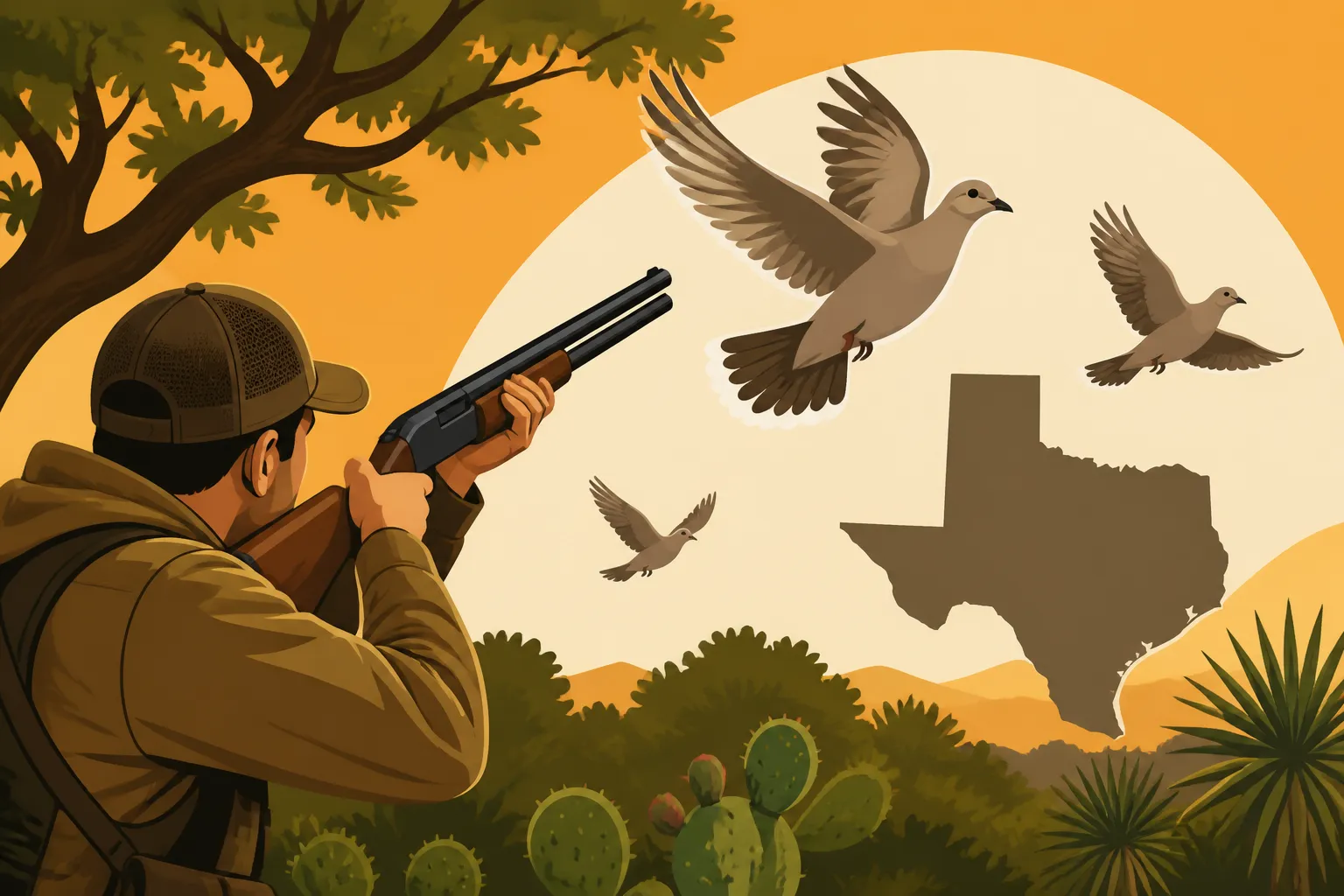
Slowly walk through areas you've identified as potential feeding or loafing zones. Keep your eyes peeled and be ready to shoulder your shotgun at a moment's notice. Doves will often flush wildly from cover, offering fast-paced, challenging shots. Creek beds and dry washes can be excellent places to stalk, as the terrain often provides natural concealment as you move. This style of hunting requires good boots, a keen eye, and quick reflexes. It's not about volume, but about the thrill of the hunt. To perfect your aim, you might want to review tips on Dove Hunting Tactics: Field Setup & Shooting.
Essential Gear and Setup for Field-Free Hunting
Hunting doves outside of a manicured field often means you'll be covering more ground and encountering a wider variety of terrain and conditions. Your gear choices should reflect this reality, prioritizing versatility, comfort, and stealth.
Shotgun, Ammo, and Choke Selection
For dove hunting, a 12-gauge or 20-gauge shotgun is typically ideal, offering a good balance of power and maneuverability. You'll want to use light loads, usually 7 1/2 or 8 shot, as doves are relatively small birds and dense patterns are more important than heavy hitting power. Shells with a dram equivalent of 2 ¾ or 3 are usually plenty.
When it comes to chokes, a modified choke is a fantastic all-around choice. It provides a good balance of pattern density for closer shots while still reaching out to those birds that might be a bit further out. If you anticipate closer flushing birds from jump shooting, an improved cylinder could be beneficial. For birds coming into a waterhole at a more controlled distance, a modified or even full choke might be appropriate. Having a shotgun that allows for easy choke changes in the field is a big plus. Understanding proper Best Shot Placement for Mourning Dove in Texas is crucial for clean kills.
Camouflage, Blinds, and Comfort
Because you're often hunting in less predictable environments, concealment is paramount. Earth-toned camouflage or drab greens and browns that blend with the natural surroundings are usually sufficient. However, if you're hunting near a dead mesquite or an old fence line, a more open country or scrub brush pattern might be beneficial. Light, breathable clothing is a must for Texas's notorious heat, especially during the early dove season.
A portable ground blind can be incredibly useful, whether it's a pop-up blind or even just a camo net draped over some natural brush. The key is to break up your outline and remain still. If you're going to be stationary for a while, a comfortable hunting stool or chair can make a world of difference. Don't forget bug spray, plenty of water, and a cooler to keep your harvested birds cool, especially in the relentless Texas sun. Proper cooling is vital, and you can find great tips in our article, How to Cool a Deer Fast in Texas Heat, many of which apply to doves too!
| Hunting Method | Best Use Case | Gear Recommendations | Pros | Cons |
|---|---|---|---|---|
| Waterhole Ambush | Hot, dry days; predictable bird movement | Portable blind, stool, decoys, Modified choke shotgun | High volume potential, birds come to you, less walking | Requires patience, limited shooting lanes, can be crowded |
| Decoying Loafing Zones | Active flight paths, natural cover | Spinning wing decoys, ground blind, light camo | Draws birds to specific spots, good visibility | Requires good scouting, decoys can be bulky |
| Jump Shooting/Stalking | Dense brush, creek beds, varied terrain | Comfortable boots, quick-handling shotgun, IC/Modified choke | Active and engaging, covers more ground, element of surprise | Lower bird count, challenging shots, high physical demand |
Remember, dove hunting without a field is an exercise in observation and adaptation. You might not always have those iconic flights of birds silhouetted against a sunset over a cut field, but you'll experience the thrill of finding doves in their natural elements, and that's a reward in itself. The more you explore and understand their habits beyond the usual spots, the more successful and fulfilling your hunts will become.
Disclaimer
Hunting regulations and seasons can change. Always consult the most current Texas Parks and Wildlife Department (TPWD) Outdoor Annual before heading afield to ensure you are compliant with all laws and bag limits. This information is for educational purposes only and should not be considered legal advice.