Aerial & Helicopter Hog Hunting in Texas
Feral hogs are an absolute plague across the Texas landscape, causing untold millions in agricultural damage and wreaking havoc on our delicate ecosystems. For landowners, ranchers, and even some frustrated hunters, the sheer numbers can feel overwhelming, making traditional ground-based methods seem like trying to empty the ocean with a teacup. This guide dives deep into one of the most effective, albeit unconventional, solutions: aerial and helicopter hog hunting, exploring how it works, what to expect, and why it’s become a critical tool in the fight against these destructive beasts.
The Feral Hog Problem in Texas: Why Extreme Measures?
If you’ve spent any time at all in rural Texas, you know the sound – the constant rooting, the torn-up fields, the damaged fences. Feral hogs aren't just a nuisance; they're an ecological and economic disaster, and their population numbers seem to defy every effort to control them. It often feels like a losing battle, which is why more drastic, efficient measures like aerial hunting have become so necessary.
The Scale of the Damage
Let's get real for a moment about the impact of these animals. Texas is home to an estimated 2.5 to 3 million feral hogs, representing roughly half of the nation's entire population. These aren't just a few rogue pigs; they are an invasive species with an incredibly high reproductive rate, meaning their numbers can explode under favorable conditions. The damage they inflict is staggering. We're talking about millions of dollars annually in crop destruction, with fields of corn, milo, and soybeans often looking like they've been rototilled overnight. Beyond crops, they contaminate water sources, destroy wildlife habitat, and can even spread diseases to livestock and humans. Imagine seeing your carefully tended food plots for deer or turkey utterly demolished, or finding your irrigation lines torn up. It’s enough to make any landowner pull their hair out.
Limitations of Traditional Hunting Methods
While I absolutely love a good stalk or a patient sit in a blind, traditional hog hunting methods, as effective as they can be for individual animals, often fall short when it comes to population control. Hunting hogs over feeders and corn in Texas is popular, and thermal hunting at night has gained traction, but these methods typically target smaller groups or individuals. You might take out a few sounders this way, and that certainly helps, but it barely scratches the surface of the overall problem. Think about it: a sow can have two litters a year, with up to 12 piglets per litter. Even if you're consistently taking out a few dozen hogs a year from your property, you're likely not even keeping pace with their reproduction. This is where the sheer scale and efficiency of aerial methods come into play, offering a way to make a significant dent in larger populations in areas that are otherwise inaccessible or too vast for ground hunters to cover effectively.
Understanding the Legality of Aerial Hog Hunting
Before you even think about hopping in a helicopter with a rifle, it's absolutely critical to understand the legal landscape. This isn't your typical deer season hunt, and there are specific regulations that govern who can participate and how it must be conducted. The laws are in place for safety, for ethical reasons, and to ensure that this powerful tool is used responsibly.
TPWD Regulations and Permits
In Texas, feral hogs are classified as an exotic, non-game animal, which means there isn't a closed season or bag limit – you can hunt them year-round, essentially whenever and however you can. However, when it comes to aerial hunting, things get a bit more specific. The Texas Parks and Wildlife Department (TPWD) requires that anyone engaging in aerial hunting for feral hogs obtain a specific permit. This permit, often referred to as a "landowner permit for feral hog control," is not for just any hunter. It's typically issued to the landowner or an authorized agent who needs to control feral hog populations on their property. The idea is to manage a nuisance, not to create a recreational hunting free-for-all. You can't just rent a helicopter and start blasting away. There are strict guidelines on reporting and compliance to ensure the activity is genuinely for control purposes. It’s always best to consult the most current Texas Outdoor Annual for the latest information on these specific regulations.
Federal Aviation Administration (FAA) Requirements
Beyond state regulations, there’s a whole other layer of legality related to the sky itself. The Federal Aviation Administration (FAA) has its own rules about flying aircraft, especially when it involves operating at low altitudes or maneuvers typically associated with hunting. Generally, the activity falls under what’s known as "wildlife services" or "agricultural operations" – it’s not categorized as recreational flight. Pilots and operators involved in aerial hog hunting must adhere to strict FAA guidelines regarding flight ceilings, minimum safe altitudes, and the type of aircraft used. This isn't just about avoiding collisions; it's about ensuring the safety of everyone on board and on the ground. Professional outfitters offering these services will have pilots who are specifically licensed and experienced in these types of operations, often holding agricultural pilot certificates or similar endorsements. Don't ever compromise on safety or legality; verify an outfitter's credentials thoroughly before committing.
How Aerial Hog Hunting Works: From the Air to the Ground
So, you've got the lay of the legal land. Now, let's talk about the adrenaline-pumping reality of what it's actually like to hunt hogs from the air. It's not just a joyride with a gun; it's a coordinated, strategic operation that requires precision, teamwork, and quick decision-making. The goal isn't necessarily a "trophy" but rather effective population removal.
Aircraft Types and Considerations
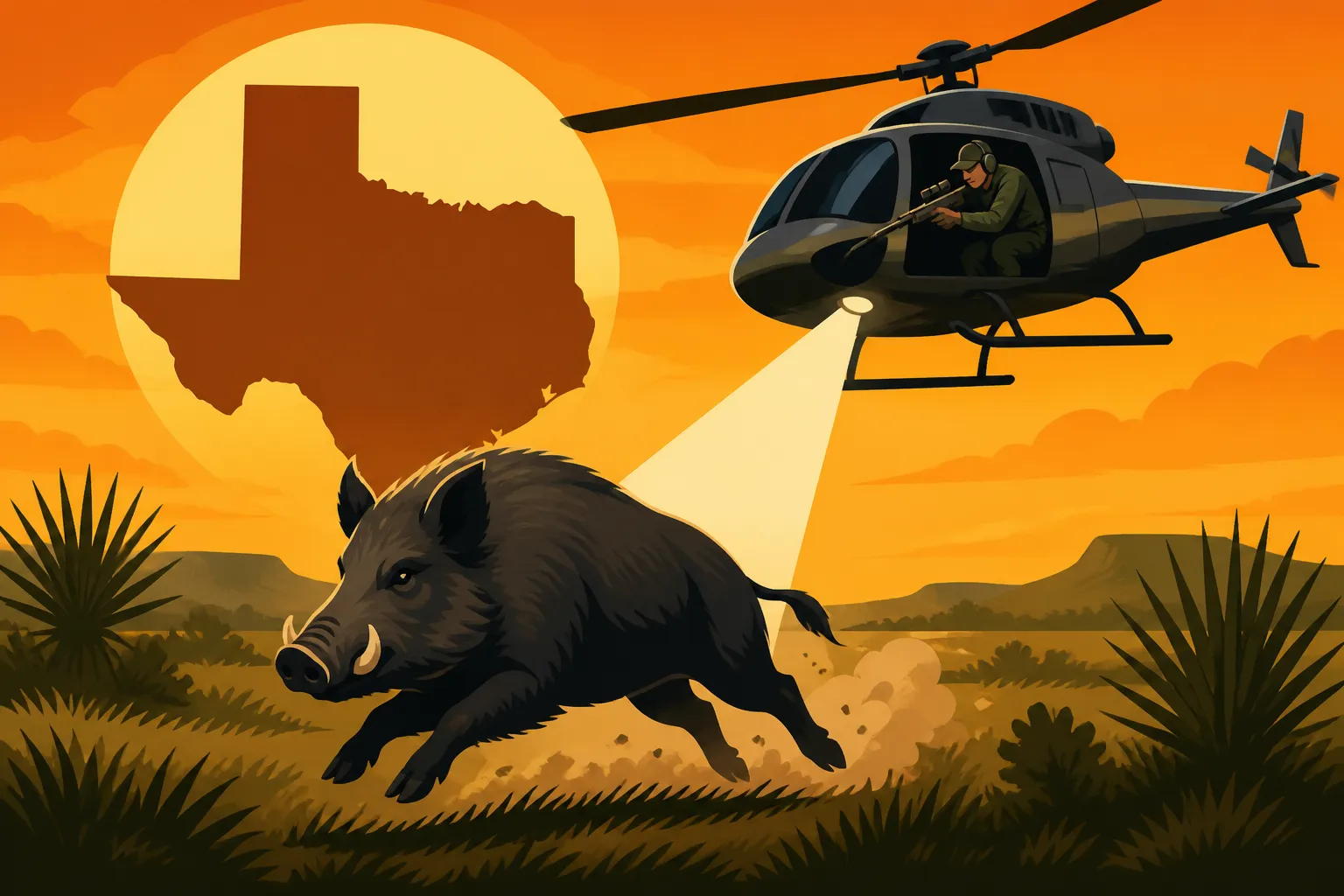
When we talk about "aerial" hunting, most people immediately think of helicopters, and for good reason. Helicopters, typically smaller, agile models like the Robinson R22 or R44, are the kings of this game. Their ability to hover, fly slowly, and turn on a dime makes them incredibly effective for pursuing fast-moving hogs through thick brush or across open fields. They offer a stable, albeit noisy, platform for shooters.
However, some operations might also utilize fixed-wing aircraft for initial spotting or in very open terrain, though they are far less common for the actual engagement due to their inability to loiter or maneuver tightly. For the real nitty-gritty of getting hogs, it’s almost always a helicopter. The type of aircraft chosen often depends on the terrain, the size of the area, and the specific outfitter's equipment.
Here's a quick comparison:
| Feature | Helicopter (e.g., R22, R44) | Fixed-Wing Aircraft (e.g., Cessna 172) |
|---|---|---|
| Maneuverability | Excellent; can hover, turn sharply, and fly low/slow. | Limited; requires speed to stay aloft, wider turns. |
| Visibility | Very good; open doors allow for wide fields of view. | Good, but limited by fuselage; doors typically stay closed. |
| Speed | Moderate to fast for transit, very slow for target engagement. | Fast for transit, too fast for precise shooting. |
| Cost (per hour) | Higher operating costs. | Lower operating costs, but less effective for active hunting. |
| Typical Use | Active hunting, herd tracking, rapid response. | Spotting large herds, survey work, transport. |
| Terrain | Highly effective in dense brush, broken terrain, and open fields. | Best suited for very open, flat terrain. |
Team Roles and Communication
A successful aerial hunt is a team effort. You typically have at least two key players: the pilot and the shooter(s). The pilot is more than just a driver; they are an integral part of the hunting team. They're constantly reading the terrain, anticipating the hogs' movements, and positioning the aircraft safely and effectively for the shot. Their skill dictates the success and safety of the hunt. The pilot will often communicate vital information to the shooter – "Hogs at 10 o'clock, moving towards the mesquites!" or "Watch for the little ones scattering!"
The shooter, often positioned with a door removed for a clear firing line, needs to be calm, steady, and an excellent shot. It's a dynamic environment, with wind, engine noise, and aircraft movement all playing a role. Good communication between the pilot and shooter is paramount, often using headsets to cut through the engine noise. In some larger operations, there might be a second shooter or even a spotter assisting with locating and tracking hogs. This is a highly specialized team, and a good outfitter will emphasize this synergy.
Tracking, Targeting, and Harvest
The hunt itself is a whirlwind of activity. Once hogs are spotted, often by their distinctive muddy trails, movement in the brush, or their dark forms against the landscape, the pilot maneuvers the helicopter to get the shooter into position. Hogs, being intelligent creatures, will try to escape, often running for the densest cover they can find. The pilot will work to keep them in the open or force them into areas where a shot is feasible.
Shooters typically use semi-automatic rifles, often chambered in common calibers like .223/5.56mm or .308, loaded with plenty of ammunition. The goal is humane and quick dispatch. It's not about making a single perfect shot on a stationary target; it's about making multiple, accurate shots on moving targets from a moving platform. Due to the destructive nature of these animals and the scale of the problem, the focus is on removing as many as possible safely and efficiently. After a pass, the pilot might circle back to ensure all downed hogs are accounted for, and in some cases, ground crews might follow up to remove carcasses, especially if the hunt is part of a larger management program.
Benefits and Drawbacks of Helicopter Hog Hunting
While the thought of hunting from a helicopter might sound like something out of a movie, it's a very real and effective tool. However, like any specialized method, it comes with its own set of advantages and disadvantages that hunters and landowners need to consider.
Unmatched Efficiency and Coverage
This is, without a doubt, the biggest selling point of aerial hog hunting. No other method comes close to its efficiency in reducing large hog populations. A helicopter can cover hundreds, even thousands, of acres in a single day, reaching remote areas that would be impossible or incredibly time-consuming to access on foot or with vehicles. Think about those dense South Texas brush country thickets or vast expanses of East Texas pineywoods. Hogs can vanish into these areas, but from the air, the perspective changes everything. You can spot entire sounders, track their movements, and engage them rapidly. This rapid removal can provide immediate, significant relief to properties suffering from severe hog damage. It’s truly a game-changer when you're trying to get ahead of a runaway hog problem, offering a level of control that simply can't be achieved otherwise. For more on effective hog control, consider reading about Hog Trapping in Texas: Methods That Work as a complementary strategy.
Costs and Accessibility
Here’s where the reality check comes in: aerial hog hunting is expensive. Like, really expensive. You're paying for specialized aircraft, a highly skilled pilot, ammunition, fuel, and the overall logistics of a complex operation. Hourly rates for a helicopter and pilot, plus the shooter package, can run into the thousands of dollars. This price point makes it largely inaccessible for the average hunter or small landowner looking to take out a few hogs.
Typically, it's a solution pursued by large ranch owners, agricultural operations with significant investments at risk, or groups of landowners pooling resources. While the cost is high, the return on investment can be substantial when you consider the millions in damage these animals cause. It's a strategic decision based on the severity of the problem and the economic impact of uncontrolled hog populations. So, while it's incredibly effective, it's definitely not a budget-friendly option for casual hunting.
Ethical Considerations and Public Perception
Aerial hunting, particularly of mammals, often sparks debate about ethics and public perception. For those unfamiliar with the devastating impact of feral hogs, the sight or idea of hunting from a helicopter can seem inhumane or unsportsmanlike. Critics sometimes argue that it lacks the "fair chase" element of traditional hunting.
However, proponents, especially those directly affected by hog damage, emphasize that this isn't recreational hunting in the traditional sense; it's a necessary wildlife management tool. The goal is pest eradication and mitigation of severe damage, not sport. The sheer numbers of hogs necessitate a method that can make a meaningful difference. Responsible outfitters emphasize humane dispatch and adherence to all regulations, aiming to minimize suffering and maximize efficiency. It's a tough conversation, but when facing millions of dollars in losses and ecological devastation, the need for effective control often outweighs traditional hunting aesthetics. Understanding the context of the feral hog crisis in Texas is crucial to appreciating why such methods are employed.
Choosing an Aerial Hog Hunting Outfitter in Texas
If you've decided that aerial hog hunting is the right solution for your property, selecting the right outfitter is arguably the most critical step. This isn't a casual booking; you're putting your safety and a significant investment in their hands. A reputable outfitter will prioritize safety, legality, and effectiveness.
Key Questions to Ask
Don't be shy about asking a lot of questions. This is a complex operation, and you need to feel completely comfortable with the people you're working with. Here are some essential inquiries:
- What permits do you hold? Ensure they have all the necessary TPWD aerial hunting permits and FAA certifications for their pilots and aircraft. Ask to see proof.
- What type of aircraft do you use? Understand the specifics – make, model, and how it's maintained.
- What's your safety record? A good outfitter will be transparent about their safety protocols and track record.
- How long have you been conducting aerial hog hunts? Experience matters a great deal in this specialized field.
- What calibers do you recommend or provide? Discuss firearm options and ammunition.
- What's included in the price? Be clear about what the hourly rate covers: fuel, pilot, ammunition, any ground crew? Avoid hidden fees.
- What are your procedures for downed hogs? Do they simply leave them, or do they have a plan for carcass removal if you request it? This is important for disease prevention and property aesthetics.
- Can you provide references? Speak to other landowners or clients who have used their services. This is invaluable.
Safety Protocols and Pilot Experience
Safety must be the absolute top priority. You'll be flying at low altitudes, maneuvering sharply, and operating firearms from a moving platform. A truly professional outfitter will have stringent safety protocols in place, covering everything from pre-flight checks to in-flight communication and emergency procedures.
The pilot's experience is non-negotiable. They should have extensive flight hours in the specific aircraft used for aerial hunting, with a deep understanding of aerodynamics, local terrain, and animal behavior. They need to be able to anticipate, react quickly, and make split-second decisions that keep everyone safe. Don't hesitate to ask about the pilot's certifications, flight hours, and specific experience with low-level operations and aerial wildlife control. It's not just about flying; it's about flying while hunting.
What to Expect on Your Hunt
An aerial hog hunt is intense, exhilarating, and highly effective. You'll likely meet at a designated airstrip or landing zone on your property. After a thorough safety briefing covering everything from how to board the aircraft to emergency procedures and firearm handling, you'll gear up. Depending on the outfitter, you might be provided with hearing protection, communication headsets, and even a vest for carrying extra ammunition.
Once airborne, the hunt begins. The pilot will begin scanning for hogs, often flying transects across the property. When hogs are spotted, the real action starts. The helicopter will maneuver to give the shooter the best possible angle, often making tight turns and rapid descents. It can be noisy and turbulent, requiring a steady hand and calm demeanor. Be prepared for a high-volume shooting scenario, as the goal is to remove as many hogs as possible in the limited flight time. It’s an unforgettable experience, providing a unique perspective on the Texas landscape and the feral hog crisis it faces. For more general insights into hunting these animals, check out our Feral Hog Hunting Tactics for Texas guide.
Preparing for Your Aerial Hog Hunt
So, you’ve chosen your outfitter and the date is set. Now what? You can’t just show up in your Sunday best. Aerial hog hunting requires specific preparation, both in terms of gear and your personal readiness, to ensure a safe and successful experience.
Essential Gear and Clothing
Comfort and practicality are key when preparing for an aerial hunt. Here's a rundown of what you'll likely need:
- Clothing: Think rugged and comfortable. Long pants (jeans or tough tactical pants) and a long-sleeved shirt are a must to protect against sun, brush, and any bumps or scrapes during ingress/egress. Layers are always a good idea in Texas, as mornings can be cool and afternoons scorching, even in the fall or spring. Avoid loose clothing that could flap in the wind.
- Footwear: Sturdy, closed-toe shoes or boots are essential. No sandals or open-toed anything. You'll be getting in and out of an aircraft, potentially in uneven terrain. You might also consider Best Snake Boots for Texas Hunting if you'll be on the ground for any extended periods.
- Eye Protection: Essential. Shooting from a helicopter means potential for debris, wind, and certainly eye strain from constant scanning. Good quality shooting glasses are a must.
- Hearing Protection: Absolutely critical. Helicopter engines are loud. Your outfitter will likely provide communication headsets that double as hearing protection, but having additional earplugs as a backup isn't a bad idea.
- Gloves: Can provide a better grip on your rifle and protect your hands.
- Sun Protection: Sunscreen, a wide-brimmed hat (that won't fly off), and sunglasses are vital, even on cloudy days, as you'll be exposed for extended periods.
- Hydration & Snacks: Bring water! It’s easy to get dehydrated, especially in Texas heat. Some quick, easy-to-eat snacks can also keep your energy up during intense periods.
- Firearm & Ammunition (if providing your own): Discuss this in detail with your outfitter. They will have specific requirements regarding caliber, rifle type, and amount of ammunition. If you're using their firearms, they will supply everything.
Physical and Mental Readiness
Aerial hog hunting is physically demanding. You’ll be sitting in an aircraft for extended periods, enduring vibrations and rapid maneuvers. The shooting itself requires strength, focus, and stamina. Your core will be engaged, and your arms will be supporting a rifle against wind and movement. If you're prone to motion sickness, discuss this with your outfitter beforehand and consider taking medication like Dramamine.
Mentally, you need to be prepared for an intense, fast-paced environment. This isn't a leisurely target practice session. You’ll be making quick decisions and shooting under pressure. Staying calm and focused amidst the noise and movement is paramount for safety and effectiveness. Practice your shooting fundamentals beforehand, especially shooting at moving targets, if possible. A good mental game plan will help you make the most of this unique and impactful hunting experience. Don't forget that this type of hunting, while exhilarating, is primarily a management tool, so keep your focus on effective population control.
Disclaimer
Please remember that hunting regulations and best practices can change. Always consult the most current Texas Parks and Wildlife Department (TPWD) Outdoor Annual and federal regulations before engaging in any hunting activities. This guide is for informational purposes only and should not replace official legal guidance or professional instruction.