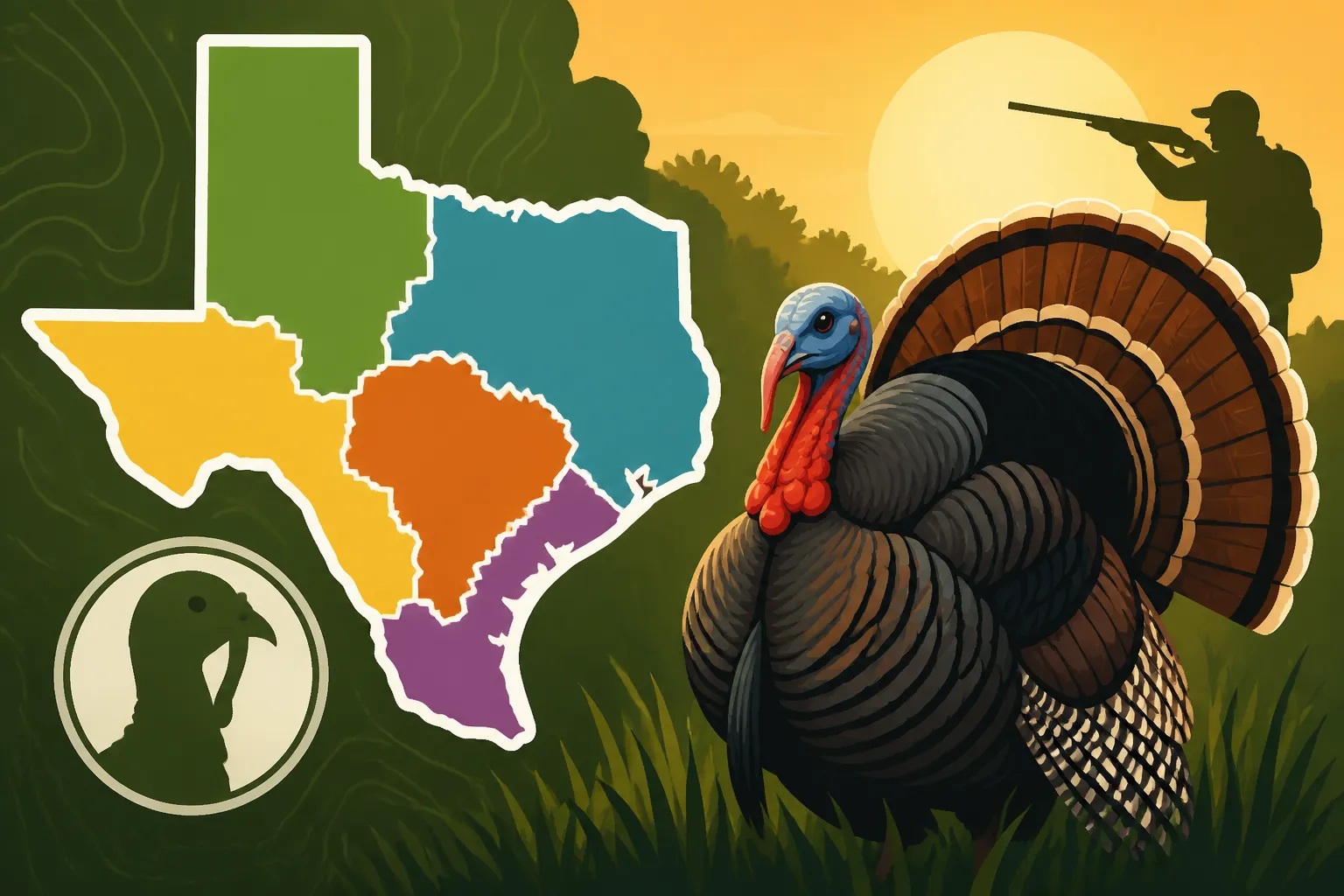
Texas Spring Turkey Season Zones & Dates
Every Texas hunter knows the agonizing feeling of sitting on a porch in late February or early March, hearing a distant, thundering gobble echo through the brush, and realizing you still have weeks to wait. Timing the Texas turkey season is an art form, especially when the state is divided into complex zones that dictate exactly when you can legally pursue those wily longbeards. This guide breaks down the dates and zones to ensure you are ready when the woods finally wake up.
Understanding the Texas Turkey Zones North vs South
The sheer size of Texas means that spring arrives in the Rio Grande Valley long before it hits the Panhandle. Because of this, the Texas Parks and Wildlife Department (TPWD) splits the state primarily into North and South zones for Rio Grande turkeys. If you are hunting a lease in the Brush Country, your season will start significantly earlier than your buddies hunting near Abilene. Navigating these boundaries is the first step in planning your spring campaign.
The South Zone Boundary and Timing
The South Zone generally encompasses the counties below the line of the Edwards Plateau and stretching into the deep South Texas scrub. For 2026, the South Zone is where the action starts first. It is a land of prickly pear and mesquite where the birds seem to get "fired up" earlier due to the warmer coastal influences. When you are looking at Texas Spring Turkey Season Zones & Dates, you’ll notice that the South Zone often opens in mid-March. This allows hunters to take advantage of the peak breeding cycle in places like Uvalde, Laredo, and Corpus Christi.
Hunters in this region often deal with rapidly rising temperatures. By the time the season is mid-way through, you might be battling 90-degree heat and humidity. However, the early start is a massive advantage for those who want to be the first in the woods. The Rio Grande turkeys here are plentiful, and if you have done your homework on How to Hunt Rio Grande Turkey in Texas, you know that these birds are often more aggressive early in the season when they are still sorting out the pecking order.
The North Zone Geography
The North Zone covers the vast majority of the state, including the Hill Country, the Rolling Plains, and the Cross Timbers. This is the heart of Texas turkey hunting. The North Zone season typically opens two weeks after the South Zone, usually landing on the Saturday closest to April 1st. This delay is intentional, as it aligns the hunting season with the biological peak of the turkey rut in cooler climates like those found in San Angelo or Amarillo.
If you are hunting in the Hill Country, specifically around Mason or Llano, you are firmly in the North Zone. The birds here can be a bit more finicky if a late cold front pushes through. It’s not uncommon to have a frost on opening morning in the North Zone, which can quiet the birds down until the sun hits the cedar ridges. Understanding this delay is crucial for those who manage multiple properties across the state. You don’t want to show up to your Shackelford County lease a week early just to realize you’re out of season.
The Special One Bird Counties
There is a third category that often confuses new hunters: the one-bird counties. These are primarily located in the Eastern part of the state and certain areas where populations are being carefully managed or restored. In these counties, the season is much shorter, and the bag limit is strictly one bearded bird. This isn’t a suggestion; it’s a vital conservation effort to ensure that turkey populations in the Post Oak Savannah and Pineywoods can continue to grow.
In these counties, you won't find the four-bird bag limit that characterizes the rest of the state. You have to be extremely selective with your shot. Many hunters find these counties to be the ultimate challenge because you can’t afford to make a mistake. If you spook a bird in a one-bird county, your season might effectively be over before it starts. Always check the Texas Rio Grande Turkey Hunting Regulations 2026 for the specific list of counties that fall under this one-bird rule before you head out.
2026 Spring Turkey Season Dates
While the exact calendar days shift slightly every year, the structure remains consistent. For the 2026 season, hunters can expect the standard Saturday openers that have become a tradition in Texas. Knowing these dates allows you to request time off work, book your lodging, and make sure your Best Gear for Rio Grande Turkey Hunting in Texas is cleaned and ready for the field.
Youth Only Hunting Weekends
Texas is incredible about fostering the next generation of hunters, and the youth-only weekends are proof of that. These weekends occur both before the regular season opens and after it closes. For the spring of 2026, the pre-season youth weekend for the South Zone typically falls in early March, while the North Zone youth weekend follows a couple of weeks later. This gives kids the chance to get into the woods when the birds haven't been pressured by every truck and call in the county.
Taking a kid out during these weekends is a special experience. The birds are often louder and more responsive because they haven't heard a thousand "yelps" from a box call yet. It is also a great time to teach them about Turkey Calling & Tactics for Texas Rios without the stress of competing with other hunters on the same property. Just remember, a licensed adult who is at least 18 years old must accompany the youth hunter, and that adult cannot hunt turkeys themselves during this special window.
Regular Season Windows
The bulk of the hunting happens during the regular season. For 2026, the South Zone regular season is expected to run from March 14 to April 26. The North Zone is expected to run from March 28 to May 10. These long windows give you plenty of opportunities to find a bird, even if you get weathered out for a weekend or two. The middle of the season is usually when the "henning up" phase ends, and toms start looking for any remaining receptive hens, making them much easier to call in.
During the regular season, you are allowed a total bag limit of four turkeys for the entire year (including any birds taken in the fall), but no more than one can be an Eastern turkey. Most of the birds harvested will be Rio Grandes. If you are hunting the Texas Rio Grande Turkey Season Dates 2026, make sure you are keeping track of your tags. Each bird must be tagged immediately upon harvest, and in many counties, you are required to report the kill within 24 hours.
Late Season Special Regulations
As the season winds down in May, the birds can become incredibly "call-shy." They’ve heard it all—the diaphragm calls, the slates, the boxes, and the wing beats. This is when the real woodsmen separate themselves from the amateurs. The late season in the North Zone often lasts until the second weekend of May. While the heat can be brutal and the snakes are definitely out, the woods are quieter, and the remaining toms are often lonely.
If you find yourself hunting the final days, you might want to check out How to Call Rio Grande Turkeys in Texas for some subtle, late-season strategies. Sometimes, the best call is no call at all. Just sitting near a known dusting bowl or a travel corridor can be more effective than trying to scream at a bird that has already survived six weeks of hunters. The late season is also the time when many hunters realize they haven't filled their tags yet, leading to a frantic but rewarding final push.
Comparing Rio Grande and Eastern Turkey Seasons
One of the most unique aspects of Texas is that we have two distinct subspecies of wild turkey that require different management strategies and, consequently, different season dates. The Rio Grande is the "Texas Turkey" everyone thinks of—the one that thrives in the dry brush. But the Eastern turkey, found in the humid forests of East Texas, is a completely different beast that requires a different approach and a different spot on the calendar.
The Rio Grande Expansion
Rio Grande turkeys are incredibly hardy. They have expanded across much of Texas, thriving in environments that would kill an Eastern turkey. Their season is long and generous because their populations are robust. When you look at the Texas Rio Grande Turkey Season Dates 2026, you are looking at months of opportunity. These birds are known for their light-colored tail fans and their willingness to travel long distances from the roost to find water and food.
Because they are so widespread, hunting them can happen on a variety of terrains. You might be glassing them in the flat draws of the Panhandle or chasing them through the thick cedar breaks of the Hill Country. Regardless of where you are, the Rio Grande is the bread and butter of Texas spring hunting. Their vocal nature makes them a favorite for beginners, as you’ll often hear them gobbling from the roost long before the sun cracks the horizon.
The Eastern Turkey Challenge in East Texas
If the Rio Grande is the loud, aggressive cousin, the Eastern turkey is the shy, calculated relative. Found in the Pineywoods, Eastern turkeys have a much shorter season—typically only the month of April. Hunting them requires mandatory harvest reporting and is restricted to a much smaller number of counties. For 2026, the Texas Eastern Turkey Season Dates 2026 will likely be April 1st through April 30th.
The Eastern subspecies is notoriously difficult to hunt in the thick timber of East Texas. You don't get the long-distance visibility you have out west. You have to rely entirely on your ears and your woodcraft. Furthermore, you are limited to one bird, and that bird must be reported via the "My Texas Hunt Harvest" app or website. If you are planning an East Texas hunt, ensure you have your Texas Hunting License: Cost, Types & How to Buy (2026) ready and understand that the "shotgun only" rule applies to many of these counties—rifles are a big no-no for Easterns.
Essential Regulations and Bag Limits
Before you ever step foot on a lease, you need to be intimately familiar with the legalities. Texas game wardens do not take "I didn't know" as an excuse, especially when it comes to turkey tags and reporting. The rules are designed to protect the resource, and following them is the hallmark of a responsible hunter.
Harvest Reporting and Tags
Every hunter in Texas must have a valid hunting license with a turkey endorsement (included in the Super Combo). When you harvest a bird, you must immediately attach the proper tag from your license to the bird's leg. But the process doesn't end there. For 2026, TPWD has expanded mandatory harvest reporting. In all counties with an Eastern turkey season and many Rio Grande counties, you must report your bird within 24 hours.
This reporting is done through the Texas Hunting Tags & Harvest Reporting (My Texas Hunt Harvest) system. It’s an easy-to-use app that asks for the county of kill, the type of bird, and some basic measurements. This data is critical for biologists to determine if the season dates and bag limits need to adjust in future years. Failing to report a harvest in a mandatory county is a Class C misdemeanor, which can result in hefty fines and the loss of your hunting privileges.
Method of Take and Equipment Rules
While many states allow various methods of take, Texas has specific rules for the spring season. Generally, you are hunting with a shotgun, but in many Rio Grande counties, you can also use a rifle, handgun, or archery equipment. However, for Eastern turkeys, it is strictly shotgun, lawful archery equipment, or crossbow. You cannot use a rifle to hunt an Eastern turkey in the spring.
Shot size is also a consideration. Most hunters opt for #4, #5, or #6 shot in lead or high-density Tungsten Super Shot (TSS). TSS has revolutionized the sport, allowing hunters to carry smaller sub-gauges like a .410 or a 20-gauge while still having the pattern density to kill a bird at 40 yards. Just remember that in Texas, it is illegal to hunt turkeys with a trap, or to hunt them over bait (like corn) in most situations during the spring, though this rule has some nuances depending on the county. Always check your Texas Rio Grande Turkey Hunting Regulations 2026 to stay on the right side of the law.
| Zone / Type | Estimated 2026 Dates | Bag Limit | Mandatory Reporting |
|---|---|---|---|
| South Zone (Rio Grande) | March 14 – April 26 | 4 Birds (Aggregate) | In Specific Counties |
| North Zone (Rio Grande) | March 28 – May 10 | 4 Birds (Aggregate) | In Specific Counties |
| Special 1-Bird Counties | April 1 – April 30 | 1 Bird | Yes (All) |
| Eastern Turkey | April 1 – April 30 | 1 Bird | Yes (All) |
| Youth (South Zone) | March 7-8 / May 2-3 | Youth Only | Per County Rules |
| Youth (North Zone) | March 21-22 / May 16-17 | Youth Only | Per County Rules |
Strategy and Tactics for the Spring Opener
Opening day is filled with high expectations and often a lot of competition. Whether you are on a private lease or using Texas Drawn Hunts & Public Hunt Draw 2027 to access state land, your strategy needs to be sound. The first week of the season is usually the loudest, but that doesn't mean it’s the easiest.
Scouting the Roost
Success in the spring starts weeks before the opener. Turkeys are creatures of habit, and they prefer to roost in large, sturdy trees—usually cottonwoods, oaks, or pecans near a water source. In South Texas, they might even roost in large mesquites if that’s all that is available. Your goal is to find where they are sleeping without bumping them. If you spook a turkey from its roost in the dark, it might not return to that spot for weeks.
Use your binoculars to glass from a distance at sunset. Listen for the "fly-up" cackle. Once you have a general idea of where the roost is, plan your approach for opening morning. You want to be set up at least 100 yards away from the roost tree before the first light hits. If you get too close, the birds will see you as soon as they wake up. If you stay too far, they might fly down in the opposite direction. Finding that "sweet spot" is the key to a successful Rio Grande Turkey Hunting in Texas experience.
Calling Strategies for the Rut
In the early season, toms are often surrounded by hens. This is the "henned up" problem that many hunters face. You can call all you want, but the tom isn't going to leave five real hens to find one plastic decoy. In this scenario, your strategy should be to "call the boss hen." If you can get the lead hen angry or curious enough to come investigate your calling, she will bring the tom with her.
As the season progresses into April, the hens will start going to the nest mid-morning. This is the "golden hour" for turkey hunters, usually between 9:00 AM and 11:00 AM. A tom that was busy at 6:00 AM is now lonely and looking for a new hen. This is when your Turkey Calling & Tactics for Texas Rios really pay off. Use soft yelps and purrs to convince him that you are a hen that stayed late and is looking for company.
Navigating the Texas Turkey License Requirements
Every year, I see someone at the local gas station on opening morning trying to figure out which license they need. Don’t be that person. The TPWD licensing system is robust, but it requires you to have your ducks (or turkeys) in a row before you hit the woods.
License Types and Endorsements
For most Texas residents, the "Super Combo" is the best way to go. It includes your hunting and fishing licenses along with all the necessary state endorsements, including the one for upland game birds. If you don't get the combo, you must ensure you have a standard hunting license and have specifically purchased the "Upland Game Bird Endorsement." Without that endorsement, you are hunting illegally.
If you are coming from out of state, the Texas Non-Resident Hunting License Cost is significantly higher, but it covers the same ground. Make sure you also have your hunter education certification if you were born after September 2, 1971. Texas requires this, and while you can buy a "one-time deferral," it’s much better to just take the course and be done with it. You can carry your license on your phone via the TPWD app, but remember that for turkeys, you still need the physical tags to attach to the bird unless you are in a digital-tag-only pilot program.
Public vs Private Land Access
The vast majority of Texas is private land, which means you either need to own land, be on a lease, or pay for a guided hunt. However, for those who don't have those options, the Annual Public Hunting (APH) permit is a lifesaver. For about $48, you get access to over a million acres of land, including various Wildlife Management Areas (WMAs).
Hunting turkeys on public land requires a different mindset. You have to be willing to hike further and scout harder than everyone else. Some of the best turkey hunting in the state can be found through the Texas Drawn Hunts & Public Hunt Draw 2027. These are lottery-style draws for high-quality hunts on state-managed land. The application deadlines are usually in the summer or early fall for the following spring, so you have to plan way in advance. If you win a draw for a place like the Chaparral WMA, you are in for a world-class turkey experience.
Disclaimer
This guide is intended for informational purposes and reflects the typical season structures and anticipated dates for 2026. Hunting regulations, including specific zone boundaries, season dates, and bag limits, are subject to change by the Texas Parks and Wildlife Department. Always consult the official Texas Outdoor Annual or the TPWD website before heading into the field to ensure you are in full compliance with the most current laws and regulations. Safe hunting and good luck in the turkey woods.