When Does Hunting Season End in Texas?
Trying to figure out exactly when hunting season wraps up in Texas can feel like a game of three-card monte, with dates shifting and zones changing depending on what you're chasing and where you're standing. It's a common frustration, especially when you're trying to squeeze in one last hunt before the freezer runs bare. This guide will cut through the confusion, providing a clear breakdown of when the curtain falls on hunting opportunities across the Lone Star State.
Navigating the End of Texas Hunting Seasons
The biggest headache for Texas hunters is undoubtedly the sheer variety of season end dates. Unlike some states with a more uniform closing, Texas operates on a complex system of zones, species-specific regulations, and special late seasons. This means that while deer season might be winding down in one part of the state, turkey season could just be getting started in another, or dove season might have already been a distant memory for months. It's a lot to keep track of, and missing a key date can mean missing out on valuable hunting time or, worse, running afoul of the law.
Understanding the general framework is the first step. Most major big game seasons, particularly for white-tailed deer, typically conclude in late December or early January, though special late seasons can extend this in some areas. Migratory bird seasons, like duck and dove, often run in separate segments, with early seasons in September and later segments sometimes stretching into January or even early February. Feral hogs and many exotics, bless their hearts, are in a league of their own with year-round opportunities. Knowing these broad strokes helps immensely when you start digging into the specifics for your target species.
Specific Season End Dates by Game Species
Let's dive into the nitty-gritty of when specific hunting seasons generally wrap up across Texas. It's important to remember that these dates can shift slightly year to year based on Texas Parks and Wildlife Department (TPWD) regulations, so always double-check the latest Outdoor Annual.
White-tailed Deer Season End Dates
For most white-tailed deer hunters, the general season, which allows for either sex harvest (with antler restrictions in many counties), usually concludes in early January. However, this isn't the whole story.
- North Texas: Typically, the general season in the North Zone runs from early November to the first Sunday in January.
- South Texas: The general season in the South Zone extends a bit longer, usually from early November to the third Sunday in January. This extra time can be crucial for those aiming for a post-rut buck.
- Special Late Season: This is where things get interesting! Many counties across both zones offer a "Special Late Season" for white-tailed deer, often extending for two weeks after the general season closes. This season is typically for antlerless deer and unbranched antlered bucks, and it's a fantastic opportunity to fill the freezer or manage herd numbers. Make sure to check the specific county regulations to confirm if your area participates. For a detailed breakdown, check out the dates on our guide to Texas Deer Season 2026-2027: Dates by Zone.
- Archery Only Season: This usually runs for about a month prior to the general season, typically concluding at the end of October.
Mule Deer Season End Dates
Mule deer hunting in Texas is primarily concentrated in the Panhandle and Trans-Pecos regions. Their seasons are much shorter and more restrictive than whitetails.
- Panhandle: The mule deer season in the Panhandle typically runs for about 9-17 days, usually in late November.
- Trans-Pecos: In the Trans-Pecos, the season is also quite short, often running concurrently with the Panhandle or just slightly later, also in late November or very early December. These dates are specific and don't usually have extended late seasons like whitetail. You'll want to consult Texas Mule Deer Season Dates by Region for the precise windows.
Turkey Season End Dates
Texas is renowned for its Rio Grande turkeys, and hunters get both a fall and a spring season. Eastern turkeys in East Texas have their own, more limited, season.
- Fall Rio Grande Turkey: These seasons generally run from early November, coinciding with deer season, and can extend well into late February or early March in certain counties. There's also a youth-only season.
- Spring Rio Grande Turkey: This is arguably the most popular turkey hunt. The spring season typically kicks off in late March or early April and runs through mid-May in most open counties. Again, youth seasons often precede the general opener. For all the specifics, our Texas Turkey Season 2026: Spring & Fall Zones guide is a great resource.
- Eastern Turkey: The Eastern turkey season in a handful of East Texas counties is much shorter, usually just a few weeks in April, with a very strict one gobbler limit.
Migratory Bird Season End Dates
Migratory birds like dove and duck have seasons that are split into multiple segments, and they often stretch into the new year.
- Dove Season: After the famous September 1st opener, dove season typically has an early segment that ends in early November. A later segment usually reopens in mid-December and can run through early January in the North and Central Zones, and through mid-January in the South Zone. Don't forget your Texas Migratory Bird Endorsement & HIP Certification. For zone-specific dates, check out Texas Dove Season 2026: Zones & Dates.
- Duck Season: Texas duck seasons also have multiple segments. The September Teal Season is brief. The main regular duck season typically opens in November and can run in segments, with some ending in late January or even early February, particularly in the South Zone and coastal areas. Consult the Texas Duck & Waterfowl Season 2026: Zones guide for precise dates.
Feral Hogs and Exotic Species Season End Dates
This is where Texas really shines for year-round hunting opportunities!
- Feral Hogs: There is no closed season and no bag limit on feral hogs in Texas. This means you can hunt them 365 days a year, day or night, with just about any legal method you can imagine, as long as you have landowner permission. This perpetual season makes hog hunting a fantastic option when other seasons are closed. Our guide, Is There a Season for Feral Hogs in Texas?, offers more insights.
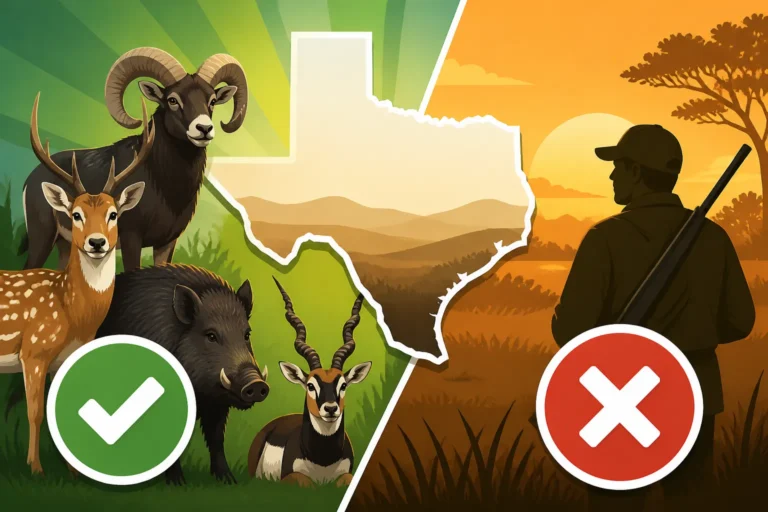
- Exotic Species: Similarly, most exotic species like Axis deer, Aoudad sheep, Blackbuck antelope, and Nilgai also have no closed season and no bag limits on private land in Texas. Since they are not considered native game animals under state law, they can be hunted year-round. This offers incredible flexibility for hunters looking for opportunities outside the traditional deer and turkey seasons.
Here's a quick reference table for some common species and their typical season end dates:
| Species | Typical General Season End Date | Notes |
|---|---|---|
| White-tailed Deer | Early – Mid-January | Varies by North/South Zone; special late season possible |
| Mule Deer | Early December | Short season in Panhandle/Trans-Pecos |
| Rio Grande Turkey (Fall) | Late February – Early March | Varies by county |
| Rio Grande Turkey (Spring) | Mid-May | Main season for gobblers |
| Eastern Turkey | Mid-April | Limited counties in East Texas |
| Mourning & White-winged Dove | Mid-January | South Zone generally longer; split segments |
| Ducks (General) | Late January – Early February | Varies by zone and species, split segments |
| Feral Hogs | Year-Round | No closed season, no bag limit |
| Exotic Species | Year-Round | On private land, no closed season, no bag limit |
Factors Influencing Season End Dates and Staying Informed
Understanding why seasons end when they do, and how to stay current, is just as important as knowing the dates themselves. The Texas Parks and Wildlife Department (TPWD) is the governing body responsible for setting and adjusting these regulations, and their decisions are based on a combination of biological science, population data, habitat conditions, and public input.
TPWD's Role and Conservation
TPWD's primary goal is conservation – ensuring healthy wildlife populations for future generations of Texans. Season dates and bag limits are carefully crafted to allow for sufficient breeding and recruitment while providing ample hunting opportunities. For instance, the timing of deer seasons often coincides with or follows the regional rut, allowing hunters to target mature bucks after they've had a chance to breed. Late season hunts, especially for antlerless deer, are critical management tools to control herd size and ensure habitat doesn't become overgrazed. Changes in population trends or environmental factors, such as drought, can lead to adjustments in season lengths or bag limits in specific counties.
How to Stay Informed
Given the dynamic nature of hunting regulations, staying informed is absolutely crucial. Relying on last year's dates or hearsay from a buddy can quickly lead to trouble.
- The Texas Outdoor Annual: This is your bible, plain and simple. TPWD publishes the Outdoor Annual every year, detailing all hunting and fishing regulations, including precise season dates for every game animal in every zone and county. You can pick up a physical copy at most license retailers or download the digital version from the TPWD website. I can't stress enough how important it is to read this cover-to-cover each year, as slight changes can occur. For tips on navigating this crucial document, refer to our guide on How to Read the Texas Outdoor Annual.
- TPWD Website and App: The official TPWD website is a treasure trove of current information, alerts, and news. They also have an official app that often mirrors the Outdoor Annual and provides quick access to regulations.
- My Texas Hunt Harvest: Beyond just buying your Texas Hunting License: Cost, Types & How to Buy (2026), this online portal is where you report your harvests for certain species. It's also a great way to double-check bag limits and requirements, reinforcing your understanding of current regulations as you actively participate in the hunting season. More details can be found in our article on Texas Hunting Tags & Harvest Reporting (My Texas Hunt Harvest).
Special Considerations Near Season's End
As seasons draw to a close, a few special considerations come into play:
- MLDP Tags: For properties enrolled in the Managed Lands Deer Permit (MLDP) program, season dates and bag limits can be significantly different from the general statewide regulations. MLDP properties often have extended seasons, sometimes running into February. If you're hunting on an MLDP property, always adhere to the specific tag instructions and harvest log provided for that property.
- CWD Zones: Chronic Wasting Disease (CWD) continues to be a serious concern in Texas. In CWD zones, there are often mandatory check stations and specific carcass movement restrictions. These rules are non-negotiable and failure to comply can result in hefty fines. Always check the current CWD zone map and associated regulations, especially if hunting near known CWD positive areas.
- Antler Restrictions: Many Texas counties have antler restrictions for white-tailed bucks. As the season winds down, hunters might feel pressured to take a buck, but it's vital to correctly field-judge legal antlers. The "13-inch rule" is a prime example, and misjudging can lead to a citation. Our guide on Texas Antler Restrictions: 13-Inch Rule & Counties is an excellent resource to refresh your memory.
Planning Your Late-Season Hunts
Just because a season is winding down doesn't mean the hunting opportunities are any less exciting. In fact, late-season hunting offers its own unique challenges and rewards. The crowds are often thinner, and animals can be in different patterns than during the early or peak season.
Tactics for Success in the Final Weeks
As the season progresses into December and January, game animals, especially deer, have been pressured for months. They're warier and often have established predictable routines.
- Focus on Food Sources: Natural food sources might be depleted, making feeders or food plots incredibly attractive. Deer are trying to pack on calories for winter. Our article on Food Plots in Texas: What Works in the Heat can give you ideas for year-round planning, but late-season plots are gold.
- Target Bedding Areas: Deer will often bed down in dense cover, especially on cold or windy days. Knowing these bedding areas and how deer transition from them to feeding can be key.
- Patience and Stealth: With fewer deer moving during daylight, patience is paramount. Minimize your scent, move slowly, and spend more time observing.
- Layered Clothing: Texas weather in December and January can be highly unpredictable. One day it's 70 degrees, the next it's freezing. Layered clothing is essential to stay comfortable and focused in the blind or stand.
Gear Considerations for Closing Seasons
Your gear choices might also need adjustments as the season progresses.
- Optics: With potentially shorter daylight hours and warier animals, good binoculars and a reliable rifle scope become even more critical for spotting game in low light or dense cover.
- Thermal and Night Vision: For year-round opportunities like hogs, investing in thermal scopes or night vision can extend your hunting hours indefinitely. While most big game seasons have daylight-only restrictions, knowing your options for species like hogs, where Is Thermal Hunting Legal in Texas? is a common question, can greatly enhance your overall hunting calendar.
- Processing Gear: If you're successful late in the season, remember that even winter days can be surprisingly warm in Texas. Having a good cooler and the right tools for field dressing quickly is always important. Our guide on How to Cool a Deer Fast in Texas Heat has tips that apply year-round.
Ultimately, knowing when hunting season ends in Texas for your desired species is about more than just remembering a date on a calendar. It's about understanding the intricate web of regulations, conservation efforts, and regional variations that make hunting in our great state such a unique and rewarding experience. Stay informed, hunt ethically, and enjoy every last minute of the season!
Disclaimer
The information provided in this guide is for general informational purposes only and is not intended as legal advice. Hunting regulations in Texas are subject to change and vary by species, zone, and county. Always consult the official Texas Parks and Wildlife Department (TPWD) Outdoor Annual or their official website for the most current and accurate regulations before engaging in any hunting activities. Failure to do so could result in penalties.