Aoudad Sheep Hunting in Texas
The thought of chasing elusive Aoudad sheep across the rugged, unforgiving terrain of Texas can feel like an impossible dream for many hunters. These magnificent animals, often called Barbary sheep, present a challenge unlike almost any other game in the state, demanding peak physical conditioning, expert marksmanship, and a deep understanding of their habits. If you've been dreaming of a truly epic hunt and want to know how to tackle these formidable mountain dwellers, this comprehensive guide will walk you through everything you need to know to make that dream a reality.
Understanding the Aoudad: The Barbary Sheep of Texas
Let's be real, Aoudad aren't native to Texas. They're an exotic species, originally from the Atlas Mountains of North Africa, which makes their presence here all the more fascinating. But don't let their exotic status fool you; they've adapted to the harsh, arid landscapes of West Texas and the Hill Country with astonishing success, thriving in environments that would break most other animals. Their intelligence, incredible eyesight, and ability to navigate treacherous terrain make them one of the most sought-after and challenging hunts in North America.
Origins and Adaptation to the Texas Landscape
Aoudad were first introduced to Texas in the 1950s, primarily as a game animal for private ranches. What began as controlled populations quickly expanded, with many animals escaping high-fence operations and establishing robust free-ranging herds, particularly in the vast, wild expanses of the Trans-Pecos region. They found the steep canyons, rocky outcrops, and sparse vegetation of West Texas to be remarkably similar to their ancestral homelands, allowing them to flourish.
Their success isn't just luck; it's a testament to their incredible adaptability. Aoudad are extremely hardy, capable of surviving on minimal water and a diverse diet of grasses, forbs, and browse that other species might ignore. This resilience, combined with their ability to withstand both extreme heat and surprisingly cold desert nights, has allowed them to carve out a significant niche in the Texas ecosystem, often competing with native species for resources.
Aoudad Characteristics and Behavior
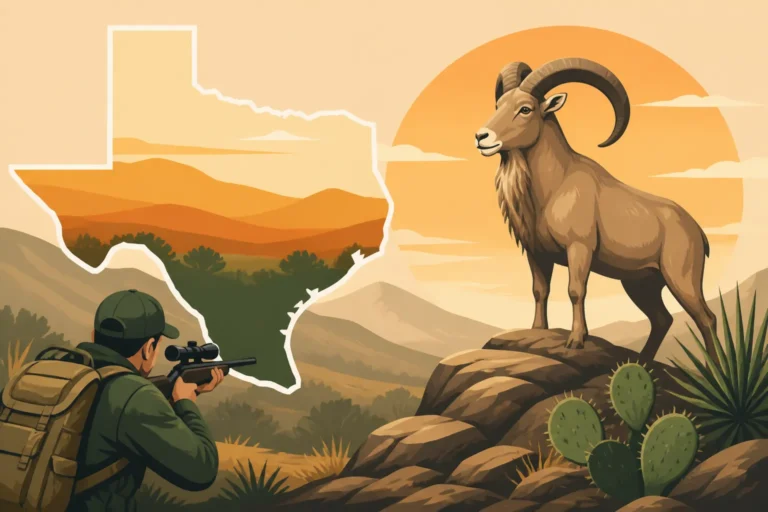
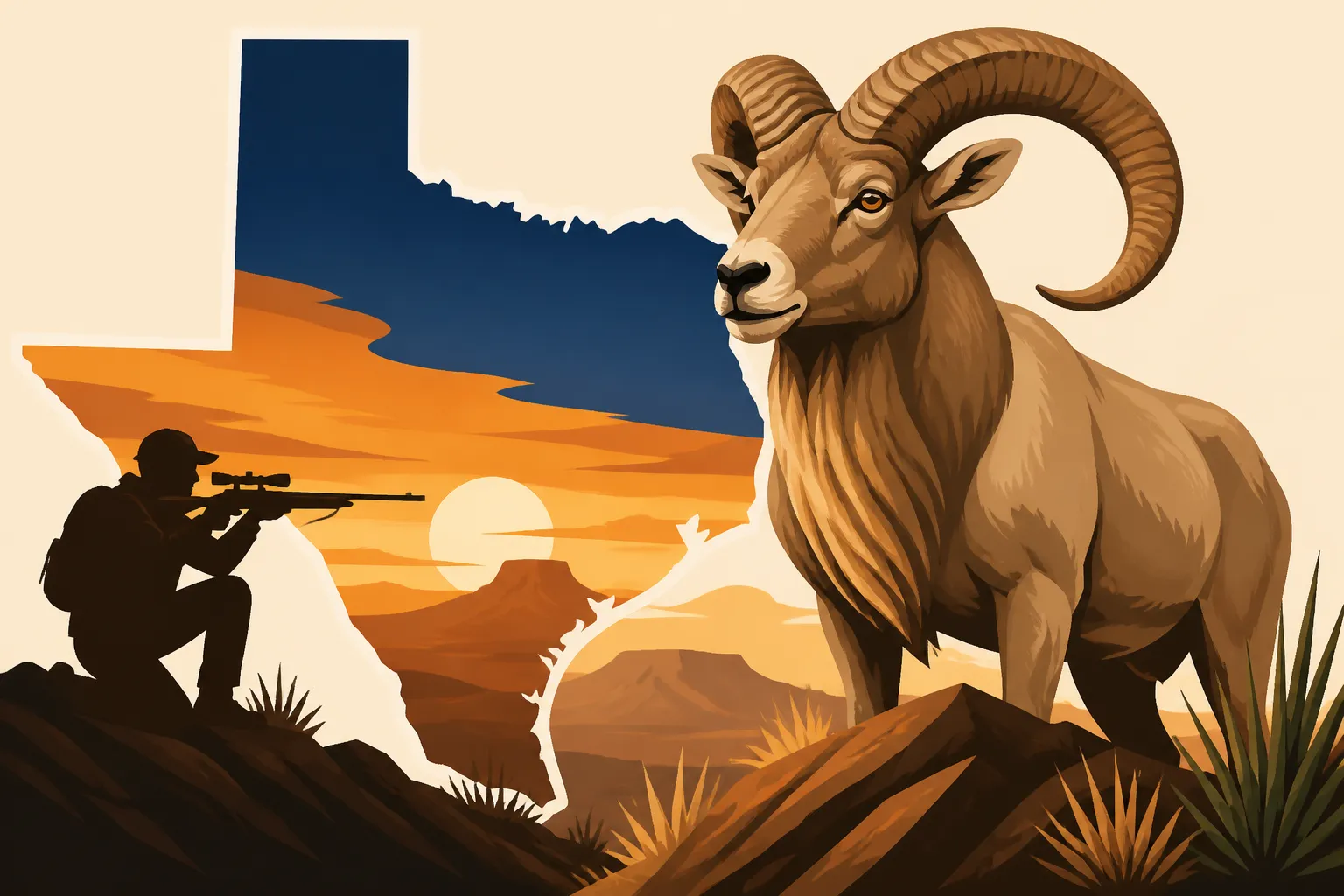
Visually, Aoudad are striking. They possess a sandy-brown coat, sometimes reddish-brown, that provides excellent camouflage against rocky backdrops. Both rams and ewes grow impressive horns that sweep back and then curve inwards, with rams often sporting horns over 30 inches long. Perhaps their most distinctive feature is the long fringe of hair, called a "chaps," that hangs from their throat and front legs, giving them an almost prehistoric appearance.
Behaviorally, Aoudad are incredibly wary creatures. They typically live in small herds, often segregated by sex outside of the breeding season. Their senses are exceptionally keen; they have eyesight that rivals a pronghorn's and an uncanny ability to detect danger from vast distances. When spooked, they can quickly disappear into the rocks, using their agility and powerful legs to scale seemingly impossible cliffs. Understanding these characteristics is crucial for any hunter hoping to pursue them, as it means every stalk must be executed with utmost precision and stealth.
Why Aoudad Hunting is So Challenging
Many seasoned hunters will tell you that a truly free-range Aoudad hunt is one of the toughest tests of hunting skill and endurance in Texas, if not beyond. This isn't a "sit in a blind over a feeder" kind of hunt. It's an active, physically demanding pursuit that often involves significant elevation changes and long distances over rugged, unforgiving terrain.
The biggest hurdles are usually their incredible eyesight and their preferred habitat. They live in places that are difficult for humans to access, offering them a natural advantage. Spotting them before they spot you, executing a silent stalk over loose rock, and then making an ethical shot at potentially long ranges, all while battling the elements, makes an Aoudad hunt a true adventure. It’s a hunt where you truly earn your trophy.
Where to Find Aoudad in Texas: Key Regions and Habitats
While Aoudad are considered exotics, their free-ranging populations are firmly established in specific areas of Texas. If you're looking to hunt these magnificent animals, knowing where to focus your efforts is paramount. The terrain itself plays a huge role in their survival and, consequently, in the hunting strategies employed.
The Trans-Pecos Mountains: Aoudad Stronghold
When most hunters think of free-range Aoudad in Texas, their minds immediately go to the Trans-Pecos region. This vast, rugged area of West Texas, with its towering mountain ranges like the Davis Mountains, Glass Mountains, and the Chinati Mountains, offers the perfect blend of steep, rocky terrain and arid conditions that Aoudad thrive in. These are truly wild places, where an Aoudad hunt feels less like a hunt and more like a wilderness expedition.
Public land options for Aoudad in the Trans-Pecos are extremely limited, with units like Black Gap WMA offering some drawn hunt opportunities, though success rates are generally low due to high demand and the sheer difficulty of the hunt. Most successful hunts in this region occur on vast private ranches, some of which span hundreds of thousands of acres. These ranches often provide the remote, challenging environment that makes a Trans-Pecos Aoudad hunt so legendary. If you're considering hunting this region, be prepared for significant physical exertion and potentially long shots. You can read more about what hunting this region entails in our guide to Trans-Pecos Hunting in Texas.
Edwards Plateau: Hill Country Exotics
While not as renowned for free-ranging Aoudad as the Trans-Pecos, the Edwards Plateau, or the Texas Hill Country, also harbors significant populations, often spilling out from high-fence operations. The Hill Country, known for its rolling hills, limestone canyons, and cedar breaks, provides ample cover and steep inclines that Aoudad utilize. Counties like Val Verde, Sutton, Edwards, and Crockett often have areas where Aoudad can be found free-ranging.
Hunting Aoudad in the Hill Country can present a different set of challenges. The terrain, while still rugged, often has denser vegetation, which can make spotting and stalking more difficult than in the open desert mountains. However, the sheer number of private ranches in the Edwards Plateau Hunting: Highest Deer Density region also means more opportunities, often through guided hunts or day leases. It's a great option for those who want the Aoudad experience without venturing quite as far west.
Private Ranches and High-Fence Operations
The reality for many Aoudad hunters in Texas is that a significant number of hunts take place on private ranches, many of which are high-fenced. While a high-fence hunt might not offer the same "wilderness" feel as a completely free-range Trans-Pecos hunt, it certainly doesn't mean it's easy. Aoudad are masters of using topography to their advantage, and even within a high-fence, they can prove incredibly challenging to locate and stalk in large, rugged pastures.
Many reputable Hunting Outfitters in Texas by Region specialize in Aoudad hunts, offering diverse experiences from challenging free-range expeditions to well-managed high-fence opportunities. These outfitters often have extensive knowledge of the local Aoudad herds and the best tactics for their specific properties. When choosing an outfitter, always inquire about the size of the hunting area, the terrain, and the typical hunting style to ensure it aligns with the challenge you're seeking.
Essential Gear and Preparations for an Aoudad Hunt
An Aoudad hunt isn't like your typical whitetail deer hunt. The animals, the environment, and the demands of the chase mean you need specialized gear and a significant amount of preparation. Skimping on these details can turn a challenging hunt into a miserable or even dangerous one. Think of it as preparing for a backcountry expedition, because in many ways, that's exactly what it is.
Optics and Long-Range Shooting Equipment
Aoudad hunting is primarily a spot-and-stalk game, and good optics are your most important tool. You'll spend hours, sometimes days, glassing distant hillsides and canyon rims, trying to pick out a tan speck that resolves into a ram. High-quality binoculars, 10x or 12x magnification, with excellent low-light performance are essential. Even better, bring a spotting scope (20-60x or 15-45x) on a sturdy tripod. This will allow you to thoroughly examine distant animals, confirm their sex, and judge their horn size without having to hike miles to get a closer look. You can find more details on selecting these in our guide to Best Hunting Optics for Texas: Scopes, Binos & Rangefinders.
Given the open, often vast terrain, shots at Aoudad can frequently be at extended ranges. A flat-shooting rifle chambered in a cartridge capable of maintaining energy and accuracy at 300-500 yards or more is highly recommended. Popular choices include .300 Win Mag, 7mm Rem Mag, .270 WSM, or even a good .308 Winchester with the right bullet. Make sure your rifle is sighted in precisely for these longer distances, and practicing shooting from various field positions, including prone and off a backpack, is non-negotiable. A reliable laser rangefinder is also a critical piece of equipment to accurately judge distance in open country.
Footwear and Clothing for Rugged Terrain
Your feet are your most valuable asset on an Aoudad hunt, and protecting them is paramount. Invest in high-quality, broken-in hiking boots with excellent ankle support and stiff soles. Look for boots that are waterproof and breathable, as you'll encounter everything from thorny brush to slippery rock faces. Many hunters also choose to wear snake boots or gaiters, especially in the rocky, desert environments where rattlesnakes are common.
Clothing should be layered, even if hunting in cooler months, as temperatures can fluctuate wildly from morning to midday. Lightweight, moisture-wicking base layers are key, followed by insulating layers and a windproof/water-resistant outer shell. Camouflage patterns that blend with rocky, arid environments are generally effective. Don't forget a wide-brimmed hat, good sunglasses, and plenty of sunscreen; the Texas sun is relentless, especially at higher elevations. Our guide on Best Early-Season Camo for Texas Heat might offer some useful insights for other game, but the principles of layering and sun protection are universal.
Physical Conditioning: More Than Just a Hike
This might be the most overlooked, yet most critical, aspect of Aoudad hunting preparation. These hunts are incredibly demanding. You'll be climbing, descending, and traversing uneven ground for hours, often with a backpack carrying your water, food, and gear. Many Aoudad hunters regret not being in better shape.
Start a rigorous fitness regimen well in advance of your hunt. Focus on cardiovascular endurance (hiking, running, stair climbing) and leg strength (squats, lunges, hill repeats). If possible, train by hiking with a loaded pack over varied terrain. Don't underestimate the impact of elevation changes; even if Texas mountains aren't as high as the Rockies, the constant up and down is a killer. The better your physical conditioning, the more you'll enjoy the hunt, and the more capable you'll be of seizing an opportunity when it arises.
Effective Hunting Tactics for Aoudad Sheep
Hunting Aoudad is a game of patience, stealth, and calculated movement. These animals are purpose-built for their rugged environment, giving them a significant home-field advantage. You can't just stumble into an Aoudad and expect a shot; you have to actively work for every opportunity, often employing strategies that are more akin to mountain goat or bighorn sheep hunting.
Spot-and-Stalk: The Primary Method
The overwhelming majority of successful Aoudad hunts in Texas are conducted via spot-and-stalk. This method involves patiently scanning vast landscapes from a high vantage point, spotting an animal, and then planning and executing a precise stalk to get within shooting range. It sounds simple, but the devil is in the details, especially when dealing with Aoudad's phenomenal eyesight and their tendency to be in highly exposed areas.
A successful spot-and-stalk requires immense discipline. Once you spot an animal, the first step is to thoroughly observe it and its surroundings. How many animals are there? What's their direction of travel? What's the wind doing? Are there any hidden obstacles or terrain features that could give you away? Every move must be deliberate, slow, and quiet. You can learn more about general principles in our guide on Spot-and-Stalk Hunting in Texas (Exotics & Mule Deer).
Glassing Techniques and Patience
Effective glassing is an art form. It's not about quickly scanning the horizon; it's about meticulously dissecting every inch of terrain with your optics. Find a comfortable, stable position (a tripod for your binoculars or spotting scope is invaluable). Start by looking at obvious features like canyon rims, rock slides, and shaded areas where Aoudad might bed down. Then, methodically grid search the area, moving your optics slowly, looking for anything that seems out of place: a patch of tan that doesn't quite match the rock, a horizontal line in a vertical world, or the distinct shape of a horn.
Patience cannot be overstated. You might glass for hours without seeing anything, only for an Aoudad to suddenly appear as if from nowhere. Once you spot them, continue to observe. Watch their movements, their feeding patterns, and identify potential bedding areas. This prolonged observation can often reveal a pattern or a route that you can exploit for your stalk. Don't rush; the mountain isn't going anywhere, and neither are the Aoudad, usually.
Shot Placement and Post-Shot Protocol
Given the potential for long-range shots and the Aoudad's tough build, precise shot placement is absolutely critical. Aim for the classic shoulder/heart-lung area. Aoudad are incredibly hardy animals, and a poorly placed shot can result in a lost animal that will retreat into impossibly steep and dangerous terrain. If possible, wait for a broadside or slightly quartering-away shot. Avoid shots that are too far quartering-to or straight-on, as their dense bone structure can deflect a bullet.
Once you've taken the shot, watch the animal's reaction closely. Did it drop? Did it run? Mark the exact spot where the animal was standing and its direction of travel if it ran. Resist the urge to immediately rush in. Give the animal some time, especially if the shot wasn't immediately lethal. This allows the animal to lay down and potentially expire, rather than being pushed further into inaccessible areas. When tracking, move slowly and deliberately, looking for blood, broken branches, or disturbed earth. Recovering your animal safely is the most important part of the hunt.
Regulations and Seasons for Aoudad Hunting in Texas
One of the great appeals of hunting exotic species like Aoudad in Texas is the relative lack of strict season dates compared to native game animals. However, that doesn't mean there are no rules. It's still crucial to understand the regulations, especially regarding licenses and land access, to ensure a legal and ethical hunt.
License Requirements and Year-Round Opportunity
For most exotic species in Texas, including Aoudad, there is no closed season, and they can typically be hunted year-round. This offers tremendous flexibility for hunters to plan their trips outside of the busy native game seasons. However, you absolutely still need a valid Texas hunting license. For residents, this typically means a general hunting license or a Super Combo license. Non-residents will need a Texas non-resident hunting license.
It's important to remember that while the hunting season is open year-round for exotics, the best time to hunt Aoudad might still be influenced by weather patterns. Cooler months (October-March) generally make for more comfortable hunting conditions and can encourage animals to be more active during daylight hours. Always check the current Texas Parks and Wildlife Department (TPWD) Outdoor Annual for the most up-to-date licensing requirements and regulations before heading afield. Our guide to Texas Hunting License: Cost, Types & How to Buy (2026) can help you navigate the various options.
Public vs. Private Land Considerations
While some limited opportunities for Aoudad exist on public lands, primarily through drawn hunts on certain Wildlife Management Areas (WMAs) in the Trans-Pecos, the vast majority of Aoudad hunting in Texas takes place on private land. This is largely due to their introduction as an exotic game animal on private ranches and their subsequent spread from these properties.
Hunting on private land requires landowner permission, typically in the form of a lease agreement or a guided hunt booking. Ensure you have clear written permission if you are on a lease. For a public land hunt, you'll need an Annual Public Hunting Permit and must adhere to all specific WMA regulations, which can be much more restrictive than general exotic hunting rules. It's vital to research any public land area thoroughly, as Aoudad populations are often sparse and access can be challenging.
CWD and Carcass Movement Restrictions
While Aoudad are not currently susceptible to Chronic Wasting Disease (CWD) in the same way as white-tailed deer or mule deer, CWD is a serious concern in Texas and affects all hunters. Certain counties in Texas are designated as CWD Zones, and special regulations apply to the movement of carcass parts from any harvested deer, elk, or other susceptible species out of these zones.
While Aoudad are not explicitly listed as a CWD-susceptible species that requires testing, it's always wise to be aware of the CWD regulations for the county you're hunting in. If you are hunting in or near a CWD Zone, understand the rules for carcass transport. Best practice is to field dress your animal thoroughly at the harvest site and remove all brain and spinal cord material before transport, regardless of species, especially when crossing county lines. TPWD provides detailed maps and information on CWD Zones and regulations, which should be reviewed annually.
After the Shot: Field Dressing and Trophy Care
The hard work doesn't stop once you've successfully harvested an Aoudad. The remote and rugged nature of many Aoudad hunts means you'll likely be performing initial field care far from any vehicle or processing facility. Proper field dressing and care are crucial to preserving the meat and the valuable trophy.
Initial Field Care in Remote Locations
Given that Aoudad hunts often take place in hot, arid environments and remote locations, cooling the animal down quickly is paramount. As soon as possible after the harvest, begin the field dressing process. This involves removing the entrails to allow the body cavity to cool. If the animal is large and you're far from a vehicle, you might consider quartering the animal in the field to make it easier to pack out. This involves removing the four legs, backstraps, and tenderloins, leaving the heavy bone structure and gut pile behind. Our guide on How to Field Dress a Deer in Hot Weather offers valuable techniques that apply equally well to Aoudad, especially given the typically warm Texas climate.
Once field dressed or quartered, get the meat out of the sun and into the coolest possible conditions. If packing out on foot, sturdy game bags are essential to protect the meat from dirt and flies. If you're fortunate enough to have a vehicle nearby, getting the quarters into a large cooler with ice immediately is the best course of action. Speed is of the essence to prevent spoilage, especially if temperatures are high.
Transporting Your Trophy
Aoudad horns are substantial, and the skull plate can be quite heavy. If you're quartering the animal, you'll want to remove the head with sufficient cape for a shoulder mount if that's your plan. For a skull mount, you can often remove the skull cap with the horns attached. Be prepared for a significant load when packing out the cape and horns, as they add considerable weight to your pack.
Consider how you will transport your trophy safely. If driving, ensure the cape is kept cool, preferably on ice in a cooler, and not just thrown in the back of a hot truck. For longer distances, a frozen cape is ideal. Protect the horns from damage during transport, as they can be brittle. Many hunters wrap them in blankets or secure them carefully in their vehicle to prevent chipping or breaking.
Tanning and Taxidermy Considerations
Once you've gotten your Aoudad out of the field, the next step is to decide on your trophy. Whether you plan for a full shoulder mount, a skull mount, or just to tan the hide, communicate clearly with your chosen taxidermist or tanner. Bring them the cape and skull as quickly as possible, especially if you haven't frozen them. A good taxidermist can advise on the best way to skin the animal in the field if you're unsure, or they can handle the final skinning.
If you're opting for a shoulder mount, ensure the cape is cut long enough to provide ample material. If you're tanning the hide, discuss salt-curing and proper storage with your tanner to ensure the best possible outcome. Aoudad hides are beautiful and durable, making for impressive rugs or wall hangings. Preserving your trophy correctly is the final step in honoring the incredible experience of hunting these magnificent Barbary sheep in the wilds of Texas.
Disclaimer
Please note that hunting regulations, license requirements, and CWD zones can change. Always consult the official Texas Parks and Wildlife Department (TPWD) Outdoor Annual or website for the most current and accurate information before planning any hunting trip. This guide is for informational purposes only and does not constitute legal advice.