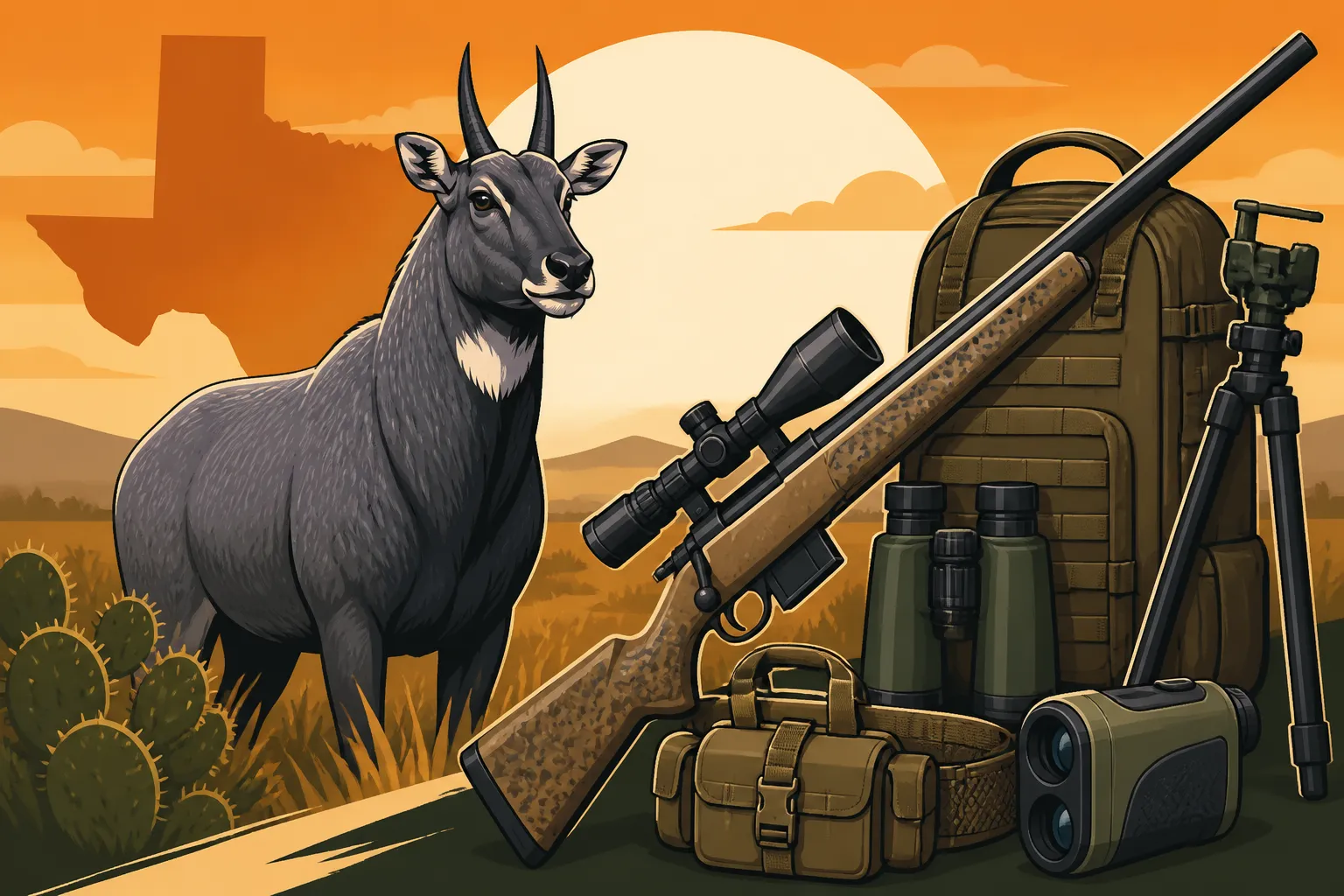
Best Gear for Nilgai on a Texas Lease
Nilgai hunting in Texas is a unique beast, presenting challenges unlike anything most hunters are used to. These impressive Asian antelope are notoriously tough, wary, and often found in thick, unforgiving brush on sprawling South Texas leases, making selecting the right gear absolutely critical. This guide will walk you through the essential equipment you'll need to successfully pursue nilgai, ensuring you're prepared for every aspect of the hunt, from the stalk to the recovery.
Understanding the Unique Demands of Nilgai Hunting
When you're planning to hunt nilgai, it’s crucial to understand that they are not your average whitetail. These are large, robust animals known for their incredible resilience and speed, often requiring more powerful calibers and extremely precise shot placement. Hunting them on a Texas lease, particularly in the dense South Texas brush, means you'll encounter everything from prickly pear cactus to impenetrable mesquite thickets, often under a blistering sun. Your gear needs to be able to withstand these harsh conditions and perform flawlessly when the moment of truth arrives. It's a completely different game than, say, Deer Hunting in Texas: Feeders, Blinds & Tactics, and your equipment choices absolutely need to reflect that difference.
Nilgai Physiology and Resilience
When you're chasing nilgai, you're not just hunting a big animal; you're hunting an animal built like a tank. Mature nilgai bulls can easily tip the scales at 400-600 pounds, with some exceptional individuals reaching over 700 pounds. Their thick hide, dense muscle, and robust bone structure mean that a marginal shot on a whitetail might only wound a nilgai, leading to a frustrating, potentially lost animal. Many experienced nilgai hunters will tell you stories of animals soaking up multiple seemingly well-placed shots from insufficient cartridges, only to disappear into the impenetrable brush. This stark reality dictates a serious approach to cartridge selection and, perhaps even more importantly, bullet construction. You'll need heavier, tougher bullets designed for deep penetration and controlled expansion, something crucial for ethically harvesting these formidable animals.
The South Texas Environment
The habitat where nilgai thrive in Texas, primarily the sprawling ranches of the lower Gulf Coast and specific areas of South Texas, is an incredibly challenging landscape. Imagine vast expanses of dense scrub brush, towering mesquites, thorny acacias, and sometimes seemingly endless fields of tall, wiry grass. Visibility can often be severely limited, even at relatively close ranges, yet shots can also be long across open senderos or pastures. Tracking can be an arduous ordeal through thick vegetation. The ground is often uneven, full of hidden holes, and covered in thorny plants just waiting to snag your clothing or, worse, puncture your boots. Plus, the weather can be brutal; intense heat is a constant factor, even in the cooler months, and sudden, torrential downpours aren't uncommon. This is far from a leisurely stroll through a manicured woodlot; it's an expedition through untamed wilderness, and your gear needs to be as rugged and resilient as the land itself.
The Rifle and Optics: Power and Precision are Paramount
For nilgai, your rifle and optics are arguably the most critical components of your entire gear setup. Given their size, toughness, and the potential for challenging shot angles, you absolutely need a setup that delivers significant kinetic energy and allows for extreme precision at varying ranges, often in less-than-ideal lighting conditions. This is definitely not the time to rely on your lightweight deer rifle if it's chambered for a smaller cartridge.
Rifle Caliber and Ammunition Choices
Let's be clear: for nilgai, forget your .223 or even your standard .270. These magnificent beasts demand more. The most popular and consistently effective calibers for nilgai start at the .300 Winchester Magnum and scale up from there. Many seasoned hunters wisely opt for cartridges like the .338 Winchester Magnum, .375 H&H Magnum, or for those seeking undeniable stopping power, even the mighty .416 Rigby. The key isn't just raw power, but rather reliable bullet construction. Premium bonded or monolithic bullets, such as Barnes TSX, Hornady GMX, or Nosler AccuBond, are highly recommended for nilgai. These bullets are engineered to retain their weight, penetrate deeply through thick hide and bone, and expand reliably, ensuring maximum damage to vital organs. A poor bullet choice can easily turn a successful shot placement into a long, frustrating, and potentially unsuccessful search for a lost animal. When considering How to Hunt Nilgai in Texas (Step by Step), bullet performance is an absolute non-negotiable factor for ethical harvesting.
| Caliber Recommendation | Bullet Weight Range (grains) | Recommended Bullet Type | Notes for Nilgai Hunting |
|---|---|---|---|
| .300 Winchester Magnum | 180-200 | Bonded, Monolithic | Considered the minimum; shot placement is absolutely critical. |
| .338 Winchester Magnum | 200-250 | Bonded, Monolithic | Excellent choice, offers a great balance of power and manageable recoil. |
| .375 H&H Magnum | 250-300 | Bonded, Monolithic | Highly effective; often regarded as ideal by professional nilgai hunters. |
| .416 Rigby | 400 | Solids, Heavy Bonded | Significant power; ensures deep penetration, but has substantial recoil. |
High-Quality Optics for Long-Range Precision
Nilgai are often spotted at considerable distances, especially if you're glassing across larger pastures or long senderos on a vast Texas lease. A high-quality rifle scope with excellent light-gathering capabilities and sufficient magnification is not optional; it’s absolutely non-negotiable. Look for scopes with a versatile magnification range, typically from around 3-15x or 4-16x. This range provides the flexibility needed for both closer encounters in the dense brush and longer, more precise shots across open country. Top-tier brands like Leupold, Vortex, or Nightforce offer rugged, reliable scopes that are built to handle the significant recoil of heavy calibers and the inevitable abuse of field conditions. A clear, bright image is paramount for precise shot placement, especially during those crucial low-light periods at dawn and dusk when nilgai are most active. And don't skimp on your binoculars either; a good pair of 10×42 or 12×50 binoculars from similar reputable brands will be your best friend for spotting these elusive animals long before they ever spot you. You might even refer to guides like Best Rifle Scope for Texas Deer Hunting for general scope considerations, but remember to prioritize higher magnification and durability for nilgai.
Essential Apparel and Footwear: Comfort and Protection
Hunting nilgai isn't a fashion show; it's an endurance test. Your clothing needs to protect you from the relentless elements, the myriad thorns, and the occasional venomous snake, all while allowing for comfortable movement and efficient heat management in the often-sweltering Texas climate.
Rugged, Breathable Clothing
Given the relentless Texas heat and the abrasive nature of the brush country, your clothing choices are absolutely vital. Opt for durable, rip-resistant fabrics like heavy-duty canvas or tough synthetics that can stand up to constant snagging from thorns and sharp branches. Lightweight, moisture-wicking materials are critically important for managing sweat and helping you stay as cool as possible. Layering is always a good idea, allowing you to adapt to significant temperature swings that can occur from cool mornings to scorching afternoons. Earth-tone colors or simple, effective camouflage patterns will help you blend seamlessly into the surroundings. Forget those heavy, insulated hunting clothes you might wear up north; here, it's all about ventilation, toughness, and minimal bulk. Even though nilgai can be hunted year-round on private land in Texas, you'll still contend with the state's famously variable and often extreme climate, making thoughtful clothing choices paramount.
Uncompromising Footwear and Leg Protection
This is where many hunters make a crucial, potentially dangerous, mistake. The South Texas brush country is home to numerous venomous snakes, particularly rattlesnakes, as well as an abundance of prickly pear and jagged rocks. High-quality snake boots or snake gaiters are not optional; they are an absolutely essential piece of safety equipment. Look for boots that are genuinely comfortable for long walks, fully waterproof, and offer excellent ankle support over uneven terrain. Brands like Lacrosse or Irish Setter are popular and trusted choices among experienced Texas hunters. Combine these with extremely durable hunting pants, perhaps even specialized chaps or heavily reinforced brush pants, to provide comprehensive protection for your legs from the relentless thorns. A twisted ankle from hidden terrain or, worse, a snakebite, can not only ruin a hunt but potentially put your life at serious risk, so invest wisely in your foot and leg protection. You can explore more options and detailed comparisons in our guide on the Best Snake Boots for Texas Hunting to ensure you're well-prepared.
Vital Accessories and Recovery Gear
Bringing down a nilgai is only half the battle, and arguably the easier half. Retrieving and processing such a large animal, often in remote and sweltering conditions, requires a whole different set of specialized tools and a lot of preparation.
Navigation and Communication
On a large Texas lease, especially if you're not intimately familiar with every sendero, pasture, and topographical feature, reliable navigation is absolutely paramount. A dedicated GPS device or a robust hunting app like GoHunt, onX Hunt, or HuntStand on your smartphone is indispensable. These tools allow you to precisely mark your vehicle's location, track your path, locate property lines, and, most critically, mark the exact spot where your nilgai falls. Knowing the terrain and having reliable mapping is crucial for efficient hunting and, perhaps even more so, for recovering your animal once it's down. Given the expansive and often remote nature of these leases, cell service can be spotty at best, so having offline map capabilities or even a satellite communicator (like a Garmin inReach) is a smart and highly recommended backup. When you're trying to find a good hunting spot or scout new areas, services like GoHunt can be invaluable in understanding the lay of the land, helping you plan your approach and identify potential nilgai habitat even before you step foot on the property.
Field Dressing and Recovery Tools
As mentioned, nilgai are massive animals. Field dressing them, particularly in the ever-present Texas heat, is a monumental and time-sensitive task. You'll need much more than just your typical deer knife. A strong, razor-sharp hunting knife or a robust Havalon-style knife with replaceable blades is essential for initial cuts and precision work. However, consider bringing a bigger, fixed-blade knife for heavier work and a small hatchet or a sturdy bone saw for quartering the animal in the field. The sheer weight and size of a nilgai mean you will almost certainly need a heavy-duty game cart or, ideally, an ATV or side-by-side vehicle for extraction. A heavy-duty rope or a portable winch can also be invaluable for dragging or loading the animal. Don't forget ample large game bags to protect the substantial amount of meat from flies, dirt, and debris. Finally, a massive cooler, like a high-capacity Yeti or an RTIC, filled to the brim with ice, is absolutely critical to quickly cool down the meat and prevent spoilage, ensuring you take home quality venison. For more detailed guidance on handling game in the heat, many principles from Field Dressing & Processing Game in Texas Heat can be scaled up and applied to nilgai. A good, strong Best Hunting Knife for Field Dressing is also a key component.
Rangefinders, Shooting Sticks, and Hydration
Precision is paramount when hunting nilgai, so a quality rangefinder is an absolute must-have for confirming shot distances, especially when hunting in open country or across vast fields where distances can be deceiving. Even if you consider yourself an excellent shot, shooting sticks or a bipod will provide a stable shooting rest, dramatically increasing your chances of making a clean, ethical shot under pressure. The Texas sun is no joke, and dehydration is a very real threat. Always carry plenty of water, perhaps even a large-capacity hydration pack, and consider electrolyte supplements to stay properly hydrated. A good, comfortable hunting backpack to carry all these essentials, plus snacks and any emergency supplies, will make your hunt much more manageable and safer. Remember, a successful nilgai hunt often hinges not just on finding the animal, but on meticulous planning and having the right tools for every single stage of the process, from the initial stalk to the final recovery.
Essential Nilgai Hunting Gear Checklist
| Category | Item | Key Considerations |
|---|---|---|
| Firearm & Ammo | High-power Rifle (.300 WM minimum) | Reliable, accurate, capable of handling heavy recoil, suitable for large, tough game. |
| Premium Ammunition | Bonded or monolithic bullets for deep penetration and controlled expansion. | |
| Optics | Rifle Scope (3-15x or 4-16x) | Excellent light gathering, clear glass, durable, holds zero well under heavy recoil. |
| Binoculars (10×42 or 12×50) | High quality for spotting at distance, rugged construction for field use. | |
| Rangefinder | Accurate, fast readings, essential for confirming critical shot distances. | |
| Apparel | Durable, Breathable Clothing | Rip-resistant, moisture-wicking, layered for temperature changes, earth tones/camo for blending in. |
| Snake Boots / Gaiters | High protection against venomous snakes and thorns, comfortable for long walks, waterproof. | |
| Wide-brimmed Hat / Cap | Crucial sun protection for face and neck. | |
| Essentials | GPS / Hunting App (e.g., GoHunt) | Offline maps, accurate property lines, marking animal location, tracking your route for safety and recovery. |
| Water / Hydration Pack | Ample water and electrolytes for the entire duration of the hunt; dehydration is a serious risk. | |
| First Aid Kit | Basic wound care supplies, consider a snakebite kit (optional, but a good precaution in remote areas). | |
| Quality Hunting Knife (or 2) | Sharp, durable for field dressing; consider a bone saw or small hatchet for quartering. | |
| Game Bags | Large, breathable bags to protect the substantial amount of meat from flies and dirt. | |
| Game Cart / ATV | Absolutely essential for extraction of such heavy game; ropes/winch for additional assistance. | |
| Shooting Sticks / Bipod | Provides a stable rest for making precise, ethical shots, especially at longer ranges or from awkward positions. | |
| Large Cooler (e.g., Yeti) | A huge, high-quality cooler filled with ice is vital for rapidly cooling the large amount of meat to prevent spoilage. |
Disclaimer
Hunting is an inherently dangerous activity. Always prioritize safety, adhere to all Texas Parks and Wildlife Department regulations, and respect private property. The information provided in this guide is for informational purposes only and should not replace proper training, local expertise, or professional guidance.