Do Exotics Require a Hunting License in Texas?
One of the most common questions I get from hunters, especially those new to the Texas scene or just looking to expand their horizons, is about exotic game. It's easy to assume that if you're hunting any animal, you need a state hunting license, just like you would for a whitetail deer or a turkey. But Texas, in its unique and wonderful way, has some different rules for exotics, which can be downright confusing. This guide is here to untangle those regulations and clearly explain when a hunting license is required for exotic species in Texas.
Understanding the Unique Status of Exotic Game in Texas
Texas is truly a special place when it comes to hunting, and nowhere is that more apparent than with our exotic game. We're talking about species that aren't native to North America but have thrived here, thanks largely to private landowners and a climate that often mimics their homelands. This classification, however, fundamentally changes how they're managed and, crucially, how they're hunted from a legal perspective.
What Defines "Exotic" in the Eyes of Texas Law?
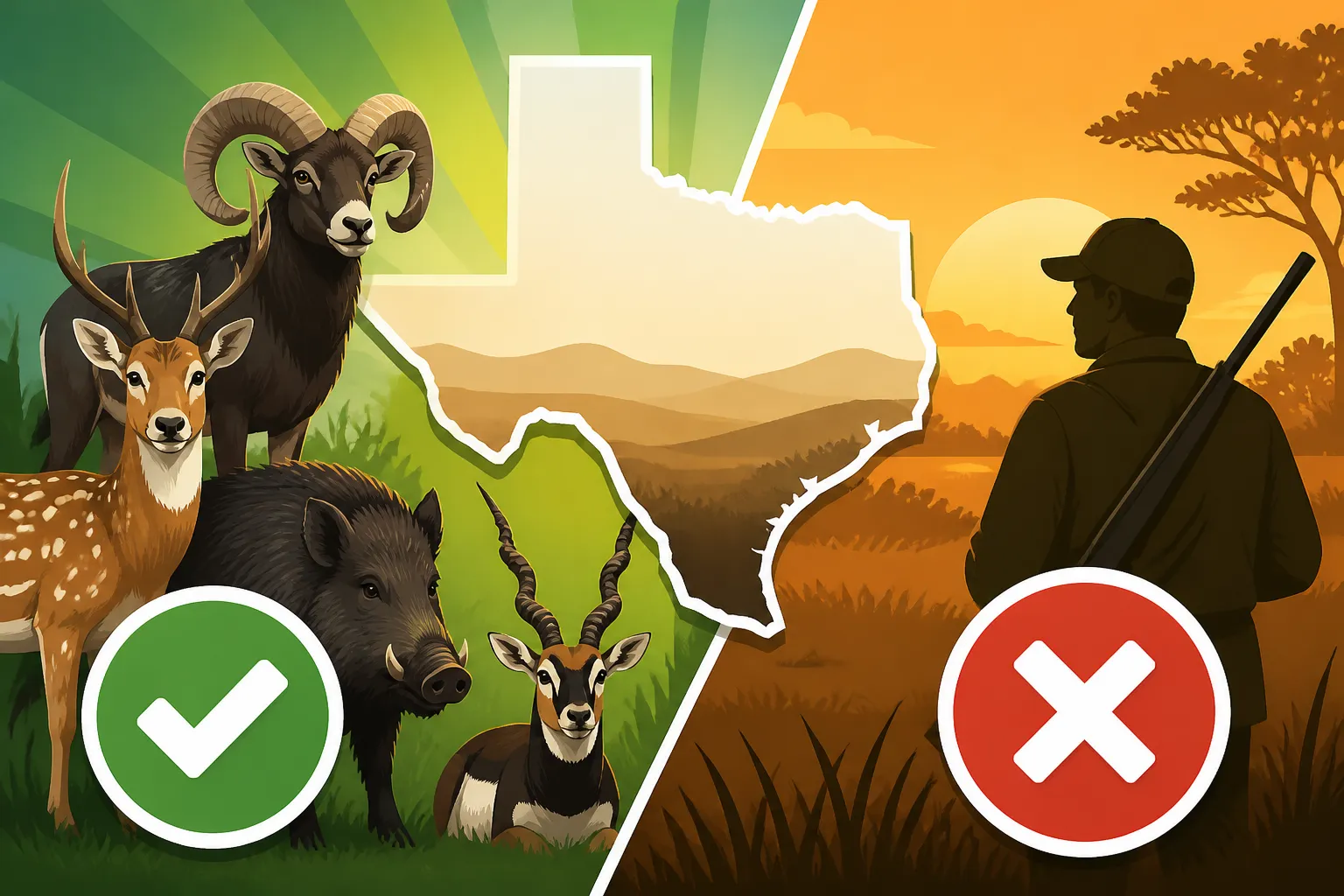
When we talk about "exotic" animals in Texas, the term isn't just about how foreign they might seem to us. Legally, the Texas Parks and Wildlife Department (TPWD) defines exotic animals as those species that are not indigenous to Texas or the contiguous United States. This includes a vast array of animals that have become incredibly popular game species across the state, such as Axis deer, Fallow deer, Sika deer, Aoudad sheep, Blackbuck antelope, and Nilgai antelope, just to name a few of the big players.
The key here is their non-native status. Because they aren't considered native wildlife, they don't fall under the same management principles as, say, a white-tailed deer or a Rio Grande turkey. These animals are largely considered private property when raised or introduced on private lands, which is where the significant difference in licensing comes into play. It’s a concept that often surprises hunters used to stricter regulations for indigenous species.
The "Private Land, No Season, No License" General Rule
This is the big one, the core piece of information that sets exotic hunting apart in Texas. For most exotic game animals, when hunted on private land, there is generally no state hunting license required. That's right, you read that correctly. You also won't find specific hunting seasons or bag limits for these animals set by the state, unlike the strictures you'd adhere to for native game like whitetail or dove.
This "hands-off" approach by the TPWD stems from the fact that these animals are considered the property of the landowner, much like cattle or other livestock, once they are contained on private property. Landowners often manage these populations themselves, using hunting as a tool for herd control and generating revenue. This system has allowed Texas to become a global leader in exotic game hunting, offering opportunities you'd be hard-pressed to find anywhere else in the world. It’s truly a unique Texan solution to a unique Texan opportunity.
The Critical Distinction: Native vs. Non-Native Species
To truly grasp the license situation for exotics, you have to understand this fundamental distinction. Native game animals, like white-tailed deer, mule deer, turkey, and feral hogs (which, despite being introduced, are managed with certain native-like regulations due to their pervasive nature), are subject to strict state and federal regulations. This means specific seasons, bag limits, shooting hours, legal methods, and yes, a mandatory state hunting license. These rules are in place to ensure sustainable populations and fair chase for everyone.
Exotics, on the other hand, exist in a sort of regulatory gray area because they are, for all intents and purposes, considered privately owned animals on private land. This is why you can often hunt Axis deer year-round, without a state license, on a private ranch. It’s a system that benefits landowners who want to diversify their offerings and hunters looking for unique experiences outside of traditional hunting seasons. However, this distinction also means that hunters need to be extra diligent about understanding the ranch's rules, as those become your primary regulatory framework.
When a Texas Hunting License IS Required for Exotics
While the general rule for exotics on private land is no state license, there are indeed specific scenarios and species where a Texas hunting license absolutely is required. Missing these exceptions can turn a fantastic hunt into a legal headache, and nobody wants that. It's crucial to always verify the specific regulations before heading out, as they can sometimes be more nuanced than the broad strokes suggest.
Hunting Exotics on Public Land
This is where the "no license" rule immediately flips. If you somehow find yourself with an opportunity to hunt an exotic animal on public land in Texas, you will need a valid Texas hunting license. While rare, there are instances where exotics might roam onto public properties, or specific drawn hunts could be offered for exotics on certain state or federal lands. For example, some exotic populations, like a portion of the Nilgai herds, exist on national wildlife refuges near the Gulf Coast, and hunting these animals would require the appropriate state hunting license and potentially a federal stamp, along with any specific permits from the refuge itself.
The key takeaway here is simple: Public land always means public rules. If you're on a Wildlife Management Area (WMA), National Forest, or any other public hunting land, assume that all state hunting license requirements, seasons, and bag limits (if applicable) apply, regardless of the species. It's always best to consult the official Texas Parks and Wildlife Outdoor Annual or the specific public land's regulations well in advance. Understanding Public Hunting in Texas: WMAs & Annual Public Hunting Permit is essential for any hunter considering public land opportunities.
Hunting Exotic Birds
When it comes to exotic game, most hunters think of hoofed animals like deer and sheep. However, there are also various exotic bird species that can be hunted in Texas, and these usually fall under different licensing requirements. Think about exotic pheasants, chukar, or even certain quail species that might be released for hunting on private game preserves.
For these exotic bird species, a general Texas hunting license is typically required, along with a migratory bird endorsement and HIP certification if they are considered migratory. Even if they are not migratory, if they are released specifically for hunting, state regulations often mandate a license. It’s a common misconception that all exotics are treated the same, but fowl often have their own set of rules. Always check the game bird sections of the Outdoor Annual or with the specific hunting preserve to confirm what endorsements or licenses you need before you step into the field.
Specific Circumstances & Ranch Regulations
Even on private land, where the "no license" rule generally applies to the state's requirements, there can be specific circumstances or ranch regulations that effectively mandate a form of licensing or permitting. Some ranches might require you to purchase a "ranch permit" or "management fee" that functions like an internal license, even if it's not a state-issued document. This isn't a state requirement, but a contractual obligation you'd have with the landowner or outfitter.
Furthermore, properties participating in programs like the Managed Lands Deer Program (MLDP) might have specific harvest recommendations or reporting requirements, even if an exotic is taken. While MLDP focuses primarily on native deer, the presence of exotics on such properties can sometimes lead to additional, albeit private, regulations to ensure proper wildlife management. It's always best practice to have a very clear discussion with your outfitter or lease manager about all rules, permits, and fees well before your hunt begins. When planning your hunt, consider asking about their practices regarding things like Protein Feeding Deer for Bigger Antlers and how exotics factor into their overall wildlife management plan.
The Nuances of Exotic Hunting on Private Land
Hunting exotic game on private land in Texas is, in many ways, an entirely different ballgame than pursuing native species. Because the state takes a largely hands-off approach to exotics on private property, the responsibility for ethical hunting, sound wildlife management, and adherence to specific rules shifts significantly to the landowner and the hunter. This system offers incredible flexibility but also demands a deeper understanding of the dynamics at play.
Owner's Discretion and Ranch Management
On private land, the owner holds immense discretion over the exotic animals on their property. These animals are, in essence, their livestock. This means that a rancher can set their own "seasons," "bag limits," and rules for hunting them. They might allow hunting year-round, or only during certain months to avoid conflict with native deer seasons. They might set age or size restrictions on animals harvested, mirroring antler restrictions seen in native deer management. The price you pay for an Axis buck, for instance, might vary wildly based on its size, much like a trophy whitetail.
This flexibility allows landowners to manage their exotic herds in a way that aligns with their business goals, conservation efforts, and the overall health of the ecosystem on their ranch. Some ranches focus heavily on genetics and selective harvesting, while others might simply aim for population control. It’s a dynamic system that relies heavily on the integrity and expertise of the individual landowner or their designated wildlife manager. A well-managed ranch will typically have clear guidelines, often shared during the booking process, that detail exactly what is permissible.
Permits and Paperwork You Might Encounter
Even though a state hunting license usually isn't required for exotics on private land, don't assume there's no paperwork involved at all. Many reputable hunting operations and landowners will still have their own internal permits, waivers, or contracts that you'll need to sign. These documents are crucial for their liability, to establish the terms of your hunt, outline ranch rules, and sometimes to track harvests for their own management purposes.
For example, a ranch might issue a "harvest tag" for each animal taken, even if it's not a state tag. This helps them keep track of their inventory and ensure fair billing. You'll often sign waivers acknowledging the inherent risks of hunting and agreeing to abide by the ranch's safety protocols. While these aren't state-mandated hunting licenses, they are legally binding agreements that are just as important to respect. Always read any such documentation carefully and ask questions if anything is unclear before you sign on the dotted line.
Ethical Considerations Beyond the Law
Just because the state doesn't mandate a license or specific seasons for many exotics on private land doesn't mean ethical considerations fly out the window. As hunters, we have a responsibility to uphold high ethical standards, regardless of the species or regulatory framework. This includes practicing fair chase, ensuring clean kills, respecting the animals, and adhering to the spirit of conservation. Many exotics, particularly species like Axis deer, are highly intelligent and challenging to hunt, even on high-fenced ranches.
Consider the potential for overharvesting or poor management. While most reputable outfitters are invested in the long-term health of their exotic herds, a hunter's ethical choices still matter. This means being mindful of shot placement, avoiding undue suffering, and taking only what you intend to process and consume. The absence of strict state oversight places an even greater onus on the individual hunter to act responsibly and ensure that the legacy of exotic hunting in Texas remains positive and sustainable. Knowing Best Shot Placement for Whitetail Deer can often transfer to similar-sized exotics, but always confirm with your guide for species-specific advice.
Popular Exotic Species and Their Licensing Requirements
Texas is home to an incredible array of exotic game animals, offering unique hunting experiences for every taste and skill level. While the "no state license on private land" rule applies broadly to most of these, understanding a bit about the individual species can help you appreciate their unique hunting challenges and the nuances of their management.
Axis Deer: A Texas Favorite
The Axis deer, often called "chital" or "spotted deer," is arguably the most popular exotic species to hunt in Texas. Native to India, these stunning deer with their perpetual spotted coats and beautiful antlers thrive in the Texas Hill Country and South Texas brush. Their venison is widely considered some of the finest wild game meat available. Due to their non-native status and widespread presence on private lands, hunting Axis deer generally does not require a Texas hunting license when pursued on private property.
Ranches often offer Axis hunts year-round, as their breeding cycle is not tied to a specific season like native whitetails. This makes them a fantastic option for hunters looking to extend their hunting calendar. However, outfitters will typically charge a trophy fee or day rate, and they'll have their own rules regarding antler size or sex of the animal you can harvest. For those interested in pursuing these magnificent animals, exploring Axis Deer Hunting in Texas (Free-Range vs High-Fence) can provide deeper insights into the hunting styles.
Aoudad Sheep: High-Altitude Thrills
Aoudad sheep, also known as Barbary sheep, are magnificent animals native to North Africa. They've found a perfect home in the rugged, mountainous terrain of West Texas, particularly the Trans-Pecos region, and also populate many ranches across the state. Hunting Aoudad is notoriously challenging, often involving strenuous spot-and-stalk tactics in remote, unforgiving landscapes. Their incredible eyesight and stamina make them a true trophy for any hunter.
Like Axis deer, Aoudad sheep are classified as exotic game in Texas. Therefore, hunting Aoudad on private land does not require a Texas hunting license. However, if you're venturing out for a Spot-and-Stalk Aoudad in West Texas hunt, be prepared for significant physical demands and often a higher price tag due to the difficulty and the quality of the trophy. Outfitters will manage their herds and set their own harvest rules, focusing on mature rams. There are some limited public land opportunities for Aoudad, particularly on WMAs like Black Gap, which would require a state license and specific permits obtained through the drawn hunt system.
Nilgai Antelope: The Gulf Coast Giant
Nilgai antelope, the largest antelope native to Asia, are a sight to behold. These majestic, bovine-like animals were introduced to South Texas in the 1930s and have established a free-ranging, self-sustaining population primarily on large ranches and federal lands in the coastal plain region, particularly in counties like Kenedy and Willacy. Their immense size and tough hides make them a challenging and formidable quarry.
On private ranches where they are considered exotics, hunting Nilgai generally does not require a Texas hunting license. However, because of their free-ranging nature and their presence on federal lands like the Laguna Atascosa National Wildlife Refuge, there are specific instances where a state license and federal permits are required. For example, if you secure a spot on a special drawn hunt for Nilgai on federal land, you absolutely need your Texas hunting license. It's imperative to confirm the exact licensing requirements with the outfitter or land manager when planning a Nilgai Hunting in South Texas trip, especially given their unique semi-wild status.
Other Common Exotics
Texas boasts a long list of other popular exotics, all falling under similar general licensing rules when hunted on private land:
- Blackbuck Antelope: Known for their striking spiral horns and beautiful coats, Blackbuck are another South Asian native that thrives in Texas. No state license needed on private land.
- Fallow Deer: These European deer come in various color phases (common, menil, white, black) and have broad, palmate antlers. No state license needed on private land.
- Sika Deer: From East Asia, Sika are known for their distinct bugle and impressive antlers. No state license needed on private land.
- Red Stag: The majestic Red Stag, a European cousin to the North American Elk, is a highly sought-after trophy. No state license needed on private land.
In all these cases, the crucial factor remains whether the hunt is taking place on private or public land. Always, always confirm with your outfitter or the land manager regarding their specific rules, fees, and any internal documentation they require.
Here's a quick overview for some of the most popular exotic species:
| Exotic Species | Native Region | General Texas Hunting License Required (Private Land)? | Typical Habitat in Texas | Notes |
|---|---|---|---|---|
| Axis Deer | India | No | Hill Country, South Texas | Popular for venison, year-round hunts possible. |
| Aoudad Sheep | North Africa | No | West Texas Mountains, Ranches | Challenging spot-and-stalk, physically demanding. |
| Nilgai Antelope | India | No (on private land) / Yes (on public/federal land) | South Texas Coastal Plains | Large, tough, free-ranging populations in some areas. |
| Blackbuck | India | No | Ranches statewide | Fast, challenging, beautiful trophy. |
| Fallow Deer | Europe | No | Ranches statewide | Various color phases, unique antler shape. |
| Sika Deer | East Asia | No | Ranches statewide | Known for their bugle, aggressive. |
| Red Stag | Europe | No | Ranches statewide | Large, impressive, similar to elk. |
Navigating the Practicalities of an Exotic Hunt
Now that we've cleared up the license question, let's talk about the practical side of actually going on an exotic hunt in Texas. It's not just about pulling the trigger; there's planning, preparation, and understanding the financial aspects that go far beyond a simple license fee. Approaching an exotic hunt with a clear understanding of these practicalities will ensure a smooth, enjoyable, and successful experience.
Choosing an Outfitter or Ranch
Selecting the right outfitter or ranch is paramount for an exotic hunt. Since the state largely defers to private landowners for these animals, the quality of your experience, the ethics of the hunt, and the success rate will heavily depend on who you book with. Don't just pick the cheapest option. Do your homework! Research potential outfitters, read reviews, and ask for references.
When you contact them, be sure to ask specific questions:
- What is included in the price? (e.g., lodging, meals, guide, field dressing, caping, quartering).
- What are the ranch's specific rules and regulations? (e.g., minimum antler size, shot placement requirements, specific weapon restrictions).
- Are there any additional fees beyond the quoted price? (e.g., non-hunter fees, unexpected trophy fees, gratuities).
- What are their policies on wounded animals?
- And, of course, explicitly ask about any required licenses or permits, even if you think you know the answer. A good outfitter will clearly explain everything, including the fact that a state hunting license generally isn't needed for most exotics on their private property. They might also advise on necessary gear, such as the Best Hunting Optics for Texas: Scopes, Binos & Rangefinders for their terrain.
Understanding the Costs Involved
While you might save on the state hunting license fee for an exotic hunt on private land, don't mistake that for a "cheap" hunt. Exotic hunts, especially for trophy-class animals, can be significantly more expensive than many native game hunts. The costs typically include:
- Daily Rate: A fee for each day you're on the ranch, often covering lodging, meals, and guiding services.
- Trophy Fee: This is the big one. It's a fee paid for the animal you harvest, and it can vary dramatically based on the species, the sex, and often the size or age of the animal. A trophy Axis buck will cost more than a doe or a cull buck.
- Processing and Taxidermy: After the shot, you'll need to consider how the animal is handled. Many outfitters offer field dressing and even quartering as part of the deal, but full processing might be an additional cost, or you might need to take it to a local processor. If you want a shoulder mount, that's another service you'll need to arrange and pay for separately. Learning How to Cool a Deer Fast in Texas Heat is important for any game animal, exotic or native.
- Gratuities: It's customary to tip your guide and other ranch staff for a job well done.
- Travel and Personal Gear: Don't forget the cost of getting to the ranch and ensuring you have all the necessary hunting gear.
It's vital to get a clear, itemized breakdown of all potential costs upfront from your outfitter to avoid any surprises.
Preparation and Gear for Exotic Species
Just because the licensing is different doesn't mean the preparation should be any less rigorous. In fact, many exotic hunts can be quite challenging and require specific gear.
- Physical Conditioning: For species like Aoudad, physical fitness is paramount. Be prepared for long hikes over rough terrain.
- Weapon Choice: While many exotics can be taken with standard deer calibers, some larger species like Nilgai are incredibly tough and warrant a heavier caliber, such as a .300 Win Mag or .338 Win Mag, to ensure a clean kill. Always discuss appropriate calibers with your outfitter.
- Optics: Good quality binoculars and a rangefinder are essential for spotting animals, especially in open country or dense brush, and for making accurate shots.
- Clothing: Dress appropriately for the Texas weather, which can range from sweltering heat to surprisingly cold temperatures, often within the same day. Layering is key. Also, consider good snake boots, especially in South Texas.
- Coolers: Even if the outfitter handles field dressing, having plenty of large, quality coolers is crucial for transporting your meat home, especially if you're traveling a long distance in warm weather. A Yeti or other high-performance cooler is a worthwhile investment.
Thorough preparation ensures not only a higher chance of success but also a safer and more enjoyable hunting experience.
Common Misconceptions and Legal Pitfalls to Avoid
The unique regulatory framework surrounding exotic game in Texas can lead to a few misunderstandings that could potentially land a hunter in trouble or, at the very least, lead to a disappointing experience. Being aware of these common misconceptions and legal pitfalls is just as important as knowing the basic rules.
The "Free-Range" Exotic Myth
When people hear "no license, no season," they sometimes imagine vast herds of exotics roaming completely wild across Texas, free for the taking anywhere. This isn't entirely accurate. While species like Nilgai and, to a lesser extent, Axis deer, have established free-ranging populations that cross property lines and truly live wild, the vast majority of exotic hunting takes place within fenced private ranches.
These fences can range from standard low-fences that might contain Axis but allow whitetail to jump, to high-fences designed to keep even larger, more determined animals contained. The term "free-range" when applied to exotics often means they aren't confined to small pastures, but rather roam thousands of acres within a larger, high-fenced ranch. True free-range exotic hunting outside of a high fence is much rarer and usually occurs in very specific areas with established populations, often requiring special arrangements or public drawn hunts, where, as mentioned, a state license would be necessary. It’s important to clarify the specifics of what "free-range" means to your outfitter to manage expectations, especially when looking into things like How to Hunt Axis Deer Year-Round.
Interstate Transport of Exotic Game
This is a critical area where many hunters can inadvertently run into trouble. While you might not need a state hunting license to take an exotic animal in Texas, transporting that animal across state lines, or even within Texas if you pass through certain zones, can be subject to strict regulations, especially concerning Chronic Wasting Disease (CWD).
CWD is a serious concern for wildlife agencies nationwide, and Texas has specific CWD zones with stringent rules for carcass movement. Even if an exotic animal isn't susceptible to CWD, the regulations often apply to all cervids (deer family) or even all exotic hoofstock, regardless of susceptibility, as a precautionary measure to prevent the spread of the disease. Before you head home with your trophy, especially if crossing state lines or leaving a CWD zone, research the current CWD regulations for Texas and your destination state. You might need to debone the animal, leave the skull cap and antlers, or take other precautions. Always check the latest CWD in Texas: Zones, Rules & Carcass Transport information.
Always Verify with Your Outfitter and TPWD
The biggest pitfall you can avoid is making assumptions. While this guide provides a general overview, regulations can change, specific situations can have unique requirements, and individual ranch rules are always paramount. Always, always confirm the specific licensing, season, bag limit, and CWD transport regulations with your outfitter or the landowner before your hunt.
For any questions related to state law, the Texas Parks and Wildlife Department's Outdoor Annual is your authoritative source. It's available online and in print. Don't rely solely on what you hear secondhand. A quick phone call or email to your outfitter, or a browse through the official TPWD website, can save you a world of trouble and ensure your exotic hunting adventure is legal, ethical, and memorable for all the right reasons.
Disclaimer
Please note that hunting regulations, fees, and seasons are subject to change. Always consult the most current Texas Parks and Wildlife Department Outdoor Annual or their official website for the latest and most accurate information before planning any hunting trip. This article is intended for informational purposes only and does not constitute legal advice.