Best Shot Placement for Whitetail Deer
There's nothing quite as gut-wrenching as making a shot on a beautiful Texas whitetail and then having that uneasy feeling in your stomach. Did I hit him right? Is he going to be recovered? It's a common fear for every hunter, from seasoned veterans to those just starting out. This guide is here to walk you through the absolute best shot placement for whitetail deer, ensuring a clean, ethical kill and a successful recovery every single time.
Understanding Whitetail Anatomy for Ethical Shots
Before you even think about pulling the trigger or releasing an arrow, you've got to understand what's happening inside that deer. Knowing where the vital organs are, how they're protected by bone, and how they shift with different body positions is paramount to making an ethical shot. We're talking about more than just hitting the deer; we're talking about hitting it in a way that brings it down quickly and humanely.
The Vitals: Heart and Lungs
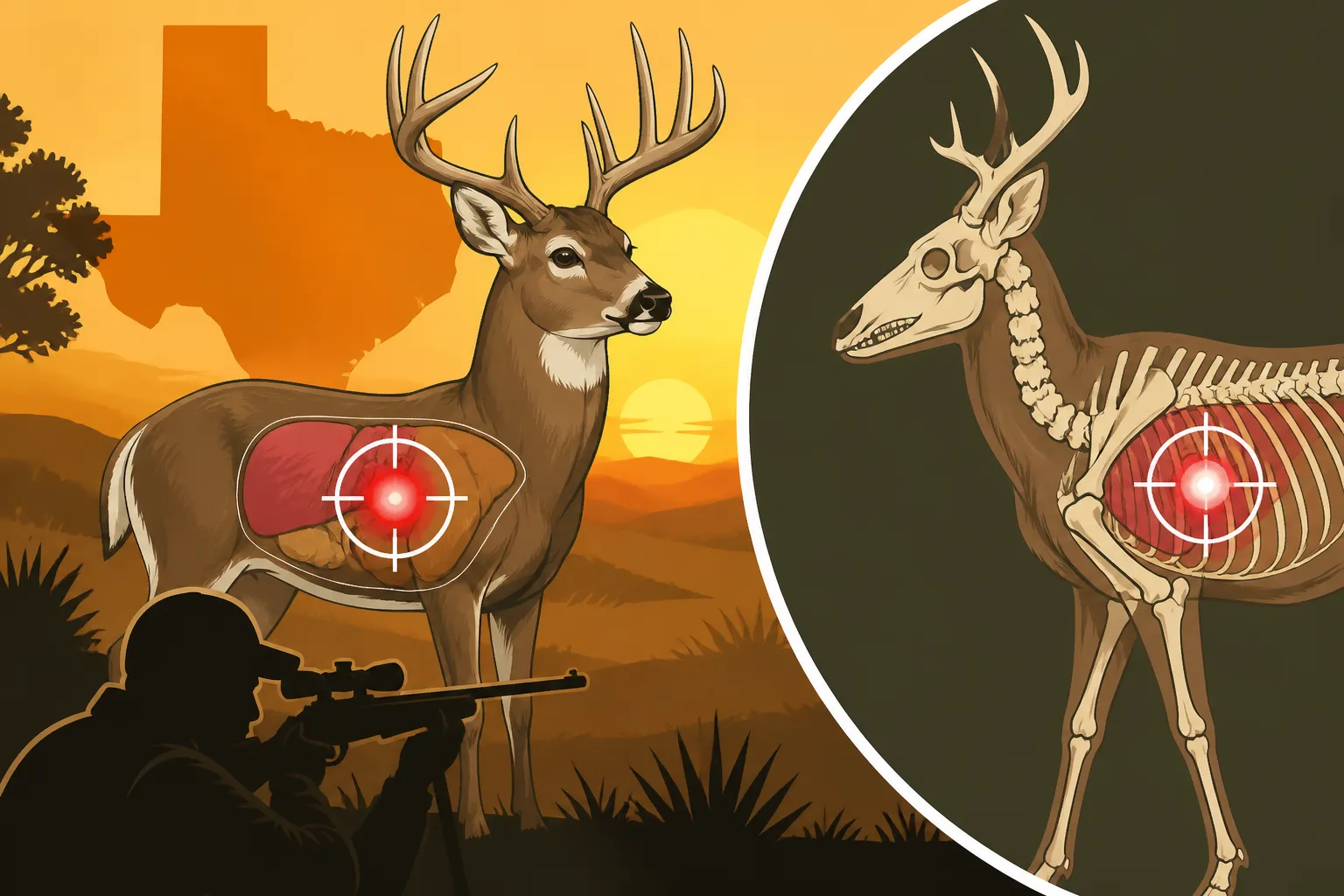
When we talk about "the vitals," we're primarily referring to the heart and lungs. These are the organs you want to target for a quick, humane kill. The lungs are quite large, spanning a significant portion of the chest cavity, and are relatively easy to hit if your shot is placed correctly. A shot through both lungs, often called a "double lung" shot, causes massive internal bleeding and quickly incapacitates the deer. The heart, while smaller, is nestled low in the chest, protected by the deer's front leg bone, but still very accessible with the right angle. Hitting the heart results in immediate circulatory collapse.
Think of it like this: the deer's chest cavity, where the lungs reside, starts just behind the shoulder blade and extends back about two-thirds of the way down the body. Vertically, it's roughly in the middle of the deer's body, between the belly and the spine. The heart is slightly lower and further forward, tucked in behind the elbow of the front leg. A well-placed shot through this vital area severs major arteries and veins, causing rapid blood loss and oxygen deprivation to the brain, leading to a quick and humane demise. Understanding this internal map is your first step to being a responsible hunter.
Skeletal Structure and Shot Angles
The whitetail's skeletal structure, particularly the shoulder blade and ribs, acts as a natural shield for those precious vitals. While ribs are relatively easy to penetrate with most modern hunting projectiles, the shoulder blade is a dense, thick bone that can deflect or stop an arrow, and severely damage a bullet, reducing its effectiveness. This is why a direct "shoulder shot" isn't always the best strategy; you want to get behind or through the shoulder, aiming for the soft tissue that houses the lungs and heart.
Imagine a deer standing perfectly broadside to you. Its front leg acts as a reference point. The sweet spot for the vitals is usually directly behind that leg, a few inches up from the bottom of the chest. However, deer rarely stand perfectly still or perfectly broadside. They might be slightly quartering away, quartering towards, or even facing you head-on. Each of these angles changes the presentation of the shoulder blade and the path to the vitals. Learning to visualize the internal organs and how they relate to the skeletal structure at different angles is a skill developed through practice and careful observation, often honed by studying anatomy diagrams and even practicing on 3D targets. This awareness is key when you're perched in your Box Blind vs Tripod vs Ground Blind in Texas.
Prime Shot Placement Options
When you're out in the field, waiting for that perfect moment, knowing exactly where to aim makes all the difference. While several shot placements can be effective, some are inherently safer and offer a higher probability of a quick, humane kill. Let's talk about the ones that truly earn their gold star.
The Broadside Shot: The Gold Standard
Without a doubt, the broadside shot is the most ideal and forgiving shot placement for whitetail deer. The deer is standing perpendicular to you, offering a clear, unobstructed view of its vitals. For this shot, you want to aim directly behind the front shoulder, about one-third of the way up from the belly line. This placement targets both lungs and often catches the top of the heart or the major arteries above it. It avoids the heavy shoulder bone and the spine, maximizing your chances of a clean pass-through.
When a deer is perfectly broadside, you can almost draw an imaginary line straight down from the back of its front leg, and another line horizontally through the middle of its body. Where those lines intersect, or just slightly forward, is your target. This shot provides a large kill zone, increasing your margin for error slightly. Even if your shot is a few inches off in any direction, you're still likely to hit a vital organ. This is why many experienced hunters, especially those hunting during The Texas Rut: When Do Bucks Rut by Region?, will wait patiently for a deer to offer this prime angle, even if it means passing on a less-than-ideal opportunity.
Quartering Away Shot: A Close Second
The quartering away shot is another highly effective and ethical option, especially popular with bowhunters but equally potent for rifle hunters. In this scenario, the deer is angled slightly away from you, presenting the vitals on the opposite side more prominently. For a deer quartering away to your right, you would aim slightly behind the rib cage on its left side, intending for the projectile to exit through the opposite front shoulder or chest area. This angle ensures a trajectory that typically bypasses the heavy shoulder bone on the entry side and slices through both lungs and potentially the heart or liver.
The key with a quartering away shot is to visualize the exit point. You're essentially aiming for the opposite shoulder pocket. This means your arrow or bullet travels through a greater amount of vital tissue. It’s a fantastic option when a deer offers it up, often more common when they are walking past a Best Deer Feeder Setup for Texas or moving through brush. Just make sure the angle isn't too severe; if it's almost a tail-on shot, it becomes too risky, which we'll discuss later.
Head and Neck Shots: High Risk, High Reward
Head and neck shots are extremely controversial, and for good reason. While they can result in an instant lights-out kill when perfectly executed, the margin for error is incredibly small. A shot to the brain or upper spinal cord will drop a deer on the spot, preventing any tracking. However, the brain is a tiny target, and the spine in the neck is also relatively small. A miss by even an inch or two can result in a devastating, non-fatal wound to the jaw, nose, or lower neck, leaving the deer to suffer or escape with a severe injury.
Because of the high risk of wounding, most ethical hunters strongly discourage head and neck shots for deer, especially with archery equipment or under less-than-ideal conditions (long range, poor light, moving animal). The potential for a clean miss or, worse, a crippling wound that doesn't kill the animal quickly, far outweighs the benefit of an instant drop. Unless you are an expert marksman in a controlled environment with zero room for error, stick to the broadside or quartering away vitals. It’s far better to have a short tracking job on a double-lunged deer than a long, agonizing search for an animal with a broken jaw. For a deep dive into vital shot placement for other species, you might find our guide on Best Shot Placement for Hogs helpful, where head shots are sometimes considered due to different anatomy and behavior.
What to Avoid: Poor Shot Angles and Areas
Just as important as knowing where to shoot is knowing where not to shoot. Attempting a shot from a poor angle or targeting an area with little chance of a quick kill dramatically increases the risk of wounding an animal and losing it, which is the absolute last thing any ethical hunter wants.
Quartering To Shot: A Risky Proposition
The quartering to shot occurs when the deer is angled towards you. While it might seem like a vital area is presented, this angle presents significant challenges. The deer's dense front shoulder bone and potentially the brisket can shield the heart and lungs, making a clean, deep penetration to the vitals very difficult. Even if you manage to penetrate, the bullet or arrow often travels through less vital tissue, making the kill slower and recovery harder.
For a deer quartering towards you, the primary target would be the point of the shoulder, aiming to break it and continue into the vitals. However, the path is obstructed by a lot of bone and muscle, and hitting the spine or the opposite shoulder becomes a much lower probability. It’s a gamble, and for most ethical hunters, it's a gamble not worth taking. It's better to wait for the deer to turn, offering a broadside or quartering away opportunity. Patience is often the biggest factor in successful and ethical hunting, especially when Hunting Over Feeders & Corn in Texas.
Straight On (Frontal) Shot: Rarely Recommended
A straight-on or frontal shot means the deer is facing directly towards you. This shot, like the head and neck shot, has a very small kill zone and an extremely high risk of wounding. The only truly vital area presented is the deer's brisket, where the windpipe, esophagus, and a small portion of the heart and major blood vessels are located. However, the massive sternum (breastbone) and heavy muscle can easily deflect a projectile or prevent it from reaching the critical organs.
Even with a perfectly placed frontal shot, the projectile might not exit, leading to minimal blood trails and a very difficult recovery. Unless you are very close, have a powerful rifle, and the deer is absolutely stationary and calm, this shot should almost always be avoided. The likelihood of simply wounding the deer in the chest or jaw and watching it run off to suffer is far too high. This is one of those moments where holding your shot, even if it feels like your only chance, is the most responsible action.
Gut Shots and Their Consequences
A "gut shot" is what happens when your projectile hits too far back, missing the vitals entirely and instead striking the deer's stomach, intestines, or liver. This is arguably the worst possible shot placement. While a gut shot will eventually kill a deer, it does so very slowly and painfully, causing immense suffering. Recovery is often extremely difficult, as blood trails are usually minimal or non-existent, and the deer can travel for miles before succumbing. The meat can also be tainted by the ruptured gut contents.
If you ever make a gut shot, the immediate action isn't to chase the deer. It's to back out and give the deer several hours (or even overnight if temperatures allow) to bed down and expire. Pursuing a gut-shot deer will often push it further and make recovery even harder. It’s a terrible scenario for everyone involved, and a strong reminder of why precise aim and understanding anatomy are so critical. Knowing Best Shot Placement for Whitetail Deer can help avoid these unfortunate situations.
Here's a quick summary of common shot placements:
| Shot Angle | Aim Point (Relative) | Pros | Cons | Recommended? |
|---|---|---|---|---|
| Broadside | Behind front shoulder, mid-body | Large kill zone, high success rate | None | Yes |
| Quartering Away | Opposite front shoulder, aiming through vitals | Good vital exposure, minimal bone | Requires understanding internal anatomy | Yes |
| Quartering To | Point of shoulder, aiming for vitals | Can be effective if perfectly executed | High risk of hitting heavy bone, low vitals | No (generally) |
| Frontal | Brisket, aiming for vitals (very small target) | Instant drop if perfect | Extremely high risk of wounding | No |
| Head/Neck | Brain or upper spinal cord | Instant drop if perfect | Tiny target, extremely high risk of wounding | No |
| Texas Heart Shot | Between hind legs, upward into vitals (rare) | Sometimes only shot offered in dense cover | Very low success rate, high gut shot risk | No |
Tracking After the Shot
Even with the best shot placement, tracking is an essential part of the hunting process. Sometimes, a deer won't drop immediately, and knowing how to read the signs it leaves behind is crucial for a successful and ethical recovery. It's not just about finding the deer; it's about honoring the animal and ensuring your efforts weren't in vain.
Reading the Sign: Blood Trails and Reaction
After the shot, pay close attention to the deer's reaction. Did it mule-kick, hump up, or run off with its tail tucked? A mule kick often indicates a solid hit in the vitals, while a deer humping up can signal a paunch or liver hit. A tucked tail usually means a poor hit, but not always. More importantly, observe where the deer ran and listen for any crashing sounds. Mark the exact spot where the deer was standing when you shot it, and then mark the last spot you saw it. These markers are invaluable for beginning your tracking efforts.
Once you approach the shot site, look for blood. The color and consistency of the blood can tell you a lot about your hit. Bright red, frothy blood indicates a lung hit, which is excellent. Dark red blood with clots might point to a liver hit. Green or brownish matter, or blood with bits of food, is a sign of a gut shot. Bone fragments also tell a story, indicating a hit to the shoulder or leg. Even sparse blood can be followed with patience and a systematic approach. Understanding what to look for here is just as critical as knowing How to Field Dress a Deer in Hot Weather once you've recovered your animal.
When to Follow and When to Wait
This is perhaps one of the most agonizing decisions after a shot: do you follow immediately, or do you wait? The answer largely depends on your assessment of the shot placement based on the deer's reaction and the initial blood trail. If you're confident it was a solid lung or heart shot (bright, frothy blood, strong reaction), you can often begin tracking after 30-60 minutes. The deer will typically bed down quickly and expire.
However, if you suspect a liver hit (dark red blood, less vigorous reaction) or, heaven forbid, a gut shot (sparse, greenish, or food-laced blood), the best course of action is to back out and wait. For a liver hit, wait at least 3-4 hours, or even longer. For a gut shot, a minimum of 6-8 hours, or preferably overnight, is often necessary. Pushing a poorly hit deer too soon will often make it jump and run further, making recovery significantly more challenging. It requires immense self-control, but it's the most ethical way to ensure recovery. If you're tracking in dense South Texas brush, patience becomes even more vital. This is also why having good Best Hunting Apps for Texas (onX, HuntStand & More) can be invaluable for marking your last known point and planning your grid search.
Disclaimer
Please remember that hunting regulations and best practices can change. Always consult the most current Texas Parks and Wildlife Department (TPWD) Outdoor Annual before heading into the field. This guide provides general information on ethical shot placement and should not replace proper hunter education and personal judgment based on specific hunting conditions.