How to Field Judge a 13-Inch Buck
There are few things more frustrating for a Texas deer hunter than finally getting a buck in your sights, only to second-guess whether it's actually legal under the dreaded 13-inch antler restriction. The pressure is immense, the moment fleeting, and the consequences of a mistake costly. This comprehensive guide is dedicated to helping you confidently field judge a 13-inch buck, giving you the tools and knowledge to make the right call every time.
Understanding the Texas 13-Inch Rule and Why It Matters So Much
Navigating the nuances of Texas hunting regulations can sometimes feel like trying to untangle a mess of fishing line after a big catch. Among the most discussed and often misunderstood rules for whitetail deer is the 13-inch antler restriction. This isn't just some arbitrary number; it's a carefully considered management tool designed to improve the age structure and quality of the whitetail deer herd across much of the state.
The Genesis of the Rule: Why It's in Place
Back in the day, the focus for many hunters was simply on harvesting any buck. This often led to a high harvest rate of younger, 1.5 and 2.5-year-old bucks, preventing them from reaching their full potential. The 13-inch antler restriction was introduced in many counties to protect these younger deer, giving them a chance to mature. The idea is that if a buck's antlers don't meet that minimum inside spread of 13 inches, he's likely a younger deer who needs another year or two to grow. This means that instead of shooting a young buck with a narrow rack, hunters are encouraged to pass him up, allowing him to breed and grow into a larger, more mature animal. It’s a win-win: healthier deer populations and better trophy potential for future seasons. Understanding this purpose helps you appreciate why it's so critical to get it right. If you want a deeper dive into the specifics of this regulation, be sure to check out our article on Texas Antler Restrictions: The 13-Inch Rule Explained.
The Consequences of a Misjudgment: Don't Make That Mistake
Let's be blunt: shooting an illegal buck in Texas is a serious offense. It's not just a minor slap on the wrist. If you harvest a buck that doesn't meet the 13-inch minimum, or any other antler restriction for that matter, you could face hefty fines, loss of hunting privileges, and even confiscation of your firearm and vehicle. Imagine the sinking feeling of knowing you made a mistake, not only potentially ruining your hunt but also impacting your ability to hunt in the future. Beyond the legal ramifications, there's the personal disappointment and the ethical concern of removing a deer that wildlife management intended to protect. It’s a moment of truth, and getting it wrong can cost you far more than just your pride. Always prioritize clear identification before taking a shot, and when in doubt, let that buck walk. You can find detailed information on regulations in the Texas White-Tailed Deer Hunting Regulations 2026 guide.
Mastering the Visual Cues for a Legal Buck
Field judging a buck is an art that combines knowledge, practice, and the ability to make quick, accurate observations under pressure. It's not about guessing; it's about confidently applying a set of visual benchmarks to determine legality.
The "Ear-Tip" Guideline: A Common, But Sometimes Tricky, Method
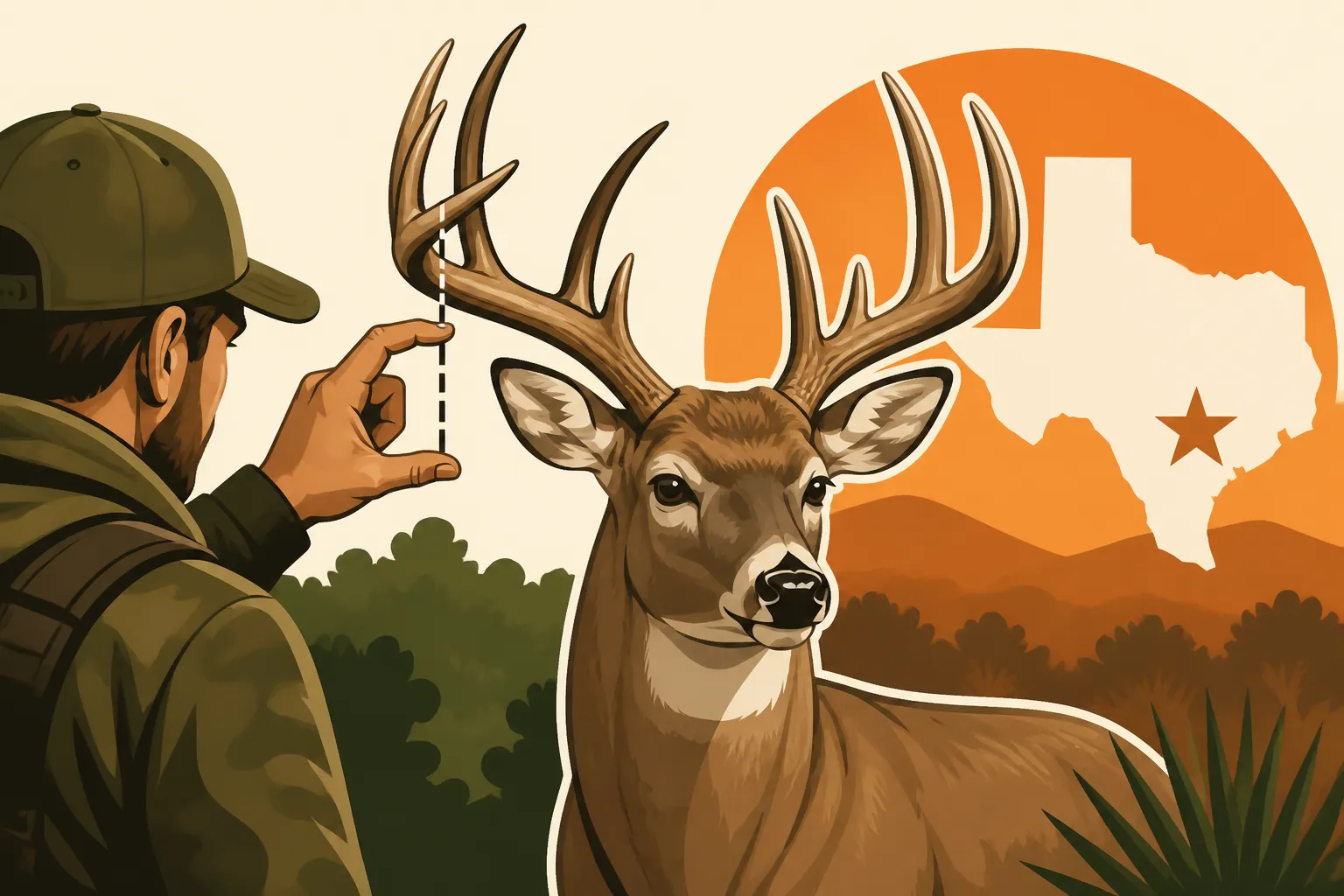
One of the most widely taught methods for field judging a 13-inch buck is the "ear-tip" guideline. The general rule of thumb states that if a buck's main beams extend wider than the tips of his ears when they are in a natural, alert position, he likely meets or exceeds the 13-inch inside spread requirement. A typical whitetail buck's ears, from tip to tip, usually measure somewhere between 13 to 15 inches. So, if his antlers clearly break that invisible line created by his ear tips, you're usually in good shape.
However, this method is far from foolproof. There are several factors that can throw off your perception. For instance, a buck might have unusually large or small ears. His ears might be laid back, forward, or not perfectly perpendicular to his head, which can make his rack appear wider or narrower. The angle he's standing at relative to you, or even the terrain he's on, can create optical illusions. Imagine a buck quartering away slightly, making his ears appear closer together than they actually are. Or a younger buck, all legs and neck, that seems to have a wider rack because his head is smaller. This is where experience and a keen eye truly come into play, and why relying solely on the ear-tip rule can sometimes lead to heartbreak.
Beyond the Ears: Main Beam Length vs. Inside Spread
While the ear-tip rule is a good starting point, truly confident field judging requires looking beyond just the ears and considering the entire antler structure. The legal definition of the 13-inch rule refers to the inside spread of the main beams at their widest point. This isn't always the same as the total width or how wide it looks compared to the ears. A buck might have long main beams that curve inward sharply, giving him a narrow inside spread even if the overall mass and height of his rack are impressive. Conversely, a buck with shorter, outwardly flared main beams might hit that 13-inch mark much more easily.
This is where understanding typical antler growth patterns becomes crucial. Younger bucks, especially 1.5 to 2.5-year-olds, often have taller, narrower racks with less mass and shorter tines. As bucks mature, their antlers tend to gain mass, length, and often, spread. Look for a combination of these factors. Does the buck have good main beam length and do those main beams carry their width out before turning in? Do his brow tines appear proportionate to his main beams? Are the G2 and G3 tines well-defined and reaching outwards? A mature buck, say 4.5 years old or older, will almost always have a rack that easily clears the 13-inch mark, with heavy main beams and good tine length. If you're seeing a skinny-necked buck with a rack that seems to defy logic for its perceived age, take a moment to really evaluate the inside spread.
To better illustrate, let's consider the following common scenarios:
| Buck Type | Common Antler Characteristics | Inside Spread Likelihood | Field Judging Challenge |
|---|---|---|---|
| Young (1.5 – 2.5 yrs) | Thin main beams, often narrow, tall tines, ears appear wide. | Unlikely to be 13"+ | Easy to misjudge if ears are laid back or buck is quartering away. |
| Middle-Aged (3.5 yrs) | Increasing mass, better tine length, often wider than ears. | Likely 13"+ | Can be tricky if main beams curve inward sharply. |
| Mature (4.5+ yrs) | Heavy main beams, good mass, long tines, clearly wider than ears. | Almost always 13"+ | Generally easier to judge, focus on overall symmetry and size. |
| "Cull" Buck | Often narrow, broken, or asymmetrical, despite older age. | Variable | Requires careful assessment, may be under 13" even if mature. |
Factors That Play Tricks on Your Eyes: Optics, Distance, Angle
Our eyes can play tricks on us, especially in the field. When you're looking through binoculars or a rifle scope, magnification can distort perceived distances and widths. A buck standing 150 yards away through 10x binoculars might look legal, but if he's actually 250 yards out, that perception could be drastically different. The further away the deer, the harder it is to accurately judge. Always try to get closer if safely possible, or use a rangefinder to understand the actual distance.
The angle of the deer is perhaps the biggest culprit for misjudgment. A buck facing directly towards or away from you will appear much narrower than he actually is. This is a common trap. Conversely, a buck that is perfectly broadside will give you the most accurate representation of his spread. If a buck is quartering slightly, it can make one side of his rack appear wider than the other, or distort the perceived inside spread. Light conditions also play a huge role; shadows can obscure details or make antlers appear thicker than they are. Overcast days or early morning/late evening light often provide the best conditions for clear viewing. Using a good quality pair of binoculars, like those from a reputable brand such as Zeiss or Vortex, can significantly improve your ability to discern these subtle differences. When glassing, hold steady and take your time to truly evaluate the animal before making a decision. Our guide on Best Hunting Optics for Texas: Scopes, Binos & Rangefinders can help you pick the right gear.
Practical Strategies for Sharpening Your Field Judging Skills
Field judging isn't something you're born with; it's a skill honed through dedicated practice and thoughtful analysis. It takes time, patience, and a willingness to learn from every observation.
Study Resources and Real-World Examples: Learning from Others
One of the best ways to get better at field judging is to immerse yourself in examples. Spend time poring over photos and videos of whitetail bucks. Websites like the Texas Parks and Wildlife Department (TPWD) often have excellent resources, including photos and videos of bucks with known measurements. Look at bucks from various angles, at different distances, and under different lighting conditions. Pay close attention to the characteristics of bucks that are just legal, barely legal, and clearly illegal.
Many experienced hunters and guides also share their knowledge. Watching hunting shows where they discuss their field judging process can be invaluable. Even better, if you have access to a deer lease, use a game camera to capture images of bucks throughout the season. Then, after harvest, compare your pre-hunt judgment with the actual measurements. This feedback loop is incredibly powerful. You might even consider joining online hunting forums or communities where hunters discuss deer photos and try to field judge them together. The more you expose your eyes to diverse examples, the better you'll become at recognizing the subtle cues that indicate a 13-inch spread.
Technology as Your Ally: Rangefinders and Apps
In today's hunting world, technology can be a powerful ally in minimizing human error. A good laser rangefinder is an absolute must-have. Knowing the exact distance to a buck eliminates one of the biggest variables that can distort your perception of antler size. If you know a buck is at 100 yards, your brain can better calibrate what a 13-inch spread should look like at that distance. Some advanced rangefinders even have features that can help with angle compensation, further enhancing accuracy.
Beyond rangefinders, there are several hunting apps available, like GoHunt, that provide incredibly detailed satellite imagery and property line information. While these won't field judge a buck for you, they are excellent for scouting and understanding the terrain where bucks might be moving. Some apps also offer supplemental information or resources that can aid in antler identification. You can use these tools to mark potential stand locations where you might get a clearer, closer view of approaching deer, improving your chances of making an accurate judgment. If you're curious about other helpful tech, check out our guide on Best Hunting Apps for Texas (onX, HuntStand & More).
Pre-Season Scouting and Trail Camera Intelligence
The work of field judging doesn't start when a buck walks out into your shooting lane; it begins long before the season even opens. Intensive pre-season scouting is paramount. Use trail cameras, especially cellular models like those from Tactacam or Moultrie, to gather intelligence on the bucks inhabiting your hunting area. Set them up on established trails, near feeders, or over scrapes to capture as many images as possible. Our article on How to Pattern Bucks With Trail Cameras delves into this strategy in detail.
When reviewing these trail camera photos, pay close attention to the antlers of different bucks. Create a mental catalog, or even a physical one, of "shooters" and "passers." For any buck that looks borderline, measure the inside spread on the photo as best you can (though this can be tricky). The goal is to get intimately familiar with the specific deer in your area. If you consistently see a particular buck on your GoHunt map or trail camera feed, and you know his spread measures 12 inches, you’ll be much more likely to recognize him and pass him up if he shows up in person during the season. This proactive approach takes the pressure off the moment of truth, allowing you to hunt with greater confidence and make more informed decisions when it truly counts.
Disclaimer
Hunting is an activity with inherent risks. Always prioritize safety, understand and follow all local, state, and federal regulations, and obtain proper licenses and permits before engaging in any hunting activities. The information provided in this guide is for informational purposes only and should not be considered a substitute for official wildlife regulations or professional guidance.