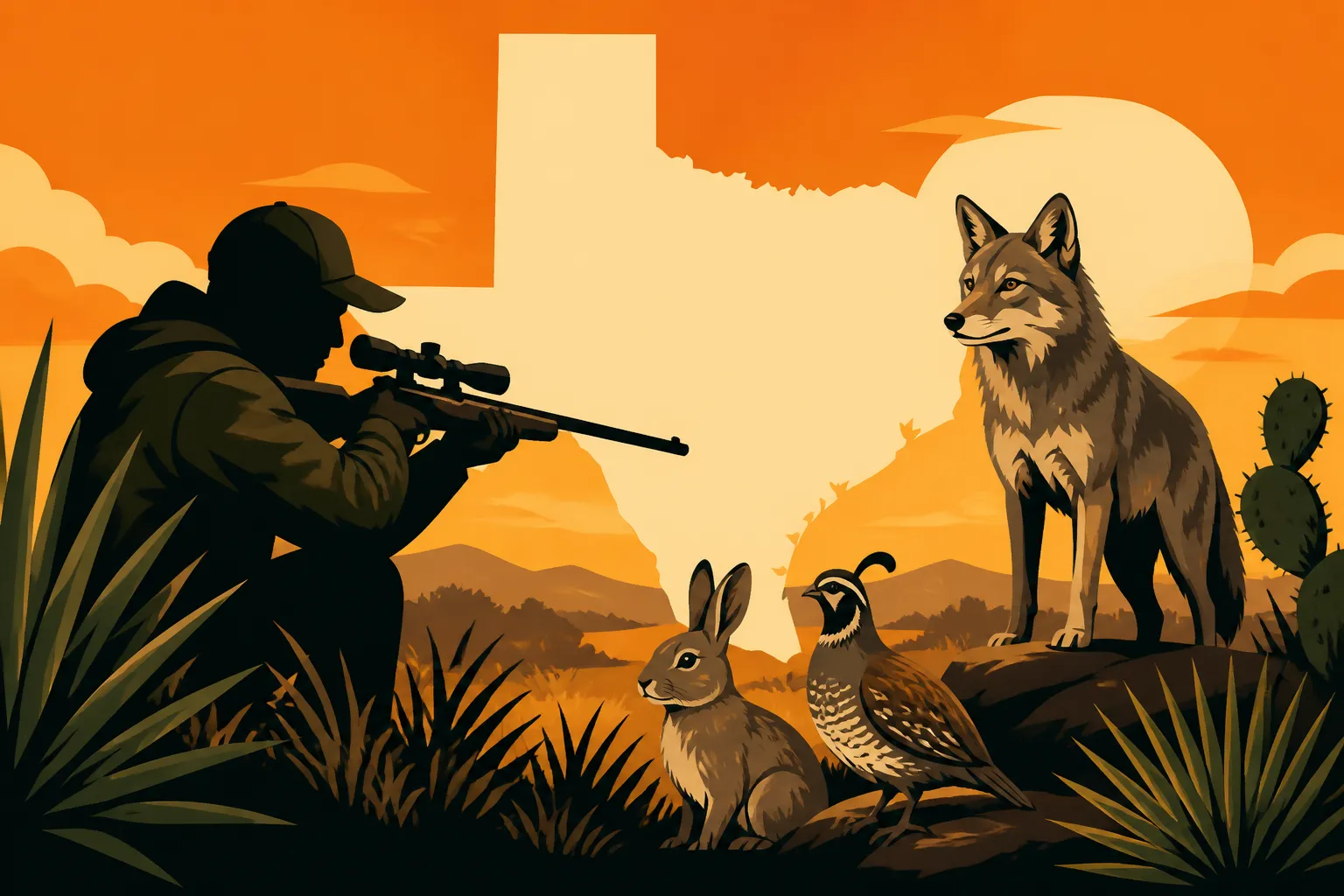
Predator & Small Game Hunting in Texas
Hunting in Texas is synonymous with chasing big whitetails or tackling aggressive feral hogs, but sometimes, the sheer complexity of licenses, seasons, and finding the right land can be a real headache. It can feel like there's an overwhelming amount of information to sift through, making it tough for new hunters or even seasoned folks looking to try something different. But don't you fret! This comprehensive guide is here to untangle the nuances of hunting predators and small game across our vast state, giving you all the practical, down-to-earth advice you need to get out there and enjoy the chase.
Understanding Predator and Small Game Categories in Texas
When we talk about hunting in Texas, most folks' minds jump straight to deer, turkey, or even exotics. But beneath that popular layer lies a vibrant, often overlooked world of predator and small game hunting that offers incredible challenges and opportunities. These categories encompass a wide array of species, each with its unique characteristics, regulations, and hunting methods. Trying to figure out all the different rules for what you can hunt and when can feel like a labyrinth, especially with species that have open seasons versus those with strict dates. It's a common frustration, but once you understand the basic distinctions, it becomes much clearer.
Defining Predators and Their Role
Predators in Texas are the wild animals that primarily hunt and feed on other animals. They play a crucial, albeit sometimes contentious, role in our ecosystems. For many landowners and wildlife managers, controlling predator populations, especially species like coyotes and bobcats, is a necessary part of managing game populations like deer, turkey, and quail. Excessive predator numbers can significantly impact the survival rates of fawns, poults, and young birds, leading to declines in desirable game species. This means that hunting predators isn't just a thrilling sport; it's often a vital wildlife management tool that helps maintain a healthy balance in nature.
Beyond management, predator hunting offers a unique, adrenaline-pumping experience. These animals are notoriously cunning and challenging to outsmart, making a successful hunt incredibly rewarding. Common Texas predators include the ever-present coyote, the elusive bobcat, and various species of fox. Hunting these animals tests a hunter's patience, calling skills, and ability to read the landscape. Many hunters also value the pelts of these animals, especially during the colder months when their fur is thickest, adding another dimension to the hunt.
The Appeal of Small Game Hunting
On the other side of the coin, small game hunting often provides a more accessible and relaxed entry point into the hunting world, though it can be just as challenging in its own right. These hunts are fantastic for honing shooting skills, understanding animal behavior, and introducing new or younger hunters to the outdoors without the intense pressure often associated with big game pursuits. The financial barrier to entry is typically lower, and the physical demands can be less strenuous, making it a perfect family activity.
In Texas, the primary small game species are rabbits and squirrels. Rabbits, including cottontails and jackrabbits, are abundant across various habitats and offer fast-paced action. Squirrels, particularly fox squirrels and gray squirrels, are a staple in the timbered regions of East and Central Texas, providing a challenging hunt requiring stealth and sharp eyes. Beyond these popular choices, Texas also has a host of furbearers that, while sometimes categorized differently, can be hunted for sport or nuisance control, such as raccoons, opossums, and skunks. Many people find immense satisfaction in harvesting these animals for their meat, which is often delicious, or for their pelts.
Regulations and Licensing for Predator and Small Game Hunting
Navigating the legal landscape of hunting can sometimes feel like trying to solve a puzzle with missing pieces. It's a common source of confusion, especially when moving between different species or types of land. Understanding the specific regulations and licensing requirements for predator and small game hunting in Texas is absolutely crucial for a legal and ethical hunt. The Texas Parks and Wildlife Department (TPWD) is the authority, and their annual Outdoor Annual is your bible, but let's break down the general framework.
General Licensing Requirements
For almost all hunting activities in Texas, whether you're chasing a trophy buck or a wily coyote, you'll need a valid hunting license. The good news is that for most predator and small game species, a general hunting license, such as the Resident or Non-Resident Hunting License, will cover your needs. If you're a Texas resident, the annual Resident Hunting License is your go-to. Non-residents will need a Non-Resident Hunting License, which comes with different fee structures. It’s vital to remember that these licenses are generally valid from September 1st to August 31st of the following year.
Now, here's where it gets a little more nuanced: if you plan to hunt on public lands, such as Wildlife Management Areas (WMAs) or National Forests, you'll typically need to purchase an Annual Public Hunting Permit (APH). This permit grants you access to designated public hunting lands for specific game. It's an endorsement added to your base hunting license and is absolutely essential if you don't have private land access. Also, remember that even if you're not specifically targeting migratory birds, but might encounter them (like doves while rabbit hunting near a field), you'll need the Migratory Bird Endorsement and HIP certification. Make sure you fully understand what specific licenses you need; it's always best to check the latest details on the Texas Parks and Wildlife Department website or in the current Outdoor Annual. For a deeper dive into the overall requirements, you might want to read more about the various options available in the Texas Hunting License: Cost, Types & How to Buy (2026) guide.
Season Dates and Bag Limits
This is where predator and small game hunting often diverge significantly from big game hunting, and it's a point of frequent misunderstanding. For most common predators in Texas, such as coyotes, bobcats, and even foxes, there is generally no closed season or bag limit on private property. This means that if you have legal access to private land, you can hunt these animals year-round, day or night, as long as you have a valid hunting license. This flexibility is a huge draw for predator hunters and makes them excellent targets for off-season practice or management efforts.
However, this "no closed season" rule doesn't apply universally to all furbearers or small game. Species like rabbits (cottontail and swamp rabbits) and squirrels (fox and gray squirrels) have very specific season dates and bag limits. For example, squirrel season typically runs from early October through late February or early March, with a daily bag limit of 10 squirrels. Rabbits often have a year-round season, but always double-check the current Outdoor Annual for any county-specific or statewide changes. Bag limits for small game are typically generous, allowing for a good day's harvest. Remember, always consult the most current Texas Parks and Wildlife Department Outdoor Annual before heading out, as regulations can change from year to year.
Legal Hunting Methods and Restrictions
Texas offers a wide range of legal hunting methods for predators and small game, providing flexibility for hunters with different preferences and resources. For firearms, common choices include rimfire rifles (.22LR for small game), centerfire rifles (like a .223 Remington or .243 Winchester for coyotes), shotguns, and even handguns. Archery equipment is also perfectly legal. For furbearers like raccoons, opossums, and skunks, trapping is a common method, though it requires specific trapper's licenses and adherence to strict regulations regarding trap types, placement, and checking intervals.
It's crucial to be aware of certain restrictions. Hunting from a vehicle on a public road or right-of-way is strictly prohibited, as is shooting from, on, or across a public road. Night hunting is permitted for certain species like feral hogs and coyotes on private land with landowner permission, often utilizing artificial light, thermal, or night vision devices. However, using artificial lights to hunt deer or other game animals is illegal. Speaking of night hunting, if you're thinking about using advanced optics, you'll find a lot of useful information on the legality and tactics in articles like Is Thermal Hunting Legal in Texas?. Always ensure you have explicit permission from the landowner for any night hunting activities and are aware of any local ordinances.
Essential Gear for Predator and Small Game Hunting
Just like any other outdoor pursuit, having the right gear can make all the difference between a frustrating day and a successful, enjoyable hunt. When it comes to predator and small game hunting in Texas, the specific equipment you need can vary quite a bit depending on what you're targeting and whether you're hunting day or night. It's a common pitfall to assume one setup fits all, leading to being under-prepared for the specific challenges each species presents. Investing in quality, purpose-driven gear can dramatically increase your chances of success and, more importantly, your safety and comfort in the field.
Firearms and Ammunition Choices
Selecting the right firearm and ammunition is paramount for ethical and effective hunting. For small game like squirrels and rabbits, a .22LR rifle is often the tool of choice. It's quiet, accurate, and its low recoil makes it perfect for introducing new hunters. For close-range rabbit hunting, especially in dense brush where quick shots are needed, a shotgun loaded with small shot (like 6s or 7.5s) can be incredibly effective. Shotguns are also versatile for upland birds that might be encountered.
When you step up to predators, your needs change. For coyotes, bobcats, and foxes, you'll want a rifle that offers a flat trajectory and sufficient energy to ensure a clean kill. Popular calibers include the .223 Remington (5.56 NATO), .22-250 Remington, .204 Ruger, and .243 Winchester. These calibers offer excellent accuracy and velocity, making them ideal for the often longer shots encountered in predator hunting. Ammunition choice matters too; look for frangible or rapidly expanding bullets designed for varmints, which deliver maximum energy quickly and reduce the risk of ricochets. Remember, shot placement is always king, regardless of caliber.
Optics and Calling Equipment
Optics are indispensable for both predator and small game hunting, though their specific application varies. For squirrel and rabbit hunting, a good pair of binoculars (8×42 or 10×42) can help you spot game in dense cover or at a distance. A quality scope on your .22LR rifle will significantly improve accuracy, especially for headshots on squirrels. For predator hunting during the day, powerful binoculars and a reliable rifle scope are essential for spotting distant animals and making precise shots.
Night hunting for predators, which is a popular and effective method in Texas, demands specialized optics. Thermal scopes and night vision devices are game-changers, allowing you to detect and identify animals in complete darkness. A thermal monocular is excellent for scanning wide areas to locate heat signatures, while a thermal or night vision rifle scope will allow you to make accurate shots. Electronic calls are another critical piece of gear for predator hunting. These devices can broadcast a variety of animal sounds—distress cries (rabbit, fawn), challenge howls, or pup whines—to lure in coyotes and bobcats. Mouth calls, while requiring more practice, offer a hands-on challenge and can be very effective. If you're considering the jump into night hunting, a look at Best Thermal Scopes for Hog Hunting in Texas will give you insights into some excellent options, many of which are perfect for predators too. For general advice on glass, check out Best Hunting Optics for Texas: Scopes, Binos & Rangefinders.
Field Essentials and Safety Gear
No matter what you're hunting, certain field essentials are non-negotiable for a comfortable and safe experience. Appropriate camouflage is important, especially for predator hunting where you need to blend seamlessly into your surroundings. For small game, more subdued earth tones might suffice. Scent control, particularly for predators with their keen sense of smell, is also a good practice. Comfortable, durable boots are a must for navigating varied Texas terrain; consider snake boots, especially in brush country, as they offer critical protection. Check out our guide on Best Snake Boots for Texas Hunting for recommendations.
Other vital items include a good hunting backpack to carry your gear, a first-aid kit for emergencies, and reliable navigation tools. While GPS units are great, a hunting app on your smartphone, like onX Hunt or HuntStand, can be incredibly useful for property lines, tracking, and marking waypoints. These apps help you stay legal and oriented, preventing accidental trespassing and ensuring you can find your way back. For more on these handy digital tools, see Best Hunting Apps for Texas (onX, HuntStand & More). Safety should always be your top priority. This includes knowing your firearm, proper muzzle control, identifying your target and what's beyond it, and wearing hunter orange where required (though often not needed for predators on private land, it's a good general practice, especially on public lands during deer season). A good headlamp or flashlight is also essential, even for daytime hunts, for navigating in low light or tracking after dark.
Mastering Predator Hunting Tactics
Predator hunting in Texas isn't just about showing up with a rifle; it's a game of wits, patience, and understanding animal behavior. These animals are incredibly intelligent and wary, making a successful hunt a testament to your skill. Many hunters get frustrated when their calls go unanswered or animals skirt their setup, but often, a few key tactical adjustments can make all the difference. Learning the nuances of calling, understanding how to use the cover of darkness, and knowing what to look for in the field are crucial for putting more predators in the truck.
Coyote and Bobcat Calling Strategies
Calling is arguably the most effective and popular tactic for drawing in coyotes and bobcats. The core principle involves mimicking the sounds of their prey (distress calls) or other predators (challenge howls, pup whines) to pique their curiosity or territorial instincts. For distress calls, think rabbit in peril, a fawn bleat, or a bird in distress. These sounds often trigger a strong feeding response, bringing predators in quickly. Electronic calls, like those from Foxpro or ICOtec, offer a wide range of realistic sounds and the convenience of remote operation, allowing you to place the caller away from your position and draw attention away from yourself.
When setting up for a call, wind direction is paramount; always try to have the wind blowing from the direction you expect the animal to approach, towards you, so your scent is carried away from their path. Utilize natural cover to break up your silhouette and always be ready, as coyotes and bobcats can appear silently and quickly. Start with softer calls and gradually increase volume if no response, imitating a fleeing animal. Varying your calls and sequences is key to keeping the animals interested. For specific, in-depth strategies on luring in these elusive creatures, definitely check out Predator Calling for Coyotes in Texas.
Night Hunting for Predators
Night hunting offers a thrilling and often more productive avenue for targeting Texas predators, particularly coyotes and bobcats. Many of these animals are primarily nocturnal, becoming more active and less wary under the cover of darkness. The legal use of artificial light, thermal imaging, and night vision devices on private land for certain species in Texas has revolutionized this pursuit, making it incredibly effective. The thrill of spotting glowing eyes or a thermal signature against a dark landscape is truly something else.
When hunting at night, safety is paramount. Always be absolutely certain of your target and what lies beyond it. Using red or green filtered lights can illuminate your target without spooking them as much as white light. However, thermal and night vision optics are superior for target acquisition and identification. A thermal monocular is fantastic for scanning broad areas, while a thermal or night vision scope on your rifle allows for precise aiming. Understanding how animals move at night, their travel corridors, and preferred hunting grounds will greatly enhance your success. You'll find that predator activity often peaks in the hours immediately after sunset and before sunrise. For more detailed insights into effective tactics for hunting predators when the sun goes down, our guide on How to Call Coyotes at Night in Texas offers excellent advice.
Understanding Predator Behavior and Sign
Becoming a successful predator hunter goes beyond just calling; it involves understanding the animals themselves. Learning to read their behavior and recognize their signs in the field is like deciphering a secret language. Coyotes are incredibly adaptable and can be found almost anywhere in Texas, from dense brush to wide-open plains. Bobcat, while also widespread, tend to prefer more timbered or brushy areas with good cover, often near water sources. Foxes are typically found in similar habitats, often in more agricultural or transitional zones.
Look for tracks, which are often more elongated for coyotes and more rounded for bobcats. Scat can also tell you what they've been eating and where they've been traveling. Pay attention to game trails, creek beds, and fencelines, as these often serve as natural travel corridors. Scouting before a hunt, even just driving around and observing, can reveal key areas of activity. Fresh tracks around a water source, den sites, or areas where domestic animals have been preyed upon are all excellent indicators of predator presence. Understanding their typical feeding times, how they react to different calls, and their territorial instincts will empower you to make more informed decisions in the field, leading to more productive hunts.
Effective Small Game Hunting Techniques
Small game hunting, while perhaps less glamorous than chasing trophy deer, offers an incredibly rewarding experience. It's often where many of us started, learning the ropes of ethical hunting, gun safety, and the satisfaction of putting wild game on the table. However, don't mistake "small" for "easy." Successfully hunting rabbits and squirrels requires keen observation, stealth, and sometimes, a good deal of physical effort. It can be frustrating to walk miles and see nothing, but a few proven techniques can significantly increase your chances of success and make those outdoor adventures truly memorable.
Rabbit Hunting Approaches
Rabbits are abundant across Texas and provide fast-paced, exciting hunting opportunities. The most common species are the Eastern cottontail and the larger swamp rabbit, found in wetter areas. One of the most classic and effective methods for hunting rabbits is with the aid of dogs, typically beagles. These dogs, with their incredible noses and relentless pursuit, will flush rabbits from thick cover and chase them in circles, often back past the hunter's stand. This method is social, active, and highly successful, especially in dense brush where rabbits might otherwise remain hidden.
For those without dogs, still-hunting or stalking can be very productive. This involves slowly moving through prime rabbit habitat—think brushy draws, mesquite thickets, fencelines, and the edges of fields—pausing frequently to scan for movement. Rabbits often bolt from cover only a few yards away, so quick reflexes are essential. Another method is driving brush. This involves a group of hunters walking in a line through dense cover, pushing rabbits towards blockers positioned at the end of the patch. Shotguns are generally preferred for rabbit hunting due to their effectiveness on fast-moving targets in heavy cover. Look for early mornings and late evenings as prime times, especially after a rain when rabbits might be out foraging.
Squirrel Hunting Methods
Squirrel hunting offers a more deliberate and stealthy challenge, often requiring keen eyesight and patience. Texas is home to fox squirrels, the larger, often rust-colored squirrel found throughout most of the state's timbered areas, and gray squirrels, smaller and typically found in the eastern Pineywoods regions. The most popular method is still-hunting: slowly moving through a hardwood bottom or timber stand, stopping frequently to listen and scan the trees for any sign of movement. Squirrels are often most active early in the morning and late in the afternoon, especially during the fall when they are busy caching nuts for winter.
Another effective tactic is stalking, where you identify a squirrel, then slowly and quietly attempt to get into shooting range. Using the trunks of trees as cover and moving only when the squirrel is distracted (e.g., chewing a nut or on the far side of a tree) can increase your success. For those who enjoy working with dogs, a good squirrel dog can quickly locate and tree squirrels, allowing you to focus on the shot. A .22LR rifle is the classic choice for squirrel hunting, allowing for precise headshots that preserve the meat. A shotgun with small shot can also be effective, especially for squirrels moving quickly through branches, but it requires careful aim to avoid excessive damage to the meat. Concentrate your efforts around nut-bearing trees like oaks, pecans, and hickories, particularly during periods of high mast production.
Furbearer Considerations Raccoon, Opossum, Skunk
While not always considered "small game" in the traditional sense of table fare, species like raccoons, opossums, and skunks are abundant furbearers in Texas and can be hunted or trapped for nuisance control, their pelts, or even just for sport. Trying to specifically target these animals can be a unique challenge and often provides opportunities for night hunting.
Raccoons are highly intelligent and opportunistic, often found near water sources or agricultural areas. They are primarily nocturnal, making night hunting with dogs a popular method. Coondogs (like Black and Tan Coonhounds or Redbone Coonhounds) are trained to track raccoons, tree them, and bay until the hunter arrives. Trapping is also very effective for raccoons, but as mentioned, requires specific licenses and careful adherence to regulations. Opossums are also nocturnal and generally less wary than raccoons, making them somewhat easier to hunt, often incidentally while hunting other furbearers. Skunks, while possessing a potent defense mechanism, are occasionally targeted for their pelts or for nuisance removal. Hunting these species can be a way to manage their populations, especially when they become a problem around homes or livestock, or to provide additional income through fur sales. Always check the specific regulations for hunting and trapping furbearers, as they can sometimes differ from general hunting laws.
| Species | Primary Reason to Hunt | Best Time to Hunt | Common Tactics | Recommended Caliber |
|---|---|---|---|---|
| Coyote | Population Control, Sport, Fur | Fall/Winter (no closed season) | Calling, Night Hunting | .223 Rem, .243 Win, .22-250 Rem |
| Bobcat | Population Control, Sport, Fur | Fall/Winter (no closed season) | Calling, Trapping | .223 Rem, .22-250 Rem |
| Rabbit | Meat, Sport | Year-round (check local seasons) | Stalking, Dogs, Driving | .22LR, Shotgun (small shot) |
| Squirrel | Meat, Sport | Fall/Winter (specific seasons) | Still-hunting, Stalking, Dogs | .22LR, Shotgun (small shot) |
| Raccoon | Nuisance, Fur | Fall/Winter (no closed season) | Trapping, Night Hunting | .22LR |
| Fox | Population Control, Sport, Fur | Fall/Winter (no closed season) | Calling, Trapping | .223 Rem, .22-250 Rem |
Seasonal and Regional Considerations for Texas Hunting
Texas is a colossal state, and what works in one corner might be completely different in another. This geographic diversity means that understanding the seasonal patterns and regional hotspots is critical for successful predator and small game hunting. It's often frustrating when you try a tactic that worked for a buddy in South Texas only to find it's completely ineffective in the Pineywoods. Recognizing these differences will not only make your hunting trips more productive but also more enjoyable, as you learn to adapt to Texas's incredible variety.
Best Times of Year for Different Species
The timing of your hunt can profoundly impact your success, even for species with year-round open seasons. For predators like coyotes and bobcats, the cooler months of fall and winter are generally considered the prime time. During these seasons, less foliage provides better visibility, making it easier to spot incoming animals. Additionally, the breeding season for coyotes often falls in late winter, and territorial instincts can make them more responsive to challenge calls. Their pelts are also at their prime during the colder months, making them more valuable for fur harvesting. Many predators are also more active during the day when temperatures are milder, making daytime calling more effective.
For small game like rabbits and squirrels, fall and winter are also typically the best seasons. Cooler temperatures make for more comfortable hunting conditions, and once the leaves have fallen, squirrels are much easier to spot in the trees. Rabbits also tend to be more active during daylight hours in cooler weather. Early fall, when acorn crops are abundant in East and Central Texas, can be an excellent time for squirrel hunting, as they are actively foraging. Always cross-reference your timing with the specific hunting season dates for small game to ensure you're legal.
Regional Hotspots Across Texas
Texas's vast landscape offers distinct ecological regions, each with its unique characteristics that favor certain species. Knowing where to go for what game can save you a lot of time and effort. If you're looking for squirrels, the dense hardwood forests of East Texas, particularly the Pineywoods region, are your best bet. Here, you'll find an abundance of fox and gray squirrels feasting on pecans, oaks, and other mast-producing trees. For a deeper look at hunting in this specific area, our guide on Pineywoods & East Texas Hunting provides useful context.
For rabbits, particularly cottontails and jackrabbits, the brush country of South Texas and the rolling plains further north offer excellent opportunities. The thick mesquite, prickly pear, and various brush species provide ideal cover for rabbits. Coyotes and bobcats are ubiquitous across the state, but populations can be particularly dense in areas with good cover and prey, such as the South Texas Brush Country. The wide-open spaces of the Texas Panhandle are also renowned for coyote hunting, where their visibility makes calling effective over long distances. To understand the terrain and tactics unique to the lower part of the state, explore South Texas Deer Hunting: Brush Country Guide, and for insights into the western regions, refer to Panhandle & Trans-Pecos Hunting in Texas.
Public vs. Private Land Access
Access to hunting land is often the biggest hurdle for hunters in Texas, a state predominantly made up of private property. For predator and small game hunting, this challenge remains. Private land offers the most flexibility, allowing year-round hunting for most predators with landowner permission, and often providing better populations due to less pressure. Gaining permission from landowners can be achieved through personal connections, knocking on doors, or joining a hunting lease. While often associated with big game, hunting leases can be an option for extensive predator and small game hunting too. Our Hunting Leases in Texas: Complete Guide (Cost & How to Find) can shed light on this option.
Public hunting opportunities exist, primarily through Texas Parks and Wildlife Department's Wildlife Management Areas (WMAs) and the Annual Public Hunting Permit (APH). Many WMAs offer small game hunting seasons and, in some cases, predator hunting opportunities. However, public land hunting often comes with stricter regulations, more limited access, and significantly higher hunting pressure. You'll need to carefully review the specific public hunting regulations for each WMA you plan to visit, as dates and rules can vary considerably. For a thorough understanding of how to navigate public lands, consider reviewing Public Hunting in Texas: WMAs & Annual Public Hunting Permit. It's a common frustration to find limited public land, but with proper planning and research, opportunities can be found.
Processing and Utilizing Your Harvest
The hunt doesn't truly end until the animal is properly processed and, if applicable, utilized. For many, this is the most gratifying part of the experience—turning hard-earned game into delicious meals or valuable pelts. It can be a bit daunting, especially for beginners, to know how to properly field dress and handle small game or predators, particularly in the unforgiving Texas heat. However, with a few key steps and a little practice, you can ensure that your harvest is respected and put to good use.
Field Dressing and Storage
Proper field dressing is critical for preserving the quality of the meat for small game and for properly preparing the pelt of a furbearer. For rabbits and squirrels, field dressing should happen as quickly as possible after the kill, especially in warm weather. This usually involves gutting the animal to remove internal organs, which helps cool the carcass and prevents spoilage. For rabbits, some hunters will also skin them immediately in the field. Once gutted, place the small game in a cooler with ice (in a sealed bag to prevent waterlogging) to cool it down rapidly.
For predators like coyotes and bobcats, if you intend to keep the pelt, cooling is still important, but the focus shifts to preserving the fur. Avoid dragging the animal unnecessarily, which can damage the pelt. Skinning should be done as soon as possible after the kill. If you're not planning to skin it immediately, ensure the carcass is cooled quickly. In Texas, where temperatures can be brutal, prompt action is non-negotiable. Our guide on How to Cool a Deer Fast in Texas Heat offers principles that apply universally to rapid game cooling, emphasizing the importance of getting that core temperature down.
Cooking Small Game
The true reward of small game hunting for many is the delicious, lean meat. Rabbit and squirrel are versatile and can be prepared in a multitude of ways. Rabbit meat is often compared to chicken, with a mild flavor and firm texture. It's excellent stewed, fried, or braised. A classic preparation involves coating pieces in seasoned flour and pan-frying until golden brown, then simmering in a rich gravy. Squirrel meat, particularly from younger animals, is also tender and flavorful, lending itself well to stews, pot pies, or slow-cooked dishes. Older squirrels might benefit from longer, slower cooking methods to tenderize the meat.
When cooking any wild game, ensure it's cooked thoroughly to an appropriate internal temperature. Basic hygiene, like washing hands and tools, is always important. Don't be afraid to experiment with different seasonings and recipes. Many traditional Southern and frontier recipes feature rabbit and squirrel, offering a taste of history. Utilizing the meat not only honors the animal but also provides a sustainable, healthy source of protein.
Fur Handling and Tanning
For those who hunt furbearers, utilizing the pelt is a significant part of the experience. Proper fur handling begins with meticulous skinning. The goal is to remove the hide cleanly, minimizing cuts and leaving as little flesh or fat attached as possible. Different species require different skinning methods (e.g., cased skinning for coyotes and bobcats, open skinning for larger animals if desired). Once skinned, the hide needs to be properly fleshed (removing all fat and muscle tissue) and then stretched on a proper drying board or stretcher.
After stretching, the pelt must be dried in a cool, well-ventilated area away from direct sunlight or heat. This process prepares the fur for tanning. While commercial tanneries offer professional services, many DIY enthusiasts learn to tan pelts at home using various methods. It's crucial to understand that there are specific regulations regarding the sale of furbearer pelts, and you'll often need a trapper's license even if you hunted the animal, if you plan to sell the fur commercially. Knowing these rules ensures you're compliant and your efforts aren't wasted.
Disclaimer
The information provided in this guide is for general informational purposes only and is not intended as legal advice. Hunting regulations in Texas can change frequently, and it is the responsibility of each hunter to consult the most current Texas Parks and Wildlife Department Outdoor Annual or website for all applicable laws, seasons, bag limits, and licensing requirements before engaging in any hunting activities. Always ensure you have appropriate licenses, landowner permission, and adhere to all safety protocols.