How to Hunt Pronghorn Antelope on the Texas Plains
Hunting pronghorn antelope on the vast, unforgiving plains of Texas can feel like trying to catch smoke. These incredible animals are built for speed and survival in wide-open spaces, making them one of the most challenging and rewarding hunts. If you've ever felt the frustration of spotting a magnificent buck only to have it vanish into the shimmering heat before you can get close, you're in the right place. This guide will walk you through everything you need to know, from understanding pronghorn behavior and choosing the right gear to mastering the art of the spot-and-stalk, helping you turn those distant sightings into successful hunts.
Understanding Pronghorn Antelope in Texas
Pronghorn, often mistakenly called antelope (they are actually in a league of their own, being the sole surviving member of the Antilocapridae family), are truly unique to North America. In Texas, their populations are robust, particularly in the western and northwestern parts of the state. Knowing where they live and how they operate is your first step toward putting one in the freezer.
Where to Find Them on the Plains
In Texas, pronghorn are primarily found in two distinct regions: the vast Panhandle and the rugged Trans-Pecos. These areas, characterized by their expansive grasslands, sparse brush, and high desert plateaus, provide the ideal habitat for these prairie rockets. The Panhandle offers immense tracts of private ranchland, often cultivated with wheat and other crops that provide sustenance, while the Trans-Pecos region, with its higher elevations and more arid landscape, also holds significant numbers. You’ll typically find them in areas with good visibility, where they can spot predators (like you!) from a mile away. While most hunting opportunities are on private land, securing a spot often involves a lease or a guided hunt. For those looking for public land options, securing a Texas Drawn Hunt Permit can occasionally provide access to prime pronghorn habitat on Wildlife Management Areas (WMAs).
Pronghorn Behavior and Habits
Pronghorn are creatures of habit, but those habits are designed for survival in their open environment. They are constantly on the move, grazing and staying vigilant. Their incredible eyesight – often cited as being comparable to 8x binoculars – is their primary defense. This means they’ll usually see you long before you see them if you’re not careful. During the rut, typically in September and early October, dominant bucks will gather and defend harems of does, making them slightly more predictable but also more wary. They often favor elevated areas or slight rises that give them an even better vantage point. You’ll observe them often feeding in small herds, with one or two animals always on alert. Understanding these behaviors is crucial for anticipating their movements and planning your approach, as they aren’t creatures to be ambushed in thick cover.
Texas Pronghorn Season Dates and Regulations
Staying up-to-date with the official regulations is absolutely paramount for a legal and successful hunt. The Texas Parks and Wildlife Department (TPWD) sets the specific Texas Pronghorn Season Dates 2026, which usually fall in late September and early October. These seasons are typically quite short, often lasting only a week or two, and are permit-based. Unlike many other game animals in Texas, pronghorn hunting usually requires a special permit or tag, often allocated through landowner permits or the public drawn hunt system. Bag limits are typically one pronghorn per hunter per season, and harvest reporting is mandatory. Always consult the current year’s *Texas Outdoor Annual* for the precise dates, specific county regulations, and permit requirements before planning your hunt. It’s a living document, and things can change year to year, so don’t rely on last season’s memory.
Essential Gear for Texas Pronghorn Hunting
Pronghorn hunting is a different beast than, say, Deer Hunting in Texas. The open terrain demands specialized gear, especially when it comes to seeing these keen-eyed animals and making accurate shots at longer distances. Don’t skimp on these essentials.
Optics: Your Most Critical Tool
I can’t stress this enough: good optics are your absolute best friend when hunting pronghorn. Since they live in such vast, open country, you’ll spend most of your time glassing – that is, systematically scanning the terrain with binoculars or a spotting scope. High-quality binoculars, at least 10×42 or even 12×50, are indispensable for hands-on scanning. Brands like Zeiss, Swarovski, and Vortex are top-tier, but there are excellent mid-range options that will serve you well. More importantly, a reliable spotting scope (20-60x or higher) on a sturdy tripod is non-negotiable for evaluating bucks from a distance, saving you countless unnecessary stalks. Without a solid spotting scope, you’ll be guessing at horn length and cutter size, which is a recipe for wasted effort. For more advice on choosing the right glass, check out our guide on Best Hunting Optics for Texas.
Rifles and Ammunition Considerations
Given the potential for longer shots on the plains, a flat-shooting rifle caliber is highly recommended. Cartridges like the .25-06 Remington, .270 Winchester, 6.5 Creedmoor, .308 Winchester, or even a .30-06 Springfield are excellent choices. Accuracy is king here; your rifle should be sighted in precisely, and you should be comfortable taking ethical shots out to 300-400 yards, maybe even a bit more if you’ve practiced extensively. This isn’t the time for a rifle you haven’t thoroughly vetted at the range. Pair your rifle with high-quality, high-ballistic-coefficient ammunition designed for rapid expansion. A good quality scope with ample magnification (e.g., 3-9x, 4-12x, or even 4.5-14x) and clear glass is also critical. Don’t forget a dependable rangefinder – knowing the exact distance to your target is paramount for accurate shot placement in open country.
Clothing and Footwear for the Plains
The Texas Plains can be extreme, often characterized by hot, dry conditions during the early season, intense sun exposure, and potentially strong winds. Lightweight, breathable, moisture-wicking clothing in natural tones or light camo patterns is ideal. Think technical fabrics that breathe and dry quickly. A wide-brimmed hat is essential for sun protection. Footwear needs to be comfortable, broken-in, and provide good ankle support for miles of walking over uneven, sometimes rocky, terrain. Snake boots aren’t usually as critical as they might be for Hog Hunting in Texas in dense brush, but be aware of your surroundings; rattlesnakes are certainly present in these arid landscapes. Layering is always a good idea, as temperatures can fluctuate dramatically between early morning and midday.
Proven Tactics for Pronghorn Hunting on the Texas Plains
Hunting pronghorn requires a blend of patience, keen observation, and often, a surprising amount of physical exertion. These animals are notoriously difficult to approach, but with the right tactics, you can increase your odds significantly.
Spot-and-Stalk Method: The Primary Approach
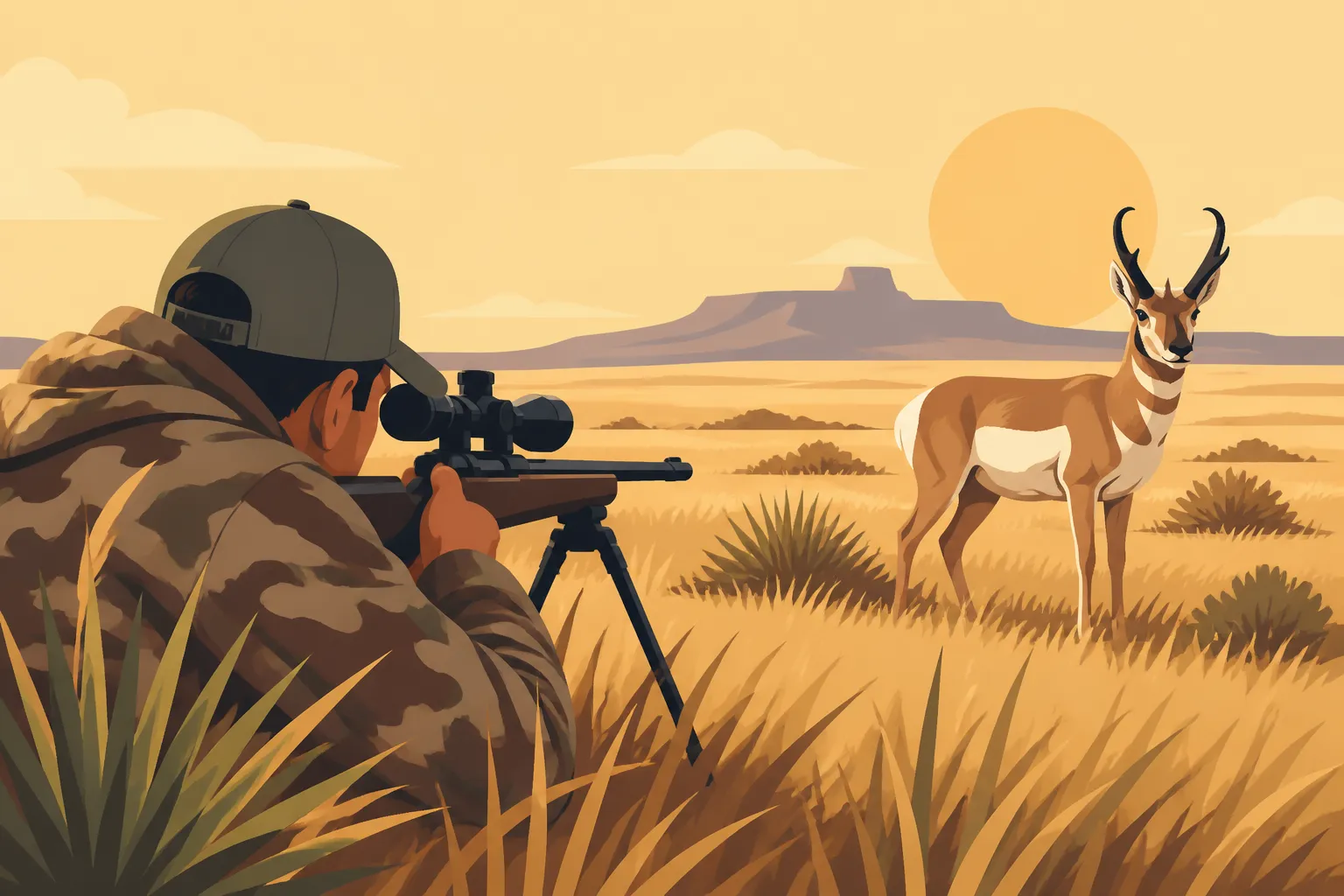
The spot-and-stalk is the quintessential pronghorn hunting method, and it truly is an art form. It begins by finding a high vantage point where you can glass vast amounts of country. Once you spot a buck you want to pursue, the real work begins.
1. **Analyze the Terrain:** Carefully study the landscape between you and the pronghorn. Look for dips, folds, dry creek beds, brush lines, or any elevation changes that can offer cover. Flat ground is your enemy.
2. **Plan Your Approach:** Map out a route that keeps you out of sight for as long as possible. This might mean walking a mile or more in a roundabout way to cover a few hundred yards of direct distance. Remember to use the wind to your advantage; pronghorn have an incredible sense of smell.
3. **Slow and Steady:** Once you start your stalk, move agonizingly slowly. Every step should be deliberate. When you’re in the open, try to stay low, often crawling on hands and knees for significant distances. Patience is absolutely crucial. A good rule of thumb is to take twice as long as you think you need to.
4. **Final Approach:** As you get closer, every rock, every clump of grass becomes vital cover. Inch forward, constantly checking the pronghorn’s position. Be prepared to wait them out if they become alert or move into an exposed area. Sometimes, the best move is no move at all, just waiting for them to feed into a more favorable position. This demanding technique is also key when Spot-and-Stalk Hunting in Texas (Exotics & Mule Deer).
Decoying Pronghorn: A Unique Strategy
While less common than spot-and-stalk, decoying can be a surprisingly effective tactic, especially during the rut. Pronghorn bucks are fiercely territorial and will often challenge an intruder. A flat, life-sized buck decoy, often made of a fabric or lightweight material, can be deployed to draw in a dominant buck.
1. **Scout for Bucks:** Identify a buck that appears to be actively defending a harem or is otherwise engaged in rutting behavior.
2. **Set Up the Decoy:** Have a partner hold the decoy (or set it up quickly) in a visible location, often on a slight rise, within shooting range of your concealed position.
3. **Get Ready:** As soon as the decoy is up, the shooter needs to be ready, rifle shouldered, focused on the buck.
4. **The Charge:** Many times, a dominant buck will see the decoy as a challenge and come charging in to confront it. This can happen incredibly fast. Be ready for a quick shot.
5. **Safety First:** Always be aware of your surroundings and other hunters if using a decoy. Make sure the area behind your decoy is clear, and never present yourself as the decoy.
Dealing with Wind and Open Terrain
The Texas Plains are almost synonymous with wind. Wind can be both a blessing and a curse. It can help mask your sound and scent during a stalk, but it can also make shooting accurately incredibly difficult.
1. **Wind Direction:** Always approach from downwind or crosswind. Pronghorn have an excellent nose, and they will bust you instantly if they catch your scent.
2. **Wind and Ballistics:** Strong crosswinds will push your bullet. You *must* account for wind drift, especially on longer shots. Practice shooting in windy conditions at the range to understand how your specific rifle and ammunition perform. A good rangefinder with wind compensation features can be a huge asset.
3. **Using Terrain to Your Advantage:** As mentioned, utilize every fold, dip, and rise in the land. Even a slight crease in the ground can offer enough cover to break up your silhouette. Learn to “read” the terrain and visualize how you can move without being seen. Sometimes, moving through a shallow wash or behind a sparse line of mesquite is all the cover you’ll get.
| Stalking Element | Pronghorn Challenge | Tactical Solution |
|---|---|---|
| Visibility | Exceptional eyesight, open terrain. | Use high-magnification optics from a distance; crawl low using minimal cover. |
| Scent | Acute sense of smell. | Always approach from downwind or crosswind; use scent-eliminating sprays. |
| Sound | Sensitive hearing. | Move slowly and deliberately; utilize wind to mask footsteps. |
| Distance | Typically long shots required. | Practice shooting at extended ranges; use a reliable rangefinder; choose flat-shooting caliber. |
| Patience | Prone to moving, may require long waits. | Be prepared for hours of glassing and slow, deliberate stalks. |
Post-Harvest Considerations
Congratulations, you’ve successfully harvested a Texas pronghorn! Now comes the critical part of preserving your meat and trophy, especially given the typically warm and arid conditions of the Texas Plains.
Field Dressing in Arid Conditions
Speed is the name of the game when it comes to field dressing in the Texas heat. Pronghorn meat is lean and delicious, but it can spoil quickly if not handled properly. As soon as you recover your animal, begin the field dressing process. Get the guts out immediately to allow the carcass to cool internally. If you’re far from your vehicle, you might need to quarter the animal to facilitate quicker cooling and easier transport. Pack plenty of ice, even for day hunts. You’ll need a good, sharp knife and maybe a game bag to keep flies off the meat while it cools. For detailed instructions on how to handle game in the heat, refer to our guide on How to Cool a Deer Fast in Texas Heat.
Trophy Care
If you’ve harvested a buck with an impressive rack, proper trophy care starts in the field. After field dressing, carefully skin the cape, ensuring you leave plenty of hide for the taxidermist. Keep the hide clean of dirt and blood. If you can’t get it to a taxidermist immediately, rough salt the hide and roll it up. For short periods (a day or two), keeping it on ice in a cooler is acceptable, but prolonged storage without salting or freezing is a recipe for disaster. Talk to your chosen taxidermist *before* your hunt for their specific instructions on field care for pronghorn.
Disclaimer
Hunting regulations and seasons can change frequently. Always consult the most current *Texas Outdoor Annual* published by the Texas Parks and Wildlife Department for the definitive and most up-to-date information before planning any hunt. This guide is for informational purposes only and should not replace official state regulations.