Is My Buck Legal Under Texas Antler Restrictions?
There are few things that can make a Texas deer hunter's heart sink faster than pulling the trigger on what they thought was a legal buck, only to get up close and realize they've made a mistake. The confusion around Texas antler restrictions, especially that famous 13-inch rule, is very real and can lead to serious headaches if you're not absolutely clear on the regulations. This guide is here to walk you through everything you need to know to confidently judge a legal buck in the field, ensuring your hunt is both successful and compliant.
Deciphering Texas Antler Restrictions: The Core Rules
Texas hunting regulations can feel like a labyrinth at times, and antler restrictions are definitely one of those areas that trip up even seasoned hunters. It's not just about how big a buck is; it's about specific measurements and antler characteristics that vary depending on where you're hunting. Getting this wrong can mean a fine, loss of your deer, and even a suspended license, so it pays to be informed.
The Infamous 13-Inch Rule: What It Really Means
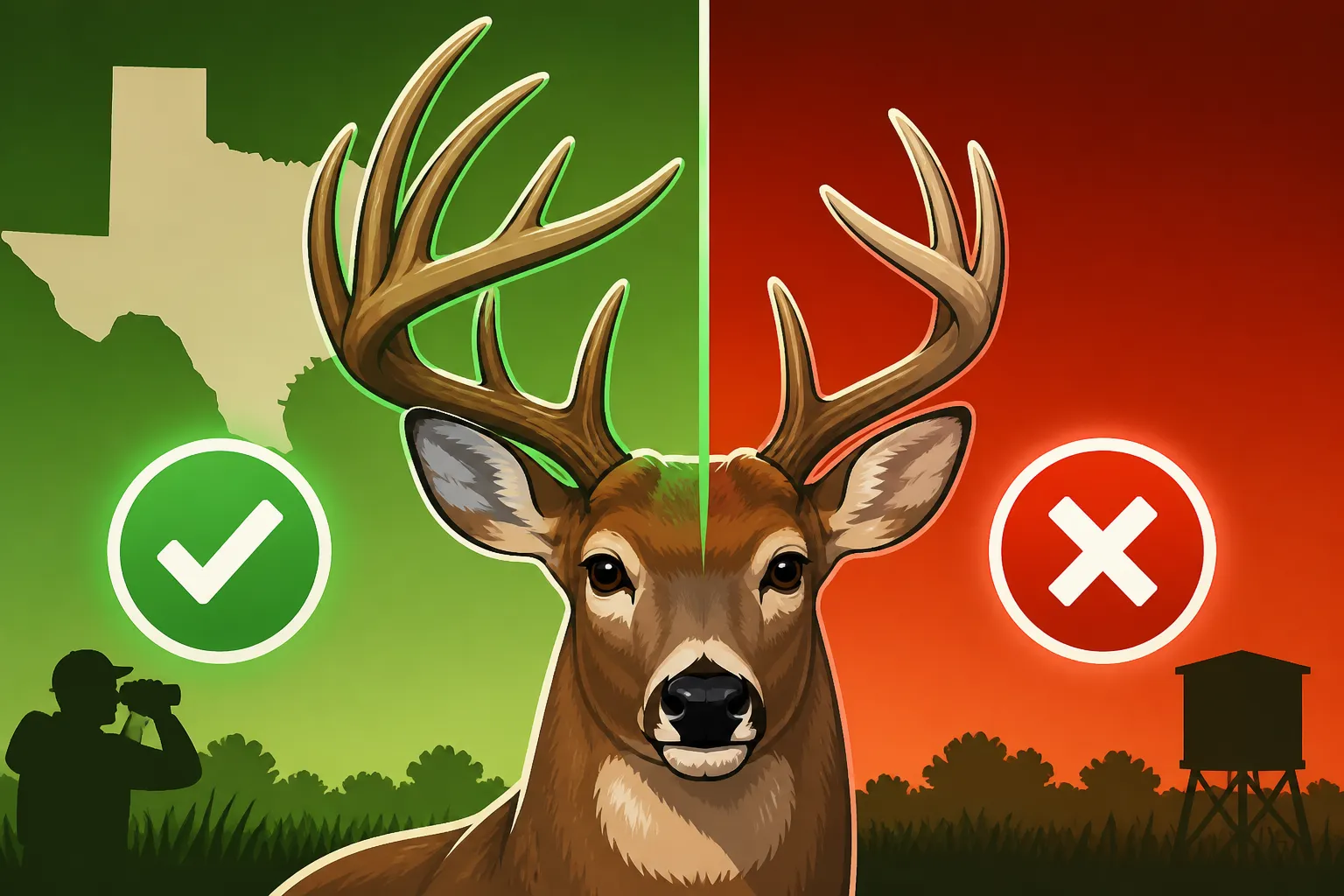
Let's cut right to the chase with the most talked-about regulation: the 13-inch antler restriction. This rule was put in place to help manage the age structure of the buck population, allowing younger bucks to mature and spread their genes before being harvested. Essentially, in many counties, a legal buck must meet one of two criteria:
- At least one unbranched antler. This means a main beam with no points coming off it. Think of it like a spike or a forkhorn where one side is just a straight beam.
- An inside spread of 13 inches or greater. This is the distance between the two main beams, measured at their widest point. It's crucial to understand that this is an inside measurement, not an outside measurement.
The key here is "at least one unbranched antler or an inside spread of 13 inches or greater." Many hunters mistakenly believe a buck must have a 13-inch spread to be legal, but a buck with an unbranched antler on one side is perfectly legal, even if its spread is less than 13 inches. This distinction is vital for avoiding an accidental violation. The purpose is to protect young, wide-racked bucks with small points, while allowing harvest of mature spikes and narrow-racked older bucks.
Where the 13-Inch Rule Applies
Now, here's where it gets a little more complex: the 13-inch antler restriction rule isn't statewide. It applies to most of Texas, particularly the vast majority of counties east of U.S. Highway 83. This includes popular hunting areas like the Edwards Plateau (Hill Country), the Post Oak Savannah, the Pineywoods, and much of South Texas.
However, there are exceptions. For instance, in the Panhandle and Trans-Pecos regions, where mule deer are the primary focus and white-tailed deer populations are generally lower, antler restrictions are usually tied to a four-point rule on one side or a certain antler spread for mule deer, not the 13-inch white-tailed deer rule. You also have some specific counties that might have their own unique regulations or be entirely exempt from the 13-inch rule for various wildlife management reasons.
Always, and I mean always, check the current Texas Deer Season 2026-2027: Dates by Zone and the Texas Parks and Wildlife Department (TPWD) Outdoor Annual for the specific county you'll be hunting in. Relying on general knowledge can get you into trouble. The rules can change, and knowing the specifics for your hunting location is non-negotiable.
Exemptions and Special Cases
While the 13-inch rule covers a broad area, there are some important situations where it might not apply, or where additional rules come into play.
- Youth Hunters: Hunters under the age of 17 (or 16, depending on the specific regulation year and species) are generally exempt from antler restrictions in Texas. This is a wonderful initiative to encourage young hunters and make their initial experiences more accessible and enjoyable. They can harvest any buck with hardened antlers, regardless of spread or points.
- Managed Lands Deer Program (MLDP): Properties enrolled in the MLDP operate under a more flexible set of rules provided by TPWD, often allowing landowners to manage their deer population with specific harvest quotas and different antler criteria. These properties are issued special MLDP tags, which supersede the general county antler restrictions. If you're hunting on an MLDP property, make sure you understand the specific harvest instructions provided by the landowner or their wildlife biologist. For more details, you can look into how MLDP Tags in Texas: How They Work.
- Specific Counties: While rare, some counties might have localized regulations that slightly alter or even completely remove antler restrictions. These are typically smaller counties or those with very unique deer management goals. Again, the Outdoor Annual is your best friend here.
How to Measure a Buck's Antlers Accurately in the Field
Judging a buck's antlers on the hoof is perhaps the most challenging aspect of hunting under antler restrictions. The adrenaline is pumping, the light might be fading, and that buck you've been watching suddenly looks a lot bigger than he did a moment ago. This is where patience, practice, and a few reliable tricks come into play.
Estimating the 13-Inch Spread
The 13-inch inside spread is where many hunters make their critical errors. It's incredibly difficult to eyeball accurately, especially at a distance. Here's what you need to know and some tips to help:
- Ear-Tip-to-Ear-Tip Rule of Thumb: For most mature Texas white-tailed deer, the distance from the tip of one ear to the tip of the other, when the ears are in a natural alert position, is approximately 14-15 inches. This is a common and fairly reliable reference point. If a buck's main beams are clearly inside the tips of his ears, he's very likely under the 13-inch mark. If they are even with or slightly outside the ear tips, he might be legal. If they are significantly outside, he's probably well over.
- Head Width: Another less precise but still useful visual cue is the width of the buck's head. A mature buck's head is typically around 6-8 inches wide. The 13-inch spread is roughly twice the width of a larger buck's head.
- Using Optics: Don't rely solely on the naked eye. Your binoculars or a good spotting scope are essential tools for judging antlers. Take your time, steady your view, and really scrutinize the rack. A rangefinder that also measures horizontal spread can be incredibly useful, though most hunters don't have this feature. If you're looking for new gear, consider checking out guides like Best Binoculars for South Texas Brush.
Keep in mind that factors like the angle of the buck's head, the terrain, and your own position can all distort your perception of size and spread.
Counting Points and the Main Beam
The "at least one unbranched antler" rule is a bit simpler to judge, but you still need to know what counts as a point.
- What Constitutes a "Point": According to TPWD regulations, a point is an antler projection at least one inch long. This measurement is taken from the tip of the point to the nearest edge of the main beam. It must also be longer than it is wide at its base. Tiny bumps, burrs, or rounded nubs typically don't count.
- Identifying the Main Beam: The main beam is the primary growth of the antler, curving generally upwards and outwards from the pedicel (the base where the antler attaches to the skull). Points sprout off this main beam. If a buck has one side that is just a main beam with no points meeting the one-inch criterion, then he's legal under that clause, regardless of his spread.
Here's a quick reference table to help visualize the criteria:
| Antler Type / Feature | Legal if? |
|---|---|
| Inside Spread | 13 inches or greater |
| Unbranched Antler | At least one main beam has no points (meeting 1" rule) branching off of it. |
| "Point" Definition | A projection on the antler at least 1 inch long, and longer than its width at base |
| Youth Hunter (under 17) | Exempt from antler restrictions, can harvest any buck with hardened antlers. |
| MLDP Tag Holders | Follow specific harvest criteria issued by TPWD for that property. |
Field Judgement Challenges
Let's be real, field judging is tough. Your heart is pounding, you've been waiting all season, and suddenly that perfect buck steps out. Here are some common challenges:
- Low Light Conditions: Dawn and dusk are prime hunting times, but they're also when shadows and dim light can make antler judging incredibly difficult. What looks like a point might just be a shadow, and estimating spread becomes a guessing game.
- Adrenaline and Buck Fever: The excitement of seeing a quality animal can cloud your judgment. You might want him to be legal so badly that your mind convinces you he is. Take a deep breath.
- Distance and Angle: A buck directly facing you or quartering away can make spread appear wider or narrower than it truly is. Always try to get a broadside view if possible, and use a rangefinder to know your exact distance.
- Rack Anomalies: Sometimes bucks have irregular racks, broken points, or unique growth patterns that make them harder to classify. When in doubt, it's always safer to pass.
This is why practicing with trail camera photos, old antlers, or even looking at deer in fields with binoculars before the season is so valuable. It trains your eye. For more tips on field judging, check out our guide on How to Field Judge a 13-Inch Buck.
The "Legal Buck" Criteria Beyond Spread
While the 13-inch rule and unbranched antler clause are central to white-tailed deer regulations in most of Texas, understanding what truly makes a buck "legal" involves putting these pieces together correctly. It's not just about one rule; it's about meeting any of the defined criteria.
Defining a Legal Buck for Harvest
In counties under antler restrictions, a legal white-tailed deer buck must satisfy one of the following conditions:
- Possess at least one unbranched antler. This means one of the main beams has no points (as defined by the 1-inch rule) growing from it. The other antler can be branched, or even a spike itself.
- Possess an inside spread of 13 inches or greater. This is measured at the widest point between the main beams.
It's a common misconception that a buck must have both a 13-inch spread and a minimum number of points, or be a "four-on-one-side" buck. This is generally not the case for white-tailed deer in most Texas antler restriction counties. The intent is to allow the harvest of young spikes or narrow-racked mature bucks, while protecting young bucks that are wide but haven't developed many points yet.
Always refer to the most current Texas White-Tailed Deer Hunting Regulations 2026 for your specific hunting zone to be completely sure. This is especially true if you're hunting in unique regions or on properties with special permits.
Understanding Antler Growth and Age Classes
The antler restrictions are fundamentally tied to deer age and herd health. Young bucks, typically 1.5 to 2.5 years old, often fall into the category of "illegal" bucks under the 13-inch rule. Their antlers might be narrow, and they might have only a few short points. Allowing these bucks to mature helps increase the number of older, larger-antlered bucks in the population.
- Yearlings (1.5 years old): Often spikes or small forked horns, rarely meeting the 13-inch spread. Many will have at least one unbranched antler, making them legal if that's the only criterion met.
- Younger Mature Bucks (2.5 – 3.5 years old): These bucks are typically the ones most impacted by the 13-inch rule. They might have good mass and several points, but their inside spread hasn't quite reached the 13-inch mark yet. These are the deer the rule is largely designed to protect, giving them another year or two to grow.
- Older Mature Bucks (4.5+ years old): Most bucks in this age class will easily meet or exceed the 13-inch spread requirement. They often have more points, greater mass, and a wider spread, making them clearly legal.
The idea is that by protecting those 2.5 and 3.5-year-old bucks with good potential but narrow racks, you're improving the genetic pool and allowing more deer to reach their full antler potential. This is a core tenet of modern deer management in Texas.
Consequences of a Mistake and How to Avoid Them
Nobody wants to make an illegal harvest. Not only does it violate wildlife laws, but it also goes against the ethical principles of responsible hunting. Understanding the potential repercussions and taking preventative measures is crucial.
Penalties for Illegal Harvest
Harvesting an illegal buck in Texas comes with serious consequences that vary depending on the specific violation and county. These can include:
- Monetary Fines: Expect a significant fine, often in the hundreds of dollars, possibly more.
- License Suspension: Your Texas hunting license can be suspended for a period, meaning you won't be able to hunt legally for that time. This is a huge setback for any avid hunter.
- Loss of Game: The illegally harvested deer will be confiscated, and you won't be able to keep the meat or the antlers.
- Community Service: In some cases, community service related to wildlife conservation might be assigned.
- Civil Restitution: Beyond fines, there might be civil restitution fees to compensate the state for the illegally taken wildlife.
It's important to remember that ignorance of the law is not an excuse. As hunters, it's our responsibility to know and follow the regulations. The Texas Game Wardens enforce these rules diligently to protect the state's wildlife resources.
Best Practices for Hunters
To ensure you stay on the right side of the law and make ethical decisions in the field, here are some best practices:
- Know Your Regulations: This can't be stressed enough. Before you step foot on your hunting property, consult the most current TPWD Outdoor Annual for your specific county. Don't rely on what you "heard" or what was true last year. Regulations, especially those related to Texas Antler Restrictions: The 13-Inch Rule Explained, can change.
- Use Quality Optics and Take Your Time: A good pair of binoculars is non-negotiable for field judging. Scan the animal thoroughly, especially its antlers. Don't rush a shot. If you're unsure, even for a second, put your weapon down and continue observing.
- "When in Doubt, Let Him Walk": This is the golden rule of antler restriction hunting. If you can't definitively determine that a buck is legal, do not shoot. There will always be another deer. It's far better to pass on a buck and be confident in your decision than to risk a violation.
- Practice Field Judging: Use trail camera photos to practice estimating spread and counting points. Get familiar with the ear-tip-to-ear-tip reference. Even observing live deer outside of hunting season can help hone your skills.
- Understand the "One Unbranched Antler" Rule: Many hunters forget this crucial part of the regulation. A buck with a spike on one side and a fully branched antler on the other is a legal deer in antler restriction counties, even if its spread is less than 13 inches. This often protects older, typically narrower-racked bucks that are still valuable for harvest.
- Consider a Laser Rangefinder: While not specifically designed for antler measurement, a good rangefinder helps you understand the distance to your target, which can significantly influence how accurately you perceive antler size.
- Hunt with Experienced Mentors: If you're new to antler restrictions, hunt with someone who has experience judging deer in the field. Their insights can be invaluable.
- Familiarize Yourself with Harvest Reporting: Once you've harvested a legal buck, remember the importance of Texas Hunting Tags & Harvest Reporting (My Texas Hunt Harvest) to properly document your take.
By diligently following these guidelines, you can enjoy your time in the Texas brush country, confident that you're making responsible and legal decisions as a hunter.
Disclaimer
Please note that hunting regulations are subject to change. This guide provides general information based on current Texas Parks and Wildlife Department regulations. It is the individual hunter's responsibility to review the most up-to-date Texas Parks and Wildlife Outdoor Annual for the current season and specific county or hunting area before engaging in any hunting activities.