La Salle County Antler Restriction & Bag Limit
Navigating the specific hunting regulations for white-tailed deer in Texas can feel like deciphering a cryptic code, especially when you're trying to understand the nuances of antler restrictions and bag limits for a particular county. It's easy to get frustrated trying to figure out what constitutes a "legal buck" or how many does you can actually harvest. This guide is here to untangle the complexities of La Salle County’s specific rules, ensuring you hit the field confidently and stay within the law.
Understanding Texas Antler Restrictions for La Salle County
When you're out in the brush country of South Texas, specifically in La Salle County, knowing your antler restrictions is paramount. Texas has implemented regulations designed to improve the age structure and quality of its deer herd, and understanding these rules is crucial for any responsible hunter.
The 13-Inch Rule in Detail
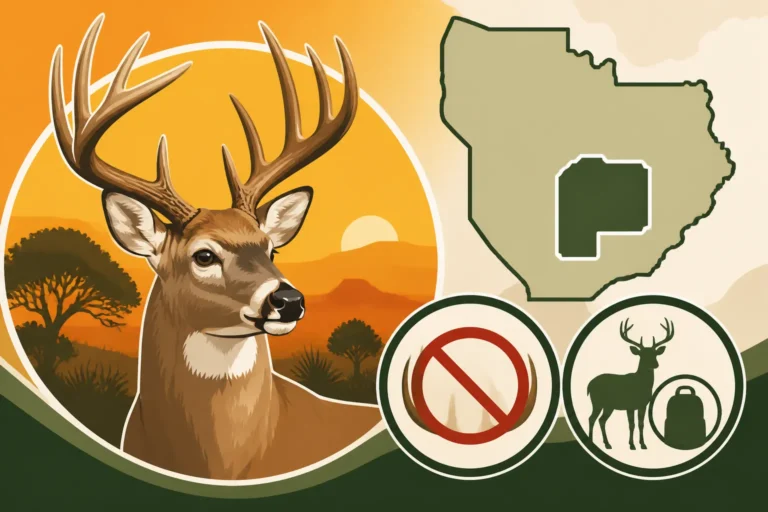
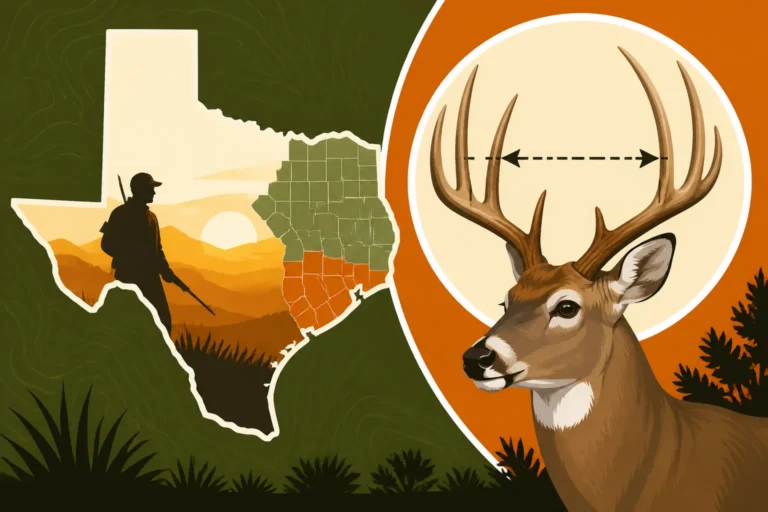
La Salle County is among the many Texas counties that fall under the general antler restriction rule. What does this mean for you, the hunter? Essentially, a white-tailed buck is considered legal to harvest if at least one of its antlers has an unbranched beam (meaning it's a spike or has one spike side), OR if its main beams have an inside spread of 13 inches or greater. It’s not just about the number of points; it's about the configuration of those antlers.
Let's break that down. Imagine you're glassing a buck. If that deer has a spike on one side, even if the other side has multiple points but doesn't meet the 13-inch spread, it's a legal animal. If it's a deer with branched antlers on both sides, then you must ensure the distance between the inside of the main beams is at least 13 inches. This rule is a major component of the statewide antler restrictions in effect across much of the state, aiming to protect younger, genetically superior bucks from being harvested too early. Learning to properly field judge a 13-inch buck takes practice, but it's a skill worth mastering.
Legal Bucks and Exceptions
So, what exactly counts as a "legal buck" in La Salle County under these restrictions?
A legal buck must meet one of the following criteria:
- Possess at least one unbranched antler: This is often referred to as a "spike buck." If a buck has a spike on one side and a fully branched antler on the other, it still qualifies as having "at least one unbranched antler."
- Have an inside main beam spread of 13 inches or greater: This applies to bucks with branched antlers on both sides. The measurement is taken at the widest point between the inside edges of the main beams.
It's important to understand there are no other exceptions for antlered deer in La Salle County unless you're hunting under a specific permit like the Managed Lands Deer Program (MLDP), which can have its own tailored regulations approved by the Texas Parks and Wildlife Department (TPWD). For the vast majority of hunters on general public or private lands, these two criteria are your gospel. This precise definition ensures that bucks with less developed antler genetics are more likely to be harvested, while allowing bucks with good potential to grow.
Common Misconceptions and Challenges
One of the biggest frustrations hunters face with antler restrictions is the difficulty of accurate field judging, especially in low light or when a deer is on the move. Many hunters overestimate antler spread, leading to potential violations. A common misconception is that a 4-point or 8-point automatically qualifies. That’s simply not true; it’s all about the spread or the presence of a spike. A beautiful 8-point buck with an 11-inch spread is not a legal buck under the 13-inch rule unless it also has an unbranched antler.
Another challenge is distinguishing true spikes from small, branched points that might appear unbranched at a distance. Always err on the side of caution. If you're not 100% certain a buck meets the legal criteria, it’s best to let it walk. Carrying a small rangefinder with a reliable reticle or using your binoculars to assess spread against known reference points (like the deer's ears) can be incredibly helpful. Many seasoned hunters even practice judging deer at specific distances with objects of known width to hone their skills.
White-Tailed Deer Bag Limits in La Salle County
Beyond antler restrictions, understanding the total number of deer you can harvest in a season—the bag limit—is equally vital. These limits are set to ensure sustainable deer populations and quality hunting opportunities year after year.
Annual Bag Limit for Bucks
In La Salle County, the general annual bag limit for white-tailed deer is three deer total, no more than two of which may be bucks, and only one of those bucks can have an inside antler spread of 13 inches or greater. This means you could potentially harvest two bucks, but if you take a large buck (13 inches or more), your second buck must be a spike or a buck that also meets the 13-inch rule (if your MLDP allows it, but general rule would be one "trophy" type buck). Or, more simply, you could take two spike bucks.
This restriction on the "trophy" buck harvest helps spread out the opportunity and prevents over-harvesting of the mature, wider-racked bucks that are so sought after in regions like La Salle County. It’s a conservation measure designed to foster a healthy, balanced herd. When planning your season, always keep this "one big buck" rule in mind if you're hunting under general regulations. If you're wondering, "How Many Deer Tags Do You Get in Texas?", this statewide regulation is important to keep in mind.
Antlerless Deer (Does) and Permits
Harvesting antlerless deer, or does, is a crucial component of deer management, helping to control population numbers and maintain a healthy buck-to-doe ratio. In La Salle County, as part of the total three-deer bag limit, you can harvest up to three antlerless deer. However, these antlerless deer typically require specific permits.
Most often, antlerless deer harvest occurs through Antlerless Deer Permits, sometimes referred to as "doe tags." These permits are issued by landowners (or their agents) through various TPWD programs. On many private hunting leases in La Salle County, especially those participating in the Managed Lands Deer Program (MLDP), these permits are issued directly to the landowner who then distributes them to hunters. This allows for flexible, on-the-ground management based on the specific deer population on that property.
If you are hunting on public land (which is rare for white-tailed deer in La Salle County, but still possible in certain areas or via drawn hunts), antlerless harvest might be restricted to specific "doe days" or a permit system managed directly by TPWD. Always check the current Texas Parks and Wildlife Outdoor Annual for the most up-to-date regulations regarding antlerless deer harvest for your specific hunting area. Understanding Texas Antlerless Deer Permits & Doe Days is key to a legal harvest.
Combined Seasons and Tagging Requirements
The annual bag limits apply across all legal hunting seasons within the regulatory year. This means whether you're hunting during the general season, the early archery season, or even the late youth season, your harvest contributes to your total annual limit. You can't, for example, take two bucks in archery season and then two more in general season; the total remains two bucks.
Each harvested deer must be immediately tagged with the appropriate hunting license tag. For bucks, you'll use an antlered deer tag, and for does, an antlerless deer tag. It's not just a suggestion; it’s a legal requirement. Failure to tag immediately can result in severe penalties. After tagging, you are also required to report your harvest. Many counties, including La Salle, require harvest reporting through the My Texas Hunt Harvest system, typically within 24 hours of harvest. This data is vital for wildlife biologists to monitor populations and adjust future regulations. Familiarize yourself with Texas Hunting Tags & Harvest Reporting well before your hunt.
| Deer Type | Bag Limit (General Season) | Antler Restriction for Bucks | Special Notes |
|---|---|---|---|
| Bucks | 2 | At least 1 unbranched antler OR inside spread >= 13 inches | Only 1 buck can have an inside spread >= 13 inches |
| Antlerless Deer (Does) | 3 | N/A | Requires Antlerless Deer Permits (often through MLDP on private land) |
| Total Deer | 3 | N/A | Applies across all seasons and methods |
Note: These are general regulations for La Salle County. Always consult the most current Texas Parks and Wildlife Department Outdoor Annual or specific MLDP tags for your property, as regulations can change.
Practical Tips for Hunting in La Salle County
Hunting in La Salle County is a dream for many, with its dense brush and reputation for quality deer. To make the most of your hunt and ensure compliance, a few practical tips can go a long way.
Scouting and Trail Camera Strategies
Effective scouting is your best friend when dealing with antler restrictions. Before the season, spend time observing deer patterns, travel corridors, and feeding areas. This will give you a better understanding of the deer on your property, including the age classes and antler development of the bucks.
Trail cameras are invaluable tools for this. When setting up your cameras, consider placing them near watering holes, protein feeders, or along well-used game trails. Many modern cellular trail cameras can send photos directly to your phone, allowing you to "pattern" bucks and assess their antler characteristics without disturbing the area. Look for bucks that clearly meet the 13-inch spread requirement or those with distinct unbranched antlers. Remember, the more you know about the deer using your area, the less likely you are to make a mistake in the heat of the moment. Learning How to Pattern Bucks With Trail Cameras is an essential skill.
Importance of Accurate Field Judging
We can't stress this enough: practice, practice, practice field judging. Before your hunt, study photos of bucks with various antler spreads and point counts. Understand that a deer's ears are roughly 14-16 inches wide when alert, which can serve as a decent reference point for a 13-inch spread. If the antlers appear to extend well beyond the ears, it's likely a legal buck. If they look barely wider or narrower than the ears, you need to be extremely cautious.
Invest in quality binoculars or a spotting scope. These optics will give you a clearer view, allowing you to confidently assess antler characteristics. In the moments leading up to a shot, take a deep breath, use your optics, and mentally run through the antler restriction criteria. If there's any doubt, let that deer walk. It’s better to pass on a buck and wait for another opportunity than to face a hefty fine and a confiscated deer.
Staying Informed with TPWD Resources
The Texas Parks and Wildlife Department (TPWD) is your ultimate resource for current hunting regulations. The "Outdoor Annual" is published annually and available online, in print, and as a mobile app. It contains all the detailed regulations, including specific county rules, season dates, and bag limits. Always ensure you are consulting the most recent edition, as regulations can change from year to year.
Beyond the Outdoor Annual, the TPWD website offers a wealth of information, including public hunting opportunities, hunter education resources, and CWD (Chronic Wasting Disease) updates that might impact carcass movement restrictions. Make it a habit to check these resources before and during the hunting season. Ignorance of the law is never an excuse, and staying informed is part of being a responsible and ethical hunter. For a broader understanding of statewide rules, check out the main guide on Texas White-Tailed Deer Hunting Regulations 2026.
Disclaimer
The information provided in this guide is intended for general informational purposes only and does not constitute legal advice. Hunting regulations in Texas are subject to change and vary by county, specific hunting leases, and various permit programs. Always consult the official Texas Parks and Wildlife Department Outdoor Annual and any specific regulations or permits pertaining to your hunting location before engaging in any hunting activities. Adherence to all local, state, and federal hunting laws is the sole responsibility of the hunter.