Texas Feral Hog Hunting Regulations 2026
Hunting feral hogs in Texas can feel like navigating a maze of regulations, especially when you're used to strict seasons and bag limits for other game animals. It’s a common frustration, trying to do your part to control these destructive critters while also making sure you’re staying on the right side of the law. This guide is here to untangle the specifics of Texas feral hog hunting regulations, so you can hunt with confidence and clarity.
Why Feral Hogs Are Different: The Core of Texas Regulations
One of the biggest sources of confusion for hunters new to Texas, or even seasoned folks transitioning from deer or turkey, is understanding why feral hogs are treated so uniquely by the state. Unlike white-tailed deer or Rio Grande turkeys, feral hogs are not considered game animals. This fundamental distinction dictates nearly every aspect of their hunting regulations.
The Pest Status of Feral Hogs
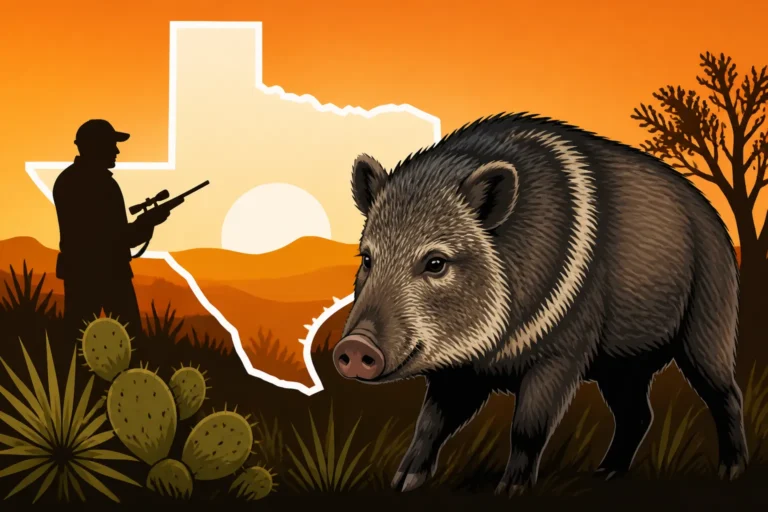
Texas views feral hogs not as a natural part of the ecosystem, but as an invasive, destructive pest. These animals cause an estimated $52 million in agricultural damage annually across the state, tearing up crops, pastures, and valuable wildlife habitat. They compete with native species for food and water, and can even spread diseases. Because of this, the state's primary goal isn't to manage their population for sustainable hunting, but to encourage their removal by almost any legal means possible. This "pest" designation fundamentally changes how you can and cannot hunt them, removing many of the restrictions you might expect for other species.
No Closed Season or Bag Limit
This is the golden rule of hog hunting in Texas, and it's what makes them so accessible to hunt year-round: there is no closed season for feral hogs, and there are no bag limits. You can hunt them any day of the year, at any time of day or night, and you can take as many as you're able to. This policy is a direct reflection of their pest status. The state wants hunters to remove as many as they can, whenever they find them. This means you don't have to worry about specific dates or counting your take, which is a huge relief when you're trying to thin out a sounder that's tearing up your lease. You can literally be out there working on them in the dead of summer when deer season is a distant memory, making it a great option for year-round outdoor activity. For a deeper dive, check out our guide on Texas Hog Hunting Season (There Isn't One).
Hunting Licenses and Permits for Hogs
While the "no season, no limit" rule is fantastic, it's easy to get confused about the license requirements. Do you need one at all? The answer, like many things in life, has a few nuances.
General Hunting License Requirements
For the vast majority of hunters, if you're on public land or any private land that isn't your own, you will need a valid Texas hunting license. This isn't specifically a "hog license," but rather a general hunting license that covers various species, including hogs. The standard Resident Hunting License or the Super Combo License for residents will cover you. Non-residents will need a Non-Resident General Hunting License. It's crucial to understand that even though hogs aren't game animals, hunting them with a firearm or archery equipment on land you don't own still falls under the umbrella of regulated hunting activities. You can find more details about these licenses in our Texas Hunting License: Cost, Types & How to Buy (2026) article.
Exceptions to the Rule
There are, however, some very important exceptions where a hunting license is not required:
- Landowners and Their Agents: If you're hunting feral hogs on your own land, or if you are the landowner's agent (e.g., an employee or family member assisting with depredation), you do not need a hunting license. This exception is designed to empower property owners to control hog populations quickly and efficiently without bureaucratic hurdles.
- Hogs Causing Depredation: This is a key one. According to Texas law, a hunting license is not required to hunt feral hogs if they are causing depredation (i.e., damage to agricultural crops, livestock, or property). This applies to any person, not just the landowner, provided they have permission from the landowner. So, if you're helping a farmer friend deal with hogs rooting up his cornfield, and you have his explicit permission, you likely don't need a license for that specific activity. However, if you're just out for recreation, even if hogs are present, the general license rule applies. It’s always best to carry a license if there’s any doubt.
Here's a quick summary table:
| Scenario | Hunting License Required? | Notes |
|---|---|---|
| Hunting on your own land | No | You or your agent (with permission) |
| Hunting on private land (with permission) | Yes | Unless directly engaged in depredation control (see below) |
| Hunting on private land (depredation) | No | Must have landowner's permission and hogs must be causing damage |
| Hunting on public land | Yes | Always required for public hunting opportunities. |
| Hunting from a helicopter | No | Requires specific permits, but a general hunting license is not typically needed for aerial hunting |
Hunter Education Requirements
Just like with other species, anyone born on or after September 2, 1971, must successfully complete a Hunter Education course to hunt in Texas, unless accompanied by a person who is at least 17 years old, who has a valid hunting license, and who has completed hunter education (or is exempt from it). This applies even to hog hunting, so don't skip it! It's a fundamental safety requirement that keeps everyone safer in the field.
Legal Methods and Means of Take
Texas is incredibly permissive when it comes to methods of taking feral hogs, again, reflecting their pest status. This flexibility allows hunters to be highly effective in their control efforts.
Day and Night Hunting
Unlike many game animals, which have restricted hunting hours, feral hogs can be hunted 24 hours a day, 7 days a week. This is particularly advantageous since hogs are often most active at night, especially in hotter months. Many hunters find tremendous success pursuing them under the cover of darkness, which also tends to be when they are most comfortable venturing into open fields.
Thermal and Night Vision Equipment
This is where things get really exciting for many hog hunters. Texas law fully permits the use of artificial lights, night vision devices, and thermal imaging equipment for hunting feral hogs. This is a game-changer for night hunting, allowing you to spot hogs from a distance and make accurate shots in complete darkness. Equipping yourself with a quality thermal scope or night vision device can significantly increase your success rates. We have a detailed guide on Is Thermal Hunting Legal in Texas? that covers all the specifics. When you combine the ability to hunt at night with advanced optics, you're looking at one of the most effective strategies for hog control. For more on this, check out How to Hunt Hogs at Night With Thermal.
Hunting Over Bait and Feeders
Yes, absolutely. Since hogs are not classified as game animals, there are no restrictions on hunting them over bait, including corn or other attractants. In fact, using feeders is one of the most popular and effective methods for patterning hogs and bringing them into a predictable location. Many deer hunters set up their feeders, and it's almost guaranteed that hogs will show up. You can utilize this to your advantage to thin out their numbers. Just remember, if you're hunting deer or other game animals, you need to be aware of the specific rules about Hunting Over Feeders & Corn in Texas (Legal Guide) for those species, but for hogs alone, it's wide open.
Other Legal Methods: Trapping, Dogs, and Aerial Hunting
Texas offers a wide array of other legal methods for taking feral hogs, demonstrating the state's aggressive approach to population control:
- Trapping: This is arguably the most effective method for removing large numbers of hogs, especially entire sounders. Modern hog traps, often equipped with remote-controlled gates and cellular cameras, allow hunters to capture multiple hogs at once. Many landowners and wildlife managers rely heavily on trapping programs to get a handle on their hog problem. Check out Hog Trapping in Texas: Methods That Work for more information.
- Hunting with Dogs: Yes, hunting hogs with dogs is a long-standing tradition in Texas and is completely legal. This usually involves bay dogs that corner the hog and catch dogs that then secure it, allowing hunters to move in for the kill, often with a knife or spear.
- Aerial Hunting: For truly large-scale control, especially on vast ranches, aerial hunting from helicopters or fixed-wing aircraft is permitted. This requires special permits from the Texas Parks and Wildlife Department and is usually conducted by professional outfits. While not accessible to the average hunter, it highlights the state's dedication to eradication.
- Archery Equipment: Bows, crossbows, and even atlatls are legal for hog hunting, just as they are for other species during general season.
- Vehicles: Unlike deer, it is legal to hunt feral hogs from a motor vehicle, powerboat, or even an airplane or helicopter. However, it's still generally illegal to discharge a firearm from or across a public road.
Important Considerations and Best Practices
Even with the liberal regulations, responsible hunting is paramount. It’s not just about following the law; it’s about respecting the land, the wildlife, and other hunters.
Landowner Permission is Non-Negotiable
This cannot be stressed enough: you must always have landowner permission to hunt on private land. Even if hogs are destroying crops and you don't need a license, you absolutely need explicit permission from the property owner. Trespassing is a serious offense and will quickly get you into legal trouble and ruin your reputation. Always ask, always inform, and always leave the property better than you found it. This simple courtesy opens doors for future hunting opportunities.
Safety and Responsible Hunting
Just because hogs are pests doesn't mean safety should take a backseat. Always follow fundamental firearm safety rules: treat every firearm as if it's loaded, never point a gun at anything you don't intend to shoot, keep your finger off the trigger until ready to fire, and be sure of your target and what's beyond it. This is especially critical during night hunting with thermal or night vision, where target identification can be more challenging. Knowing your equipment and practicing with it regularly is essential.
Carcass Disposal and Handling
After a successful hog hunt, proper carcass disposal is important. Texas law prohibits disposing of a carcass in a public road or right-of-way, or on someone else's property without their permission. While hogs don't carry Chronic Wasting Disease (CWD) like deer, responsible disposal helps prevent the spread of other potential diseases and keeps the landscape clean. Burying carcasses or transporting them to a designated disposal site (if available) are common practices. If you're hunting on a lease, coordinate with the landowner on their preferred disposal methods. Our guide on Field Dressing & Processing Game in Texas Heat offers good general advice that can apply to hogs as well.
Public Hunting Opportunities for Hogs
While most hog hunting happens on private land, the Texas Parks and Wildlife Department (TPWD) does offer public hunting opportunities for feral hogs on some Wildlife Management Areas (WMAs). These usually require an Annual Public Hunting Permit (APH Permit) and often have specific rules regarding dates, methods, and access. It’s essential to check the specific WMA’s regulations before planning a trip, as they can vary greatly. For example, some WMAs might prohibit night hunting or thermal devices, even though it's generally legal statewide. Always check the current year's Outdoor Annual for WMA-specific rules.
Looking Ahead to 2026: Anticipated Stability
When it comes to feral hog regulations in Texas, consistency is usually the name of the game. Given their persistent status as an invasive pest, the state's approach has been remarkably stable over the years, and there's no indication that major changes are on the horizon for 2026.
General Consistency in Regulations
The core tenets — no closed season, no bag limit, liberal methods of take, and license requirements tied to land ownership and depredation status — are deeply ingrained in Texas wildlife management philosophy concerning hogs. These policies have proven effective in empowering Texans to combat the hog problem, and drastic shifts are unlikely. The state isn't looking to make it harder to hunt hogs; quite the opposite. This stability means you can generally plan your hunting activities with confidence that the fundamental rules won't change dramatically.
Staying Informed Through the TPWD Outdoor Annual
However, it's always wise to practice due diligence. Before any hunting season, and certainly as 2026 approaches, the single most authoritative source for all Texas hunting regulations is the Texas Parks and Wildlife Department's Outdoor Annual. This document is updated annually and contains the most current and legally binding information. While major changes to hog regulations are improbable, minor clarifications or additions could occur. You can access the Outdoor Annual online through the TPWD website, or pick up a physical copy wherever hunting licenses are sold. Always give it a thorough read, especially if you plan to hunt in a new area or try a new method. This habit will save you from potential headaches and ensure you're always hunting legally and ethically. Our Texas Hunting Regulations Changes for 2026 article will also highlight any updates if they come.
Ultimately, hunting feral hogs in Texas is a fantastic way to enjoy the outdoors, hone your skills, and contribute to wildlife conservation by removing a damaging invasive species. With a clear understanding of the regulations, you're well-equipped for a successful and responsible hunt.
Disclaimer
The information provided in this guide is for general informational purposes only and is subject to change. While we strive to offer accurate and up-to-date content, hunting regulations can be complex and are regularly updated by the Texas Parks and Wildlife Department. It is always the hunter's responsibility to consult the most current official Texas Parks and Wildlife Outdoor Annual or contact TPWD directly for the exact and most current legal requirements before engaging in any hunting activities.