Best Hunting Method for Feral Hog in Texas
Feral hogs in Texas are legendary for their intelligence and their ability to disappear the moment they feel a hint of hunting pressure. Many hunters find themselves frustrated, staring at trail camera photos of massive sounders that only appear at 2:00 AM. This guide breaks down the best hunting methods to outsmart these elusive pests and finally fill your freezer.
The Reality of Hunting Texas Feral Hogs
If you have spent more than five minutes on a lease in the Hill Country or the South Texas brush, you know that feral hogs are not just "wild pigs." They are highly adaptable, incredibly smart, and have a sense of smell that makes a whitetail deer look like it has a clogged nose. The biggest mistake most hunters make is treating hog hunting like a secondary activity during deer season. If you want to be successful, you have to understand that these animals evolve based on how you hunt them.
When the sun is high and the Texas heat is beating down, hogs are almost exclusively in the thickest, nastiest cover they can find. They are looking for wallows and shade. If you are sitting in a box blind at noon, you are probably just taking a nap. Real success comes from understanding their thermal needs and their reaction to pressure. Once a sounder has been shot at near a feeder, they often turn completely nocturnal. This is why many people struggle; they are using daytime tactics for an animal that has moved its entire life to the shadows.
Managing your scent is also a massive hurdle. I have seen big boars catch a whiff of a hunter from 200 yards away and vanish without making a sound. You can have the most expensive rifle in the world, but if the wind is wrong, you are just birdwatching. Validating that frustration is important—it is genuinely hard to hunt an animal that can smell you coming and only moves when you are usually asleep. To truly master How to Hunt Feral Hogs in Texas (Step by Step), you have to be willing to change your schedule to match theirs.
Thermal and Night Vision Tactics
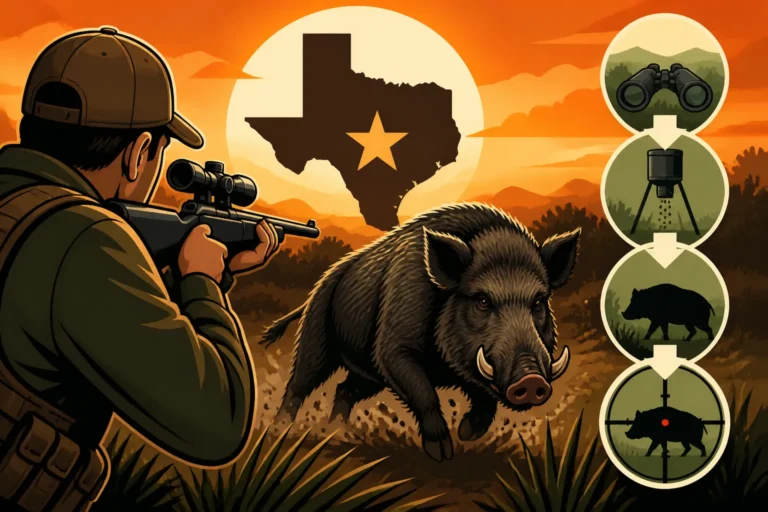
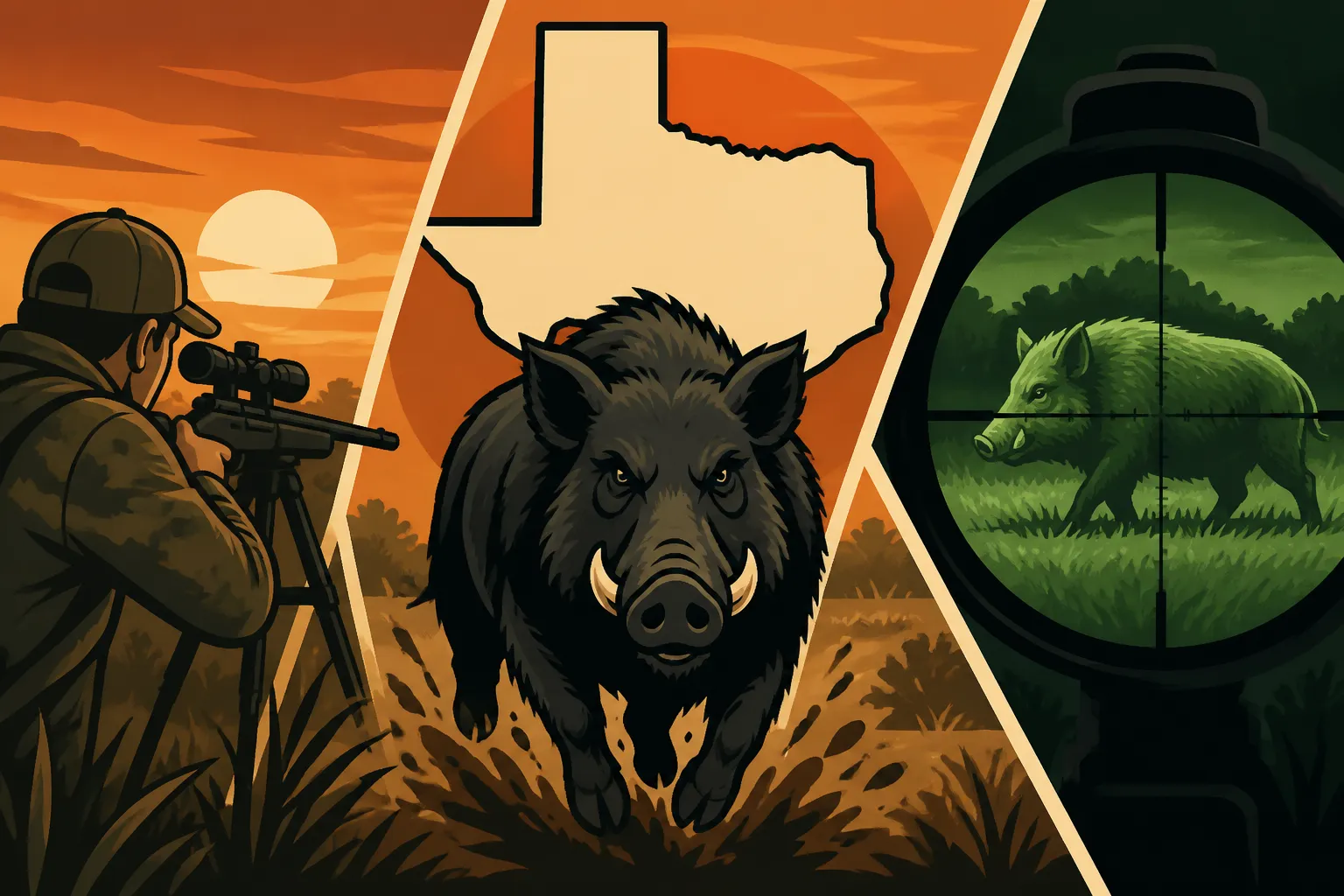
There is no way around it: the absolute best hunting method for feral hogs in Texas today is night hunting with thermal optics. While traditional spotlights used to be the go-to, hogs have learned that a red or green light often means a bullet is coming. Thermal imaging allows you to see the heat signatures of a sounder from hundreds of yards away in total darkness, giving you a massive tactical advantage. You can watch them interact, identify the lead sow, and plan your approach without them ever knowing you are there.
The process usually involves a "scan and stalk" method. You start by using a handheld thermal monocular to scan open fields, oat patches, or feeder lines. Once you spot a group, you check the wind. This is the most critical step. You must stay downwind. Because you are hunting at night, the thermal allows you to see exactly where the pigs are facing. You can often stalk within 50 to 60 yards if you are quiet and the wind stays in your favor. This is where How to Hunt Hogs at Night With Thermal becomes an adrenaline-pumping experience unlike anything else in the Texas outdoors.
The beauty of thermal is the efficiency. When you are looking through a high-quality scope, the hogs glow white or black against the cool background of the earth. It removes the guesswork of "is that a stump or a pig?" It also allows for much safer shooting, as you can clearly see the entire environment, including any livestock or buildings that might be in the distance. If you are serious about hog control, investing in a thermal setup or booking a guide who provides them is the gold standard. It is the one method that consistently produces high body counts and protects your land from the destruction these animals cause.
The Advantage of Suppressors at Night
If you are hunting with a group, using a suppressor is a game-changer. Hogs are social animals, but they aren't stupid. When a loud unsuppressed rifle goes off, the sound echoes through the river bottoms and sends every pig within two miles into high gear. A suppressor doesn't make the shot silent, but it masks the direction of the shot and reduces the "crack" that panics the herd.
Often, if you are suppressed and the wind is right, you can get a second or third shot off at the sounder before they realize which way to run. This is particularly effective when you are trying to manage large populations. It also makes the experience much more pleasant for the hunter, saving your hearing and reducing the muzzle flash that can momentarily blind you even through a thermal scope.
Is It Legal to Hunt Hogs at Night
One of the most common questions for newcomers is about the legality of this method. Fortunately, Texas is very aggressive about hog management. Since they are an invasive species, Is Thermal Hunting Legal in Texas? is a resounding yes. In fact, you can hunt them 365 days a year, at any hour, using almost any legal firearm. This freedom is what has led to the rise of specialized night-hunting rigs and the booming industry of nocturnal hog "eradication" teams.
Effective Baiting and Feeder Setups
If you aren't ready to drop thousands of dollars on night vision, the next best method is a strategic feeder setup. Most Texas leases already have corn feeders in place for deer, and hogs will naturally gravitate toward them. However, if you want to target hogs specifically, you need to change your strategy. Standard Deer Feeder Timer Settings in Texas usually focus on dawn and dusk, but hog-specific baiting should be more persistent.
Hogs love "sour" corn. If you want to keep deer away but attract every pig in the county, take a five-gallon bucket of corn, fill it with water, add some sugar or a cheap beer, and let it sit in the Texas sun for a week. The smell is repulsive to humans but like a dinner bell for hogs. Digging a "post hole" and filling it with this mixture forces the hogs to spend time rooting and digging to get the bait, rather than just vacuuming it off the surface and leaving. This keeps them in the kill zone longer, giving you a better chance at a steady shot.
Placement is also key. Hogs feel much more comfortable in cover. While a deer might walk into the middle of a wide-open 10-acre field, a big boar prefers a feeder tucked into a mott of oak trees or near a creek bed. If you place your feeder too far from cover, they will wait until the absolute dead of night to visit. By placing it closer to their bedding areas, you might catch them moving during the "golden hour" just before dark or just after sunrise. You should also consider How to Keep Hogs Out of Your Deer Feeder if you are trying to prioritize whitetail, which often involves building high-fenced pens that only the deer can jump over.
| Method | Best Time | Difficulty | Equipment Needed | Success Rate |
|---|---|---|---|---|
| Thermal Stalking | 10 PM – 4 AM | Moderate | Thermal Scope/Monocular | Very High |
| Feeder Sitting | Dawn / Dusk | Easy | Standard Rifle & Corn | Moderate |
| Sour Corn Holes | Any (if near cover) | Moderate | Post-hole Digger & Bait | High |
| Spot and Stalk | Mid-Morning | Hard | Binoculars & Stealth | Low |
| Trapping | 24/7 (Passive) | Easy | Large Corral Trap | High (Group) |
Spot and Stalk in the Texas Brush
For the purist who wants a challenge, spot and stalk during the day is the ultimate test of woodsmanship. This method requires a deep understanding of the terrain. In the summer, you should look for water. Hogs do not have sweat glands, so they must find mud or water to regulate their body temperature. If you can find a secluded stock tank or a creek with fresh tracks, you are in the game. Using Best Way to Hunt Hogs in Summer tactics involves moving incredibly slowly through the creek bottoms, often only a few yards at a time, listening for the sound of grunting or splashing.
The "spot" part usually happens from a distance using high-quality binoculars. You are looking for a dark shape that doesn't belong. In the thick mesquite of South Texas or the cedar breaks of the Hill Country, a hog can look like a shadow or a rock. Once you identify one, you have to play the wind perfectly. Hogs have poor eyesight compared to deer, so you can sometimes get away with more movement, but if they see a sudden, sharp motion, they are gone.
Stalking is also one of the best Feral Hog Hunting Tactics for Texas because it allows you to cover more ground than sitting in a blind. If you aren't seeing signs at one tank, you move to the next. It’s an active, engaging way to hunt that teaches you a lot about the land. However, be prepared for a workout. Crawling through prickly pear and catclaw to get within 40 yards of a sleeping boar is not for the faint of heart. You also need to be very aware of Best Shot Placement for Hogs, as their anatomy is different from a deer. Their vitals are lower and further forward, and a large boar has a "shield" of thick cartilage over his shoulders that can stop smaller calibers.
Trapping as a Management Tool
While many don't consider trapping to be "hunting" in the traditional sense, it is often the most effective way to remove large numbers of pigs at once. If you have a massive infestation that is tearing up your pastures or destroying your food plots, Hog Trapping in Texas: Methods That Work is worth investigating. Modern traps now use cellular cameras and remote-controlled gates. You can watch the pigs enter the trap on your phone from your living room and drop the gate only when the entire sounder is inside.
The problem with older style "box" traps is that they often only catch one or two pigs, and the rest of the sounder becomes "trap shy." They see their friends get caught and they learn to avoid those metal boxes forever. Large corral traps are much more effective because they don't look like a confined space until the gate falls. If you are serious about How to Hunt Hogs During the Day in Texas and at night but still can't keep up with the population growth, trapping is the necessary "boring" part of the job that actually moves the needle on population control.
Preparing for the Harvest
Once you have successfully used one of these methods, the real work begins. Texas is hot, and feral hogs carry a lot of thermal mass. If you don't get that animal gutted and cooled down quickly, the meat will spoil. Many people ask, Are Feral Hogs Good to Eat? and the answer is a resounding yes—if you handle them correctly. Smaller sows (under 100 pounds) are fantastic and lean, often tasting like a cross between commercial pork and wild game. Large boars can be "gamey" and tough, but they still make excellent sausage or ground meat.
Always wear gloves when cleaning hogs to protect yourself from diseases like brucellosis. Get the hide off as fast as possible and get the meat on ice. If you are hunting in the heat of a Texas afternoon, you have about an hour or less to get that animal cooled down before you start losing meat quality. Success in the field is only half the battle; being a good steward of the resource by processing the meat correctly is what separates a true hunter from someone just shooting at targets.
Disclaimer
This guide is for informational purposes only. Hunting regulations in Texas can change, and it is the hunter's responsibility to verify all current laws with the Texas Parks and Wildlife Department (TPWD) before heading into the field. Ensure you have a valid Texas hunting license and permission to hunt on the land you are accessing. Always practice hunter safety and be certain of your target and what lies beyond it.