How to Hunt Blackbuck Antelope on a Texas Lease
Many hunters find themselves on a Texas lease with blackbuck present but struggle to actually close the distance on these skittish exotics. Unlike whitetail, they don't always follow a predictable routine, leaving hunters frustrated and empty-handed after days of glassing. This guide solves that by breaking down the specific habits, scouting techniques, and tactical approaches needed to successfully harvest a trophy blackbuck on private Texas land.
Understanding Your Quarry: The Indian Blackbuck in Texas
Blackbuck antelope are not native to the Lone Star State, but they have thrived here since their introduction in the 1930s. If you are hunting on a lease in the Edwards Plateau or the South Texas brush country, you are dealing with one of the most visually stunning and alert animals in the world. Their eyesight is legendary; they can spot a hunter’s silhouette or a twitching hand from hundreds of yards away in an open pasture.
The social structure of a blackbuck herd is fascinating and dictates how you should hunt them. Dominant males, often referred to as "black" bucks because of their dark, charcoal-colored coats, guard a harem of females. Younger or less dominant males are usually lighter brown or tan. When you are scouting your lease, you need to identify the dominant male's territory. They are highly territorial and will defend a specific patch of ground with surprising aggression. This predictability is your greatest advantage. If you see a big, dark male in a specific cedar break or open field on Monday, there is a very high probability he will be within a few hundred yards of that spot on Tuesday.
One of the most unique behaviors to look for is the midden. Blackbuck males establish "latrines" or dung piles to mark their territory. On a Texas lease, these often look like concentrated circles of small pellets in an otherwise grassy area. If you find a fresh midden site, you have found the heart of a male's territory. This is where he will return to check for rivals and maintain his claim. Understanding this behavior is often the key to finding the Best Hunting Method for Blackbuck Antelope in Texas because it allows you to hunt where the animal wants to be, rather than just where you hope he will pass through.
Scouting Strategies for the Modern Texas Lease
Success begins long before you pull the trigger. Because blackbuck are active throughout the day, your scouting needs to be more comprehensive than it is for whitetail. They don't just move at dawn and dusk; in fact, they often love the midday Texas sun, grazing in open fields when other animals have retreated to the shade. This makes midday glassing a vital part of your routine.
Technology plays a massive role here. Many hunters rely on cellular cameras to track movement, but you have to be smart about placement. While a whitetail might walk right past a camera on a cedar post, a wary blackbuck might avoid a new, strange object in the middle of his open pasture. Learn How to Pattern Bucks With Trail Cameras specifically for exotics by placing them on the periphery of open flats or near established water troughs. Blackbuck need to drink regularly, especially during the scorching summer months when there is no "off-season" for exotic hunting.
Don't overlook the importance of topographical maps and apps. Look for "edge" habitat where open grasslands meet dense cover like mesquite or juniper. Blackbuck prefer to graze in the open where they can use their eyes to stay safe, but they want cover nearby for when the wind picks up or when they feel threatened. By identifying these transition zones, you can better predict their flight paths. If you can find a spot where a fence line forces them through a specific gap or gate, you have identified a high-traffic "choke point" that is perfect for a blind setup.
Primary Hunting Methods for Blackbuck Success
There are two main schools of thought when it comes to blackbuck: sitting and waiting, or getting on your feet and moving. Both can be effective, but your choice should depend on the terrain of your lease and the pressure the animals have faced. If you are on a smaller lease with limited acreage, sitting over a known food or water source is usually the higher-percentage play.
Hunting Over Feeders and Corn
In Texas, corn is king. Most leases already have an infrastructure of feeders designed for whitetail, and blackbuck will absolutely utilize them. However, they can be "feeder shy" if the timer is too loud or if there is too much hog activity. When considering Is It Legal to Hunt Over Corn in Texas? for exotics, the answer is a resounding yes, and it is a staple of lease management. The trick is to ensure your feeder is in an open enough area that the blackbuck feels secure. They hate feeling boxed in.
If you are using a blind, ensure it is well-camouflaged and has been in place for weeks. Blackbuck have incredible memory for their environment. A new pop-up blind in the middle of a field is essentially a "keep away" sign for a trophy male. You’re better off using a permanent box blind or a tripod tucked into a motte of trees. When the feeder goes off, be patient. The females usually come in first. The dominant male will often hang back on the edge of the brush, watching for danger before committing to the corn.
The Thrill of the Spot-and-Stalk
For those who find sitting in a box blind tedious, Spot-and-Stalk Hunting in Texas (Exotics & Mule Deer) is the ultimate test of skill. This is particularly effective on large Hill Country leases with rolling hills and draws. The goal is to use the terrain to stay out of sight while you glass for that tell-tale dark coat in the distance. Once you spot a shooter, you have to play the wind perfectly. Blackbuck don't have the nose of a whitetail, but they aren't stupid either.
The "stalk" usually involves a lot of belly-crawling through prickly pear and cedar. You have to move when their heads are down grazing and freeze when they look up. This is where Best Binoculars Under $500 for Texas Hunting become your most important tool. You need to be able to judge the curl and length of the horns from a distance so you don't waste three hours stalking a sub-par male. A true trophy blackbuck will have three to four full curls and a deep, dark coat. If you see a male that looks "jet black" from a mile away, that’s your target.
Essential Gear for the Blackbuck Hunter
Your gear needs to be tailored to the specific physics of a blackbuck. These are not large animals; a big male might only weigh 75 to 90 pounds. You don't need a magnum caliber to take one down. In fact, heavy recoiling rifles often lead to poor shot placement on these small targets.
| Gear Category | Recommendation | Why It Matters |
|---|---|---|
| Rifle Caliber | .243 Win, .25-06, or 6.5 Creedmoor | Flat shooting with enough energy for a clean kill without ruining the cape. |
| Optics | 10×42 Binoculars | Necessary for spotting dark coats against shadows in the brush. |
| Clothing | Lightweight, breathable camo | Texas heat is brutal; you need to stay cool to stay focused. |
| Footwear | Snake boots | Vital for stalking through Texas tall grass and brush. |
| Rangefinder | Angle-compensating | Blackbuck are small; a 20-yard error in range can mean a complete miss. |
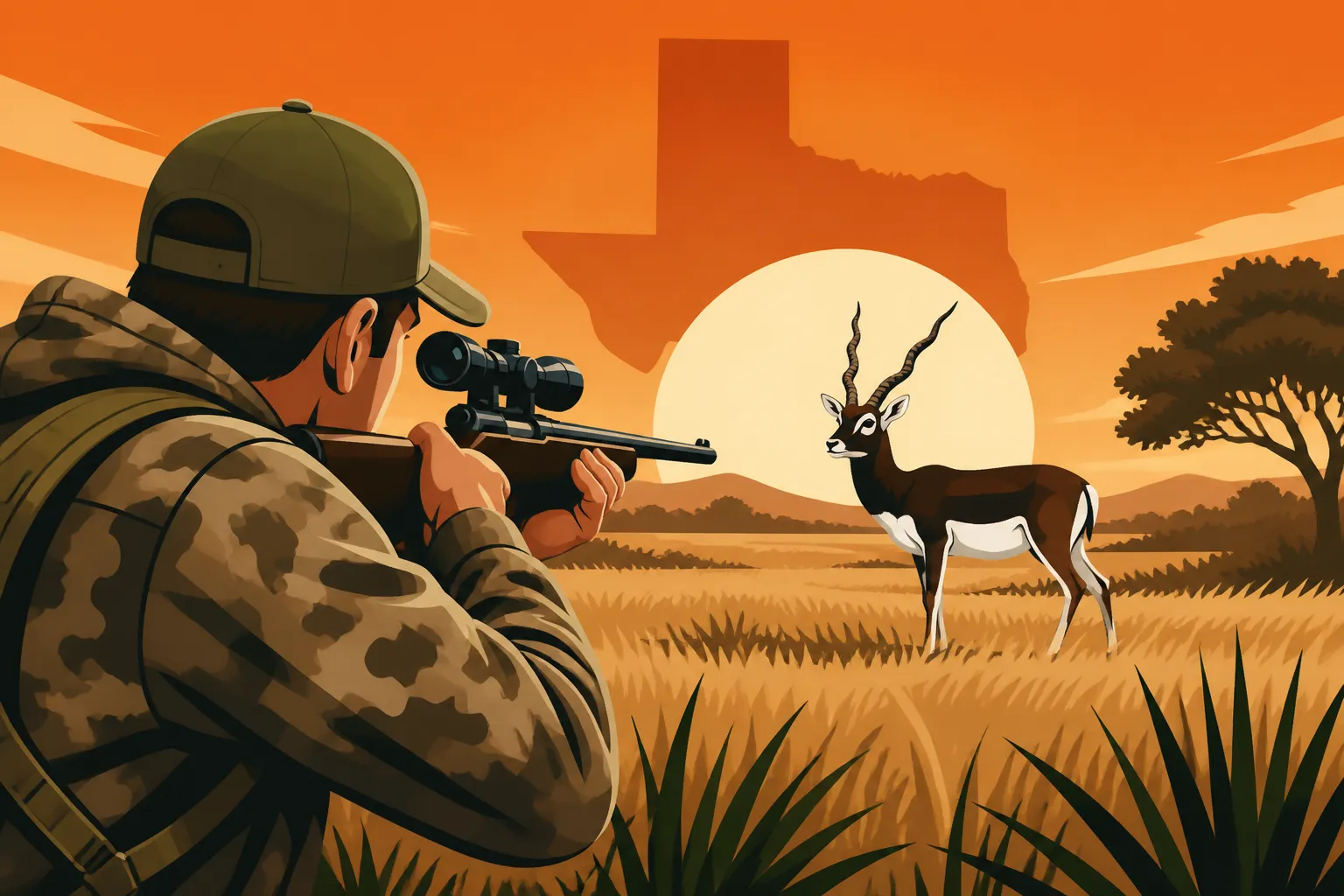
When selecting your Best Gear for Blackbuck Antelope on a Texas Lease, focus on accuracy over power. A .243 Winchester is perhaps the perfect blackbuck cartridge. It has a very flat trajectory, which is crucial because blackbuck are often shot at distances between 150 and 300 yards in open pastures. Because they are a smaller target, even a slight miscalculation in range can result in a shot that goes over the back or under the brisket. High-quality glass is also non-negotiable. You’ll spend hours staring into the "shimmer" of a Texas afternoon, and cheap binoculars will give you a headache and cause you to miss animals standing in the shade. Use something like the Best Binoculars for South Texas Brush to cut through the glare and identify horn tips behind a mesquite tree.
Comparison of Texas Regions for Blackbuck
Not all Texas leases are created equal. Depending on where your lease is located, your tactics will need to shift slightly to account for the vegetation and climate.
- The Hill Country (Edwards Plateau): This is the heart of blackbuck country. The rolling hills allow for better "glass and stalk" opportunities. You can get high on a ridge and look down into the valleys. The density of animals here is usually very high, meaning you have to be careful not to "spook" one group of females while you are stalking a male in another group.
- South Texas (Brush Country): Here, the cover is much denser. You are often restricted to senderos or "scraped" lines. Hunting over a feeder or a water hole is much more common here because the visibility is so limited. You’ll want to check out Exotic Hunting in Texas: Axis, Aoudad, Blackbuck & More for specific tips on hunting multiple species in this thick environment.
- The Coastal Plains: This area is very flat and open. Wind is almost always a factor. You will need a rifle that can handle the crosswinds and a lot of patience, as the animals can see you coming from a mile away.
Making the Shot and Trophy Management
When the moment finally arrives, remember that a blackbuck’s vitals are slightly further forward and lower than a whitetail’s. Aim for the "middle of the middle" regarding the vertical height of the body, tucked just behind the shoulder. Because they are high-strung animals, they often "jump the string" or bolt at the sound of the shot. Take your time and wait for a broadside or slightly quartering-away angle.
Once the animal is down, the work really begins. Blackbuck are prized for their venison, which many hunters consider superior to whitetail. If you’ve wondered Is Axis Venison the Best Wild Game Meat? you’ll find that blackbuck is a very close second—it's lean, mild, and delicious. However, because you are likely hunting in warm weather (since they can be hunted year-round), you must act fast. Knowing How to Field Dress a Deer in Hot Weather is a skill that translates perfectly to blackbuck. Get the hide off or the carcass into a cooler as soon as possible to prevent the meat from tainting.
If you plan on mounting your trophy, be very careful with the cape. Blackbuck have relatively thin skin around the neck. Do not cut the throat; this is a common mistake that ruins a pedestal or shoulder mount. Instead, tube-skin the animal or leave plenty of hide behind the front shoulders for your taxidermist. These animals represent a unique part of the Texas Hunting experience, and a well-preserved mount is a testament to a challenging hunt on a Texas lease.
How to Hunt Blackbuck Antelope on a Texas Lease Disclaimer
This guide is intended for informational purposes only. Always consult the official Texas Parks and Wildlife Department (TPWD) Outdoor Annual and your specific lease agreement before hunting. While blackbuck are exotics and can generally be hunted year-round with a valid Texas hunting license, individual lease rules, bag limits, and local ordinances may apply. Ensure you have the landowner's permission and are following all safety protocols regarding firearm use and property boundaries.