San Saba County Antler Restriction & Bag Limit
You've spent countless hours scouting your lease, meticulously setting up feeders, and finally, deer season is upon us. But before you even think about hitting the stand, there's that annual ritual of wrestling with the Texas Parks and Wildlife Department (TPWD) Outdoor Annual, trying to decipher the specific rules for your hunting grounds. It can feel like a daunting task, especially when it comes to understanding the antler restrictions and bag limits that apply precisely to San Saba County. This guide is here to untangle those regulations, helping you hunt responsibly and within the law, ensuring your season is successful and stress-free.
The Foundation: Understanding Texas Antler Restrictions Generally
Before we dive into the nitty-gritty of San Saba County, it's really important to grasp why antler restrictions exist in the first place and how they broadly work across the state. Many hunters, myself included, used to get frustrated by these rules, wondering why we couldn't just shoot any legal buck. But the truth is, these regulations are a crucial tool for wildlife management, designed to improve the overall health and age structure of the white-tailed deer population. They encourage hunters to pass on younger bucks, allowing them to mature and reach their full potential, which ultimately leads to a healthier, more balanced herd with a better buck-to-doe ratio and more impressive antlers in the long run.
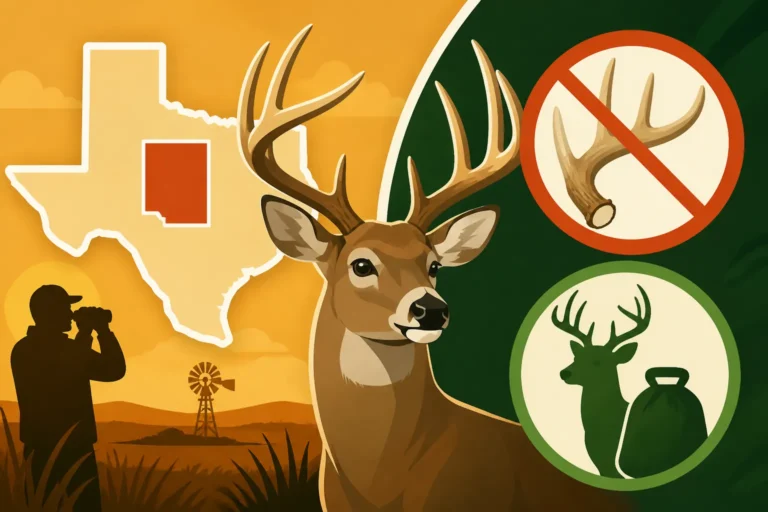
The most common statewide antler restriction, often referred to as the "13-inch rule," dictates that a legal buck must have at least one unbranched antler, or an inside spread of 13 inches or greater. This means that if a buck has branched antlers on both sides, its main beams must be at least 13 inches apart, measured from the inside tips of the main beams. If a buck only has a single spike or unbranched antler on one side, that automatically makes it legal, regardless of spread. This rule is in place in a vast number of counties, primarily those in the Post Oak Savannah and Cross Timbers ecoregions, as well as parts of the Edwards Plateau. It’s not about preventing you from taking a deer, but about making sure the deer you take contribute positively to the herd's future.
However, the key takeaway here is that not every county in Texas operates under these same rules. While the 13-inch rule is widespread, some counties have no antler restrictions, allowing hunters to take any buck with a hardened antler. Other counties might have slightly different interpretations or additional requirements. That's why it's absolutely critical to always check the specific regulations for the county you're hunting in. Misinterpreting these rules, even accidentally, can lead to fines and loss of hunting privileges, which is something none of us want. For a broader overview of these regulations, you might find our guide on Texas Antler Restrictions: 13-Inch Rule & Counties particularly helpful.
San Saba County's Specific Antler Restriction Rules
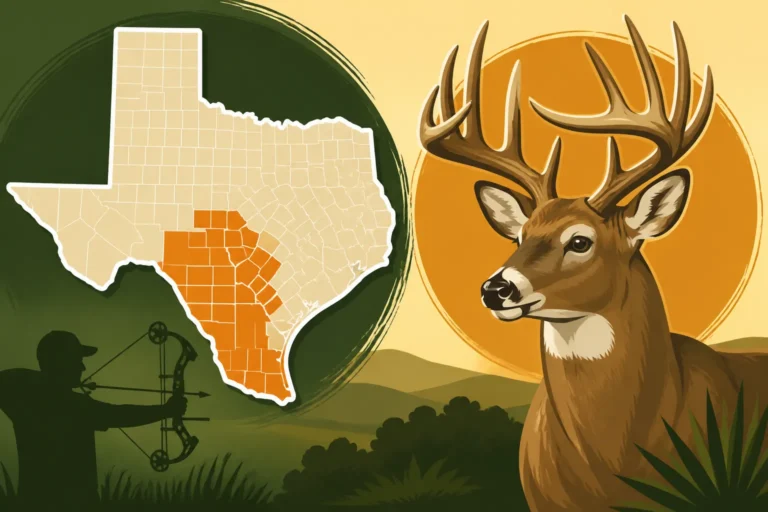
Now, let's zero in on San Saba County. This is a beautiful part of the Texas Hill Country, known for its diverse wildlife and excellent hunting opportunities. When it comes to white-tailed deer, San Saba County falls under the general "special antler restriction" rule that many other counties in the Edwards Plateau region also observe. This means the commonly discussed 13-inch rule applies here.
To legally harvest a buck in San Saba County, the deer must meet one of the following criteria:
- Possess at least one unbranched antler. This is the simplest category. If a buck has a spike on one side and a branched antler on the other, or spikes on both sides, it's a legal deer. The unbranched antler essentially acts as a "pass" for the spread requirement. Think of it as allowing younger, typically 1.5-year-old bucks with simpler antler configurations to be harvested, as they're less likely to contribute trophy genetics to the herd anyway.
- Have an inside spread of 13 inches or greater. For bucks with branched antlers on both sides, the critical measurement is the distance between the inside edges of the main beams. If this measurement is 13 inches or more, the buck is legal. This is where field judging becomes crucial. You're trying to quickly estimate that distance while a buck might be on the move, which can be incredibly challenging. Many seasoned hunters use a common trick: if the antlers extend past the deer's ears when its head is facing forward, it's often a good indicator of being close to or over the 13-inch mark. However, this is just a guideline, and it's always best to be conservative.
What does this mean for hunters? It means you really need to take your time and properly identify your target. Rushing a shot on a buck whose antlers don't clearly meet these criteria can lead to an illegal harvest. I've heard stories from many hunters who, in the heat of the moment, misjudged a buck's spread only to realize later it was undersized. It's a tough lesson to learn, and one we all strive to avoid. Always use your binoculars or your scope's magnification to get a good look before making a decision. When in doubt, let him walk. There will always be another deer.
This rule, by design, helps protect the 2.5-year-old bucks and some 3.5-year-old bucks that haven't yet reached their full antler potential, allowing them another year or two to grow. This is often seen as a beneficial trade-off, as it helps create a more robust population of older, bigger-antlered bucks for future seasons. If you're looking for more general strategies for deer hunting, our comprehensive guide to Deer Hunting in Texas: Feeders, Blinds & Tactics offers a lot of useful insights that can be applied to San Saba.
White-Tailed Deer Bag Limits in San Saba County
Understanding the bag limit is just as important as knowing the antler restrictions. It dictates how many deer you can legally harvest during the season, ensuring that the population remains sustainable. For San Saba County, the regulations are fairly straightforward, but still require careful attention to detail.
In San Saba County, the general bag limit for white-tailed deer is four deer total per hunter per license year. This total limit is then broken down into specific categories for bucks and does:
- Bucks: You are permitted to harvest two bucks. Out of these two bucks, only one can have an inside spread of 13 inches or greater. This means that if you take a buck with a 13-inch or greater spread, your second buck must be an unbranched antlered deer (a spike). Conversely, if you harvest an unbranched antlered deer first, your second buck can be either another unbranched antlered deer or one with a spread of 13 inches or greater. This specific rule is tied directly to the antler restriction, aiming to influence the age structure of the buck population. It encourages hunters to take a young spike buck, while still allowing for the harvest of a more mature, branched-antlered deer.
- Does (Antlerless Deer): You are permitted to harvest two antlerless deer. These can be taken during the general open season, but it's crucial to understand the specifics. In antler-restricted counties like San Saba, antlerless deer may be taken only by archery, during the special youth-only season, or during designated "doe days" if applicable, unless the landowner is participating in the Managed Lands Deer Program (MLDP) and has specific tags. Always check the Texas Deer Season 2026-2027: Dates by Zone to confirm the exact doe days for San Saba, as these can vary slightly year to year. For many hunters on private land, these doe days are their primary opportunity to fill their antlerless tags.
The Managed Lands Deer Program (MLDP) can significantly impact these bag limits on individual properties. If the land you hunt on is enrolled in the MLDP, the TPWD wildlife biologist has worked with the landowner to develop a specific deer management plan. This plan often includes customized harvest recommendations and special MLDP tags, which supersede the county bag limits for that property. Hunters on MLDP properties will use these specific MLDP tags for their deer, and the rules printed on those tags (e.g., number of bucks, does, antler criteria) are the ones that apply. If you're hunting on an MLDP property, make sure you understand the specific tag requirements from the landowner or lease manager. This program is fantastic for promoting proactive wildlife management, and you can learn more about its impact in our article on MLDP Tags in Texas: How They Work.
Other Key Regulations for San Saba County Deer Hunters
While antler restrictions and bag limits are primary concerns, several other regulations are vital for any hunter in San Saba County to adhere to. Overlooking these can lead to serious consequences, so it's always worth a quick refresher.
Harvest Reporting Requirements
One of the most critical aspects of modern deer hunting in Texas is harvest reporting. For white-tailed deer harvested in an antler-restricted county like San Saba, mandatory harvest reporting is required. This means that after you harvest a buck or doe, you must report it to TPWD. This data is incredibly valuable for wildlife biologists, providing them with real-time information on harvest rates, population health, and the effectiveness of management strategies.
The good news is that reporting has become much easier with technology. You can typically report your harvest using:
- The My Texas Hunt Harvest app: This is arguably the most convenient method. You can download it to your smartphone and report your harvest directly from the field. It's user-friendly and walks you through the necessary steps.
- The TPWD website: You can also log onto the TPWD website and report your harvest online. This is a good option if you prefer using a computer or don't have good cell service in the field but can access the internet later.
Regardless of the method, make sure you report your harvest accurately and promptly. It's not just a legal requirement; it's a critical part of being a responsible hunter and contributing to wildlife conservation. For more details on the process, check out our guide on How to Report Your Harvest in Texas.
Hunting License and Tags
Of course, you can't even step into the field without the proper Texas hunting license and tags. For white-tailed deer in San Saba County, you'll need a valid hunting license that includes the white-tailed deer endorsement. Most Texas residents opt for the Super Combo license, which bundles various endorsements, making it a convenient and cost-effective option. Non-residents will need a specific non-resident hunting license.
Upon harvesting a deer, you must immediately fill out the appropriate tag from your license and attach it to the deer. The tag must remain with the deer until it reaches its final destination or is processed. Remember, those tags are your legal proof of harvest and are crucial for tracking bag limits. Our guide on Texas Hunting License: Cost, Types & How to Buy (2026) provides all the information you'll need to make sure you're properly licensed.
Chronic Wasting Disease (CWD) Considerations
Chronic Wasting Disease (CWD) is a serious neurological disease affecting deer and other cervids. While San Saba County is not currently designated as a CWD Containment or Surveillance Zone, it's always important for hunters to be aware of the disease and any potential changes to regulations. CWD is a real concern for wildlife managers, and regulations can change rapidly based on disease detection.
If you plan to transport a harvested deer through or from another county that is a CWD zone, or if San Saba County were ever to be designated as such in the future, there would be specific carcass movement and testing requirements. Always check the most current TPWD Outdoor Annual for updates on CWD zones and associated regulations, especially regarding carcass movement, before you head out. These rules are in place to help prevent the spread of the disease and protect our deer populations.
Season Dates
While this article focuses on antler restrictions and bag limits, it's essential to remember that all these rules only apply during the legal hunting season. San Saba County generally follows the standard general season dates for the Edwards Plateau region. These dates can shift slightly each year, so it's paramount to consult the official TPWD Outdoor Annual for the most up-to-date information. Understanding when you can hunt, and for what species, is foundational to ethical and legal hunting. Our article on Texas Deer Season 2026-2027: Dates by Zone is an excellent resource for planning your hunting trips.
Here's a quick summary of the key regulations for San Saba County:
| Regulation Category | Details for San Saba County |
|---|---|
| Antler Restriction (Bucks) | – One unbranched antler OR |
| – Inside spread of 13 inches or greater (for bucks with branched antlers on both sides) | |
| Total Deer Bag Limit | Four (4) deer |
| Buck Bag Limit | Two (2) bucks total; only one (1) with an inside spread of 13 inches or greater (the other must be an unbranched antlered deer) |
| Antlerless (Doe) Bag Limit | Two (2) antlerless deer |
| Antlerless Harvest Dates | By archery, during special youth-only season, or during designated "doe days" (check current Outdoor Annual), unless MLDP tags apply |
| Mandatory Harvest Reporting | Required for all white-tailed deer harvested |
| License Requirements | Valid Texas hunting license with white-tailed deer endorsement |
| CWD Zone Status | Not currently a CWD zone (always verify current TPWD regulations) |
Remember, hunting is a privilege, and with that privilege comes the responsibility to know and follow all regulations. By taking the time to understand these rules for San Saba County, you're not just staying out of trouble; you're actively contributing to the sustainable management of Texas's incredible deer populations, ensuring that future generations can enjoy the same rich hunting heritage we do today. Good luck this season, and stay safe out there!
Disclaimer
Please note that hunting regulations, seasons, and bag limits are subject to change by the Texas Parks and Wildlife Department (TPWD). While this guide provides comprehensive and accurate information based on current data, it is ultimately the hunter's responsibility to consult the official TPWD Outdoor Annual or website for the most up-to-date and complete regulations before engaging in any hunting activities. This content is for informational purposes only and should not be considered legal advice.