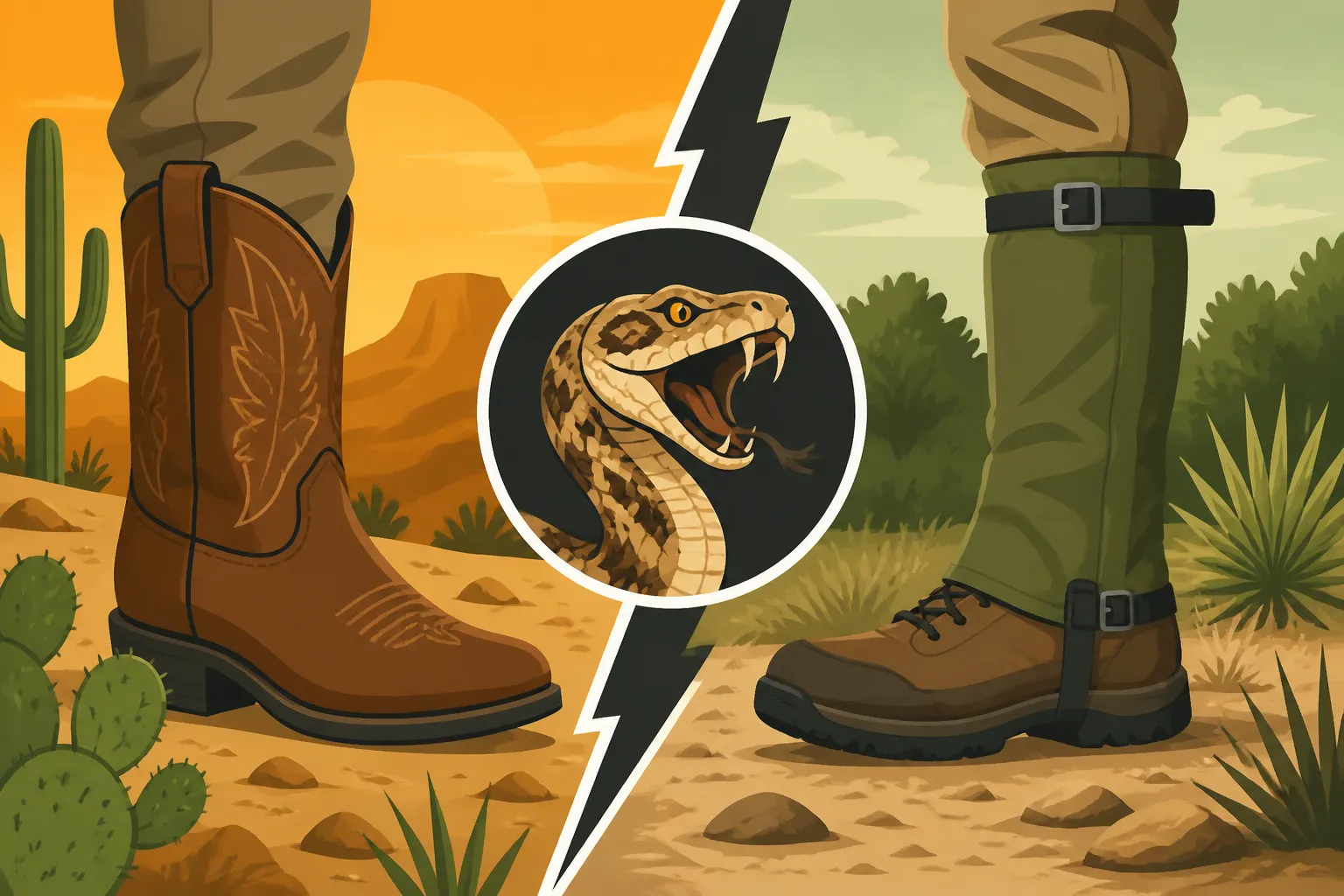
Snake Boots vs Snake Gaiters: Which for Texas?
Hunting in Texas is an incredible experience, but let's be real – the thought of encountering a venomous snake can put a damper on anyone's outdoor adventure. Whether you're chasing whitetail through the thick brush of South Texas or navigating the rocky terrain of the Hill Country, protecting yourself from an unexpected bite is paramount. This comprehensive guide will break down the pros and cons of snake boots versus snake gaiters, helping you make an informed decision for maximum safety and comfort in the Texas wild.
The Unwelcome Slithering Residents of Texas
Before we even get into gear, let's acknowledge the very real threat. Texas is home to over 100 species of snakes, and about 15 of them are venomous. The four main types you need to worry about are rattlesnakes (especially Western Diamondback), copperheads, cottonmouths (water moccasins), and coral snakes. They’re everywhere, from the dense undergrowth to arid scrublands, and they’re often masters of camouflage. The fear isn't just about a bite; it's about the intense pain, medical emergency, and the sheer inconvenience of having your hunt (or worse, your life) disrupted. Many seasoned hunters have a story about a close call, validating that a proactive approach to snake protection isn't paranoia, it's just smart.
Understanding Texas Snake Behavior
Texas snakes aren't out to get you, but they will defend themselves if they feel threatened. Rattlesnakes, for instance, often give fair warning, but sometimes they're coiled and silent, especially when startled. Copperheads blend perfectly with leaf litter and can be hard to spot until you're right on top of them. Cottonmouths are prevalent in watery areas, and their aggressive reputation is well-earned when cornered. The reality is, you're most likely to encounter a snake when you're least expecting it – stepping over a log, reaching into a brush pile, or just walking through tall grass. This is precisely why reliable lower leg protection is non-negotiable for anyone serious about hunting here.
Common Encounter Hotspots
Different regions of Texas present different snake challenges. If you're hunting in the South Texas Brush Country, you're constantly pushing through dense, thorny vegetation that provides excellent cover for Western Diamondbacks. Up in the Hill Country, rocky outcroppings and cedar brakes are prime rattlesnake habitat. For those pursuing waterfowl or hogs in the eastern part of the state or along the Gulf Coast, cottonmouths are a significant concern near marshes and slow-moving water. Even seemingly innocuous spots can harbor these reptiles, making all-around protection a wise choice no matter where you plan to go. When scouting a new lease or public land, using tools like GoHunt to analyze terrain features can give you an edge in identifying potential snake hotspots before you even set foot on the property.
Diving Deep into Snake Boots
Snake boots are essentially tall, specialized boots designed with a puncture-resistant material that covers your calves, shins, and feet. They're built like tanks, offering comprehensive protection from the ground up, and for many Texas hunters, they're the go-to choice for peace of mind.
Protection Level
The primary purpose of snake boots is protection, and they generally excel here. Most reputable snake boots are tested and certified to withstand strikes from even the most venomous fangs. The protective layers, often a combination of tough leathers, synthetic fabrics like Cordura nylon, and specialized inserts, extend from your toes all the way up to just below your knee. This means that if a snake strikes low, or even mid-calf, you're covered. This full-coverage design is particularly reassuring when you're moving quickly through dense cover, where a snake might strike from an unexpected angle. They also offer excellent ankle support, which is a bonus when navigating uneven terrain, minimizing the risk of a twisted ankle that could put you in a vulnerable position.
Comfort and Mobility
Here's where things get a bit more nuanced. While protection is top-notch, comfort can be a real sticking point for many. Snake boots are, by their nature, heavy and stiff. This bulk can make long treks feel more strenuous, especially in the relentless Texas heat. Imagine slogging through a mesquite flat in August with heavy, insulated boots – it can be brutal. Many modern snake boots, like those from LaCrosse or Irish Setter, have made strides in ventilation and weight reduction, incorporating lighter materials and breathable membranes. However, they're still boots, and they'll never feel as light and agile as your favorite hiking shoes. Breaking them in is absolutely essential; a brand-new pair of stiff snake boots can cause blisters and discomfort that will ruin a hunt faster than any snake encounter.
Durability and Maintenance
Good snake boots are an investment, and they're built to last. The rugged materials and reinforced construction mean they can stand up to years of abuse from thorns, brush, and rocky trails. Many models are also waterproof, which is fantastic for crossing creeks or slogging through muddy fields, especially during spring turkey season or early dove hunts. Maintenance typically involves cleaning off mud and debris, treating the leather (if applicable), and ensuring any zippers or laces are in good working order. With proper care, a quality pair of snake boots can be a loyal companion for many hunting seasons. However, inspect them regularly for wear and tear, especially if you're frequently pushing through thick brush, as even the toughest materials can degrade over time.
Unpacking Snake Gaiters
Snake gaiters, on the other hand, are worn over your existing boots and pants, providing a protective shell for your lower legs. They’re a popular alternative for hunters who prioritize flexibility or who only need occasional snake protection.
Protection Level
Snake gaiters offer robust protection, much like snake boots, but with a different form factor. They typically cover from your ankle to just below your knee, wrapping securely around your leg. Brands like Turtleskin and Crackshot use high-tech materials, often blends of ballistic nylon or similar composites, designed to repel snake fangs. The key is to ensure they fit snugly and cover adequately, leaving no gaps. While they protect against direct strikes to the covered area, they don't offer the integrated foot protection of boots. This means your actual hunting boots need to be sturdy enough to provide some resistance to a low strike, though most hunting boots have thick enough leather to deter many snake fangs. However, the top of your foot could still be vulnerable if a snake strikes from an odd angle.
Comfort and Flexibility
This is where gaiters really shine for many hunters. Because they go over your existing footwear, you can wear your most comfortable, lightweight hunting boots – or even sturdy hiking shoes – for better mobility and less fatigue. They're generally lighter and less cumbersome than full snake boots. This can be a huge advantage when you're covering a lot of ground, especially in warm weather. Good gaiters allow for excellent airflow, preventing your legs from overheating, which is a common complaint with heavy snake boots. They don't restrict ankle movement as much, making it easier to climb, crouch, and navigate varied terrain. For those who frequently switch between different types of hunting or environments, the versatility of gaiters is a major plus.
Ease of Use and Storage
Snake gaiters are incredibly easy to put on and take off. Most designs feature full-length zippers or hook-and-loop closures, allowing you to quickly secure them over your pants and boots. This means you can throw them on when you enter a known snake area and remove them when you're back in camp or on a paved road. They're also much more compact and lightweight for packing. You can easily roll them up and stash them in your backpack without taking up much space or adding significant weight. This portability makes them ideal for day hunts or trips where you might not need snake protection for the entire duration, or for hunters who travel and want to minimize bulky gear. If you're heading out to scout a new lease in the hot summer months, throwing a pair of gaiters in your pack with your rangefinder and a water bottle is a breeze.
Head-to-Head: Boots vs. Gaiters
Now that we’ve looked at each option individually, let’s put them side-by-side to highlight the critical differences that matter most to a Texas hunter.
Comprehensive Protection vs. Modular Coverage
Snake boots offer a truly integrated protective system. The entire lower leg and foot are encased in puncture-resistant material. This can be a significant advantage in areas with extremely dense brush where a snake might strike a low-lying foot or ankle without warning. Think of hunting hogs in Texas at night; the last thing you want is a gap in your protection.
Gaiters, on the other hand, offer modular protection. They are excellent for the calf and shin, but your foot protection is still dependent on the boots you wear underneath. While most robust hunting boots offer some defense, it's not the same level of engineered snake-specific protection as a dedicated snake boot. This isn't necessarily a dealbreaker, but it's a difference worth noting for peace of mind.
Weight and Heat Management
For many Texans, this is the tie-breaker. The weight and insulation of traditional snake boots can be a real deterrent, especially during early deer season or any hunt during the brutal summer months. Modern boots have improved, but they can still lead to sweaty, uncomfortable feet and legs. Staying cool and comfortable is crucial for long days afield.
Gaiters typically weigh less and allow you to wear lighter, more breathable footwear. This can significantly reduce fatigue and keep you cooler, which translates to a more enjoyable and focused hunting experience. If you’re often walking miles each day in search of game, the cumulative effect of lighter gear can be substantial.
Durability and Longevity
High-quality snake boots are built to withstand heavy abuse. Their integrated construction often means fewer potential failure points. They're designed for the long haul, often lasting many seasons with proper care. They typically resist snags and tears well, even in rugged environments.
Gaiters are also durable, but because they are external, they can be more prone to snags on thorns or brush. The straps or zippers that secure them can also experience wear and tear over time. While individual parts can sometimes be repaired or replaced, the overall lifespan might be slightly less than a well-maintained pair of snake boots under continuous heavy use.
Here’s a quick comparison to help visualize the differences:
| Feature | Snake Boots | Snake Gaiters |
|---|---|---|
| Protection | Full lower leg & foot; integrated | Lower leg (ankle to knee); modular over existing boots |
| Weight | Heavier, more cumbersome | Lighter, more flexible |
| Comfort | Can be hot, stiff; requires break-in | More breathable, uses preferred boots; less break-in |
| Mobility | Can restrict ankle movement | Excellent ankle flexibility |
| Ease of Use | Put on like regular boots; full-time protection | Quick on/off; can be added/removed as needed |
| Storage | Bulky; takes up space | Compact, easy to roll up and pack |
| Cost | Generally higher initial investment | Often lower initial investment |
| Waterproofing | Often integrated (many models) | Dependent on underlying boots & gaiter material |
| Ideal Use Case | All-day wear, dense/unknown terrain, maximum security | Variable terrain, hot weather, lighter load, situational protection |
Making Your Choice for Texas
So, which one is right for you? There’s no single right answer, as it truly depends on your hunting style, the terrain you frequent, and your personal priorities.
Factors to Consider for Your Hunting Style
If you're the kind of hunter who spends all day, every day, in the thickest, nastiest cover that Texas has to offer – think chasing deer through dense mesquite or following hog tracks through thorny brush – then the absolute, unyielding protection of a dedicated snake boot might be your best bet. If your hunts often involve crossing water or mud, many snake boots also offer superior waterproofing, making them a dual-purpose choice. For instance, if you're out there early for dove hunting tactics or pursuing large game like Nilgai in dense coastal scrub, a robust pair of boots might give you that extra edge of confidence.
However, if you prioritize agility, often hunt in open fields, or spend a lot of time in a blind or stand where movement is minimal, then gaiters might be more practical. They're fantastic for bowhunting in Texas when quiet movement and stealth are critical, allowing you to wear quieter, more flexible footwear. If you’re primarily hunting over feeders and corn in Texas, and your walk to the blind isn't overly treacherous, the comfort of gaiters might win out. They also allow you to adapt your gear to the specific hunt; if you're doing a multi-day trip and only one day involves known snake habitat, gaiters are easy to pack and deploy.
Terrain and Seasonality
The environment you're hunting in plays a huge role. In the arid, rocky Trans-Pecos region, where rattlesnakes are common but the vegetation might not be as dense, the flexibility and lighter weight of gaiters can be a blessing. When you’re scrambling over boulders, less bulk on your feet can make a big difference.
Contrast that with the thick, thorny scrub of South Texas, where a snake strike could come from any angle in the dense undergrowth. Here, the comprehensive, all-encompassing protection of snake boots might be more appealing, especially if you’re doing a lot of still-hunting or tracking. For warmer seasons, like early dove season or spring turkey hunting, the breathability of gaiters can offer superior comfort. During colder months, when snakes are less active, you might opt for less specialized protection anyway, but it's always wise to err on the side of caution.
Budget and Investment
Let's talk dollars and cents. Quality snake boots can be a significant upfront investment, often ranging from $150 to $400 or more. However, they combine footwear and protection into one item. Brands like Danner and Irish Setter offer excellent durability for the price.
Snake gaiters tend to have a lower entry price point, often between $50 and $150. But remember, you still need a good pair of sturdy hunting boots to wear underneath them, so factor that into your overall cost. If you already own excellent hunting boots that you love, adding a pair of gaiters might be the more economical solution. Consider your long-term needs; a durable pair of snake boots might last longer than several pairs of gaiters, depending on usage.
Beyond the Gear: Additional Snake Safety Tips
While your choice between snake boots and gaiters is critical, remember that no gear is a magic bullet. Being snake-aware is just as important.
Situational Awareness
Always stay vigilant. Pay attention to where you step and where you place your hands. Use a walking stick to probe dense brush or to turn over logs before stepping over them. Never reach into a crevice or under a rock without looking first. When walking at night, a good headlamp or even a thermal monocular (especially if you're hunting hogs at night with thermal) can help spot snakes on the ground before you're too close.
First Aid Preparedness
Knowing what to do in case of a bite is crucial. Carry a fully stocked first-aid kit that includes essentials for snakebite, and know how to use them. The most important thing to do after a bite is to remain calm, immobilize the affected limb, and seek medical attention immediately. Do not try to cut the wound, suck out venom, or apply a tourniquet. A solid understanding of basic first aid can make a huge difference in an emergency.
Hunter Education and Knowledge
Educate yourself on the types of venomous snakes common in the specific area you'll be hunting. Learn to identify them and understand their typical behaviors. For example, knowing that cottonmouths are often found near water helps you approach those areas with extra caution. Familiarize yourself with local wildlife regulations and recommended safety practices. Websites like GoHunt and the Texas Parks and Wildlife Department provide a wealth of information that can keep you safe and informed.
Disclaimer
Please remember that this guide provides general information and recommendations. Hunting involves inherent risks, and individual safety should always be your top priority. Always consult official Texas Parks and Wildlife Department regulations and consider seeking professional guidance for specific hunting situations or safety concerns.