Best Protein for Deer in Texas (Feed Comparison)
You've been out there, putting in the hours, scouting your land, checking your trail cameras, and you're dreaming of bigger, healthier deer on your property. But let's be honest, getting those truly impressive racks or ensuring your does are raising robust fawns in the tough Texas environment can feel like an uphill battle. Native forage is great, but it often falls short. That's where supplemental protein feeding comes in, and navigating the sheer number of options can be incredibly confusing. This guide is here to cut through the noise, comparing the best protein feeds for deer in Texas and helping you make informed decisions for your herd.
Why Protein Matters for Texas Deer
Texas is a beast of its own when it comes to wildlife management, and deer are no exception. We love our whitetails and mule deer, but the land, as vast and beautiful as it is, doesn't always provide everything they need, especially at crucial times. Understanding why protein is so vital is the first step to making your feeding program a success.
The Nutritional Gap in Texas Forage
Here in Texas, we experience some pretty extreme conditions. Droughts are a regular concern, and even in good years, the quality of natural browse and forbs can fluctuate wildly. While native forage is the foundation of a deer's diet, it often lacks the sustained, high-quality protein necessary for optimal growth and health. Think about the brush country of South Texas—tough, woody plants that provide cover but might not always pack a nutritional punch. Or the Hill Country, where rocky terrain can limit lush growth.
During key periods like late winter and early spring, when bucks are beginning to grow new antlers and does are pregnant or lactating, the protein demands are incredibly high. If the natural habitat can't meet these demands, the deer's body simply can't allocate enough resources to maximize antler growth or produce healthy fawns. This nutritional gap doesn't just impact antler size; it affects overall body condition, immune system function, and the ability of the herd to recover from stress like the breeding season or harsh weather. Ultimately, consistent protein supplementation can lead to a healthier, more resilient deer population on your land.
Timing is Everything When Feeding Protein
It's not just what you feed, but when you feed it that makes a huge difference in Texas. Deer have seasonal nutritional needs that align with their life cycles, and understanding these can help you target your protein efforts for maximum impact.
The most critical period for supplemental protein feeding often starts in late winter and extends through spring and summer. This is when bucks are really pushing antler growth, and does are carrying and nursing fawns. For a buck to grow an impressive set of antlers, his body needs a significant amount of protein and minerals available right at the start of that growth phase. If he's lacking protein in March, you can bet his antlers will show it in September. Similarly, does need ample nutrition to support pregnancy and lactation, which directly impacts fawn survival rates and the overall health of the next generation.
Many seasoned hunters and wildlife managers advocate for continuous, year-round protein feeding. While peak demand might be in spring and summer, consistent protein helps maintain overall herd health, aids in post-rut recovery for bucks, and keeps deer in peak condition to handle the stresses of hunting season or another dry spell. Even during the fall and winter, while corn or other grains might be used for attraction, a baseline of protein ensures deer aren't losing condition and are ready to hit the ground running for the next antler and fawning cycle. For a deeper dive into the benefits, check out our guide on Protein Feeding Deer for Bigger Antlers.
Types of Protein Feeds for Texas Deer
When you walk into a feed store, the options for deer feed can feel overwhelming. "Protein feed" isn't a single product, but a category with distinct differences. Let's break down the most common types you'll encounter and their suitability for your Texas hunting grounds.
Pelleted Protein Feeds
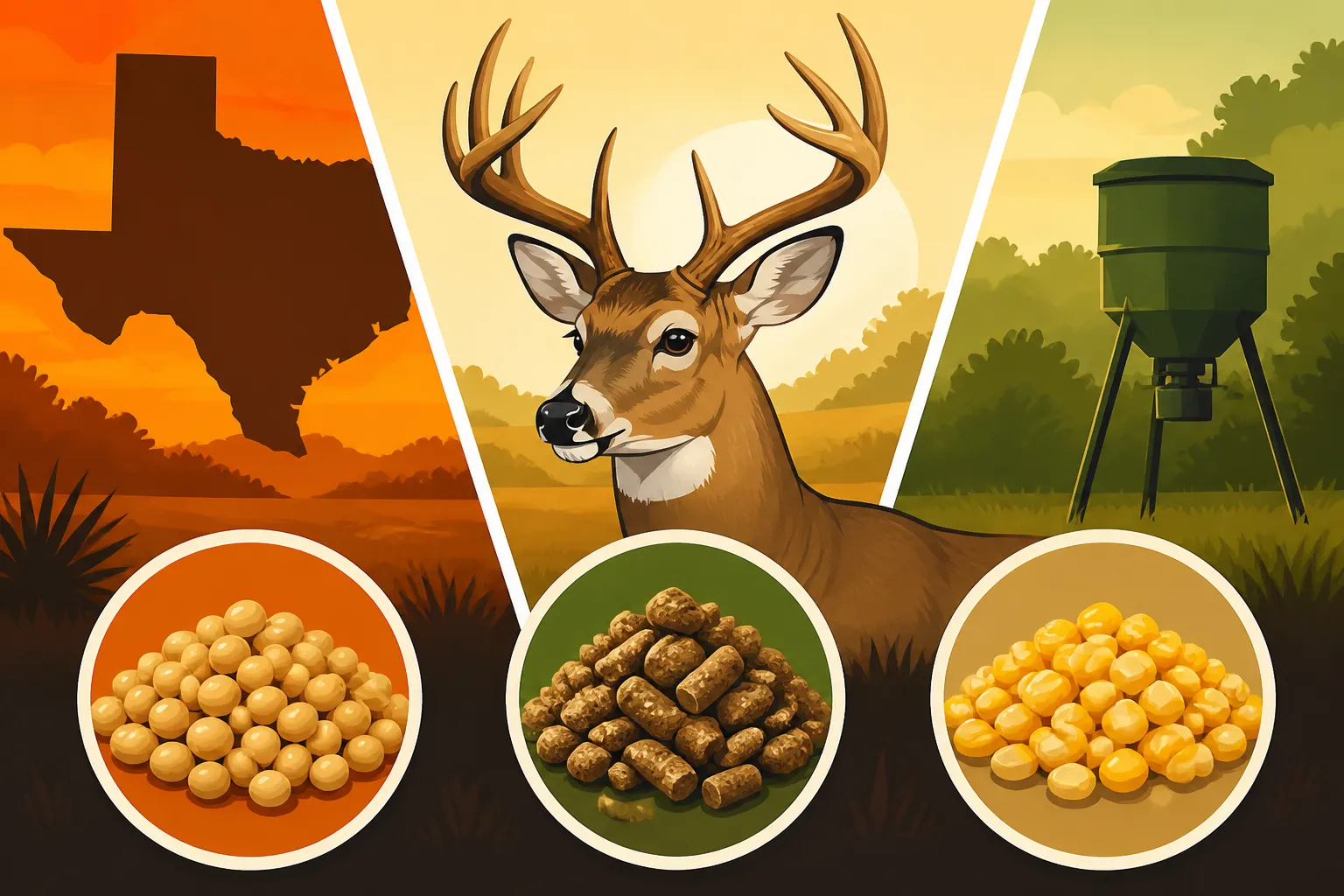
Pelleted protein feeds are probably what most people think of when they hear "deer protein." These are highly processed, uniformly shaped pellets designed to deliver a concentrated and consistent dose of protein, vitamins, and minerals. They typically come in protein percentages ranging from 16% to 20%, though some specialized formulas might go higher. Common ingredients often include a blend of soybean meal, cottonseed meal, corn, and various other grains, often bound with molasses for palatability and to help hold the pellet together. Brands like Purina AntlerMax, Lyssy & Eckel, Record Rack, and Stand & Fill are widely available across Texas.
The major advantage of pelleted feeds is their nutritional consistency. Every pellet is formulated to contain the same nutrient profile, meaning deer get a balanced diet with every mouthful. This consistency is crucial for promoting robust antler growth and supporting does through fawning. They are also relatively easy to dispense through specialized protein feeders, which are often designed to minimize waste and keep out smaller critters. However, pelleted feeds can be significantly more expensive than simple corn, and their efficacy can be hampered by moisture if not stored or dispensed properly. Rain can turn pellets into a soupy mess or cause them to mold, leading to spoilage and potential health issues for deer.
Protein-Enriched Grains and Mixes
Sometimes, a pure pelleted protein feed might not be the right fit, or you might be looking for a more economical way to boost nutrition. That's where protein-enriched grains and mixes come into play. These often involve blending standard deer corn with a percentage of protein pellets or using feeds that are primarily grain-based but have added protein supplements. You might find mixes with protein percentages in the 10-14% range, making them a step up from plain corn but not as concentrated as dedicated protein pellets.
One common strategy is to mix protein pellets directly with corn in your feeders. This can be a great transitional feed, especially if your deer aren't accustomed to eating straight protein pellets. The familiar smell and taste of corn can draw them in, and they'll gradually start consuming the protein. It's also a way to extend your protein budget while still offering enhanced nutrition. However, a drawback is that deer might pick through the mix, consuming primarily the corn and leaving the more expensive protein behind, leading to inconsistent nutrient intake. These mixes are also susceptible to moisture, just like pure pellets, and can lead to waste if not managed correctly. For a comparison of options, check out our article on Corn vs Protein Feeder for Texas Deer.
Mineral Supplements and Blocks
While not a primary source of protein, mineral supplements and blocks are an important component of a comprehensive deer nutrition program and often go hand-in-hand with protein feeding. These products are designed to provide essential macro and micro-minerals (like calcium, phosphorus, zinc, copper, and selenium) that are critical for bone development, immune function, and overall metabolic health, all of which indirectly support antler growth and fawn development. You'll find them in loose granular form to be poured on the ground or in solid block form.
The main benefit of mineral supplements and blocks is their ease of deployment and longevity. You can simply place a mineral block in a high-traffic area or create a mineral site by digging a shallow pit and pouring in granular minerals. They require minimal maintenance and can last for weeks or months. Many hunters swear by them for drawing deer in and providing a year-round mineral boost. However, their primary role is mineral supplementation, not protein delivery. Deer intake can also be highly variable depending on individual needs, preferences, and the presence of natural mineral sources. They should always be considered a complement to, rather than a substitute for, high-quality protein feeds.
Here’s a quick overview of these protein feed types:
| Feed Type | Protein Content (Typical) | Pros | Cons |
|---|---|---|---|
| Pelleted Protein Feeds | 16-20% | Consistent high nutrition, targeted growth, easy dispensing | High cost, susceptible to moisture damage, can spoil easily |
| Protein-Enriched Grains | 10-14% (mixed) | More economical than pure pellets, good for transitioning deer | Inconsistent intake if deer pick, still susceptible to moisture |
| Mineral Supplements | <5% (negligible) | Easy to deploy, long-lasting, vital for overall health | Not a primary protein source, variable deer intake, often ignored |
Choosing the Right Protein Feed for Your Texas Lease
Now that you know the types, how do you decide what's best for your specific situation in Texas? It's not a one-size-fits-all answer. What works for a lease in the Golden Triangle might not be ideal for a ranch in the Trans-Pecos.
Factors to Consider: Cost, Availability, and Deer Preference
Let's be real: supplemental feeding, especially with quality protein, is a significant financial commitment. This isn't a cheap endeavor. High-quality pelleted protein feed can run anywhere from $15 to $25 per 50-pound bag, sometimes more, depending on brand and current market prices. If you're running multiple feeders over a large lease, those costs add up fast. You need to budget realistically and consider whether year-round feeding is sustainable or if you'll focus on peak periods.
Availability is another key factor. While major brands like Purina and Record Rack are widely distributed and can be found at most Tractor Supply Co. stores, Atwoods, or local feed co-ops across Texas, specialty feeds or bulk options might require more planning. If your lease is out in the middle of nowhere, ensure you have a reliable source within a reasonable driving distance.
But perhaps the most crucial factor is deer preference. You can buy the most expensive, scientifically formulated protein on the market, but if the deer on your property won't eat it, it's just expensive compost. Deer can be surprisingly finicky. Some herds dive right into new protein, while others might take weeks or even months to get accustomed to it. This often comes down to taste, texture, and even familiarity. What your neighbor's deer devour, yours might ignore. This is where a little trial and error, perhaps starting with a smaller quantity of a couple of different brands, can save you a lot of money and frustration. GoHunt users often share insights on localized deer preferences, which can be a valuable resource for gauging what might work in your specific region.
Feeder Types and Placement for Protein
The type of feeder you use and where you place it are just as important as the feed itself, especially with protein. Traditional spin feeders, while excellent for corn, aren't designed for free-choice protein pellets. Protein feeders are typically gravity-fed, often with wide, open troughs or multiple ports that allow deer to eat on demand. For optimal results, you’ll want to invest in a feeder specifically designed for protein. Take a look at our article on the Best Protein Feeder for Texas Deer for some great options.
Placement is critical. You want to place your protein feeders in areas where deer already feel safe and comfortable. Think about secluded spots near natural travel corridors, thick cover, or reliable water sources. Avoid open, exposed areas where deer might feel vulnerable. Spreading out multiple feeders across your property can also encourage wider usage and reduce competition, giving more deer access to the valuable nutrition. Remember, deer are creatures of habit, and they'll be more likely to use a feeder if they don't have to travel far from their bedding or feel exposed. For general feeder advice, our guide on the Best Deer Feeder Setup for Texas offers more insights.
Maximizing Your Protein Investment and Avoiding Pitfalls
Investing in protein feed is a big step towards improving your herd, but simply filling a feeder isn't enough. To truly see the benefits and protect your investment, you need a smart strategy.
Monitoring and Adjusting Your Feeding Strategy
Once you've set up your protein program, the work isn't over. Constant monitoring is key. Trail cameras are your best friends here. By strategically placing cameras near your protein feeders, you can observe how many deer are using them, how frequently, and which deer are benefiting the most. This data can help you identify if specific bucks are consistently visiting, or if younger deer and does are getting their fair share. Understanding these patterns is crucial for adjusting your strategy. Our guide on How to Pattern Bucks With Trail Cameras can provide excellent tips.
Don't be afraid to adjust. If you notice deer aren't hitting a particular feeder, try relocating it. If intake drops off suddenly, consider if natural forage has become more abundant, or if something is spooking the deer. Your feeding strategy should be dynamic, adapting to seasonal changes, forage conditions (especially during a Texas drought!), and the specific needs of your herd. For instance, you might increase feed volume in the spring and summer when nutritional demands are highest, and reduce it slightly during the fall and winter, while still maintaining a consistent supply. For landowners involved in more intensive management, participating in programs like those discussed in Managed Lands in Texas Explained can provide additional strategies and support for supplemental feeding.
Dealing with Competitors: Hogs, Raccoons, and Birds
One of the most frustrating aspects of supplemental feeding in Texas is dealing with non-target species. Feral hogs, raccoons, and even large flocks of birds can quickly decimate your expensive protein feed, leaving little for your deer. This isn't just about wasted money; it's about failing to deliver the intended nutrition to your deer.
Hogs are probably the biggest menace. They'll gorge themselves, tear up feeders, and contaminate feed. To combat them, investing in hog-resistant feeders is crucial. These often have specialized cages, heavy-duty construction, or design features that make it difficult for hogs to access the feed ports. Elevating feeders high enough that only deer can comfortably reach the ports can also help. For more in-depth solutions, our article on How to Keep Hogs Out of Your Deer Feeder is a must-read.
Raccoons are cunning little thieves, often raiding feeders at night. Coons can climb almost anything, so baffles or cages around feeder legs can sometimes deter them. Trapping and relocating or dispatching problem raccoons can also be necessary in some cases. Birds, while less destructive, can still consume a surprising amount of feed. While harder to completely exclude, some feeder designs with smaller, more controlled ports can reduce their access. Ultimately, a multi-pronged approach combining feeder design, placement, and active management is usually required to protect your valuable protein investment.
Remember, the goal of protein feeding in Texas is to supplement natural forage, not replace it entirely. It's a tool to enhance the health, growth, and overall quality of your deer herd, helping you manage your land for the best possible hunting experience and wildlife stewardship. Understanding your local conditions, monitoring your herd, and adapting your strategy are all part of the journey to fostering those South Texas Trophy Whitetail: Brush Country Bucks or healthier deer across any part of our great state, whether during the regular Texas Deer Season 2026-2027: Dates by Zone or year-round. Consistent efforts will definitely pay off in the long run, and could even help bucks meet Texas Antler Restrictions: 13-Inch Rule & Counties.
Disclaimer
Hunting regulations and best practices can change. Always consult the latest Texas Parks and Wildlife Department (TPWD) Outdoor Annual for current laws, seasons, and licensing requirements before engaging in any hunting activities. The information provided here is for general guidance and educational purposes only.