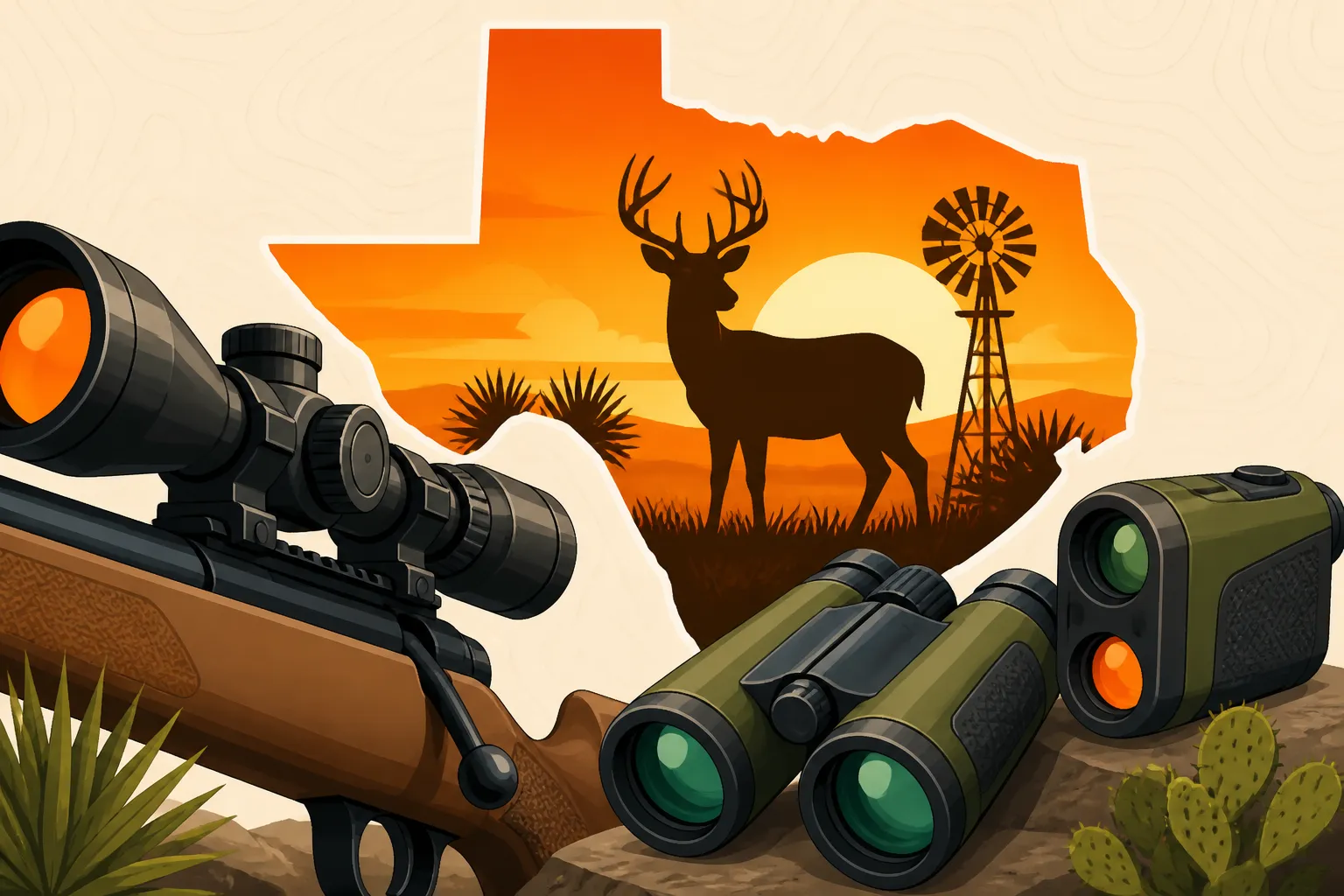
Best Hunting Optics for Texas: Scopes, Binos & Rangefinders
One of the most frustrating things about hunting in Texas is staring out across a vast expanse – whether it's the wide-open Panhandle plains, the dense South Texas brush, or the rugged Hill Country canyons – and knowing there's game out there, but you just can't quite make it out. Maybe it's a shadowy form under a mesquite, a flicker of movement on a distant ridge, or an antler tip barely visible in the heat mirage. Without the right optics, those fleeting moments turn into missed opportunities and endless "what ifs." This comprehensive guide is all about equipping you with the knowledge to choose the best hunting scopes, binoculars, and rangefinders so you can confidently identify, track, and make ethical shots in Texas' diverse and challenging hunting environments.
The Undeniable Importance of Quality Optics in Texas Hunting
Texas is enormous, and its hunting landscapes are just as diverse as its geography. From the vast, sprawling ranches of South Texas to the mountainous terrains of the Trans-Pecos, the dense forests of East Texas, and the rolling plains of the Panhandle, each region presents its own optical challenges. You're not just scanning a small woodlot; you're often surveying acres upon acres, sometimes miles, looking for subtle signs of game. This isn't just about spotting a deer; it's about discerning antler size, confirming sex, and making sure that animal is indeed the one you're permitted to harvest under specific regulations like the Texas antler restrictions: 13-inch rule and counties.
Imagine spending countless hours scouting, setting up feeders, and enduring the Texas heat, only to be limited by blurry glass or a scope that can't handle the intense sunlight. It’s a gut-wrenching feeling. Good optics aren't a luxury here; they're a necessity for effective and ethical hunting. They bridge the gap between "I think I saw something" and "I know exactly what that is and how far away it is." They transform an educated guess into a confident decision, which is crucial for making a clean shot and ensuring a quick, humane harvest. Without them, you're essentially hunting with one hand tied behind your back, relying on sheer luck more than skill and preparation.
Overcoming Texas' Unique Optical Challenges
The Texas environment is a beast when it comes to optics. The intense sunlight can create mirage that dances off the hot ground, making distant objects shimmer and distort. This isn't just annoying; it can make judging yardage or identifying a trophy buck nearly impossible. Then there's the dust, especially in drier regions, which can coat lenses if they're not properly sealed or maintained. And let's not forget the sheer distances involved, particularly in the Panhandle or Trans-Pecos where spotting game from miles away isn't uncommon.
High-quality optics are built to mitigate these issues. Superior lens coatings combat glare and enhance light transmission, cutting through some of that oppressive mirage. Robust construction with O-ring seals and nitrogen purging ensures your glass remains fog-proof and waterproof, protecting against the dust and the occasional sudden downpour. Furthermore, the advanced glass found in premium optics provides a sharper, clearer image with better contrast, allowing you to pick out details even in challenging conditions or low light. This clarity is paramount when you're trying to differentiate a legal buck from a spike at 300 yards.
Ethical Hunting and Target Identification
Beyond just seeing an animal, optics play a pivotal role in ethical hunting. You need to be absolutely certain of your target before you even think about pulling the trigger. This means identifying the species, sex, and often the specific antler criteria if you're hunting deer in counties with antler restrictions. A good pair of binoculars can save you from making a mistake that could cost you a fine, a tag, or worse, an unethical shot on an animal you didn't intend to harvest.
For example, when hunting white-tailed deer, being able to clearly see if a buck has an inside spread of at least 13 inches or if its main beam extends past its ear tip is critical in many Texas counties. You can't guess on these things. Similarly, when hunting exotic species like axis deer, you want to ensure you're targeting a mature animal if that's your goal. The last thing any hunter wants is to wound an animal due to poor target identification, leading to a long, arduous tracking job, or worse, a lost animal. Quality optics help eliminate that uncertainty, ensuring that when you decide to take a shot, it's an informed, ethical one.
Hunting Scopes: Choosing the Right Magnification and Features for Texas
Your rifle scope is arguably the most critical optical tool you'll carry in the field. It's the direct link between your eye and your target, and its performance can make or break a hunt. Texas hunting often involves shots at varying distances, from close-quarters encounters in dense brush to long-range opportunities across open fields. Selecting the right scope isn't about getting the most powerful magnification; it's about finding the sweet spot that offers versatility, clarity, and reliability under typical Texas conditions.
You want a scope that can handle the recoil of your chosen rifle caliber, withstand the bumps and scrapes of a pickup truck bed, and perform flawlessly in bright sun or fading twilight. The market is flooded with options, from budget-friendly models to high-end precision instruments. Understanding key features like magnification range, objective lens size, reticle type, and turret adjustments will guide you to a choice that truly enhances your effectiveness in the field.
Magnification Ranges for Diverse Texas Terrain
Texas' varied terrain dictates a flexible approach to scope magnification. You'll encounter everything from the thick, thorny scrub of South Texas, ideal for close-range shots on whitetail or hogs, to the wide-open vistas of West Texas where mule deer might be spotted at several hundred yards. This diversity means a "one-size-fits-all" approach to scope power often falls short.
For hunters primarily pursuing whitetails in the brush country or hogs in dense cover, a lower magnification range, something like 1-4x, 2-7x, or 3-9x, is often perfect. These scopes offer a wide field of view, making it easier to acquire a fast-moving target in thick vegetation. The lower end of the magnification is excellent for quick, close shots, while the higher end provides enough zoom for shots out to 150-200 yards. When you're in the dark confines of a ground blind or a box blind vs tripod vs ground blind, a wide field of view is a distinct advantage.
Conversely, if your hunts take you to the vast plains of the Panhandle or the rugged mountains of the Trans-Pecos, where long shots are more common for species like mule deer or aoudad sheep, you'll benefit from a scope with a higher top-end magnification, perhaps a 3-12x, 4-16x, or even 5-20x. These higher powers allow you to resolve distant targets with greater detail, crucial for precision at extended ranges. However, remember that higher magnification often comes with a narrower field of view and can amplify hand shake, so practice is essential.
Reticle Types and Turret Adjustments
The reticle (crosshairs) in your scope is how you aim, and different types offer various advantages. A basic duplex reticle is simple, clean, and effective for most hunting situations out to moderate ranges. For those looking to extend their effective range, a BDC (Bullet Drop Compensating) reticle or a Mil-Dot/MOA reticle offers holdover points that compensate for bullet drop at different distances. These can be incredibly useful when you're engaging game at 200, 300, or even 400 yards without having to dial in elevation. Many hunters find a simple BDC reticle sufficient for Texas deer hunting, as it offers a quick reference for common hunting distances.
Turret adjustments allow you to fine-tune your point of impact. Capped hunting turrets are generally preferred for their low profile and protection against accidental adjustments, making them ideal for carrying your rifle through brush. They are typically "set it and forget it" once sighted in. However, for long-range precision or dialing in for specific shot distances, exposed, tactical-style turrets with clear, audible clicks are invaluable. These allow for quick, repeatable adjustments to compensate for bullet drop and windage. If you plan on frequently shooting at varying long distances, particularly when spot-and-stalk hunting in Texas, scopes with precise, repeatable turrets are a game-changer. Just ensure they have a zero stop feature to prevent getting lost in your adjustments.
Binoculars: Essential for Scouting and Spotting in Vast Texas Landscapes
While a rifle scope is for the shot, binoculars are for the hunt. In the immense landscapes of Texas, a good pair of binoculars is your primary tool for scouting, locating game, and observing animal behavior long before you ever raise your rifle. They allow you to glass vast areas efficiently, saving you countless steps and minimizing your disturbance to the environment. Whether you're trying to pick out a bedded buck in the shadows or identify a distant group of hogs, binoculars are indispensable.
Many seasoned Texas hunters will tell you they spend far more time looking through their binoculars than their rifle scope. They are crucial for surveying food plots in Texas, checking game trails, and simply enjoying the wildlife. When considering binoculars, think about their optical clarity, magnification power, field of view, and durability – all factors that will directly impact your success and enjoyment in the Texas brush or open country.
Magnification and Objective Lens Size
Choosing the right magnification for your binoculars is a balance between power and practicality. For general hunting in Texas, binoculars in the 8x to 10x range are the most popular and versatile. An 8x magnification, often paired with a 42mm objective lens (8×42), offers a wide field of view, good brightness, and is relatively easy to hold steady. This is an excellent choice for hunting in the denser Hill Country or Post Oak Savannah, where you might be glassing areas from 50 to 300 yards.
For hunters who spend a lot of time glassing vast open areas, like the South Texas brush country or the West Texas plains, a 10x magnification (e.g., 10×42 or 10×50) provides that extra reach to resolve details at longer distances. However, a 10x binocular will have a slightly narrower field of view and will be harder to hold steady freehand, especially after a long day. If you opt for 10x, consider carrying a tripod adapter or a monopod for extended glassing sessions. For extremely long-range glassing, some hunters even go to 12x or 15x, but these almost always require a tripod for stable viewing. The "Best Binoculars for South Texas Brush" would often lean towards 10x due to the need to pick apart distant details in the dense, yet often expansive, cover.
Durability and Optical Quality for Field Use
Texas weather can be unpredictable, ranging from scorching heat to sudden thunderstorms, and everything in between. Your binoculars need to be tough enough to handle these extremes and the general abuse of being carried in the field. Look for models that are fully waterproof and fog-proof (often achieved through O-ring seals and nitrogen or argon purging). This ensures that humidity, rain, or a sudden drop in temperature won't compromise your view. The exterior armor should be rugged, offering a good grip and protection against drops and impacts. Many quality binoculars feature a durable rubberized coating that also helps dampen noise.
Optical quality is paramount. It's not just about magnification; it's about what you see through that magnification. Good glass with advanced multi-coatings will transmit more light, provide a brighter image, truer colors, and superior contrast. This is especially critical during the low-light periods of dawn and dusk when game is most active. Brands like Vortex, Leupold, and Zeiss are known for their excellent optical quality, providing crisp, clear images that help differentiate an antler from a branch or a hide from a shadow. It’s worth investing in the best glass you can afford, as it will significantly enhance your ability to identify game and ultimately improve your hunting experience.
Rangefinders: Pinpointing Distances for Ethical Shots
Once you've spotted your target and determined it's a shooter, the next critical piece of information you need is the exact distance. Guessing yardage is one of the quickest ways to make an unethical shot, especially with modern cartridges that have flatter trajectories. A laser rangefinder eliminates the guesswork, giving you precise distance measurements in seconds, allowing you to make accurate ballistic adjustments or use the correct holdover point on your reticle.
In Texas, where shot distances can vary wildly, from 30 yards to 400+ yards, a reliable rangefinder is non-negotiable for serious hunters. It instills confidence in your shot placement, reduces the chances of wounding an animal, and helps you stay within your effective shooting range.
Essential Features for Texas Terrain
When choosing a rangefinder for hunting in Texas, several features are particularly important. First, consider the maximum reflective range. While you might not often shoot deer at 1,000 yards, a rangefinder rated for longer distances typically performs better and more consistently at common hunting ranges (e.g., 50-500 yards) by providing faster, more reliable readings, even on less reflective targets like deer hides. Look for models that can range out to at least 800-1,000 yards on deer-sized objects.
Angle compensation is another critical feature. In the hilly or mountainous regions of Texas, such as the Hill Country or Trans-Pecos, shots are often taken at steep uphill or downhill angles. A conventional rangefinder will give you the line-of-sight distance, but gravity affects a bullet based on the horizontal distance. An angle-compensating rangefinder (often labeled as "ARC" or "True Ballistic Range") calculates the "shoot-to" distance, which is the actual horizontal distance the bullet will travel, significantly improving accuracy on angled shots. This feature is particularly helpful if you're hunting in rugged areas or plan on trying a drawn hunt in places like the Black Gap WMA.
Speed, Accuracy, and User Interface
In hunting, every second counts. A rangefinder that gives you a fast, consistent reading is crucial. Look for models with quick measurement times and the ability to scan, which allows you to hold down the button and get continuous readings as you pan across terrain or track an animal. This is incredibly useful when an animal is slowly moving or when you're trying to get a reading on multiple objects to get a sense of the landscape.
Accuracy is, of course, paramount. Most modern hunting rangefinders are accurate to within +/- 1 yard, which is more than sufficient for hunting purposes. However, some higher-end models offer even greater precision. The user interface should be intuitive, with clear displays that are easy to read in varying light conditions. Reticle choices within the rangefinder (e.g., crosshairs, circles) can also be a matter of personal preference. The display itself can be LED, LCD, or OLED. OLED displays are often brighter and clearer, especially in low light, though they can sometimes wash out in extremely bright conditions. For the "Best Rangefinder for Texas Hunting", models like the Vortex Crossfire HD or Leupold RX series are popular choices for their balance of features and value.
Optics for Specific Texas Game Animals
Texas is a hunter's paradise with a wide array of game species, each presenting unique challenges that can influence your optics choices. What works perfectly for a whitetail in the dense brush might not be ideal for a mule deer on the open plains or a hog at night. Understanding the typical environments and behaviors of these different animals will help you fine-tune your optical setup for maximum effectiveness.
Whitetail Deer Hunting in Diverse Habitats
White-tailed deer are the most popular game animal in Texas, found in almost every corner of the state, but their habitats vary significantly.
- South Texas Brush Country: Here, the deer live in incredibly dense, thorny vegetation. Shots are often close-range, quick, and through small shooting lanes. For scopes, a 1-4x or 2-7x variable with a wide field of view is excellent. You need to acquire targets fast. For binoculars, 8×42 is generally preferred for its wider field of view and stability. A rangefinder is still vital, as seemingly short distances can be deceptive in the thick brush, and you might need to confirm yardage before a deer disappears. This is where a good pair of "Best Binoculars for South Texas Brush" can truly shine.
- Texas Hill Country: The Hill Country offers a mix of open fields, cedar breaks, and rolling terrain. Here, a 3-9x or 3-12x scope is a fantastic all-around choice. It provides enough magnification for crossing fields but can be dialed down for closer shots in the cedars. 10×42 binoculars are highly effective for glassing hillsides and creek bottoms. A rangefinder with angle compensation is a huge asset due to the varied topography.
- East Texas Pineywoods: Similar to brush country, the Pineywoods can be dense, with shots often limited to clear-cuts or feeders. A lower power scope (2-7x, 3-9x) is generally sufficient. Binoculars in the 8×42 range help spot movement in the shadows.
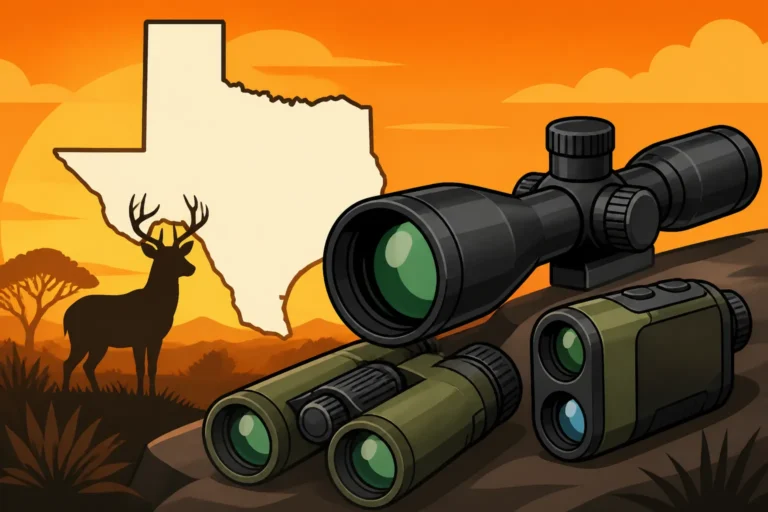
For general Deer Hunting in Texas: Feeders, Blinds & Tactics, a versatile 3-9×40 scope, 10×42 binoculars, and a reliable laser rangefinder will cover most scenarios.
Mule Deer and Pronghorn on Open Plains
Hunting mule deer in the Texas Panhandle or Trans-Pecos, or pronghorn on the open plains, is a completely different ballgame. This is long-range country, demanding optics that can perform at extended distances.
- Mule Deer: These animals often hold in coulees and draws, but when spotted, they might be hundreds of yards away. A scope with higher magnification, like a 4-16x or 5-20x, and precise, repeatable turrets is highly recommended. You'll spend a lot of time glassing, so high-quality 10×42 or even 12×50 binoculars are essential, often used with a tripod for stability. A rangefinder with a long reflective range and angle compensation is critical for those distant, angled shots. When learning How to Hunt Mule Deer in the Panhandle, you'll quickly discover the value of these long-range tools.
- Pronghorn: Pronghorn hunting is almost exclusively long-range. They have incredible eyesight and are rarely found close. A 4-16x or 5-20x scope is a must, coupled with top-tier 10x or 12x binoculars on a tripod. Accuracy at distance is key, so a high-performance rangefinder capable of ranging beyond 1,000 yards on reflective targets is a wise investment. The open country also means mirage can be a significant factor, making premium glass even more important.
Feral Hogs and Exotic Game
Feral hogs are abundant across Texas and can be hunted year-round, often at night. Exotic species like axis deer, aoudad, and blackbuck are also popular targets, often found on high-fence ranches but also free-ranging in certain areas.
- Feral Hogs: For daytime hog hunting, the same optics you'd use for whitetail are generally sufficient. However, Hog Hunting Methods in Texas: Thermal, Night & Trapping often involves specialized optics. Thermal scopes and thermal monoculars are incredibly effective for spotting and shooting hogs in the dark. They detect heat signatures, allowing you to see animals that would be invisible to the naked eye or even traditional night vision. If you're hunting hogs over feeders or in fields at night, a thermal optic can be a game-changer. For rifle scopes, a 1-6x or 2-10x with illuminated reticle works well with thermal or night vision clip-ons, or as a standalone for daytime use.
- Exotic Game (Axis, Aoudad, Blackbuck): Hunting exotics can range from close-up shots on a feeder to long-range spot-and-stalk adventures. For free-range axis deer, which are often found in the Hill Country and South Texas, a versatile 3-9x or 3-12x scope is great. For aoudad sheep in the rugged Trans-Pecos, long-range capabilities similar to mule deer hunting (higher magnification scopes, powerful binoculars on a tripod, and advanced rangefinders) are essential. Aoudad Sheep Hunting in Texas often means tough terrain and distant shots. Many exotic hunts occur on private ranches where conditions can vary, so adaptability in your optics is key. When preparing for an Axis Deer Hunting in Texas (Free-Range vs High-Fence) adventure, ensure your rangefinder has excellent reflective capabilities for their often-brown hides.
Maintaining Your Optics in the Harsh Texas Environment
Texas can be brutal on hunting gear, and optics are no exception. The extreme heat, dust, humidity, and occasional downpours can quickly degrade performance or even damage your expensive glass if not properly cared for. Investing in quality optics is only half the battle; proper maintenance is crucial to ensure they last and perform flawlessly season after season. Don't let a blurry lens or a fogged scope ruin a hard-earned hunting opportunity.
Cleaning and Storage Best Practices
Dust is an ever-present enemy in many parts of Texas. Never wipe a dusty lens with a dry cloth, as this can scratch the delicate coatings. Always start by using a soft brush (like a retractable lens brush) or a can of compressed air to gently remove loose particles. Follow up with a specialized lens cleaning solution and a clean microfiber cloth, wiping in a circular motion from the center outwards. Avoid using harsh chemicals or paper towels, which can damage coatings. You can find lens cleaning kits from brands like Zeiss or Vortex that contain everything you need.
When not in use, store your optics in a protective case or cover to shield them from dust and impact. If your optics get wet, wipe them dry thoroughly before storing them. If they become heavily soiled or submerged, check your manufacturer's warranty and consider sending them in for professional cleaning and inspection. For example, the GoHunt app can help you plan your trips, and knowing your gear is ready to go when you hit the field is a big part of that preparation.
Protecting Against Heat and Humidity
The Texas sun can be relentless, with temperatures soaring well into the triple digits. Prolonged exposure to extreme heat can potentially damage the internal components or seals of your optics. Avoid leaving your rifle scope or binoculars in direct sunlight for extended periods, especially inside a hot vehicle. If you're in a blind, try to keep your optics shaded when not in use.
Humidity, particularly in East Texas or along the Gulf Coast, can lead to internal fogging if your optics aren't properly sealed and purged with nitrogen or argon. While high-quality optics are designed to be fog-proof, dramatic temperature changes can sometimes test their limits. If internal fogging occurs, let the optic slowly acclimate to ambient temperature, usually in a dry environment. Never try to disassemble a sealed optic yourself, as this will void the warranty and likely introduce more problems. Regular checks of external seals and caps can help ensure integrity.
Dealing with Mirages and Glare
While cleaning and proper storage are about physical protection, managing mirage and glare is about optimizing performance in the field. Mirages, caused by heat rising from the ground, can be incredibly frustrating for long-range shooters. While you can't eliminate mirage, you can mitigate its effects. Using a lower magnification can sometimes reduce the visible distortion. Waiting for cooler temperatures (early morning or late evening) or for conditions with less direct sunlight can also help.
Glare, caused by direct sunlight hitting your objective lens, can wash out your image. Many scopes come with a threaded objective housing that accepts a sunshade. A simple sunshade can significantly reduce glare, especially when shooting from a low angle or towards the sun. You can also use a baseball cap or your hand to shade the objective lens. Anti-reflective coatings on your lenses also play a huge role here, which is why investing in quality glass is so important.
Budgeting for Quality Optics: What to Expect
Let's be real: quality hunting optics can be a significant investment. It's easy to get overwhelmed by the price tags, but understanding where your money goes and what kind of performance you can expect at different price points will help you make an informed decision without breaking the bank. There's a sweet spot for every budget, and it's about finding the best value for your specific hunting needs in Texas.
Entry-Level Options (Under $500)
At the entry-level, you can find functional scopes, binoculars, and rangefinders that will get the job done for basic hunting scenarios. For scopes, brands like Bushnell, Nikon, and some lower-end Leupold or Vortex models offer reliable performance within this price range. You can expect decent optical clarity, simple reticles, and reasonable durability. These are perfectly adequate for shots out to 200-250 yards on typical whitetail. You can often find a good 3-9×40 scope for under $300.
For binoculars, 8×42 or 10×42 models from the same brands are available. They will provide clear enough images for spotting game at moderate distances, though edge-to-edge clarity and low-light performance might not match higher-end options. Expect a maximum effective ranging distance of 400-600 yards for rangefinders, typically on reflective targets. This price point is an excellent starting point for new hunters or those on a tight budget who primarily hunt in less demanding environments. Many hunters start here and upgrade as their skills and needs evolve.
Mid-Range Performance ($500 – $1,500)
This is often the sweet spot for many serious Texas hunters, offering a significant jump in optical quality, features, and durability without reaching astronomical prices. In this category, you'll find brands like Vortex (Viper, Razor HD series), Leupold (VX-3i, VX-5HD), Meopta, and higher-end Bushnell or Nikon.
- Scopes: You'll see much improved glass, better light transmission, more precise and repeatable turret adjustments (often with zero stops), and a wider array of reticle options. Scopes like a Vortex Viper PST Gen II or a Leupold VX-5HD offer excellent versatility for both close and long-range hunting, capable of extending your ethical shot range to 400-600 yards with practice. For Best Rifle Scope for Texas Deer Hunting, many popular choices fall into this range.
- Binoculars: Mid-range binoculars boast superior lens coatings, brighter images, better edge-to-edge clarity, and more rugged construction. They perform significantly better in low light, which is crucial for those prime hunting hours. Expect excellent waterproof and fog-proof performance.
- Rangefinders: Rangefinders in this segment offer faster readings, more reliable ranging on non-reflective targets (like deer hides), and typically include angle compensation and sometimes basic ballistic calculations. You can confidently range beyond 800-1,000 yards.
This range provides a fantastic balance of performance and value, suitable for hunting almost all Texas game in diverse conditions.
High-End Precision ($1,500+)
Once you cross the $1,500 threshold, you're looking at top-tier optics from renowned manufacturers like Zeiss, Swarovski, Leica, Nightforce, and high-end Vortex (Razor HD, UHD). These are instruments built for extreme precision, unparalleled optical clarity, and ultimate durability.
- Scopes: Expect perfect edge-to-edge clarity, virtually no chromatic aberration, superior light transmission that truly extends your shooting hours, bomb-proof construction, and ultra-precise turrets that track perfectly. These scopes are designed for extreme long-range shooting and competition, making them overkill for many Texas hunting scenarios but invaluable for specific pursuits like Mule Deer Hunting in Texas: Panhandle & Trans-Pecos or extreme long-range predator hunting.
- Binoculars: The difference in high-end binoculars is often most noticeable in low-light performance and the sheer resolution of detail at long distances. They are incredibly bright, sharp, and offer ergonomic designs for extended glassing without fatigue. When planning a hunt, using tools like GoHunt to scout areas can highlight where these high-end optics truly excel.
- Rangefinders: Top-tier rangefinders offer consistent, lightning-fast readings out to incredible distances (2,000+ yards), advanced ballistic calculators integrated into the unit, and sometimes even environmental sensors.
While certainly a significant investment, these optics represent the pinnacle of performance and reliability, offering a lifetime of service and the absolute best view of your hunting world.
Texas-Specific Optics Considerations and Recommendations
Texas hunting presents a unique set of challenges that really put your optics to the test. Beyond just magnification and clarity, think about how specific conditions like dense brush, open fields, intense heat, and unique game laws influence your gear. It’s not just about what looks good on paper; it’s about what performs best when you’re out there, miles from the truck, with a trophy on the line. Getting the right setup can make all the difference, helping you confidently identify and harvest game while staying within regulations.
Best Optics for South Texas Brush Country
The South Texas brush country is legendary for its trophy whitetail, but it’s a tough place to hunt. The dense, thorny vegetation means visibility can be limited to small shooting lanes, and deer can appear and disappear in a flash.
- Rifle Scope: You need a scope that offers a wide field of view on the low end and enough magnification for the occasional longer shot across a sender or food plot. A 2-7×33, 3-9×40, or even a 1-6×24 scope with an illuminated reticle is fantastic. The wide field of view allows for quick target acquisition, and the lower magnification is perfect for the close-quarters action you often encounter. The illuminated reticle helps immensely in the shadows of the brush or during low light. Consider a scope with durable, capped turrets to avoid accidental adjustments while moving through thick cover.
- Binoculars: For South Texas Trophy Whitetail: Brush Country Bucks, an 8×42 binocular is often the go-to. It provides a generous field of view and is easier to hold steady for extended periods of glassing the intricate patterns of the brush. While 10x might seem appealing for detail, the narrower field of view can make it harder to quickly scan and locate game. Optical clarity is crucial here to pick out the subtle details of antlers amongst the mesquite and prickly pear.
- Rangefinder: Even in thick brush, knowing your exact distance is vital. A compact, fast-reading rangefinder capable of 600-800 yards on deer is perfect. Angle compensation might not be as critical as in the Hill Country, but it’s always a good feature to have.
Optics for Open Country and Western Texas
When you head west of I-35 or into the Panhandle, the landscape opens up dramatically. Here, long-range glassing and shooting are the norm, and the mirage from the heat can be a constant challenge.
- Rifle Scope: For Mule Deer Hunting in Texas (Step by Step) or pronghorn, you'll want a scope with a higher magnification range, typically 4-16x, 4-20x, or even 5-25x. Coupled with a larger objective lens (44mm-50mm) for better light gathering, these scopes allow you to confidently take shots out to 400+ yards. Precise, repeatable exposed turrets with a zero stop are highly beneficial for dialing in exact yardage. Look for scopes with good anti-reflective coatings to combat glare and mirage.
- Binoculars: This is where powerful binoculars truly shine. A 10×42 or 12×50 binocular is standard, and many serious hunters will opt for 15x or even 20x binoculars, often mounted on a tripod. Tripod glassing is a game-changer for scanning vast areas for extended periods without fatigue, allowing you to pick apart distant hillsides and plains. A quality tripod and a solid binocular adapter are just as important as the binoculars themselves.
- Rangefinder: A long-range rangefinder capable of ranging out to 1,000 yards or more on deer-sized targets is essential. Look for models with advanced angle compensation and fast, consistent readings. Some long-range rangefinders also integrate ballistic solutions, which can be incredibly helpful in this environment.
Night Hunting Optics for Hogs and Predators
Night hunting, particularly for feral hogs and predators like coyotes, is incredibly popular and effective in Texas, especially with the use of thermal and night vision technology.
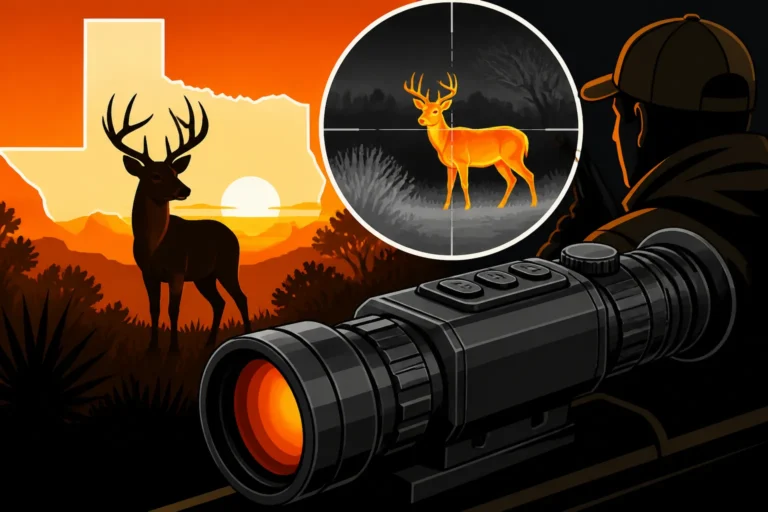
- Thermal Scopes: Thermal optics detect heat signatures, allowing you to see animals in complete darkness, through fog, smoke, or light brush. Brands like Pulsar, AGM, and ATN offer excellent thermal rifle scopes that can be mounted directly onto your rifle. They are a significant investment, but they are unmatched for nighttime target detection and engagement. Consider models with good resolution and refresh rates for a clear, smooth image. When asking "Is Thermal Hunting Legal in Texas?" the answer is generally yes for hogs and predators, making these tools invaluable.
- Thermal Monoculars/Binoculars: These are essential for scanning and spotting before engaging. A thermal monocular allows you to quickly scan large areas to locate heat signatures, then switch to your thermal rifle scope for the shot. This conserves battery on your rifle optic and gives you a broader situational awareness.
- Night Vision Scopes: While thermal is dominant for hogs, traditional night vision (Gen 2 or 3) can also be used. Night vision amplifies ambient light (starlight, moonlight), making objects visible. While generally cheaper than thermal, it doesn't perform as well in absolute darkness or through thick cover. Digital night vision offers more features like recording but requires an IR illuminator for best performance.
General Recommendations for Texas
Regardless of your specific hunt, here are some general recommendations:
- Durability: Opt for optics that are waterproof, fog-proof, and shockproof. Texas weather and terrain are tough.
- Lens Coatings: Good multi-coatings on all air-to-glass surfaces significantly improve light transmission, clarity, and color fidelity, especially important during low light.
- Ergonomics: Choose optics that feel comfortable in your hands, with easily accessible controls. You'll be using them a lot.
- Accessories: Don't forget lens covers, a quality neck strap or harness for binoculars, and a protective case for your rifle scope when transporting your firearm.
By carefully considering your hunting environment and target species, and investing wisely in quality optics, you'll significantly enhance your chances of a successful and ethical hunt in the vast and beautiful state of Texas. Using resources like the GoHunt app for scouting and planning helps you ensure your optics are aligned with your hunting strategy.
Table: Recommended Optics by Texas Hunting Scenario
To help you visualize the ideal optical setup for different Texas hunting experiences, here's a handy guide.
| Hunting Scenario | Best Rifle Scope | Recommended Binoculars | Essential Rangefinder | Key Considerations |
|---|---|---|---|---|
| South Texas Brush Whitetail | 1-6×24, 2-7×33, 3-9×40 | 8×42 | Compact (600-800yd) | Wide field of view, quick target acquisition, good low light for dense cover. |
| Hill Country Whitetail | 3-9×40, 3-12×44 | 10×42 | Angle Compensating | Versatility for mixed terrain, angle comp for elevation changes. |
| West Texas Mule Deer/Pronghorn | 4-16×50, 5-25×50/56 | 10×42, 12×50 (Tripod) | Long Range (1000yd+ ARC) | High magnification, clear glass for long distances, tripod for stability, precise rangefinding with angle comp. |
| Daytime Hog Hunting | 2-7×33, 3-9×40, 1-6×24 | 8×42, 10×42 | Standard (600-800yd) | Similar to whitetail, quick shots possible; can be paired with thermal monocular for scouting. |
| Nighttime Hog Hunting | Thermal Scope (Pulsar, AGM) | Thermal Monocular | N/A (integrated into thermal) | Absolute darkness capability, heat signature detection, high refresh rate for moving targets. |
| Free-Range Exotics (Axis) | 3-9×40, 3-12×44 | 10×42 | Angle Compensating | Similar to whitetail/mule deer depending on terrain; good glass for identification. |
| Aoudad Sheep (Trans-Pecos) | 5-25×50/56 (Target Turrets) | 15×56 (Tripod), Spotting Scope | Long Range (1500yd+ ARC) | Extreme magnification, rugged build, precision rangefinding, spotting scope for long-range identification on mountains. |
Disclaimer
The information provided in this guide is for general informational purposes only and does not constitute legal advice. Hunting regulations in Texas are subject to change and vary by county, species, and season. Always consult the most current Texas Parks and Wildlife Department (TPWD) Outdoor Annual or their official website before any hunting activity to ensure compliance with all applicable laws and regulations. The author and publisher are not responsible for any actions taken based on the information presented herein.