Best Rangefinder for Texas Hunting
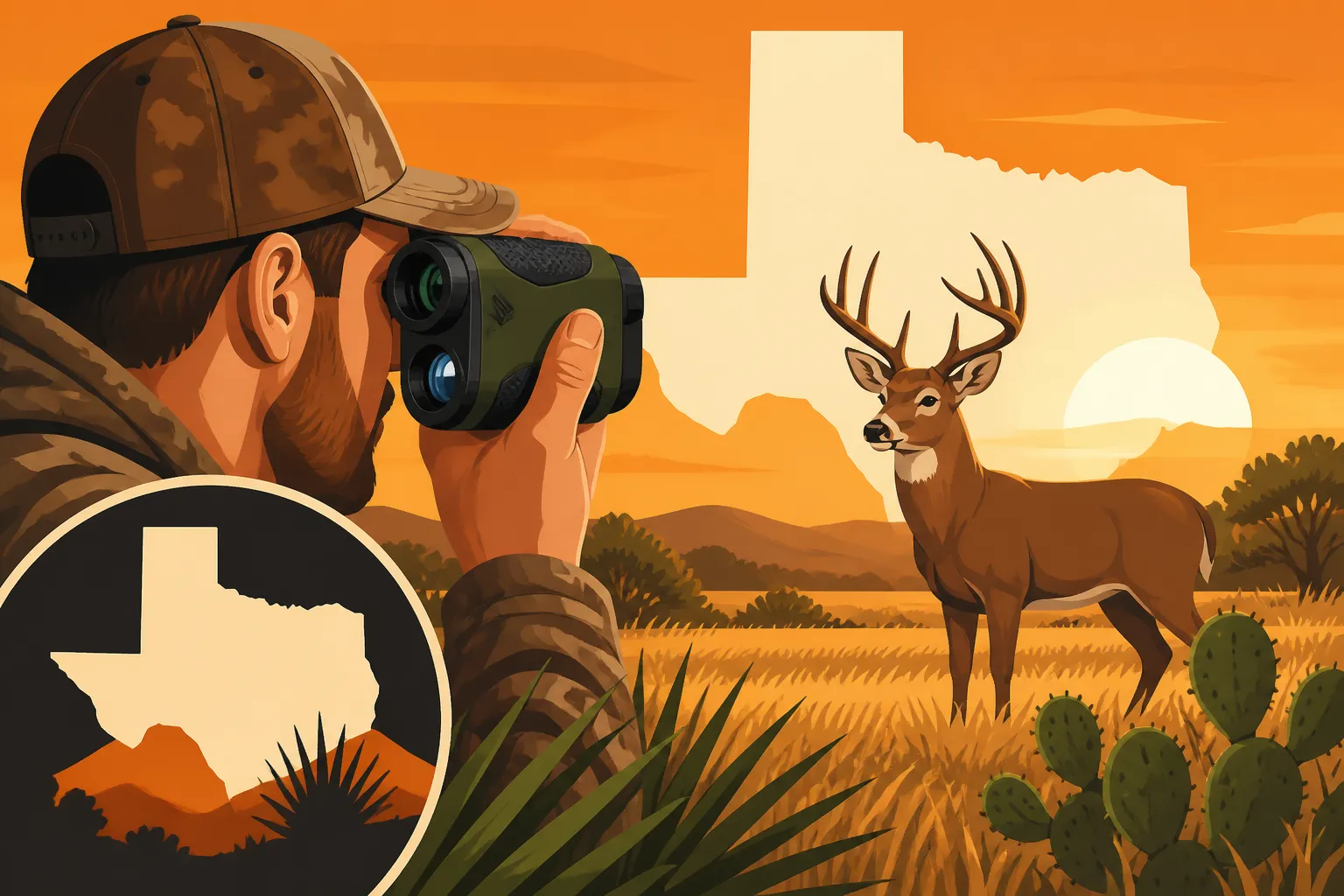
Trying to judge distances in the vast, open plains or the dense brush country of Texas can be a real headache, leading to missed shots or, worse, unethical ones. Whether you're chasing whitetail through the Hill Country or glassing for mule deer in the Trans-Pecos, a reliable rangefinder isn't just a luxury—it's an absolute necessity. This guide is going to walk you through everything you need to know to pick the best rangefinder for your specific Texas hunting adventures, ensuring you're always confident in your shot placement.
Why a Rangefinder is an Essential Tool for Texas Hunters
Let's be honest, we've all been there. You're sitting in your blind, a magnificent buck steps out, and your heart starts pounding. You think, "Is that 150 yards? Or 200?" That split-second uncertainty can cost you a clean shot or even lead to a missed opportunity entirely. Texas hunting presents such a diverse range of environments and shot opportunities that relying solely on your eye is a gamble you don't want to take. A good rangefinder takes the guesswork out of the equation, giving you rock-solid data for every scenario.
Eliminating Guesswork and Ensuring Ethical Shots
One of the most profound benefits of carrying a quality rangefinder is the ability to make consistently ethical shots. There’s nothing worse than wounding an animal due to misjudging distance. In the thick South Texas brush, a deer that looks like it's 75 yards away might actually be 100, and that 25-yard difference can significantly alter your bullet's trajectory or arrow's drop. Conversely, in the wide-open spaces of the Panhandle or Trans-Pecos, a pronghorn might appear much closer than its actual 300+ yards.
For rifle hunters, knowing the exact distance allows you to use your ballistic data and adjust your holdover or dial your scope precisely. For bowhunters, it's even more critical, as arrow drop is far more pronounced over shorter distances. Imagine being in a ground blind targeting a hog over a feeder. If you think it's 30 yards but it's really 40, your arrow could easily sail over its back or hit low, causing an unfortunate wound. A rangefinder removes this doubt, helping you place your shot exactly where it needs to go for a quick, humane harvest. It's about respecting the animal and making sure your hunt is as responsible as possible.
Adapting to Diverse Texas Landscapes and Game
Texas is a massive state, and its hunting landscapes are as varied as its wildlife. You might be still-hunting whitetail in the dense Cross Timbers, sitting over a food plot in the Post Oak Savannah, or trying to pattern deer with trail cameras around a feeder. Each of these scenarios presents unique challenges for judging distance.
Consider the contrast: bowhunting whitetail in the Hill Country often involves shots under 40 yards, sometimes even from a precarious treestand. Here, precision at close range and angle compensation are paramount. Now, think about hunting mule deer in the Glass Mountains of the Trans-Pecos, where a shot could easily be 400 yards or more across an open canyon. The same rangefinder might technically "range" both distances, but its features for optical clarity, maximum range, and angle compensation become dramatically more important as the distances stretch. Exotic hunting in Texas, whether it's an axis deer in the brush or an aoudad sheep on a remote mountainside, often demands similar long-range capabilities and rugged reliability. Having a tool that can seamlessly transition from a quick 20-yard bow shot to a calculated 600-yard rifle shot is invaluable and ensures you're prepared for whatever the Texas wild throws your way.
Key Features to Prioritize in a Texas Hunting Rangefinder
When you start looking at rangefinders, the options can feel overwhelming. There are so many brands, models, and acronyms thrown around that it's tough to know what truly matters for hunting in Texas. From maximum range claims to optical coatings, it’s easy to get lost in the specs. But after years in the field, I’ve found that a few core features really make a difference, especially given the unique demands of our state's diverse hunting environments.
Range and Accuracy: Reaching Across Texas
This might seem obvious, but the stated maximum range of a rangefinder is often based on highly reflective targets under ideal conditions. What you really need to focus on is its effective range on a non-reflective target, like a deer or a hog. For most rifle hunting scenarios in Texas, especially for species like whitetail or hogs, a rangefinder that can consistently and accurately range out to 600-800 yards on an animal is a solid baseline. If you're planning on long-range shooting for mule deer in the rugged Trans-Pecos or spotting and stalking aoudad, you'll want something that pushes beyond 1,000 yards, perhaps even 1,500 yards, to give you ample opportunity to range surrounding terrain and plan your approach.
For bowhunters, while the maximum range might seem less critical, accuracy at closer distances (20-80 yards) is absolutely paramount. Even a yard or two off can mean the difference between a perfect shot and a clean miss with an arrow. Look for models with a high degree of precision, often stated as +/- 0.5 or 1 yard, especially in that critical archery zone. Remember, consistent performance across varying light conditions and target types is far more important than a mythical "max range" number you'll rarely hit in the field.
Optical Quality and Display Clarity in Harsh Sunlight
Texas weather means a lot of sun, and that relentless glare can wreak havoc on cheap optics. A rangefinder is only as good as its ability to help you clearly see your target and the displayed information. Look for good magnification, typically 6x or 7x, which offers a stable image without being too shaky for quick ranging. More importantly, pay attention to the quality of the glass and coatings. Fully multi-coated lenses improve light transmission, reduce glare, and provide a brighter, clearer image, which is crucial when ranging in low light at dawn or dusk, or when the sun is directly overhead.
The display itself is another critical factor. Many entry-level models use a black LCD display which can be nearly impossible to read against a dark background or in fading light. Red OLED or LED displays offer superior visibility in all lighting conditions and often come with adjustable brightness settings, allowing you to fine-tune it to the exact conditions you're facing. Some models even offer customizable reticle options, letting you choose the aiming point that works best for your eyes. Being able to quickly acquire your target and read the distance without squinting or repositioning is vital when that trophy animal finally steps out.
Angle Compensation and Scan Modes for Real-World Scenarios
Very rarely do we take perfectly flat shots in the field. Whether you're hunting in the rolling hills of the Edwards Plateau or shooting down from a high box blind overlooking a ravine, angles come into play. Angle compensating technology, often called "Angle Range Compensation" (ARC) or similar, calculates the "shoots-like" or horizontal equivalent distance, which is what your bullet or arrow trajectory actually responds to. This feature is non-negotiable for bowhunters, as even slight inclines or declines dramatically affect arrow drop. For rifle hunters, it becomes increasingly important on steeper angles and longer distances. Many advanced rangefinders offer specific "Bow" and "Rifle" modes, sometimes even with built-in ballistic groups, to provide even more precise information.
The "Scan" mode is another unsung hero. Instead of just a single, static reading, scan mode allows you to continuously range multiple targets or track a moving animal simply by panning the rangefinder across the landscape. This is incredibly useful for ranging several deer in a group, getting a feel for the terrain, or quickly updating your distance as an animal walks. Some higher-end models include "Last Target Priority" or "Brush Mode" features, which help filter out obstructions like brush or tall grass in the foreground and ensure you're ranging the intended target, not the obstacle in front of it. These seemingly small features make a massive difference in the efficiency and reliability of your rangefinder when you're under pressure.
Durability and Ergonomics for Rugged Texas Adventures
Texas hunting can be tough on gear. From scorching summer days during dove season to unexpected winter cold fronts, and everything in between like dust, mud, and rain, your rangefinder needs to be built like a tank. Look for a unit that is advertised as waterproof and fog-proof. An IPX7 rating for waterproofing means it can be submerged for a short period, which is excellent peace of mind if you accidentally drop it in a puddle or get caught in a sudden downpour. Fog-proofing, often achieved by nitrogen purging, prevents internal lenses from fogging up during rapid temperature changes, like moving from a warm truck cabin to the cold morning air.
Ergonomics are equally important. A rangefinder should fit comfortably in your hand, be easy to operate with one hand, and have controls that are intuitive even when wearing gloves. Rubber armor not only provides a better grip but also adds an extra layer of protection against bumps and drops. Consider the size and weight as well. If you're packing light for a Spot-and-Stalk Aoudad in West Texas hunt, every ounce counts. Some rangefinders come with convenient lanyard loops or integrated clip systems, making them easy to secure to your bino harness or pack for quick access. A rangefinder that feels good in your hand and can withstand the elements will be a trusted companion for years to come.
Navigating the Types of Rangefinders for Texas Applications
Just like there isn't one perfect rifle for every hunting situation, there isn't one universal "best" rangefinder. The market offers a few distinct types, each with its own advantages and ideal applications. Understanding these differences can help you narrow down your choices and pick the tool that truly complements your hunting style and the specific challenges of Texas terrain.
Laser Rangefinders: The Gold Standard for Precision
When most hunters think of a rangefinder, they're picturing a dedicated handheld laser rangefinder. These compact devices are designed specifically for one job: sending out a laser pulse, measuring the time it takes to return, and calculating the distance to your target. They are incredibly precise, often giving readings to within a yard or even half a yard, which is crucial for making ethical shots. The beauty of a standalone laser rangefinder is its simplicity and speed. You can quickly pull it out, range your target, and put it away, minimizing movement and disturbance.
Modern laser rangefinders have come a long way. Many now feature advanced angle compensation, high-quality optics, and customizable display reticles. They are generally the most cost-effective way to get reliable distance readings. However, they are a separate piece of gear, meaning one more item to carry and potentially lose. They also require you to take your eyes off your target through your primary optics (scope or binoculars) to range, which can sometimes be a disadvantage if an animal is on the move. Despite these minor drawbacks, for most Texas hunters, a dedicated laser rangefinder is an indispensable and highly effective tool, offering unmatched precision and ease of use in a compact package.
Rangefinding Binoculars: Combining Two Essential Tools
For hunters who value efficiency and want to streamline their gear, rangefinding binoculars are an incredibly attractive option. These units integrate a laser rangefinder directly into a pair of high-quality binoculars, eliminating the need to carry both. Imagine glassing a herd of axis deer in South Texas; with a rangefinding binocular, you can simply press a button, and the distance to the animal you're looking at appears right in your field of view. This seamless transition from observation to ranging saves valuable time and minimizes movement, which can be critical when stalking wary game.
The primary advantages are obvious: less gear, quicker target acquisition, and often, superior optical quality compared to standalone rangefinders. Many premium rangefinding binoculars, such as those from Leica or Zeiss, offer world-class glass, rivaling dedicated hunting binoculars. This makes them fantastic for spotting game from long distances, which is common when hunting Mule Deer in Texas: Panhandle & Trans-Pecos or scanning vast fields for dove. The downsides, however, are their increased cost and weight compared to a standalone unit. They are often heavier and bulkier than traditional binoculars, and if one component fails, you've lost both your binos and your rangefinder. But for those who can justify the investment, the convenience and performance of rangefinding binoculars in the diverse Texas landscapes are hard to beat.
Rangefinding Rifle Scopes: Integrated Solutions for Long Shots
A more specialized, but increasingly popular, option is the rangefinding rifle scope. These scopes have a laser rangefinder built directly into the optic itself. The concept is simple: look through your scope, press a button, and the distance to your crosshairs is displayed right there. Some advanced models even automatically calculate and display the precise holdover or adjust the reticle for you, making them incredibly intuitive for long-range shooting. This technology is particularly appealing for hunters who focus on extended shots, like those pursuing How to Hunt Pronghorn Antelope on the Texas Plains or specific exotic species at distance.
The benefits are clear: maximum speed and efficiency. You never have to take your eyes off the target or shift your aiming position. This integrated approach can significantly reduce the time from target acquisition to shot, which is crucial for fleeting opportunities. However, these are highly specialized and often quite expensive optics. If you hunt with multiple rifles, you'd need a separate rangefinding scope for each, or be constantly swapping them, which isn't practical. They also add considerable weight and bulk to your rifle. Moreover, the rangefinder component is limited to functioning only when looking through the scope, meaning it's not useful for general scouting or ranging objects without pointing your rifle at them. For the dedicated long-range shooter, or those focused on a single rifle setup for specific types of hunting, a rangefinding scope offers an unparalleled, integrated solution.
Recommended Rangefinders for Different Texas Hunting Styles
The vastness of Texas means there's no single "best" rangefinder for everyone. What works perfectly for a bowhunter in a pineywoods ground blind might be completely inadequate for a rifle hunter chasing pronghorn in the Panhandle. It all comes down to balancing features, performance, and budget with your specific hunting style and the game you pursue. Let's break down some common categories and what to look for.
Budget-Friendly Options That Don't Skimp on Performance
You don't need to break the bank to get a reliable rangefinder that will serve you well in Texas. For many hunters, especially those just starting out or primarily hunting over feeders and in more contained brush, there are excellent options under $250. These rangefinders might not boast the absolute longest ranges or the brightest OLED displays, but they provide critical accuracy where it counts.
When looking at budget-friendly models, prioritize consistent performance on deer-sized targets out to 300-400 yards. This is usually sufficient for most How to Hunt White-Tailed Deer in Texas (Step by Step) scenarios, especially if you're hunting typical lease land with well-placed blinds. Brands like Bushnell, Vortex, and Sig Sauer often offer solid entry-level units. For instance, a Bushnell Engage 1700 or a Vortex Crossfire HD can give you angle compensation (essential for those Hill Country shots) and respectable clarity for the price point. You might find a simpler LCD display (black numbers) that can be hard to read in low light, but with good technique, you can overcome this. These rangefinders are perfect for getting precise readings for those vital 50-200 yard shots and are robust enough to handle the general wear and tear of a Texas hunting season. They're also great for a beginner who wants to ensure ethical shots without a huge upfront investment.
Mid-Tier Workhorses: Balancing Features and Cost
For many experienced Texas hunters, the sweet spot lies in the mid-tier rangefinders, typically priced between $250 and $500. These models strike an excellent balance between advanced features, optical quality, and affordability. Here, you'll start seeing significant improvements in optical clarity, brighter red OLED displays, longer effective ranges on non-reflective targets (often 600-900 yards on deer), and more refined angle compensation systems.
Rangefinders in this category, like the Leupold RX-1400i TBR/A or the Sig Sauer KILO1600 BDX, often include advanced ballistic calculations (TBR for Leupold, BDX for Sig Sauer) that can give you holdover points for your specific rifle and ammunition. This is incredibly valuable whether you're making a calculated shot on a Hill Country buck or dialing in for a longer shot on an unsuspecting hog. They typically feature faster processors for quick readings and more robust scan modes, making them ideal for everything from Hog Hunting Methods in Texas: Thermal, Night & Trapping at distance to scanning multiple animals in a field. The improved optics and display make ranging easier and more reliable in challenging light conditions, ensuring you're confident in your shot, no matter the time of day. These workhorses are designed to be reliable, versatile, and provide a significant upgrade in performance without venturing into the ultra-premium price points.
Premium Picks for the Discerning Texas Hunter
When you demand the absolute best in optics, extreme range, and advanced ballistic integration, the premium rangefinder market delivers. These units, often costing $500 to well over $1,000, are built for the most demanding Texas hunting scenarios, from long-range precision shooting to guiding complex backcountry stalks. Brands like Leica, Zeiss, Swarovski, and the top-tier models from Vortex and Sig Sauer dominate this space.
With a premium rangefinder, you're getting world-class optical clarity, often rivaling high-end binoculars, allowing you to see your target with incredible detail even at extreme distances. They feature lightning-fast processors, incredibly bright and customizable OLED displays, and effective ranging capabilities on non-reflective targets well beyond 1,000 yards, sometimes even pushing 2,000. Many of these rangefinders integrate advanced environmental sensors (temperature, barometric pressure, incline) and sophisticated ballistic solvers to provide highly precise firing solutions. For example, some models can connect via Bluetooth to a smartphone app, like GoHunt, to pull in detailed ballistic profiles for your specific rifle and ammunition, giving you not just the distance, but the exact holdover or turret clicks needed for the shot. This kind of integration is invaluable for anyone undertaking demanding hunts like Spot-and-Stalk Hunting in Texas (Exotics & Mule Deer) or How to Hunt Aoudad Sheep in Texas, where every yard and every environmental factor can impact your shot. If you're looking for the pinnacle of performance and precision, a premium rangefinder is an investment that truly elevates your hunting game.
Mastering Your Rangefinder in the Texas Wild
Owning a rangefinder is one thing; effectively using it in the dynamic environment of a Texas hunt is another. It's not just about pushing a button and getting a number; it's about understanding how to get the most consistent and reliable readings, even when conditions are less than ideal. Just like knowing when to rattle for bucks in South Texas, knowing how to master your rangefinder takes practice and understanding.
Best Practices for Consistent Ranging
The first rule of consistent ranging is stability. A slight wobble can send your laser pulse off-target, giving you a false reading. When possible, brace yourself against a tree, a fence post, your blind, or even use shooting sticks or a tripod. Many rangefinders have a tripod adapter for enhanced stability, which is invaluable for long-range ranging. When still hunting or stalking, always try to range key landmarks as you move. Knowing the exact distance to that oak tree, that brush line, or that rock outcropping beforehand means you're not fumbling with your rangefinder when an animal suddenly appears.
Another critical best practice is to range multiple times and confirm. If you get a wildly different reading on a second attempt, or if it just doesn't "feel" right, range again. The GoHunt app, for example, allows you to mark waypoints and distances on a map during your scouting trips. This pre-ranging information can be a fantastic way to double-check your live rangefinder readings when you're in a stand. Pay attention to the target itself; ranging a large, broadside deer is easier than a small, partially obscured hog. Also, be mindful of the angle from which you're ranging. For instance, if you're in a treestand, use your angle compensation feature consistently. Practice, practice, practice—range everything around your house, at the range, and while scouting. The more you use it, the more intuitive it becomes, and the faster and more confident you'll be when it matters most, perhaps during a critical moment in the Texas Deer Season 2026-2027: Dates by Zone.
Overcoming Common Texas Ranging Challenges
Texas presents its own unique set of environmental challenges that can affect rangefinder performance. One of the most common is heat shimmer or mirage, especially on bright, sunny days in open country. This distortion of light can cause your laser beam to deflect, resulting in inconsistent or inaccurate readings. To mitigate this, try ranging earlier or later in the day when the ground isn't radiating as much heat. If you must range during peak heat, try to aim slightly below the animal, at the base of its legs, where the heat distortion is less pronounced, or use scan mode to try and get an average reading.
Dense brush, a hallmark of much of South Texas and the Hill Country, is another hurdle. Cheap rangefinders might pick up the closest piece of brush instead of the deer behind it. This is where features like "Last Target Priority" or "Brush Mode" come into play. These modes are designed to ignore closer objects and range the furthest object the laser hits within a specific beam width. If your rangefinder doesn't have these, try to aim for a small gap in the brush, or range a clear spot just above or beside the animal and use that as a reference. Fog and heavy rain can also limit a rangefinder's effectiveness by scattering the laser beam, significantly reducing its maximum range. In these conditions, be realistic about your effective range and consider adjusting your hunting tactics or shot opportunities. Understanding these limitations and having strategies to overcome them will make you a far more effective hunter.
Caring for Your Rangefinder: Longevity in the Texas Heat and Dust
Your rangefinder is an investment, and like any valuable piece of hunting gear, it needs proper care to perform reliably season after season. The harsh Texas environment, with its intense heat, pervasive dust, and occasional torrential downpours, can be particularly tough on electronics and optics. A little preventative maintenance goes a long way in ensuring your rangefinder is ready when you need it most.
Cleaning and Protecting Optics from the Elements
The lenses of your rangefinder are its eyes, and keeping them clean is paramount for clear, accurate readings. Texas dust, pollen, and even mud from a sudden rain shower can quickly accumulate. Never wipe lenses with your shirt or a rough cloth, as this can scratch the delicate coatings. Always start by blowing off any loose dust with a can of compressed air or a soft lens brush. Then, use a lens cleaning solution specifically designed for optics and a microfiber lens cloth. Apply a small amount of solution to the cloth (never directly to the lens) and gently wipe in a circular motion, starting from the center and working outwards.
When not in use, keep your rangefinder in its protective case. Many models come with a soft or semi-rigid case, or you can find aftermarket options that offer better protection. During transport, especially on bumpy ranch roads, ensure it's securely stored and not rattling around with other gear. If you get caught in the rain, wipe down your waterproof rangefinder with a soft cloth and allow it to air dry thoroughly before putting it back in its case to prevent moisture buildup and potential corrosion. Protecting your optics from physical damage and the elements will ensure they stay clear and functional for years of Deer Hunting in Texas: Feeders, Blinds & Tactics.
Battery Life and Field Preparedness
Rangefinders are electronic devices, and they run on batteries. This seems obvious, but it's surprising how often hunters forget to check or replace their batteries before heading into the field. Most rangefinders use common types like CR2, CR123A, or AAA batteries. Always carry at least one spare set of fresh batteries in your hunting pack. A dead rangefinder in the middle of a hunt is essentially useless.
Check the battery indicator on your device regularly, and replace batteries before they get too low, even if they're not completely dead. Cold weather, while less common in most of Texas, can significantly reduce battery life, so be extra vigilant during winter hunts. Conversely, extreme heat can also impact battery performance over extended periods. If you leave your rangefinder in a hot truck for days, it can degrade the battery faster. It’s always a good idea to remove batteries if you’re storing the rangefinder for a long off-season period to prevent leakage and damage to the electronics. A small, inexpensive battery tester can also be a handy addition to your gear kit, ensuring you're never caught off guard. Taking these simple steps will ensure your rangefinder is always powered up and ready to give you those critical distance readings.
| Feature Category | Entry-Level Rangefinder | Mid-Tier Rangefinder | Premium Rangefinder |
|---|---|---|---|
| Max Reflective Range | 600-800 yards | 1000-1500 yards | 1500-2500+ yards |
| Max Deer Range | 300-400 yards | 600-800 yards | 1000-1500+ yards |
| Magnification | 5x-6x | 6x-7x | 7x-10x |
| Display Type | LCD (Black) | LCD/OLED (Red/Black) | OLED (Adjustable Brightness) |
| Angle Compensation | Basic (line of sight equivalent) | Advanced (BOW/Rifle modes) | Full Ballistic Calculations |
| Scan Mode | Yes, basic continuous | Enhanced, faster updates | Fast, with advanced target priority |
| Durability | Water resistant | Waterproof (IPX4-IPX6) | Fully Waterproof (IPX7), fog-proof |
| Price Range | $100-$250 | $250-$500 | $500-$1000+ |
| Ideal Texas Use | Close-range bowhunting, deer feeders | Most rifle hunting, brush country | Long-range hunting, exotics, open plains |
Disclaimer
Please remember that hunting regulations and best practices can change. Always consult the most current Texas Parks and Wildlife Department Outdoor Annual for the latest rules, regulations, and season dates before heading into the field. This guide is for informational purposes only and should not replace official guidelines.