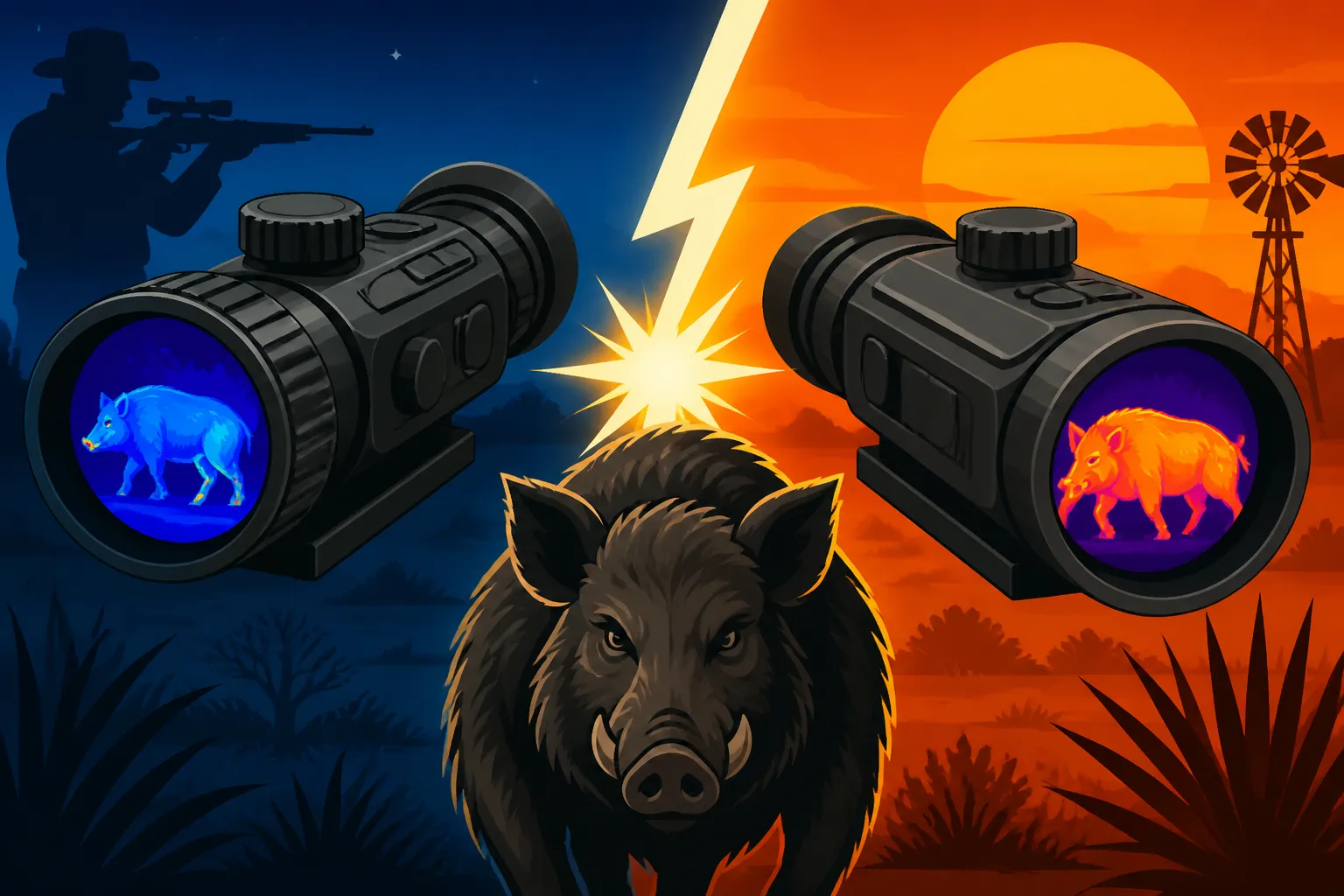
Pulsar vs AGM Thermal Scope for Hogs
Choosing the right thermal scope for hog hunting in Texas can feel like navigating a maze, especially with so many advanced options on the market. It's a significant investment, and you want to be sure it stands up to the demands of our wild Texas nights and helps you effectively manage those elusive feral hogs. This comprehensive guide will break down two of the leading thermal scope brands, Pulsar and AGM, to help you understand their strengths and weaknesses so you can make an informed decision.
The Critical Role of Thermal Scopes in Texas Hog Hunting
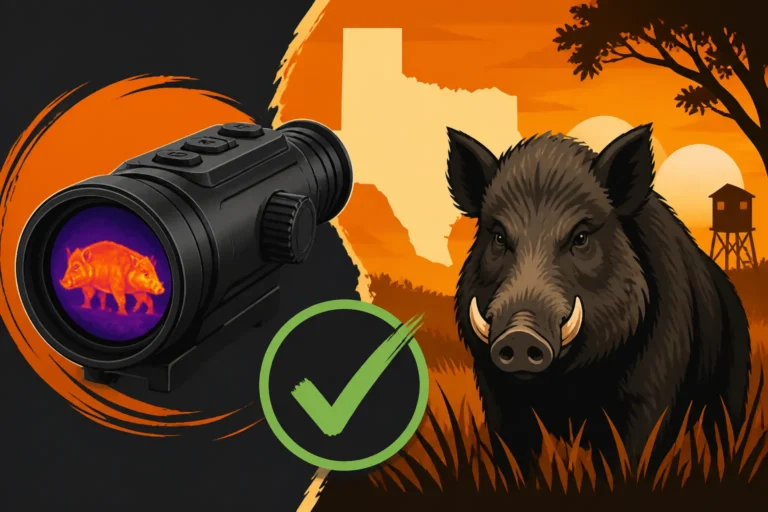
Texas is home to an estimated 3 to 5 million feral hogs, and they wreak havoc on agriculture, property, and native wildlife across the state. Hunting them isn't just a sport; it's a vital part of land management. While you can hunt hogs during the day, these intelligent animals are largely nocturnal, meaning the most effective way to control their populations is often under the cover of darkness. This is where thermal scopes truly shine, turning the pitch black into a visible landscape of heat signatures.
Traditional night vision relies on ambient light, which can be limited even on moonlit nights, and can be easily blinded by bright lights. Thermal imaging, however, detects heat, allowing you to see hogs in complete darkness, dense brush, or even through light fog or rain. This capability is a game-changer for successful night hunting, allowing you to identify targets that would be completely invisible otherwise. Understanding the nuances of these devices is crucial for anyone serious about hog eradication in the Lone Star State, especially when you consider that Is Thermal Hunting Legal in Texas? – spoiler alert: it is, and it's highly effective!
Why Thermal is Superior to Traditional Night Vision for Hogs
Imagine you're out on a lease near Uvalde or down in the South Texas brush country, where cover is thick and shadows run deep. With traditional night vision, a hog might be camouflaged by the environment, or simply hiding behind a mesquite tree, making it impossible to spot. But with a thermal scope, that hog's body heat stands out like a beacon against the cooler background, regardless of how dark or brushy the terrain. This thermal contrast means quicker target acquisition and more ethical shots, even in challenging conditions.
Another huge advantage is the ability to spot animals that are partially obscured. A hog moving through tall grass or partially behind a bush might only show a sliver of its body through traditional optics, but its entire heat signature will often be visible with thermal. This makes it far easier to determine if you have a clear shot and to avoid accidentally hitting non-target animals, which is a common concern during night operations. The safety and effectiveness that thermal technology brings to night hunting cannot be overstated.
Key Thermal Scope Features for Texas Conditions
When you’re looking at thermal scopes for hog hunting in Texas, there are a few features that truly make a difference in our unique environment. High refresh rates, typically 50Hz or more, are essential for tracking fast-moving hogs without a choppy, laggy image. Our hogs are notoriously quick, whether they're rooting through a field or bolting from a feeder, and a smooth image helps immensely with shot placement.
Another critical factor is sensor resolution. Higher resolutions, like 384×288 or even 640×480, provide a much clearer, more detailed image, allowing you to better identify your target and assess shot opportunities at longer distances. This is especially important when you’re hunting in open areas of the Panhandle or vast fields where hogs might be hundreds of yards away. Features like picture-in-picture (PIP), multiple color palettes, and video recording capabilities also enhance the hunting experience, allowing for precise aiming and post-hunt analysis or sharing. Considering how much time and effort goes into setting up for Hog Hunting Methods in Texas: Thermal, Night & Trapping, having the right features on your scope can significantly improve your success rate.
Pulsar Thermal Scopes: Features and Performance for Texas Hunters
Pulsar has established itself as a premium brand in the thermal imaging market, often lauded for its robust build quality, cutting-edge technology, and impressive image clarity. When you pick up a Pulsar scope, you immediately get the sense of a well-engineered piece of equipment designed for serious use. For Texas hog hunters, this can translate into reliable performance night after night, even in the demanding conditions of our varying landscapes.
Many hunters in areas like the Texas Hill Country, where terrain can be rugged and distances can vary, appreciate the advanced capabilities that Pulsar offers. Their scopes often feature high-resolution sensors and advanced image processing algorithms that result in exceptionally detailed thermal images. This clarity means better target identification, which is vital for distinguishing hogs from other animals or even from shadows and heat sources on the ground.
Advanced Imagery and User Experience
Pulsar's thermal scopes, such as the Thermion or Talion series, are known for their high-quality microbolometer sensors (often 384×288 or 640×480 resolution) combined with a high refresh rate of 50Hz. This combination delivers a crisp, fluid image, making it easier to track running hogs or identify targets in dense cover. The intuitive user interface, often with a simple joystick or well-placed buttons, allows for quick adjustments to brightness, contrast, and color palettes, even in the dark.
Many Pulsar models also come equipped with advanced features like variable magnification, built-in rangefinders, and multiple zeroing profiles for different rifles or distances. Their Stream Vision 2 app connectivity is also a standout, allowing for firmware updates, live streaming to a mobile device, and remote control of the scope. Imagine being able to share your real-time view with a hunting buddy watching from the truck, or quickly re-zero your scope with ease before heading out for a night hunt. This blend of clarity and intelligent features often sets Pulsar apart for hunters who prioritize top-tier performance.
Durability and Battery Life Considerations
Pulsar scopes are generally built to withstand the rigors of field use. They often feature magnesium alloy housings or other robust materials, making them shock-resistant and IPX7 waterproof. This means they can take a bump or two and still perform in the unexpected rain showers that can pop up during a South Texas hog hunt.
However, battery life can be a nuanced topic. While Pulsar often uses proprietary battery packs that integrate seamlessly into the scope's design, they may sometimes offer less run time than some competitors, especially on higher brightness or with heavy video recording use. Many models combat this with dual battery systems or external power bank compatibility, but it’s something to keep in mind for extended hunts without access to charging. While a Pulsar scope can be a significant investment, its durability means it's often a long-term piece of equipment that will serve you well for years to come, aiding in your efforts to manage feral populations year-round, as detailed in our guide to Feral Hog Hunting in Texas: Year-Round Guide.
AGM Thermal Scopes: Practicality and Value for Texas Hunters
AGM Global Vision has rapidly gained popularity among hunters, particularly those looking for a strong balance between performance and affordability. They've made significant strides in bringing capable thermal imaging technology to a wider audience without compromising too much on essential features. For many Texas hog hunters, especially those just getting into thermal or outfitting multiple rifles, AGM offers a compelling value proposition.
You’ll find AGM scopes commonly used by hunters ranging from the plains of West Texas to the dense thickets of East Texas, where practicality and reliability are just as important as the latest bells and whistles. They tend to focus on core functionalities that truly matter in the field, making them straightforward to use and dependable when it counts. Their appeal lies in delivering solid performance that effectively handles the task of spotting and acquiring hogs without breaking the bank.
Solid Performance and User-Friendly Design
AGM thermal scopes, such as the Rattler or Adder series, often feature sensor resolutions of 256×192 or 384×288, with refresh rates of 50Hz. While these resolutions might not always match the absolute top-tier clarity of the highest-end Pulsar models, they are more than sufficient for detecting and identifying hogs at typical hunting ranges in Texas. For example, a 384×288 sensor can comfortably detect a hog-sized heat signature out to several hundred yards, which is perfectly adequate for most lease hunting scenarios.
Many AGM models emphasize ease of use with simplified button layouts and intuitive menu systems. This means less fumbling in the dark and more focus on the hunt. They often feature multiple color palettes, digital zoom, and built-in video recording, covering all the essential bases for a successful thermal hunt. Their image processing, while perhaps not as refined as Pulsar's highest-end units, still delivers clear enough thermal contrast to pick out hogs against various backgrounds, whether you're scanning a cut cornfield or a wooded creek bottom. For hunters looking for a straightforward, effective tool, AGM often hits the sweet spot.
Robustness and Battery Solutions
AGM scopes are generally built to be rugged and dependable, often featuring durable aluminum alloy housings and an IP67 waterproof rating. This level of protection means they are resistant to dust and can withstand being submerged in shallow water for a short period – certainly enough to handle a sudden downpour or an accidental drop in a puddle. This kind of resilience is crucial when you're spending long hours in the unpredictable Texas outdoors.
One area where AGM often shines is its battery solutions. Many of their models utilize standard CR123A batteries or common 18650 rechargeable batteries, offering hunters the flexibility to swap out readily available power sources. Some models, like the Adder series, even integrate a traditional scope design with a long-lasting internal battery system complemented by an external replaceable battery, giving you phenomenal run times for all-night hunts. This practicality in power management can be a huge advantage when you're deep in the brush and don't have constant access to charging points. This practical design makes them a popular choice for Best Thermal Scopes for Hog Hunting in Texas.
Head-to-Head Comparison: Pulsar vs. AGM for Hog Hunting
When it comes down to choosing between Pulsar and AGM, it's often a balance between ultimate performance and practical value. Both brands offer excellent thermal scopes, but they cater to slightly different priorities and budgets. To truly understand which one might be the best fit for your specific hunting style and local Texas conditions, let's stack them up directly.
Think about your typical hunting grounds. Are you primarily hunting over feeders on a lease in Central Texas, where shots might be within 100-200 yards? Or are you spot-and-stalk hunting in wide-open West Texas terrain, requiring maximum detection range and crystal-clear identification at longer distances? Your answer will significantly influence which brand aligns better with your needs. Many hunters use tools like GoHunt to scout and understand terrain before ever setting foot on a lease, and knowing your hunting environment helps immensely in gear selection.
Image Quality and Detection Range
Pulsar generally holds an edge in sheer image quality, particularly with their higher-end models featuring 640×480 resolution sensors. Their advanced image processing often produces a cleaner, more detailed picture, which can be invaluable for identifying subtle details on a hog at longer ranges or in challenging conditions like light fog. This superior clarity can mean the difference between confidently taking a shot and holding off.
AGM scopes, while offering very respectable image quality, especially in their 384×288 models, might not always match Pulsar's top-tier crispness. However, for detecting and identifying hogs at common hunting distances (say, up to 250-300 yards), AGM performs admirably. The detection range for both brands is impressive, with even lower-resolution AGM scopes capable of detecting a heat signature far beyond ethical shooting range. The real distinction comes in the ability to clearly identify the target at those extended distances.
Features, Ergonomics, and User Interface
Both brands offer a rich set of features, including multiple color palettes, picture-in-picture, and video recording. Pulsar often integrates more advanced functionalities like built-in ballistic calculators, high-precision laser rangefinders, and more extensive connectivity options (e.g., Stream Vision 2 app). Their ergonomics are generally refined, with controls often designed for easy manipulation without looking, which is crucial in total darkness.
AGM tends to focus on a more streamlined feature set that covers the essentials without unnecessary complexity. Their user interfaces are often very intuitive, making them quick to learn and operate. For hunters who prefer a "set it and forget it" approach or want a scope with minimal fuss, AGM's straightforward design can be a significant advantage. The ergonomics on AGM scopes are also solid, often mimicking traditional rifle scope designs, which many hunters find comfortable and familiar.
Price Point and Value Proposition
Here's where the starkest difference often emerges. Pulsar scopes typically occupy the higher end of the thermal market, reflecting their advanced technology, superior image quality, and premium features. While they offer unparalleled performance, the investment is substantial. This makes them ideal for dedicated hunters who demand the very best and plan on extensive use.
AGM, on the other hand, offers a more accessible entry point into quality thermal hunting. Their price-to-performance ratio is exceptionally strong, making them a fantastic option for hunters who need effective thermal capabilities without the premium price tag. For many, an AGM scope provides more than enough performance to consistently put hogs down, leaving extra budget for other essential gear or perhaps a membership to a scouting platform like GoHunt for finding new hunting grounds.
Comparison Table: Popular Pulsar and AGM Thermal Scopes
Let's look at a general comparison of some popular models you might encounter when shopping for a thermal scope.
| Feature | Pulsar Thermion 2 XQ35 Pro | AGM Rattler TS35-384 | Pulsar Talion XQ38 | AGM Adder TS35-384 |
|---|---|---|---|---|
| Sensor Resolution | 384×288 | 384×288 | 384×288 | 384×288 |
| Pixel Pitch | 17 µm | 17 µm | 17 µm | 12 µm |
| Refresh Rate | 50 Hz | 50 Hz | 50 Hz | 50 Hz |
| Detection Range | ~1400 yards | ~1750 yards | ~1475 yards | ~1750 yards |
| Battery Life | 10 hours (dual battery) | 4.5 hours (CR123A) | 9 hours (dual battery) | 15 hours (internal+ext) |
| Mounting System | 30mm standard rings | Standard QD mount | Proprietary clamp mount | 30mm standard rings |
| WiFi/App | Yes (Stream Vision 2) | Yes (AGM Connect) | Yes (Stream Vision 2) | Yes (AGM Connect) |
| Video Recording | Yes | Yes | Yes | Yes |
| Housing Material | Magnesium Alloy | Aluminum Alloy | Magnesium Alloy | Aluminum Alloy |
| Waterproof Rating | IPX7 | IP67 | IPX7 | IP67 |
| Approx. Price | $$$$ | $$ | $$$ | $$$ |
Note: Prices and specific features can vary greatly by model and generation. This table provides a general overview for comparison.
Choosing the Right Thermal Scope for Your Texas Hunt
Deciding between Pulsar and AGM really boils down to your personal priorities, your budget, and the specific demands of your hunting environment here in Texas. There's no single "best" choice, only the best choice for you.
Consider how often you'll be hunting, the typical ranges you expect to encounter hogs, and your comfort level with technology. Are you a gadget enthusiast who loves having the latest tech, or do you prefer a straightforward tool that just works? These questions can guide you toward the right brand and model.
Budget and Long-Term Investment
If your budget is a primary concern, and you need a reliable thermal scope that performs well without breaking the bank, an AGM model like the Rattler series offers incredible value. It will absolutely get the job done for the vast majority of Texas hog hunting scenarios. You'll be able to effectively spot and engage hogs, and the savings could be put towards a quality night vision monocular for scanning, as discussed in Best Thermal Monocular for Scanning in Texas, or perhaps other crucial gear like a dependable game cart for those heavy hauls.
If you're looking to make a significant, long-term investment in a top-tier thermal optic, and absolute image clarity, advanced features, and robust construction are your highest priorities, then a Pulsar Thermion or Talion might be the better fit. These scopes are built for demanding users who want every advantage possible, offering a premium experience that can truly enhance your night hunting capabilities and confidence.
Specific Hunting Scenarios in Texas
- Feeder Hunting or Smaller Properties: For hunting over feeders on a smaller property where shots are typically under 200 yards, an AGM Rattler or similar model will be more than sufficient. You'll easily detect hogs coming to corn and have enough clarity for ethical shots. The cost-effectiveness of AGM means you could even consider outfitting multiple hunters on a lease without an exorbitant investment.
- Spot-and-Stalk in Open Country: If you're venturing into more open areas, like the Panhandle or South Texas ranches with long senderos, where long-range detection and precise identification are critical for spot-and-stalk tactics, a higher-resolution Pulsar like a Thermion 2 XP50 Pro could give you a significant advantage. The enhanced detail at extreme ranges allows for better decision-making before committing to a stalk.
- Rugged Terrain and Weather: Both brands offer durable options, but if you frequently hunt in extremely harsh conditions – constant rain, dense thorny brush, or areas where your gear might take a beating – both Pulsar's magnesium alloy housings and AGM's robust aluminum builds are excellent. Just ensure you're comfortable with the specific scope's controls while wearing gloves or in less-than-ideal conditions.
- Multi-Purpose Use: If you plan on using your thermal scope for more than just hogs, perhaps for coyote calling (check out Predator Calling for Coyotes in Texas) or other nocturnal pest control, the versatility and advanced features of a Pulsar might offer more flexibility. However, many AGM models are equally capable in these roles, so assess the specific features you need for diverse applications.
Ultimately, both Pulsar and AGM offer fantastic thermal imaging solutions for the dedicated Texas hog hunter. The best way to make your decision, if possible, is to try them out firsthand. Visit a local sporting goods store or attend a hunting expo where you can put them in your hands and look through them. See which one feels more natural, whose menu system makes more sense to you, and whose image quality truly impresses your eyes. Happy hunting, and may your thermal scope lead you to many successful hog hunts!
Disclaimer
The information provided in this article is for general guidance and informational purposes only. Hunting regulations and gear specifications can change. Always consult the latest Texas Parks and Wildlife Department regulations and your specific product manuals before engaging in any hunting activities or using any equipment. The author and publisher are not responsible for any accidents, injuries, or legal infractions incurred while hunting.