Best Gear for Feral Hog Hunting in Texas
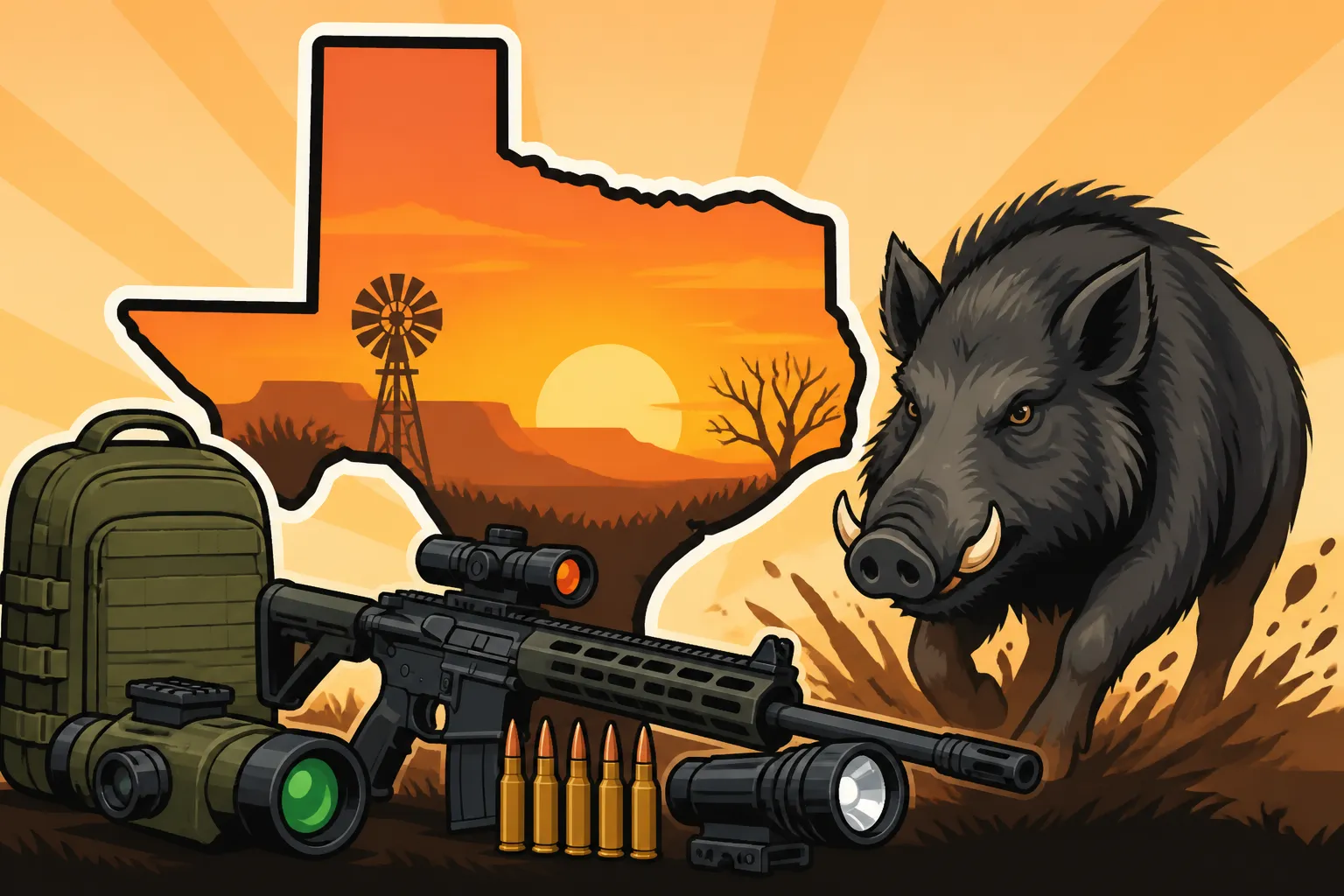
Feral hogs are a relentless nuisance across Texas, causing millions in agricultural damage and significantly impacting native wildlife. If you're tired of seeing your feeders raided, your food plots rooted up, or simply want to do your part in managing these destructive animals, understanding the best gear for feral hog hunting is your first crucial step. This guide will meticulously break down the essential equipment you need to effectively pursue and harvest hogs in the diverse landscapes of the Lone Star State, ensuring you're prepared for any scenario these intelligent and tough creatures throw your way.
Essential Firearms for Hog Hunting in Texas
When it comes to putting down a feral hog, you need a reliable firearm that can deliver sufficient stopping power. Hogs are notoriously tough, with thick hides, dense bone structures around their shoulders, and an aggressive disposition when cornered. This isn't the time to skimp on your choice of weapon.
Rifles: Calibers and Platforms
For most hog hunting scenarios in Texas, a centerfire rifle is your bread and butter. The versatility of a rifle allows for shots from varying distances, whether you're stalking through dense brush or picking off hogs at longer ranges from a blind. Many hunters gravitate towards modern sporting rifles (AR-style platforms) due to their modularity, ergonomics, and capacity, but traditional bolt-action rifles are equally effective and often preferred for precision at extended distances.
When selecting a caliber, you'll want something with enough energy to punch through a hog's tough hide and muscle, ideally leading to a quick, ethical kill. Popular choices include the ubiquitous .223 Remington/5.56 NATO, particularly when paired with heavier, bonded bullets designed for hunting. While some debate its effectiveness on larger boars, with proper shot placement and appropriate ammunition, it's a very capable hog round. For those seeking more punch, the .308 Winchester is a perennial favorite, offering excellent ballistics and energy for larger hogs and longer shots. It's a fantastic all-around caliber for Texas hunting, easily capable of handling everything from whitetail to big boars. Other excellent options include the 6.5 Grendel, known for its flat trajectory and energy retention, and the 7.62x39mm, which offers good performance in a compact package. When considering shot placement for hogs, remember that the kill zone is further forward and lower than on a deer due to their anatomy.
Shotguns: When and Why They Work
While not as common for general hog hunting as rifles, shotguns can be incredibly effective in specific situations, particularly in thick cover where shots are close and fast. Imagine busting a group of hogs out of a dense cedar break; a shotgun loaded with slugs or buckshot can put multiple hogs on the ground quickly. The sheer kinetic energy delivered by a 12-gauge slug is undeniable and will stop even the largest boar in its tracks, provided you make a solid hit.
The key to successful shotgun hog hunting is understanding its limitations and playing to its strengths. Range is the primary concern; slugs are generally accurate out to 75-100 yards, while buckshot is typically effective out to 40-50 yards, depending on the choke and load. This makes shotguns ideal for hunts where you anticipate close-quarters encounters, such as still-hunting dense river bottoms or ambushing hogs along a game trail in heavy cover. Carrying a shotgun with a good set of rifle sights or a low-power scope can drastically improve accuracy with slugs. Just be sure to pattern your shotgun with your chosen ammunition before heading afield.
Handguns: Close-Quarters Backup
A handgun might not be your primary hog hunting tool, but it serves admirably as a backup or for very specific, close-range scenarios. For instance, if you're pursuing hogs with dogs, a powerful handgun chambered in calibers like .44 Magnum, .357 Magnum, or even 10mm Auto can be invaluable for dispatching a bayed hog quickly and safely. This eliminates the need to maneuver a long rifle in tight quarters, especially with dogs in the mix.
Beyond dog hunting, a handgun can provide a sense of security when tracking wounded animals into thick brush or as a sidearm when you're primarily hunting something else but want to be prepared for an opportunistic hog encounter. Many experienced Texas hunters carry a handgun with them, especially in areas known for aggressive boars. It’s always better to be over-prepared when dealing with an animal that can be dangerous. Just like with rifles, choosing a suitable caliber and practicing extensively to ensure accuracy and proficiency is paramount.
Optics and Night Hunting Equipment
Hogs don't always play by daylight rules. In fact, they're predominantly nocturnal, especially in areas with hunting pressure or during the scorching Texas summers. To effectively hunt these elusive creatures, especially after dark, you'll need specialized optics.
Thermal Scopes and Monoculars
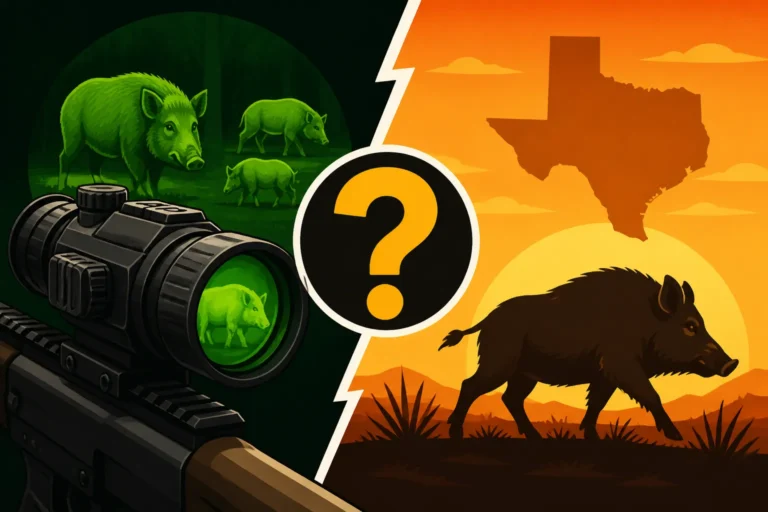
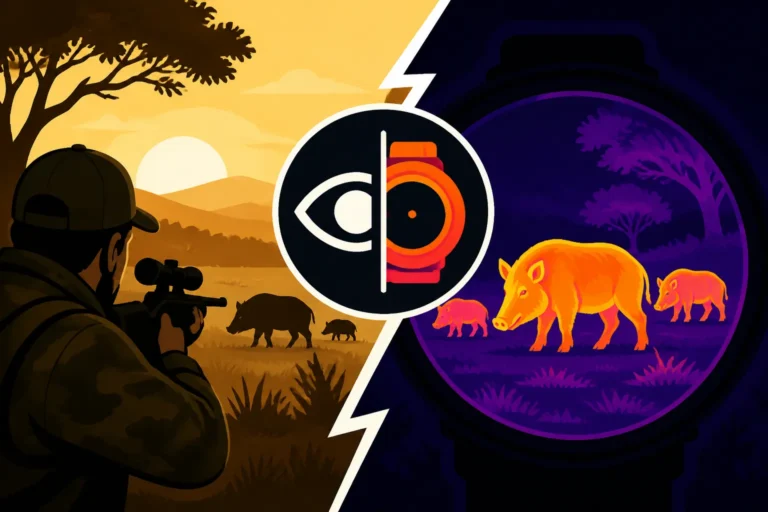
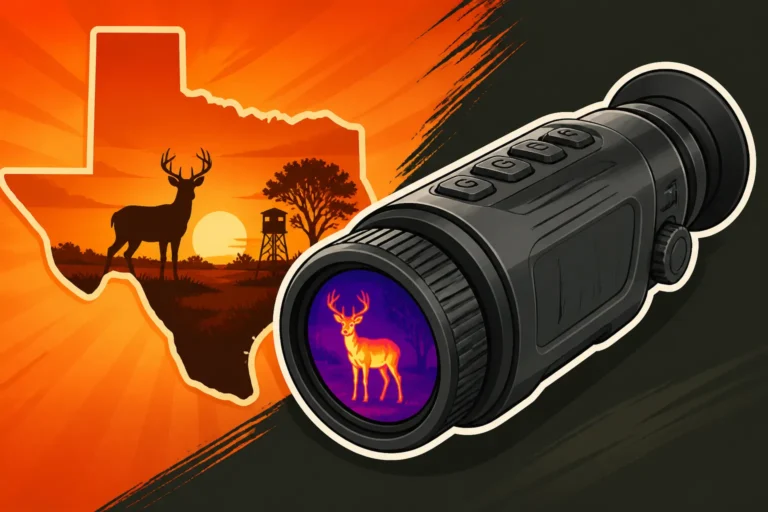
Thermal imaging has revolutionized hog hunting in Texas, making it exponentially more effective to hunt after sundown. Unlike traditional night vision, which amplifies ambient light, thermal optics detect heat signatures. This means hogs can't hide in shadows, behind light brush, or even in total darkness. They glow like beacons against the cooler background, making them relatively easy to spot. For an in-depth dive, check out our guide on Best Thermal Scopes for Hog Hunting in Texas.
A thermal monocular is fantastic for scanning large areas and locating hogs before you ever raise your weapon. It's like having a superpower that lets you see their body heat through fog, light rain, or heavy cover. Once located, a thermal riflescope allows for precise aiming and shot placement. Brands like Pulsar and AGM offer excellent thermal options, from entry-level handhelds to advanced weapon-mounted systems. The initial investment might seem steep, but the effectiveness they provide for night hunting is unparalleled, drastically increasing your success rate. This is especially true for those who enjoy Hog Hunting at Night in Texas: Is It Legal? (Yes).
Night Vision Devices
While thermal is often preferred for detection, traditional night vision (NV) still has a place in hog hunting. NV intensifies available light, allowing you to see objects in near-dark conditions. It excels in situations where you need to identify specific details, like determining if a hog is a large boar or a sounder of sows and piglets. For identification, some hunters find the clarity and detail of good generation 2 or 3 night vision to be superior to thermal, especially in an open field where definition matters.
Many hunters use a combination: a thermal monocular for initial detection and scanning, and then either a night vision scope or a digital night vision attachment on their rifle for precise target identification and shooting. This dual-optics approach maximizes your capabilities in low-light conditions. Digital night vision has become increasingly popular due to its lower cost and ability to record video, making it a great option for those on a tighter budget looking to get into night hunting.
Traditional Scopes and Red Dots
For daylight hog hunting, a quality traditional riflescope is indispensable. Variable power scopes (e.g., 3-9×40, 4-12×40) offer flexibility for both close-range shots in thick brush and longer shots across fields. Look for scopes with good light transmission, a clear reticle, and robust construction to withstand the rigors of hunting in Texas. Brands like Leupold, Vortex, and Bushnell offer reliable options across various price points.
Red dot sights are fantastic for fast, close-range hog encounters, particularly if you're hunting in dense cover or over bait where shots are typically under 50 yards. Their quick target acquisition and wide field of view make them ideal for rapidly engaging multiple hogs. While they don't offer magnification, their speed and simplicity are a significant advantage in dynamic hog hunting situations. Many AR-style platforms are perfectly suited for a red dot or a low-power variable optic (LPVO).
General Hunting Gear for Texas Hog Hunts
Beyond firearms and specialized optics, a range of general gear is crucial for comfort, safety, and efficiency during your hog hunting adventures in Texas. The environment here can be challenging, from scorching heat to dense, thorny brush.
Apparel and Footwear for Texas Terrain
Texas weather is notoriously unpredictable, often swinging from chilly mornings to blazing afternoons, sometimes all in the same day. Layering is your best friend. Start with moisture-wicking base layers to manage sweat, add an insulating mid-layer for warmth if needed, and finish with a durable outer layer that can withstand thorns and brush. Camouflage patterns are always a good idea, though hogs rely more on scent and sound than sight. Light, breathable materials are key for comfort during long hunts, especially when hunting in Texas heat.
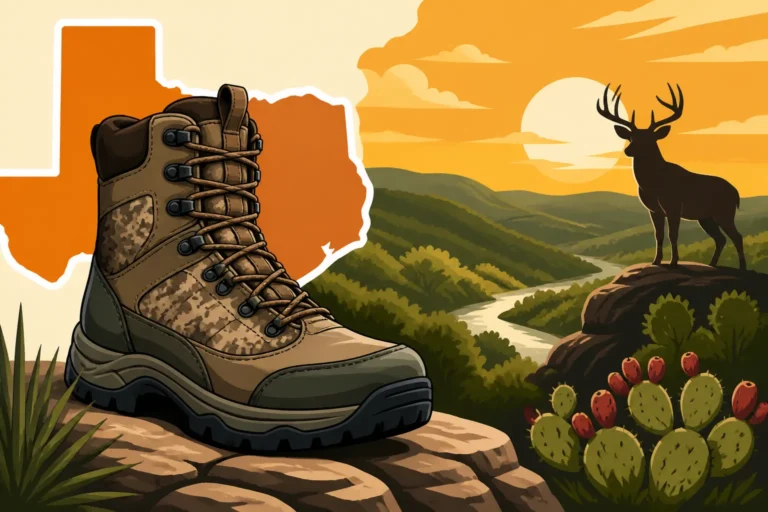
Footwear is absolutely critical. Texas is snake country, and stepping on a venomous snake is a risk many hunters face. High-quality snake boots or snake gaiters are non-negotiable, offering peace of mind and protection from rattlesnakes, copperheads, and cottonmouths. Look for boots that are comfortable for long walks, waterproof, and provide good ankle support over uneven terrain. Brands like LaCrosse and Rocky make excellent snake boots that are widely trusted by Texas hunters. You'll thank yourself when you hear that tell-tale rattle and realize your feet are protected.
Essential Accessories
Don't underestimate the power of small, well-chosen accessories. A reliable headlamp or flashlight is essential for navigating in the dark, whether you're heading to your stand before dawn or tracking a hog after sunset. A good fixed-blade hunting knife is crucial for Field Dressing & Processing Game in Texas Heat. Look for a sturdy blade that holds an edge and is easy to clean. A multi-tool can also be incredibly handy for minor repairs or adjustments in the field.
To get your hog out of the field, especially if it's a big one, a game cart is a lifesaver. Dragging a 200-pound boar through brush is no fun, and a good cart can save your back and energy. For a deeper dive, check out our guide on the Best Game Cart for Hauling Deer & Hogs. Also, a sturdy pair of gloves can protect your hands from thorns, burrs, and the sharp tusks of a boar when handling the animal after the shot. Finally, always carry a small first-aid kit, especially if you're hunting alone or in remote areas.
Trail Cameras for Scouting
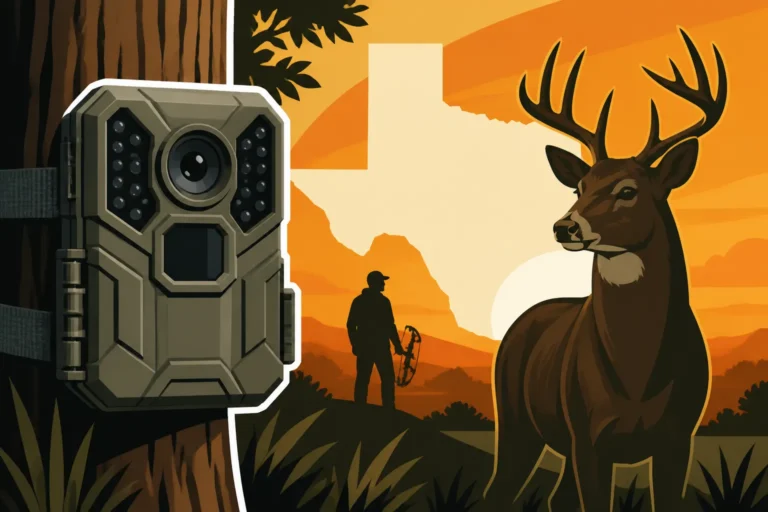
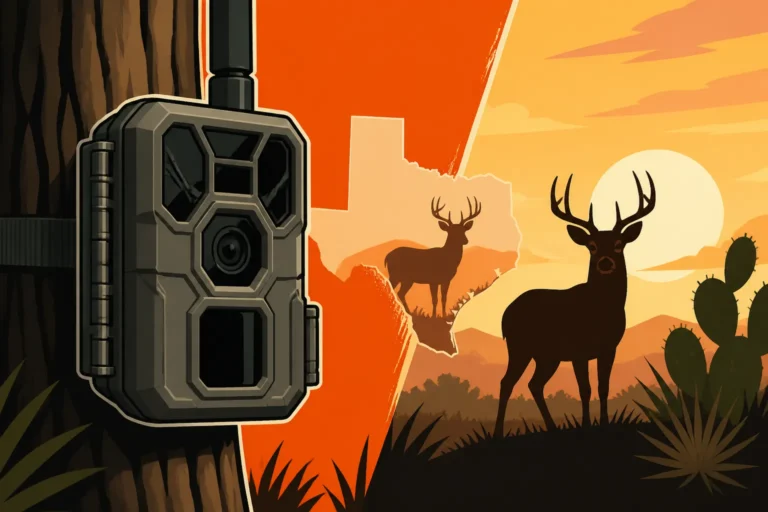
Understanding hog movement patterns is paramount to successful hunting, and trail cameras are invaluable tools for this. Placing cameras near known hog travel routes, water sources, or feeder setups can provide critical intelligence on when and where hogs are active. This information helps you decide the best time of day or night to hunt, and where to set up your ambush.
Modern cellular trail cameras can send photos directly to your phone, allowing you to monitor activity remotely without disturbing the area. This is a game-changer for active hog management on your property or lease. Brands like Tactacam Reveal and Moultrie Edge are popular choices among Texas hunters. Even non-cellular cameras are useful, requiring regular checks but still providing valuable insights into herd size, travel directions, and consistent feeding times. Integrating a mapping system like GoHunt to mark camera locations and observed activity can significantly enhance your scouting efforts, helping you visualize hog patterns across your lease.
Advanced Tactics and Specialized Gear
For the dedicated hog hunter looking to maximize efficiency and ethical harvesting, some specialized gear goes above and beyond the basics, allowing for more strategic and impactful hunting.
Trapping Equipment
While shooting hogs is effective, trapping is often the most efficient method for reducing hog populations, especially when dealing with large sounders. A well-designed hog trap can capture multiple animals at once, providing a more systematic approach to control. Modern traps often feature smart technology, like cellular-triggered gates, allowing you to monitor and spring the trap remotely once the entire sounder is inside.
When considering trapping, look for large, sturdy traps that can hold numerous hogs without damage or escape. Popular designs include continuous catch traps and large panel traps with rooter or guillotine gates. Baiting is key to successful trapping; fermented corn is a common and highly effective attractant. Remember that hog trapping is a commitment, requiring regular checks and proper disposal of harvested animals. This method is often central to comprehensive Hog Trapping in Texas: Methods That Work strategies.
Suppressors for Ethical Hunting
Suppressors (often called "silencers") are increasingly popular among hog hunters, and for good reason. Beyond the obvious benefit of hearing protection, which is crucial for preserving your hearing during repeated shooting sessions, suppressors offer several other advantages. They reduce felt recoil and muzzle flash, which can improve accuracy and allow for faster follow-up shots, particularly important when engaging multiple hogs in a sounder. The reduced noise also causes less disturbance to other wildlife and can sometimes prevent other hogs in a group from scattering immediately after the first shot, allowing for more successful harvests.
Legally owning a suppressor requires a federal tax stamp and a waiting period, but for many serious hog hunters, the benefits far outweigh the process. For those who hunt extensively, especially at night or in areas near residential zones, a suppressor is a responsible and highly effective piece of gear. When you're constantly monitoring hog activity, perhaps through a platform like GoHunt that shows historical movement, you'll want to minimize disturbance to keep those patterns predictable.
Drones and Aerial Scouting
For a truly advanced approach, drones with thermal capabilities are emerging as a powerful tool for scouting and even actively hunting hogs in specific, legal scenarios. While regulations around hunting with drones can vary and are often strict, their use for scouting is gaining traction. A drone can quickly survey vast tracts of land, identifying hog hotspots and movement corridors that would be impossible to cover on foot. When you're trying to locate hogs on a large lease, having an aerial perspective can drastically cut down on scouting time.
Imagine using a thermal-equipped drone to pinpoint a sounder bedded down in a dense mesquite pasture that would otherwise be impenetrable. This information, combined with data you might log in a hunting app like GoHunt, can then guide your ground approach. While direct hunting with drones is still heavily regulated and often illegal, their use for locating animals and planning your hunt offers a significant tactical advantage. However, always be aware of and adhere to all local, state, and federal regulations regarding drone use in hunting.
Comparing Firearm Types for Hog Hunting
| Firearm Type | Primary Use Case | Recommended Calibers/Loads | Pros | Cons |
|---|---|---|---|---|
| Rifle (AR-style/Bolt-action) | Versatile, long-range to close-range | .223/5.56 (heavy bullets), .308 Win, 6.5 Grendel | Accurate, good range, high capacity (ARs), versatile | Can be cumbersome in thick brush, noise |
| Shotgun | Close-quarters, dense cover | 12 Gauge Slugs, Buckshot (00, #1) | Devastating power at close range, quick follow-ups | Limited range, heavy recoil with slugs |
| Handgun | Backup, close-range dispatch | .44 Mag, .357 Mag, 10mm Auto | Compact, easy to carry, excellent for dispatching bayed hogs | Limited range, requires more skill for accuracy |
Disclaimer
Hunting regulations and gear recommendations can change. Always consult the most current Texas Parks and Wildlife Department (TPWD) Outdoor Annual for the latest rules, seasons, and licensing requirements before heading into the field. This information is for educational purposes only and not a substitute for official guidance.