Best Gear for Dove Hunting in Texas
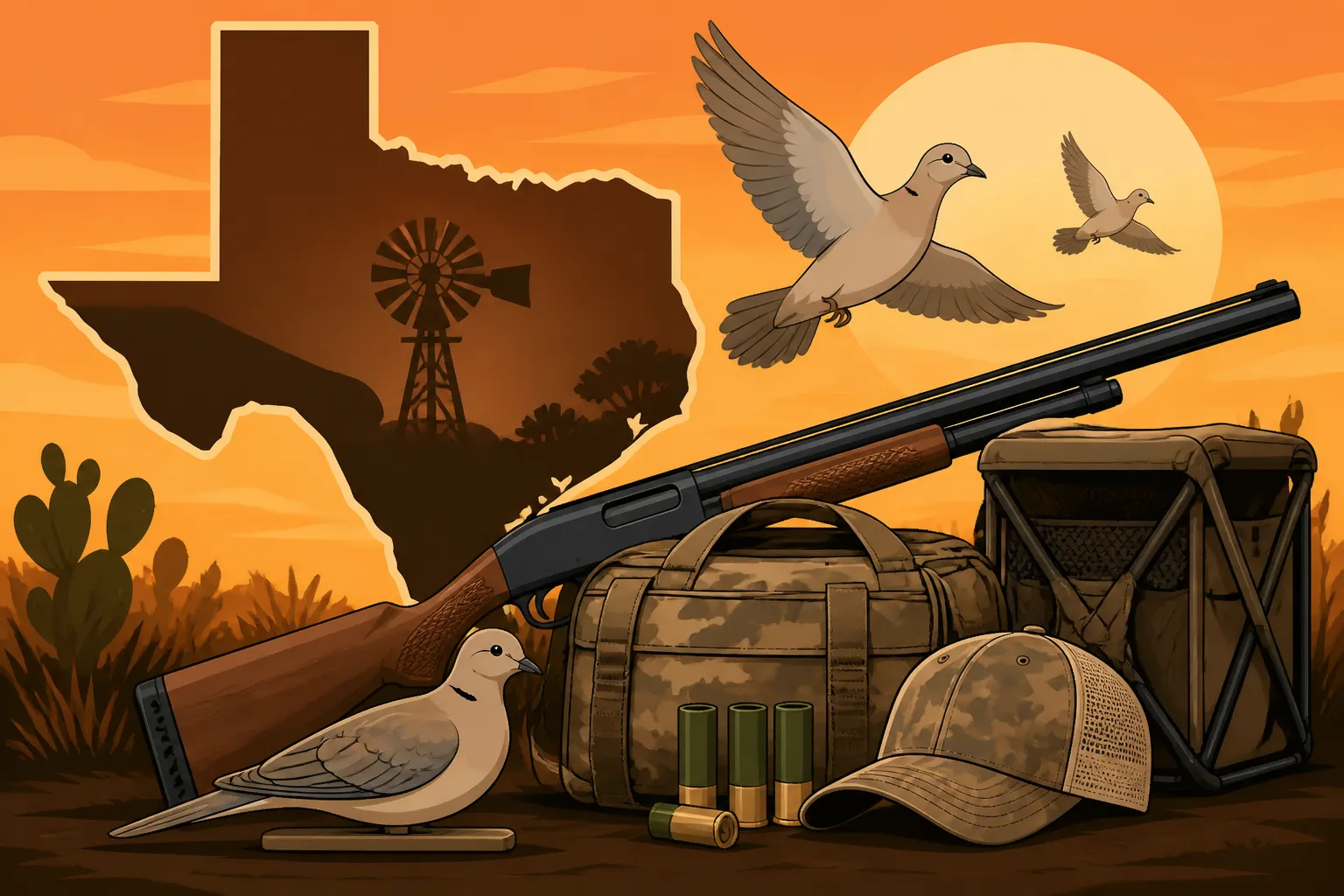
There's nothing quite like the excitement of a Texas dove opener, but let's be honest, it can also be a brutal experience if you're not properly equipped. From the scorching September sun to the deceptively fast-flying birds, many hunters find themselves unprepared for the unique challenges of chasing doves in the Lone Star State. This guide is here to cut through the guesswork and give you the real-world rundown on the best gear for dove hunting in Texas, ensuring you're comfortable, effective, and ready for action.
The Essential Shotgun and Ammunition
When it comes to dove hunting, your shotgun is obviously your most critical piece of gear. But it's not just about having a shotgun; it's about having the right shotgun and pairing it with the right ammunition for the specific conditions you'll face in a Texas dove field. The fast action and sheer volume of shooting can really expose any weaknesses in your setup.
Choosing the Right Gauge and Action
For dove hunting, the 12-gauge and 20-gauge shotguns are by far the most popular choices, and for good reason. The 12-gauge offers a robust payload and a wide variety of ammunition options, giving you a bit more forgiveness on those longer shots or when you're facing a particularly strong headwind. It’s a workhorse that many seasoned hunters rely on, especially when the birds are high and fast. However, it does come with a bit more recoil, which can become noticeable after a few boxes of shells in a long afternoon.
On the flip side, the 20-gauge is a fantastic option, particularly for newer hunters, youth hunters, or anyone looking for a lighter gun with less recoil. While it carries a slightly lighter shot charge, modern 20-gauge loads are incredibly effective on doves, especially if you're comfortable with your swing and lead. It's often easier to carry through the fields all day, and for many, the reduced recoil means more enjoyable shooting and better accuracy over the long haul. Ultimately, the best gauge is the one you shoot most confidently and comfortably, allowing you to focus on the birds, not the kick.
Beyond the gauge, the action of your shotgun plays a big role in the dove field experience. Semi-automatic shotguns are incredibly popular for dove hunting because they help mitigate recoil and allow for faster follow-up shots. That quick second or third shot can make all the difference when a whole flock of white-wings buzzes your decoy spread. Brands like Beretta, Browning, and Winchester offer reliable semi-auto options that cycle smoothly, even with lighter dove loads. Pump-action shotguns are also perfectly viable and often more budget-friendly. They're incredibly reliable and robust, able to handle all sorts of conditions. While they require manual cycling between shots, many hunters prefer the tactile feedback and the sheer dependability of a good pump. It often comes down to personal preference and how quickly you can work that pump when doves are pouring in.
Ammunition Selection for Fast Fliers
Choosing the right ammunition is just as critical as your shotgun itself. For doves, you're generally looking for lighter loads with smaller shot sizes to achieve a dense pattern that’s effective on these relatively small, fast-moving targets. The most common shot sizes are 7.5, 8, and sometimes 9. Size 7.5 will give you a bit more range and knockdown power, great for those high-flying mourning doves. Size 8 is a fantastic all-around choice, offering a good balance of pellet count and energy. Size 9, with its higher pellet count, creates a very dense pattern, excellent for closer birds or when you're shooting over decoys.
When hunting over water or in certain conservation areas, you might be required to use steel shot. If that's the case, make sure to pick a steel load specifically designed for doves, as steel performs differently than lead. Generally, you'll want to go up one or two shot sizes with steel (e.g., use 6s or 7s steel instead of 7.5 or 8s lead) to compensate for its lighter weight and different ballistic properties. Your choke selection will also significantly impact your pattern. Most dove hunters start with an improved cylinder or modified choke. An improved cylinder is great for close-range birds and a wide pattern, while a modified choke offers a tighter pattern for slightly longer shots. Carrying a few different chokes and experimenting on a patterning board before the season can give you a huge advantage in the field. Remember, you're aiming for a pattern that can effectively cover the vitals of a dove at various distances, not just a single pellet.
| Shotgun Gauge | Typical Shot Size for Doves | Recoil Level | Common Shot Capacity | Pros | Cons |
|---|---|---|---|---|---|
| 12 Gauge | 7.5, 8 | Medium to Heavy | 2-5 | Versatile, abundant ammo, good range, larger pattern | Heavier, more recoil, can be tiring over many shots |
| 20 Gauge | 7.5, 8, 9 | Light to Medium | 2-5 | Lighter, less recoil, good for beginners/youth, easier carry | Slightly less range/payload than 12ga, less forgiving |
Staying Comfortable and Safe in the Texas Heat
Dove season in Texas often kicks off on September 1st, which means you'll be dealing with intense heat, humidity, and relentless sun. Being properly dressed and hydrated isn't just about comfort; it's about safety and maintaining your focus throughout the hunt. You don't want to be distracted by sweat dripping into your eyes or the onset of heat exhaustion when a flock of doves banks hard and heads your way.
Lightweight Camo and Breathable Apparel
Forget your heavy, insulated hunting gear. For early season doves, you need lightweight, breathable fabrics that wick moisture away from your skin. Synthetic blends are often superior to cotton in this regard because they dry faster and prevent chafing. Think about light tans, khakis, and subtle green patterns that blend in with harvested fields, mesquite thickets, or fence lines. Most dove fields don't require super intricate camo patterns, but breaking up your silhouette is always a good idea. Brands like Sitka, Kuiu, or even budget-friendly options from Academy Sports + Outdoors or Bass Pro Shops offer excellent Best Early-Season Camo for Texas Heat that can make a world of difference.
A wide-brimmed hat or a baseball cap is absolutely non-negotiable for sun protection. Pair it with a lightweight, long-sleeved shirt, even if it feels counterintuitive in the heat. Many modern hunting shirts offer UPF (Ultraviolet Protection Factor) ratings, which is crucial for preventing sunburn. Darker colors tend to absorb more heat, so lighter hues are generally better. For your lower half, comfortable, durable pants that can withstand briars and grass burrs are key. And don't forget your feet! You'll be doing a lot of walking, so comfortable, well-broken-in boots are a must. Depending on where you're hunting in Texas, especially in the South Texas brush country, investing in a good pair of snake boots or snake gaiters could be a lifesaver. You never know when you might step too close to a sun-warmed rattler coiled up in the grass.
Hydration and Field Accessories
Dehydration is a serious threat in the Texas sun. Carrying ample water is not just a recommendation; it's a requirement for a safe hunt. A hydration pack, like those from CamelBak or Osprey, can be an excellent choice, allowing you to carry several liters of water comfortably on your back and sip throughout the hunt without fumbling with bottles. If you prefer bottles, bring several and consider freezing one or two the night before. Electrolyte supplements or drinks can also help replenish essential minerals lost through sweat. Always bring more water than you think you'll need, especially if you plan on being out in the field for several hours.
Beyond hydration, a few other field accessories will greatly enhance your comfort and effectiveness. A lightweight, portable hunting chair or stool is a game-changer. Sitting on the ground in a hot, dusty field gets old fast, and having a comfortable perch allows you to remain still and focused for longer periods. Small, foldable chairs from brands like Alps Outdoorz or Browning are perfect. Bug spray, particularly one effective against mosquitoes and gnats, can make a miserable experience tolerable. A basic first-aid kit with bandages, antiseptic wipes, pain relievers, and moleskin for blisters is also a smart addition to your pack. Finally, a small towel to wipe away sweat and dust will feel like a luxury.
Decoys, Blinds, and Calling Tactics
Many new dove hunters simply walk into a field, sit down, and hope for the best. While that can sometimes work, employing some strategic decoys, a bit of concealment, and even some calling can drastically improve your success rate and make the hunt far more engaging.
Decoy Strategies for Drawing Birds In
Dove decoys are one of the most underutilized tools in the Texas dove hunter's arsenal. When used correctly, they can significantly increase the number of birds that commit to your area, bringing them within easy shooting range. You have a few main types to choose from: stationary clip-on decoys and spinning-wing decoys. Stationary decoys, typically plastic or foam, clip onto fences, branches, or decoy stakes and imitate doves resting. A spread of 6-12 of these, strategically placed to look natural, can be quite effective.
However, the real game-changer is often the spinning-wing decoy. Brands like Mojo Outdoors revolutionized dove hunting with their motorized decoys. The flashing wings of these decoys mimic a dove descending to land, creating a highly visible and irresistible attractant for incoming birds. Place a spinning-wing decoy or two prominently in your spread, ideally elevated slightly, and watch the birds flock in. Combine them with stationary decoys for a truly convincing setup. When deciding on placement, think about wind direction and sun position; doves generally prefer to land into the wind, and having your decoys visible against the sky or with the sun at your back can be advantageous. For a deeper dive into optimizing your spread, check out our guide on How to Use Decoys for Dove Hunting.
Portable Blinds and Concealment
Doves have surprisingly keen eyesight, and they'll often flare if they spot a human silhouette. While sometimes natural cover like a mesquite tree, a sunflower patch, or a fence line is all you need, often you'll be hunting in open fields with limited natural concealment. This is where a portable blind comes in handy. A simple camo net draped over some poles or even just around yourself can effectively break up your outline. Quick-setup ground blinds, like those from Barronett or Ameristep, offer excellent concealment and can be deployed rapidly. They provide full concealment, allowing you to move and adjust without spooking incoming birds.
When choosing a blind, consider its portability and ease of setup. You might be moving your setup several times throughout the day as bird patterns change. A blind that's lightweight and packs down small is ideal. If hunting with a group or kids, a larger pop-up blind can provide comfortable space for multiple shooters while keeping everyone hidden. Even without a full blind, always try to position yourself with a backdrop that breaks up your outline – don't stand silhouetted against the sky. Being patient and still in your chosen spot will often yield better results than constantly moving around and drawing attention to yourself.
Essential Optics and Scouting Tools
In the fast-paced world of dove hunting, good optics and smart scouting tools are often overlooked, but they can significantly impact your success before and during the hunt. It’s not just about the shot; it’s about understanding the birds and the terrain.
Binoculars for Scouting and Spotting
While you might think binoculars are just for deer or elk hunting, they are incredibly useful for doves. Before you even set foot in a field, a good pair of binoculars, say 8×42 or 10×42, can help you scout from a distance. You can identify flight paths, feeding areas, and water sources without disturbing the birds. This information is gold for setting up your blind and decoys in the most productive spots. Are the birds flying high over a specific corner? Are they landing in a particular cluster of trees? Binoculars help you answer these questions.
During the hunt itself, binoculars can help you spot incoming doves from a greater distance, giving you more time to prepare for the shot. This is especially helpful if you’re trying to discern between White-Winged vs Mourning Dove in Texas or spot a small flock against a busy sky. Look for binoculars that are durable, waterproof, and fog-proof, as Texas weather can be unpredictable. Brands like Vortex, Leupold, or Bushnell offer excellent options that provide clear, bright images even in challenging light conditions, making those distant specks turn into identifiable doves much earlier.
Navigation and Planning Apps
In today's hunting world, smartphone apps have become indispensable, and dove hunting is no exception. A robust hunting app can be a powerful tool for scouting, navigating property lines, and understanding land features. Services like GoHunt provide valuable mapping overlays that show public land boundaries, private property lines, and topographical features. This is crucial for Texas, where many dove fields are on private land, and respecting boundaries is paramount. You can mark potential setup locations, track your movement, and even identify optimal approach routes. GoHunt also allows users to review hunt units, providing insight into potential hunting pressure or bird activity in various areas.
Beyond boundary lines, these apps often include satellite imagery, which helps you identify key features like water tanks, tree lines, power lines, and crop fields that doves frequent. Knowing where these resources are located can help you predict flight paths and choose the best ambush points. Many apps also offer real-time weather overlays, including wind direction and speed, which are critical for setting up decoys and anticipating how birds will approach. Having a reliable navigation app like GoHunt on your phone, with downloaded offline maps, means you're always informed, even in areas with spotty cell service. This proactive planning, combined with scouting, can make all the difference in a successful dove hunt, whether you're planning a trip to a WMA or securing permission for private land. You can learn more about other useful options in our comprehensive guide on the Best Hunting Apps for Texas (onX, HuntStand & More).
Post-Hunt Essentials and Game Care
The hunt doesn't end when the shooting stops. In the Texas heat, proper post-hunt care for your doves is crucial, both for preserving the meat and complying with regulations. Neglecting this step can quickly ruin your hard-earned harvest.
Game Vests and Coolers
Once you've downed a dove, you need a way to retrieve and carry it comfortably. A good game vest is specifically designed for this purpose, featuring a large, expandable game bag on the back, along with plenty of pockets for shells, calls, and other small items. Many vests also have built-in hydration sleeves. The game bag allows air circulation, which is important for cooling the birds. Opt for a lightweight, breathable vest, similar to your apparel, to avoid overheating. You might also consider a mesh-backed vest for maximum ventilation.
As soon as possible, get your doves into a cooler. The Texas heat can spoil game meat incredibly quickly. A quality cooler, like those from Yeti or RTIC, filled with plenty of ice, is essential. Don't just toss them in a warm cooler; pre-chill it and have ice ready. Some hunters prefer to pluck their birds immediately in the field and place the cleaned breasts directly on ice, which speeds up the cooling process and reduces weight. If you're hunting with a large group or anticipate a big haul, having a dedicated cooler for birds (and another for drinks!) is a smart move. For more information on keeping your game fresh, take a look at our article on the Best Coolers for Texas Hunting (Yeti & Alternatives).
Cleaning and Processing Tools
Field dressing doves isn't as involved as processing a deer, but having the right tools makes it much easier and more efficient. A sharp pair of game shears or a good bird knife is indispensable for quickly breasting out doves. Many hunters prefer shears for their speed and ease of use. A small, portable cleaning table or even just a clean, flat surface can make the process more sanitary and comfortable. Remember to have plenty of paper towels or wet wipes for clean-up.
Once breasted, place the meat into Ziploc bags, then immediately into your ice-filled cooler. Keeping the meat cool is the number one priority. Some hunters will even bring a small bucket with a lid to store the breasts in ice water temporarily before transferring them to bags for transport. Always remember to leave one wing attached to each dove until you've reached your final destination, as this is a legal requirement for identification in Texas, especially if you're dealing with different species like mourning doves versus white-winged doves. For more detailed instructions on how to handle your harvest in warm conditions, our guide on Field Dressing & Processing Game in Texas Heat is a must-read.
Disclaimer
Please be aware that hunting regulations, seasons, and licensing requirements can change. Always consult the most current Texas Parks and Wildlife Department (TPWD) Outdoor Annual before any hunting activity to ensure you are in full compliance with state and federal laws. This guide is for informational purposes only and should not replace official regulations.