Do You Need Thermal to Hunt Hogs in Texas?
Ah, the age-old question that keeps many a Texas hunter up at night (pun intended!): do you really need thermal to hunt hogs here in the Lone Star State? It’s a common dilemma, and one that sparks a lot of debate around campfires and online forums. Dealing with feral hogs is a constant battle for landowners and hunters alike, and choosing the right gear can feel overwhelming. This guide will walk you through the nuances of hog hunting in Texas, examining whether thermal optics are a necessity or simply a powerful advantage, helping you decide what's best for your hunts.
The Real Deal About Hog Hunting in Texas
Feral hogs are more than just a nuisance; they're an ecological and agricultural disaster across Texas. Understanding their impact and the legal framework for hunting them is the first step in deciding your gear strategy.
Why Hogs Are Such a Problem
If you've spent any time on a Texas lease or even just driven through rural areas, you've seen the damage. Feral hogs root up crops, destroy pastures, contaminate water sources, and compete with native wildlife for food. Their destructive habits cost Texas agriculture an estimated $500 million annually. They're intelligent, adaptable, and breed at an incredible rate – a sow can have 1-2 litters of 4-8 piglets each year, and those piglets can start breeding as early as 6 months old. It's a population explosion that no amount of traditional hunting seems to fully curb, making them a year-round target for hunters dedicated to conservation and property protection.
The sheer numbers of these animals mean that every hunter's effort, no matter how small, contributes to managing their widespread impact. From the dense brush country of South Texas to the farmlands of the Panhandle, these animals are everywhere, making them one of the most accessible game animals in the state. If you’re looking for a comprehensive guide on tackling this issue, check out our Feral Hog Hunting in Texas: Year-Round Guide.
The Legal Landscape for Hog Hunting
One of the beautiful things about hog hunting in Texas is the absolute freedom we have as hunters. Texas Parks and Wildlife Department (TPWD) recognizes the severe problem feral hogs pose, which is why there's no closed season, no bag limit, and no license required to hunt feral hogs on private land with landowner consent. This is a huge distinction from hunting deer or turkey.
Crucially, this open season also extends to methods. Unlike some states, Texas explicitly allows hunting feral hogs at night and with the aid of artificial light. This includes spotlights, night vision, and, yes, thermal imaging devices. This progressive stance makes Texas a hotspot for night hunting enthusiasts. In fact, many hunters specifically target hogs at night because that's when these intelligent animals are most active and least wary, especially in areas with high human activity during the day. If you're wondering, "Is Thermal Hunting Legal in Texas?" the answer is a resounding yes, and it's a popular and effective method. This legal flexibility is a massive advantage when considering thermal technology.
Traditional Methods vs. Modern Thermal Technology
Before thermal optics became widely available and somewhat affordable, Texas hunters employed various tactics to pursue hogs after dark. Let's compare these established methods with the capabilities thermal technology brings to the field.
Pros and Cons of Traditional Night Hunting Methods
For decades, if you wanted to hunt hogs at night, you were mostly limited to spotlights or, more recently, night vision devices. These methods certainly work, but they come with their own set of challenges.
-
Spotlights and Vehicle-Mounted Lights:
- Pros: This is often the most budget-friendly option. A powerful handheld spotlight or a vehicle-mounted light can illuminate a field, making it possible to identify and shoot hogs. They're relatively easy to use, and many hunters already own a good spotlight. For quick, reactive hunting from a vehicle, they can be quite effective in open terrain.
- Cons: The biggest drawback is that the bright light instantly spooks animals. Hogs, being smart, quickly learn to associate bright lights with danger. You often only get one shot or a very brief window before they scatter into the brush. In dense cover, spotlights are largely useless, as the light doesn't penetrate foliage effectively. This means you're limited to very open areas, which isn't always where the hogs are. Plus, holding a spotlight, aiming, and shooting can be awkward and requires coordination if you're hunting with a partner.
-
Night Vision Devices:
- Pros: Night vision offers a significant upgrade over spotlights because it allows you to observe animals without alerting them with a blinding beam of light. You can scout, track, and prepare for a shot with less chance of spooking the sounder. Modern digital night vision devices can also often record video, which is a nice bonus for reviewing your hunt. They work by amplifying ambient light (starlight, moonlight), creating a green-tinted image.
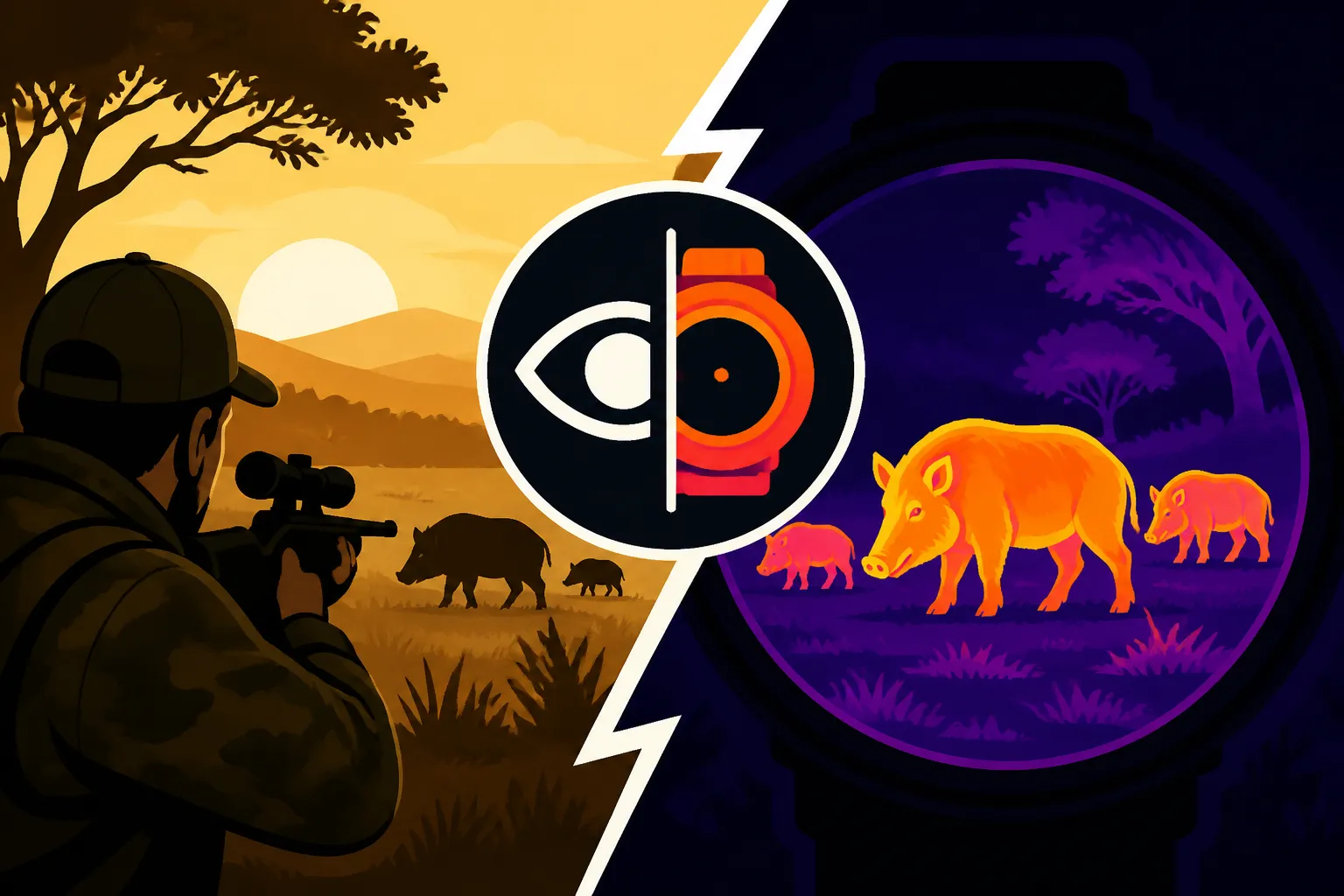
- Cons: While better than spotlights, night vision still relies on some ambient light. On cloudy, moonless nights, their performance can be severely hampered. Even with an infrared (IR) illuminator, which essentially acts as an invisible spotlight, you're still casting a beam, and discerning objects in dense brush remains difficult. Identifying individual hogs, their size, or even if they're facing you can be tough, especially at longer distances or through thick foliage. The image quality can also be grainy, and while you see through the darkness, you're not seeing heat, which is where thermal truly shines. If you’re curious about a deeper comparison, you might find our article on Thermal Scope vs Night Vision for Hog Hunting helpful.
The Game-Changing Power of Thermal Optics
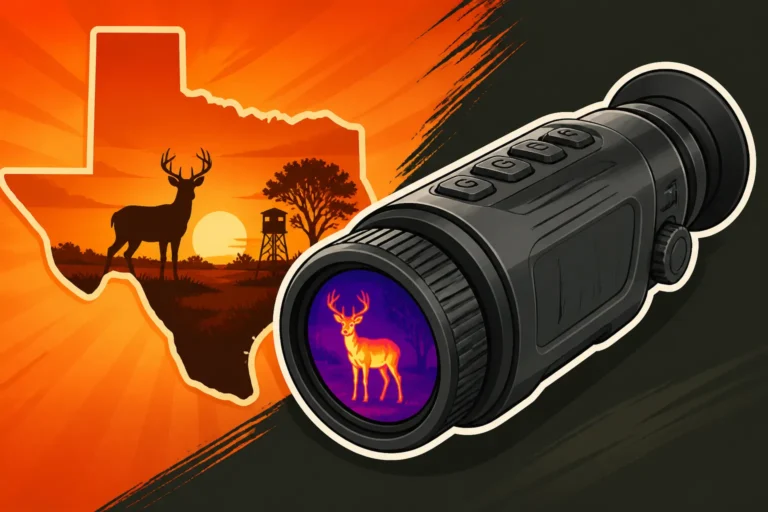
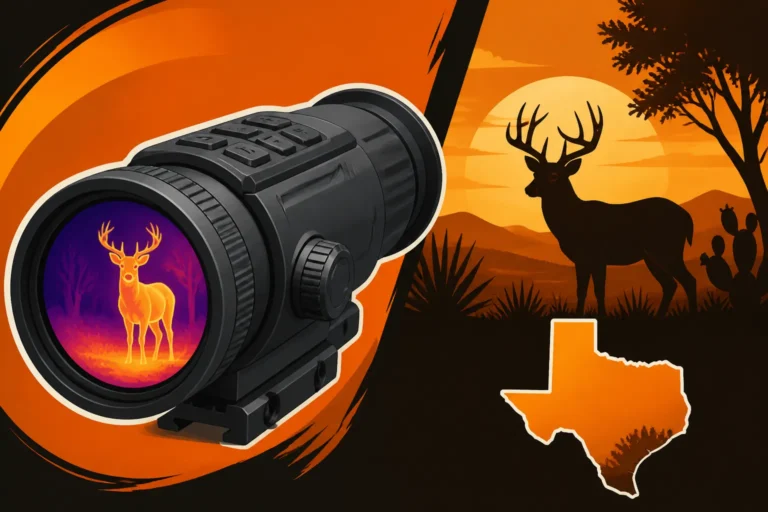
This is where thermal imaging steps onto the stage and fundamentally changes the night hunting experience. Thermal optics don't rely on light; they detect heat signatures. Every living creature, every engine, every fresh track leaves a heat signature, and thermal devices make those visible.
-
How Thermal Works: Instead of amplifying light, thermal cameras detect the infrared radiation (heat) emitted by objects. This radiation is converted into an electronic signal, which is then displayed as an image on a screen. Warmer objects typically appear brighter, while cooler objects appear darker, or are represented by different colors depending on your chosen palette (e.g., "white hot," "black hot," or various color scales). This means that even in pitch-black conditions, heavy fog, or light rain, if there's a temperature difference, a thermal device can "see" it.
-
The Advantages Thermal Brings:
- Unparalleled Detection Range: You can spot a hog's heat signature from hundreds of yards away, even if it's completely obscured by darkness or light brush that would defeat traditional optics. This early detection gives you a huge advantage in planning your approach.
- Visibility Through Cover: This is perhaps the biggest game-changer. Thermal can "see" through light foliage, tall grass, and even fog. While it won't penetrate a solid oak tree, it will show you the heat signature of a hog hiding behind a few branches or in a thicket that would be invisible to the naked eye or night vision. This is critical in the dense South Texas brush or the mesquite thickets of the Hill Country.
- Rapid Target Identification: Once you detect a heat signature, it's often much easier to identify it as a hog, deer, or other animal, even at a distance. While discerning exact antler points or fine details is challenging with thermal, recognizing a "hog shape" is typically straightforward.
- Increased Efficiency and Success: With the ability to scout and track effectively in total darkness, thermal hunting is simply more efficient. You spend less time guessing and more time finding and engaging targets. This leads to higher success rates and often allows you to take multiple hogs from a sounder before they fully realize the danger.
- Enhanced Safety: Knowing what's in front of you, even in the darkest conditions, significantly improves safety. You can confirm your target and ensure there are no unintended hazards in the background. Many hunters use thermal monoculars for scanning and a thermal scope on their rifle. For recommendations, our guide on the Best Thermal Scopes for Hog Hunting in Texas offers some great insights.
When planning your hunts, especially for scouting or understanding patterns, resources like GoHunt can be invaluable for gathering information, looking at topography, and understanding potential game movement.
Do You Need Thermal? A Realistic Perspective
So, after all that, is thermal a "need" or a "want"? The honest answer is that it truly depends on your specific hunting goals, budget, and the terrain you're hunting.
When Thermal Is Absolutely Essential
There are definitely scenarios where calling thermal "optional" would be a disservice to its effectiveness. If any of these describe your situation, thermal optics will likely transform your hog hunting experience from frustrating to incredibly rewarding:
- Hunting Large Properties with Diverse Terrain: If you're on a sprawling ranch with a mix of open fields, dense brush, creek bottoms, and thickets, thermal is a game-changer. It allows you to quickly scan vast areas and pinpoint hogs in places you'd never find them with traditional methods. Imagine trying to spot a sounder in 200 acres of tall Johnson grass at midnight without thermal—it's nearly impossible.
- Maximizing Efficiency and Harvest Numbers: Landowners and hunters actively engaged in serious hog population control will find thermal indispensable. The ability to quickly locate multiple sounders and effectively engage more animals in a single night is unmatched. If your goal is to make a significant dent in the hog population, thermal dramatically increases your capability.
- Hunting Pressured Hogs: Feral hogs are smart. In areas with high hunting pressure, they quickly become nocturnal and extremely wary. They learn to avoid lights and human scent. Thermal allows you to observe and approach these educated hogs without alerting them, giving you a distinct advantage.
- Dense Brush Country: Let's face it, much of Texas is brushy. From the thorny thickets of South Texas to the juniper breaks of the Hill Country, hogs love to hide in dense cover. Thermal lets you peer into these sanctuaries, revealing hogs that would otherwise remain hidden until they're on top of you, if you even see them at all. This is especially true when trying to pattern hogs on your lease.
- Safety and Responsible Hunting: The clarity thermal provides in identifying your target, even in the darkest conditions, contributes to safer hunting practices. There's less guesswork, reducing the risk of misidentification.
- CWD Zones and Baiting Restrictions: In some CWD zones, regulations on baiting or feeding might be in place. While corn is legal in most of Texas, if you're in an area where visibility over a feeder is limited, or you can't bait, thermal becomes even more critical for locating free-ranging hogs. It helps when you're thinking about the Best Setup for Hunting Hogs Over a Feeder without relying solely on daylight visits.
When You Can Get By Without It
Now, let's be realistic. Not every hog hunt requires thermal. There are many successful hog hunters in Texas who don't own thermal optics.
- Open Terrain and Moonlight: If you primarily hunt hogs in wide-open agricultural fields, especially on clear nights with a bright moon, traditional spotlights or even good night vision can be perfectly adequate. A full moon can illuminate a field almost like daylight, giving you decent visibility.
- Budget Constraints: Let's not mince words: good thermal optics are an investment. Prices have come down significantly, but a quality thermal scope or monocular can still cost anywhere from $1,500 to $5,000 or more. If your budget is tight, it might be better to invest in other essential hunting gear first.
- Occasional or Opportunistic Hunting: If hog hunting is a secondary pursuit, or you only go a few times a year, the cost of thermal might not justify the return for your specific needs. For some, an occasional daytime hog hunt with a rifle or a bow (check out our Bowhunting Hogs in Texas: Tips for more on that) is all they need.
- Smaller Properties with Known Hog Patterns: On smaller, well-managed properties where you have a very clear understanding of hog movement patterns and limited areas for them to hide, you might be able to get by with well-placed feeders and strategic ambushes, even at night, using traditional lighting methods. Knowing How to Pattern Hogs on Your Lease is key here, regardless of your gear.
Weighing the Investment: Cost vs. Benefit
The decision often boils down to a classic cost-benefit analysis. A good thermal monocular for scanning might start around $1,000-$2,000 (like an AGM Rattler V2 or a Pulsar Proton), while a decent rifle-mounted thermal scope can range from $2,000 to $4,000 (brands like Pulsar, AGM, and ATN are popular options). High-end units can easily exceed $5,000.
The benefits often outweigh the cost for serious hog hunters:
- Increased Success Rate: This is undeniable. Thermal simply provides more opportunities.
- More Hunting Opportunities: You're not restricted by daylight or moon phase. Every night is a potential hunting night.
- Faster and More Efficient Hunts: Less time searching, more time hunting.
- Enhanced Experience: There's something truly incredible about seeing the world in a completely different light (or heat, rather). It opens up a whole new dimension of hunting.
- Property Protection: For landowners, the ability to effectively manage hog populations around the clock is invaluable for protecting crops and land.
Here's a simple breakdown to help visualize the decision:
| Feature | Traditional Night Hunting (Spotlight/NV) | Thermal Hunting |
|---|---|---|
| Detection Range | Limited, especially in cover | Excellent, hundreds of yards even in light cover |
| Visibility | Relies on ambient light/IR illuminator | Sees heat signatures, works in total darkness, fog |
| Target ID | Can be difficult, especially at distance | Generally clear heat signature |
| Stealth | Spotlights very un-stealthy; NV better | Very stealthy, animals unaware of your presence |
| Cost (Entry-Level) | $100-$500 (spotlight/basic NV) | $1,500-$2,500 (monocular) / $2,000-$3,500 (scope) |
| Effectiveness | Good in open terrain, limited cover, calm hogs | Excellent in all conditions, especially dense cover |
| Primary Use | Opportunistic, reactive shooting | Proactive scouting, targeted eradication |
Ultimately, for anyone serious about hog hunting in Texas, especially for consistent eradication or hunting challenging environments, thermal is not just a luxury; it’s arguably the most impactful piece of gear you can acquire. While you can hunt hogs without it, you'll be significantly more effective with it.
Maximizing Your Night Hunt, With or Without Thermal
Whether you decide to invest in thermal optics or stick with traditional methods, some core principles will always improve your chances of success during night hunts.
Scouting and Setup
Effective scouting is the bedrock of any successful hunt, day or night. For hogs, it’s about understanding their patterns, their preferred bedding areas, travel corridors, and feeding spots.
- Trail Cameras are Your Best Friend: Utilize trail cameras year-round to monitor hog activity. Modern cellular trail cameras, like those from Tactacam Reveal or Moultrie Edge, can send images straight to your phone, giving you real-time intelligence on when and where hogs are moving. This helps you identify preferred feeding times, travel routes, and even how to keep hogs out of your deer feeder by understanding their patterns around it. They'll show you where to concentrate your efforts. Knowing How to Pattern Bucks With Trail Cameras also applies to hogs in many ways!
- Feeder Placement and Management: Hogs are drawn to food, and feeders are prime locations for night hunting. Place your feeders strategically in areas where you have a clear shooting lane but also cover for hogs to feel secure. Consider different feed types; while corn is a classic, some hunters use soured grain or specific hog attractants to draw them in. Ensure your feeder is hog-resistant or set up in a way that minimizes damage.
- Understanding Hog Behavior: Hogs are creatures of habit but can adapt quickly. They’re often most active in the cooler parts of the day, which means dawn, dusk, and nighttime, especially in the Texas heat. Look for rooted-up ground, rub marks on trees, and fresh tracks near water sources. Pay attention to wind direction when setting up, as their sense of smell is incredible. A helpful resource for planning and executing hunts, especially concerning game behavior, is often found on platforms like GoHunt, which compiles useful information for various hunting scenarios.
Essential Gear for Any Night Hunt
Beyond your optics, a successful night hunt requires a few other critical pieces of gear to ensure safety and effectiveness.
- Appropriate Rifle and Ammunition: A reliable rifle chambered in a common caliber (like .308, 6.5 Creedmoor, or .223/5.56) is crucial. Hogs are tough animals, so choose ammunition with good penetration and knockdown power. A good bullet ensures a clean, ethical kill. For most hog hunting, a semi-automatic rifle offers faster follow-up shots, which is a significant advantage when a whole sounder takes off.
- Sound Suppression (Silencers): This is a game-changer for night hunting, especially if you're targeting multiple hogs. A suppressed rifle dramatically reduces muzzle blast, making it less likely to spook the entire sounder after the first shot. This often allows you to take several animals before they fully understand the threat and disperse. Always check federal and state laws regarding suppressors; they are legal in Texas with the proper tax stamp.
- Good Light Sources (Even with Thermal): Even if you're using thermal, a reliable handheld flashlight or a headlamp is essential for safety and utility. You'll need it for navigating to and from your stand, field dressing, and blood trailing. A red or green light filter can help preserve your night vision if you're not using thermal.
- Safety Gear and Communication: Always hunt with a partner if possible, and carry communication devices (cell phone, satellite messenger if out of service). Let someone know where you're going and when you expect to return. Be mindful of your surroundings, especially when moving in the dark. Snake boots are a must-have in many parts of Texas, particularly in brushy areas where rattlesnakes and other venomous snakes are common, regardless of whether you're hunting during the day or at night.
By combining diligent scouting, smart setup, and the right gear, you’ll be well-equipped to tackle the challenge of feral hog hunting in Texas, making a real impact on their numbers and protecting our precious landscapes. For a step-by-step approach, our How to Hunt Feral Hogs in Texas (Step by Step) guide can provide further assistance.
Disclaimer
Hunting regulations and best practices can change. Always consult the most current Texas Parks and Wildlife Department (TPWD) Outdoor Annual or their official website before any hunting activity to ensure you are compliant with all state and local laws. This information is for general guidance and educational purposes only.