Best Feeder Timer for Deer Feeders
Let's be real, a deer feeder is only as good as the timer running it. Out here in Texas, where the weather can be brutal and hog pressure is constant, having a reliable feeder timer isn't just a convenience – it's absolutely essential for effective deer management and successful hunts. This guide is all about helping you navigate the options and pick the best feeder timer to keep your deer lease humming and your feed strategically dispersed, no matter the challenges the Lone Star State throws your way.
The Critical Role of a Reliable Feeder Timer in Texas
In the vast and varied landscapes of Texas, from the dense South Texas brush country to the rugged Hill Country, deer feeders are a staple for attracting and maintaining healthy deer populations. But simply having a feeder isn't enough; it's the brain of that feeder, the timer, that dictates its effectiveness. A poorly chosen or unreliable timer can lead to wasted feed, inconsistent patterns for deer, and frustration for hunters. Texas conditions demand timers that can withstand extreme heat, sudden downpours, and the relentless attention of non-target species like feral hogs.
Battling the Texas Elements and Wildlife
Texas weather is a beast of its own, and your feeder timer needs to be built to handle it. We're talking about scorching summer days where temperatures routinely soar into the triple digits, followed by sudden, torrential thunderstorms that can drench anything left exposed. A cheap, flimsy timer might work for a week or two, but it won't stand up to the long haul. Look for timers housed in robust, weather-resistant casings, preferably made from durable plastics or even metal, with sealed buttons and compartments to keep moisture and dust out.
Beyond the weather, there's the ever-present challenge of unwanted guests. Feral hogs are notorious for trying to dismantle feeders, and they'll quickly learn a predictable, easily accessible feeding schedule. An advanced timer allows you to randomize feed times slightly or set multiple short bursts throughout the day and night to keep deer coming without providing an all-you-can-eat buffet for hogs. Learning How to Keep Hogs Out of Your Deer Feeder is a constant battle, and your timer is a key weapon in that arsenal. Consider the physical construction of the timer itself – often located at the bottom of the hopper – it needs to be tough enough to withstand an aggressive hog bumping into it, trying to get at the last kernels of corn.
Optimizing for Deer Behavior and Regulatory Compliance
Deer are creatures of habit, but those habits can shift based on pressure, weather, and time of year. A versatile feeder timer allows you to adapt your feeding schedule to what the deer are doing. During the pre-rut and rut, you might want to adjust your feed times to coincide with peak deer movement, potentially even adding a midday drop to entice a mature buck to show himself. In contrast, during the off-season, you might stick to a more consistent, less frequent schedule for supplemental feeding. Being able to easily change these settings is invaluable.
It's also crucial to remember that hunting regulations in Texas often dictate when and how you can hunt over bait. While Hunting Over Feeders & Corn in Texas (Legal Guide) is generally permissible, understanding your local county's specific rules, especially regarding timing and antler restrictions, is paramount. Your feeder timer needs to support these regulations, allowing you to set precise schedules that comply with legal hunting hours. For instance, you can't hunt deer at night, so your timer should be programmed to dispense feed during legal daylight hours for deer season. For species like hogs, however, night feeding and hunting are often allowed, giving you more flexibility with your timer settings. Many hunters use a platform like GoHunt to scout and understand specific regulations for their hunting areas.
Deciphering Feeder Timer Types: Analog vs. Digital
When you're outfitting your deer feeder, one of the first choices you'll face is between an analog and a digital timer. Both have their place and their loyal adherents, but understanding their distinct characteristics is key to making the right decision for your specific hunting setup and level of tech-savviness.
The Enduring Simplicity of Analog Timers
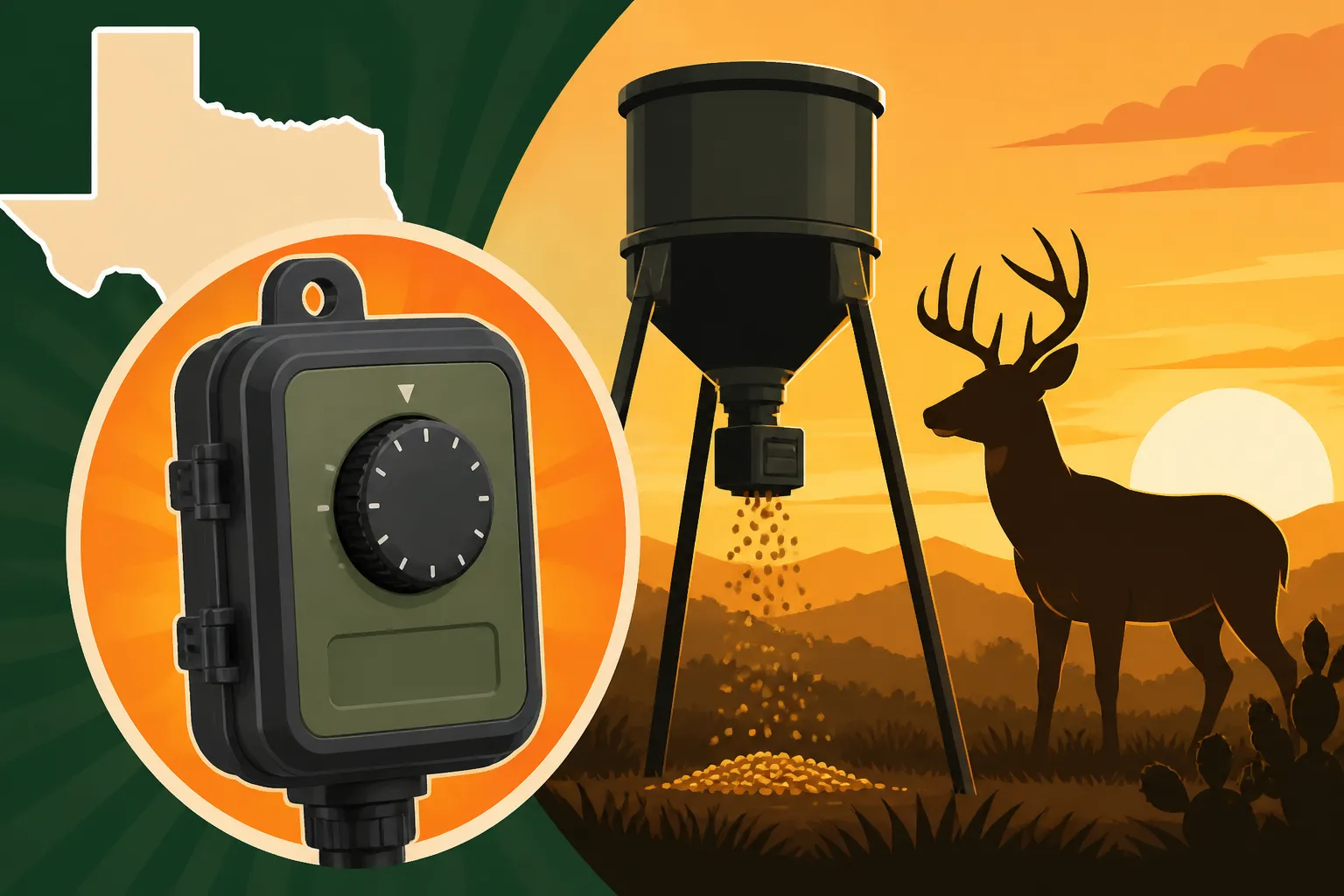
Analog timers are the old-school workhorses of the feeder world. Think of them like a simple kitchen timer – usually a clock face with pins or levers that you set to dictate feed times. They typically offer fewer programming options, perhaps one or two feed times per day, with a basic feed duration adjustment.
The biggest advantage of analog timers is their straightforward operation. There's no complex menu to navigate, no digital display to fuss with. If you appreciate mechanical simplicity and reliability in the field, an analog timer might be right up your alley. They tend to be less expensive upfront, making them a budget-friendly option for hunters just starting out or those with a very basic feeding strategy. Their reliance on physical components also means fewer electronic parts that can fail in extreme weather, though the exposed pins can sometimes be less precise over time or get knocked out of place. Many analog timers from brands like American Hunter have proven themselves reliable for decades, offering a tried-and-true solution that just works.
However, their simplicity is also their biggest limitation. Adjusting feed times often requires physically moving pins or resetting dials, which can be a nuisance if you're frequently changing your schedule or want very precise intervals. They generally don't offer multiple feed durations or the ability to program different days of the week, which can be restrictive for advanced deer management strategies or for responding to nuanced deer behavior.
The Precision and Flexibility of Digital Timers
Digital timers are the modern solution, offering a much higher degree of control and customization. These timers feature a digital display and buttons, allowing you to program multiple feed times per day, often up to 6 or even 8, with precise durations down to the second. Many models also allow for different schedules on different days, which is incredibly useful if you want to feed more heavily on weekends or during specific phases of the Texas Deer Season 2026-2027: Dates by Zone.
The core benefit of digital timers lies in their precision. You can fine-tune your feeding schedule to match specific observations from your trail cameras or integrate with data from hunting apps. For example, if you notice bucks are consistently hitting your feeder right at legal shooting light, you can program a short, sharp feed burst right before that window. Brands like Moultrie and Wildgame Innovations offer a wide range of digital timers, from basic models to those with advanced features like battery life indicators, motor speed adjustments, and even solar panel compatibility.
While digital timers generally come with a higher price tag and a steeper learning curve (navigating menus can be tricky initially), their flexibility usually outweighs these drawbacks for serious hunters. They offer the ability to truly optimize your Best Deer Feeder Setup for Texas to attract and hold deer, manage feed consumption, and minimize waste. The ability to save different programs or easily adjust them with a few button presses is a massive time-saver compared to fiddling with physical pins, especially when you're managing multiple feeders across a lease.
| Feature | Analog Feeder Timers | Digital Feeder Timers |
|---|---|---|
| Programming | Simple, pin-based, 1-2 daily feeds | Complex, button/menu, multiple daily feeds (up to 8+) |
| Precision | Less precise (minute increments) | Highly precise (second increments) |
| Flexibility | Limited (fixed schedule) | High (variable days, custom durations) |
| Ease of Use | Very easy, intuitive | Moderate (initial learning curve) |
| Cost | Lower | Higher |
| Battery Life | Generally good (fewer complex electronics) | Varies (often includes battery indicator) |
| Features | Basic feed intervals | Battery monitor, motor speed, solar compat. |
| Durability | Mechanical, can be robust but pins vulnerable | Electronic, depends on casing and sealing |
Essential Features to Prioritize in a Feeder Timer
Choosing the right feeder timer goes beyond just analog or digital. To ensure longevity and effective feed distribution in the demanding Texas environment, you need to consider a range of features that directly impact performance and ease of use. These aspects are often overlooked until you're cursing a dead battery or a jammed motor in the middle of a hot August afternoon.
Durability and Power Management for Remote Locations
First and foremost, your timer needs to be tough. Texas terrain and weather are unforgiving. Look for timers with a heavy-duty, weather-sealed casing. This means gaskets around the battery compartment and display, and robust plastic or metal construction to resist impacts from falling branches, curious wildlife, and general wear and tear. Some brands specialize in this ruggedness, knowing their products will be left out in the elements for months on end.
Power management is another huge factor, especially for feeders located deep in your lease where frequent battery checks are impractical. Most feeder timers run on either 6V or 12V batteries. A good timer will have an efficient motor and intelligent circuitry to prolong battery life. Even better, look for models that are compatible with a solar panel charger. A small solar panel mounted to the feeder can keep your battery topped off indefinitely, eliminating the need for constant battery swaps and ensuring your feed schedule never misses a beat. This is particularly important for models that power Best Cellular Trail Cameras for Texas (2027) that might be linked to the same battery system.
Consider the motor itself. The timer usually controls a spinner plate motor. A robust motor capable of handling different types of feed, from corn to protein pellets, is crucial. Look for motors with metal spinner plates if you plan to feed heavier or more abrasive Best Corn for Deer Feeders in Texas or protein. Plastic spinner plates are fine for standard corn, but can wear down or break with tougher feeds.
Advanced Programming and Compatibility
The heart of any good timer is its programming flexibility. Beyond just setting a time, can it adjust feed duration? A quality timer allows you to dial in the exact number of seconds the feeder runs, from a quick 2-second burst to a longer 20-second dump, giving you precise control over How Much Corn Does a Deer Feeder Use per cycle. This fine-tuning helps manage costs and ensures you're distributing the right amount of feed for your goals, whether it's attracting deer or providing supplemental nutrition for Protein Feeding Deer for Bigger Antlers.
Many modern digital timers offer multiple daily feed times, often up to 6 or more. This allows for diverse strategies, like a morning and evening feed to coincide with peak deer movement, and perhaps a small midday "snack" to keep them in the area. Some even allow for varied schedules by day of the week. For example, you might want to feed more frequently during hunting season weekends or scale back during the middle of the week. GoHunt offers features that can help you track deer movement patterns and then adjust your timer settings accordingly.
Compatibility with different feeder units is also important. While most timers are fairly universal, some feeder brands, like Boss Buck or Moultrie, offer integrated timer systems that are designed to work seamlessly with their specific feeder models. If you're upgrading an existing feeder, ensure the new timer will easily mount and connect to your current setup. Pay attention to wire connections and mounting hardware – the easier it is to install, the less headache you'll have in the field. Also, consider the display. A backlit LCD screen is a godsend for programming in low light conditions, common during early mornings or late evenings when you're often out on the lease.
Setting Up Your Feeder Timer for Maximum Success
Once you've picked out the perfect feeder timer, the real work begins: getting it installed and dialed in for your specific hunting objectives. Proper setup isn't just about functionality; it's about creating a consistent, reliable food source that deer will trust, while also making sure you're getting the most out of your investment.
Installation Best Practices and Troubleshooting Common Issues
First, before you even head to the field, take some time to read the instructions. I know, I know, it sounds obvious, but trust me, understanding your specific timer's menu system before you're out in the blazing Texas sun or battling mosquitoes will save you a world of frustration. Program it at home with a charged battery.
When installing, ensure the timer and battery are securely mounted within the feeder housing to protect them from weather and wildlife. Many feeders have specific compartments for this. If your feeder doesn't, consider adding a small, weather-tight box to house the electronics. Make sure all electrical connections are tight and clean. Loose connections are a primary culprit for intermittent feeder failures.
Common issues often stem from power. If your feeder isn't spinning, check the battery first. Even with a solar panel, batteries can die, especially if they're old or if several cloudy days occur. Always carry a spare, fully charged battery to the lease. If the battery is good, check all connections, from the battery to the timer, and from the timer to the motor. Sometimes a wire can come loose from vibration or critter interference. Another common problem is a jammed spinner plate. Leaves, sticks, or clumps of wet feed can get caught, preventing the motor from turning. Clear any obstructions regularly. Knowing Best Feeder Timer Settings for Daylight Deer is crucial, and if your feeder isn't working, all those settings are useless.
Fine-Tuning Your Schedule for Specific Game and Goals
The beauty of a good feeder timer is its ability to be adjusted. Don't just set it and forget it. Observe your deer with trail cameras and adjust the schedule to optimize results. For instance, if your trail cameras are showing bucks moving mostly at dawn and dusk, set your feeder to throw corn about 30 minutes after legal shooting light in the morning and 30 minutes before it ends in the evening. This creates a consistent pattern the deer can learn. For other species, like feral hogs, you might consider different timing. Remember, Feral Hog Hunting Tactics for Texas can include night hunting, so you might set up a feeder to throw at midnight if you're targeting hogs specifically with thermal optics.
Consider the type of feed you're using. If you're primarily using a Best Feeder for Protein Pellets in Texas for nutritional supplementation in the off-season, you might want more frequent, smaller drops to encourage consistent consumption without overwhelming the deer. For corn during hunting season, fewer, more strategic drops might be better to attract deer without making them completely dependent or lazy.
Don't be afraid to experiment. Use the advanced features of your digital timer. Try a morning and evening feed for a week, then add a small midday feed the next week. Cross-reference this with your trail camera data to see what works best. Tools like GoHunt can help you mark feeder locations and even keep notes on observed animal behavior relative to your feeding schedule, making it easier to track your experiments and find optimal times. The goal is to establish a predictable, reliable food source that integrates seamlessly with the natural movement patterns of the deer on your property, maximizing your chances for a successful hunt.
Disclaimer
Please note that hunting regulations, seasons, and licensing requirements in Texas can change. Always consult the most current Texas Parks & Wildlife Department (TPWD) Outdoor Annual or their official website before engaging in any hunting activities. This guide is for informational purposes only and should not be considered legal advice.