Best Game Cart for South Texas Sand
You've just dropped a magnificent South Texas buck or a monstrous feral hog, and the adrenaline is still coursing through your veins. You walk up, admire your harvest, and then it hits you: the long, grueling haul back to the truck. If you've ever tried to pull a standard game cart through that deep, soft, unforgiving South Texas sand, you know the frustration. The wheels dig in, the cart gets bogged down, and you quickly realize you're basically dragging the entire load, not rolling it. This guide is dedicated to solving that very real problem, helping you choose the best game cart specifically designed to conquer the challenging sandy terrain of South Texas, making your post-harvest efforts significantly less painful.
Why South Texas Sand is a Game Cart Killer
Anyone who’s hunted the vast, often arid stretches of South Texas knows that the landscape, while beautiful and teeming with game, presents some unique challenges for hunters. It's not just the thorny brush or the scorching heat; it's the very ground beneath your feet, especially when you're trying to move something heavy.
The Struggle of Soft, Loose Soil
Picture this: you're trying to roll a cart with a 150-pound deer across a sandy two-track or through a dry creek bed. What happens? Standard-issue, narrow-wheeled game carts immediately start sinking. It's like trying to push a shopping cart through a beach volleyball court. The narrow tires create too much ground pressure, digging deep ruts and bringing your progress to a grinding halt. You find yourself fighting the terrain more than the weight of the animal, using valuable energy that could be better spent on other post-harvest tasks. The fine, unconsolidated sand of regions like the Brush Country or parts of the Coastal Plains just doesn't offer the firm purchase that smaller, harder wheels need to roll efficiently. This isn't your average dirt road; it's a dynamic, shifting surface that demands specific equipment.
Heat and Distance Magnify the Problem
Now, layer in the infamous Texas heat, even during deer season when it can still feel like summer. Dragging a bogged-down cart just a few hundred yards under a blazing sun or in humid conditions can quickly lead to exhaustion, dehydration, and even dangerous overheating. What might be a manageable half-mile pull on firm ground becomes an epic, sweat-drenched ordeal in the sand. Every extra ounce of effort, every time you have to stop and lift a wheel out of a rut, takes a toll. Many hunters, especially those on larger leases or public lands, face significant distances between their harvest site and their vehicle. A game cart that fails in the sand adds hours to the process, not to mention the potential for spoilage if you can't get your game to a cooler quickly. The faster you can get your harvest out of the field and field dressed, the better, and a proper cart is paramount to this goal. Learning how to cool a deer fast in Texas heat becomes critical, and the ease of transport directly impacts that timeline.
Key Features of a Sand-Ready Game Cart
When you're trying to move a harvested animal across challenging South Texas terrain, your average hardware store hand truck just won't cut it. You need a game cart built specifically to tackle soft ground. It's all about minimizing resistance and maximizing flotation.
Wheel Design and Tire Type
This is, without a doubt, the single most crucial factor for a game cart destined for sandy environments. Forget those hard, skinny tires you see on many entry-level carts. Those are great for pavement or hard-packed dirt, but they're absolutely useless in sand.
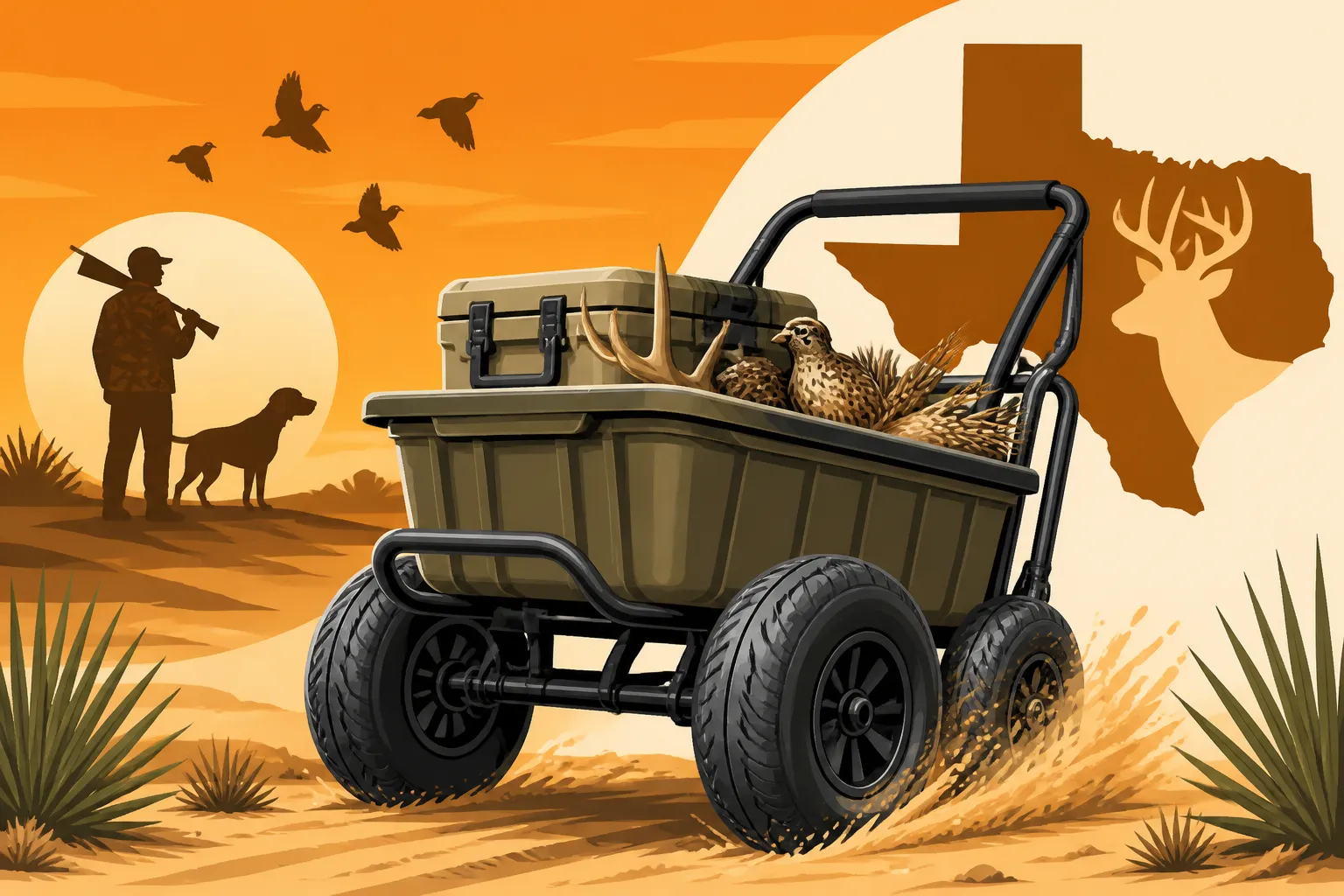
What you need are wide, pneumatic tires. Think about a beach buggy or an ATV; they use wide tires to spread the weight over a larger surface area, reducing ground pressure and allowing them to "float" over the sand instead of digging in. Look for tires that are at least 4 inches wide, but preferably even wider—6 to 8 inches can make a massive difference. The larger diameter also helps, as a bigger wheel can roll over small obstacles more easily without getting hung up. Pneumatic (air-filled) tires also offer a degree of suspension, cushioning the load and making the ride smoother, which can be helpful if you're traversing rocky patches between sandy areas. You can also slightly deflate pneumatic tires to increase their footprint even further in extremely soft conditions, though be careful not to underinflate to the point of risking the bead or valve stem. Brands like the Hawk Crawler feature larger, more aggressive tread tires that are better suited for varied terrain, including softer ground, though they might not be as wide as dedicated beach cart tires. When considering the Best Game Cart for Hauling Deer & Hogs, wheel design is paramount.
Frame Construction and Durability
While the wheels do the heavy lifting in terms of flotation, the frame of the cart is what holds your precious cargo together. South Texas hunting often means rough roads, jagged rocks, and unforgiving brush. Your cart needs to be able to withstand serious abuse.
Look for frames made of heavy-gauge steel or aircraft-grade aluminum. Steel tends to be heavier but incredibly robust, while aluminum offers a lighter package that's still very strong and corrosion-resistant, a bonus if you're near coastal areas where salt air is a factor. Welded joints are generally stronger than bolted ones, but quality bolted construction can also be very durable. Pay attention to the axle; it needs to be stout enough to handle significant weight without bending under stress. A good, solid axle system is non-negotiable. Additionally, consider how the game is secured to the cart. Straps and tie-downs are essential, but some carts include built-in features or a well-designed bed that cradles the animal, preventing it from shifting during transport, especially over uneven sandy terrain. A robust kickstand is also a small but often overlooked feature that makes loading and unloading much easier when you're by yourself.
Capacity and Versatility
The size and shape of the game you're hauling will dictate the capacity you need. A small cart might work for a javelina, but a mature South Texas whitetail or a large hog requires a more substantial platform.
Consider the dimensions of the bed. Is it long enough for a deer to lie flat without excessive overhang? Is it wide enough to accommodate the girth of a large animal? Most quality game carts are designed to handle deer up to 300 pounds, but if you're regularly chasing larger feral hogs or exotics like axis deer, you might want to look at carts with higher weight ratings. Beyond just capacity, think about versatility. Can the cart fold down for easy transport in your truck or ATV? Does it have multiple attachment points for securing various types of game or gear? Some carts even convert into a utility wagon, which can be incredibly useful around the lease for hauling feeders, bags of corn, or other supplies. A versatile cart is an investment that pays off season after season, not just for game recovery. For those scouting new areas, a tool like GoHunt might offer insights into terrain types, helping you anticipate your needs for a versatile game cart before you even step foot in the field.
Top Contenders: Game Carts for Sandy Terrain
When you're sifting through the options for a game cart that can truly handle South Texas sand, you'll quickly realize that not all carts are created equal. The key is prioritizing those features that directly address the challenges of soft, loose ground.
The Importance of Wide, Pneumatic Tires
We've touched on this, but it bears repeating: without the right tires, your game cart will become a sandy anchor. Standard bicycle-style tires, even pneumatic ones, just don't offer enough surface area. What you're looking for are tires often referred to as "all-terrain" or "fat tires," similar to what you'd see on a specialized beach cart or a fat-tire bicycle.
These tires typically range from 6 to 10 inches in width, and usually have a diameter of 16-20 inches. This combination significantly increases the contact patch with the ground, effectively distributing the weight of your game over a much larger area. This flotation effect means the cart rides on the sand rather than sinking into it. You'll exert far less energy, preventing that exhausting, bogged-down feeling. Many outdoor enthusiasts, including those who regularly use gear for activities like Dove Hunting in Texas: The Sept 1 Opener Guide or even just setting up camp, often rely on carts with similar wide-tire designs for easier movement over varied terrain. Some manufacturers, while not exclusively focused on game carts, offer utility wagons with these types of wheels that can be adapted for game recovery. Brands like Mule brand carts or even some specific models from Rivers Edge or Hawk often feature more robust wheel systems than basic carts, designed to handle rougher environments. Checking user reviews specific to sandy conditions, possibly even on platforms like GoHunt that compile user feedback, can be invaluable here.
Considerations for Folding and Storage
While performance in the field is paramount, the practicality of transporting and storing your game cart cannot be overlooked. Nobody wants a cumbersome piece of equipment that's a nightmare to get to and from the hunting grounds.
A good game cart for South Texas should ideally be foldable or at least easily disassembled. Many modern designs incorporate quick-release pins or hinges that allow the cart to fold flat or break down into more manageable pieces. This is a huge advantage for fitting it into the bed of a pickup truck, the trunk of an SUV, or even the back of an ATV. Imagine trying to navigate narrow ranch roads or dense brush with a fully assembled, bulky cart; it's just not practical. A folding cart means you can load it up, drive to your spot, and then quickly deploy it when needed. For instance, when you're focused on Deer Hunting in Texas: Feeders, Blinds & Tactics, you don't want to spend precious hunting time struggling with gear setup. Look for models where the wheels can be easily removed without tools, further reducing the cart's profile for storage. When comparing options, check the folded dimensions against the available space in your vehicle. Some hunters even find innovative ways to strap their folded carts to roof racks or alongside other gear, ensuring they always have it on hand for that critical moment after the shot.
| Feature | Ideal for South Texas Sand | Less Suitable for South Texas Sand |
|---|---|---|
| Wheel Width | Wide (6-10+ inches) | Narrow (2-4 inches) |
| Tire Type | Pneumatic (air-filled), low pressure capability | Solid, hard plastic/rubber |
| Tire Tread | Aggressive, all-terrain | Smooth, shallow grooves |
| Frame Material | Heavy-gauge steel or aircraft-grade aluminum | Lightweight, thin-walled aluminum or plastic |
| Axle Strength | Heavy-duty, solid steel | Thin, hollow, or easily bent |
| Loading Capacity | 250 lbs + | Under 200 lbs |
| Storage/Transport | Folds flat or disassembles easily, removable wheels | Rigid, non-folding, fixed wheels |
Tips for Using Your Game Cart in Challenging Conditions
Having the right game cart is half the battle; knowing how to use it effectively in those tricky South Texas sandy conditions is the other. Even the best cart can be a pain if you don't approach the task strategically.
Proper Loading Techniques
It might seem straightforward – just throw the deer on and go, right? Not so fast, especially when dealing with soft ground. How you load your game can significantly impact the cart's performance and your effort level. The goal is to distribute the weight as evenly as possible and keep the center of gravity low.
First, always place the heaviest part of the animal (typically the mid-section) over the axle. This reduces the amount of weight you're lifting or supporting at the handles. If the weight is too far forward or backward, it creates a "lever effect," making the cart harder to balance and more prone to tipping or digging in. For a deer, this usually means positioning its belly or chest directly over the axle. Secondly, use strong, robust straps or bungee cords to secure the animal firmly to the cart. You don't want it shifting side-to-side or bouncing around as you navigate uneven terrain or soft spots. A shifting load means constantly fighting for balance, which rapidly exhausts you. Thirdly, if your cart allows for it, try to keep the animal’s legs tucked in or secured to prevent them from snagging on brush or dragging in the sand. This seemingly small detail can prevent frustrating hang-ups and make the pull smoother. Remember, you're looking for a low, stable, and secure load. A well-loaded cart feels lighter and handles far better, reducing the chance of getting bogged down in that notorious sandy loam. This attention to detail is similar to the meticulous planning involved in Field Dressing & Processing Game in Texas Heat, where every step contributes to a successful outcome.
Maintenance for Longevity
Investing in a quality game cart means you'll want it to last through many seasons of successful hunts. The harsh environment of South Texas – dust, sand, moisture, and extreme temperatures – can take a toll on any equipment. Regular maintenance is key.
After each use, especially if you've been in wet or muddy conditions (even sand can become abrasive when wet), take the time to clean your cart thoroughly. Rinse off any dirt, sand, blood, or debris. Pay special attention to the wheel axles and bearings, as sand is incredibly abrasive and can quickly wear down moving parts. Let the cart dry completely to prevent rust, particularly if it's steel. Next, inspect all nuts, bolts, and welds. The constant jostling and heavy loads can loosen fasteners or stress joints. Tighten anything that feels loose, and check for any signs of cracking or fatigue in the frame. Lubricate moving parts, especially the wheel bearings, with a waterproof grease or silicone spray. This helps keep things rolling smoothly and protects against corrosion. Periodically check your pneumatic tires for proper inflation and inspect them for cuts, punctures, or signs of dry rot from sun exposure. If you're using removable wheels, ensure the quick-release mechanisms are clean and functioning correctly. Storing your cart in a dry, covered area when not in use will also significantly extend its lifespan. By treating your game cart like the essential piece of hunting gear it is, you'll ensure it's ready to perform whenever you need to haul that trophy out of the South Texas sand. Regular checks, like using a reliable tool from GoHunt to scout and prepare your hunting spots, become part of the overall strategy for a successful season. For further advice on maintaining your gear and optimizing your hunting efforts, you might find valuable information in our guide on Best Hunting Gear for Beginners in Texas By Budget.
Disclaimer
Please remember that hunting regulations and best practices can change. Always consult the most current Texas Parks and Wildlife Department (TPWD) Outdoor Annual and local regulations before heading into the field. This information is for educational purposes only and not a substitute for official guidance.