How to Keep Hogs Out of Your Deer Feeder
There’s almost nothing more frustrating for a Texas hunter than seeing their carefully managed deer feeder, meant to draw in those elusive whitetails, turned into an all-you-can-eat buffet for feral hogs. You invest your hard-earned money and time into feed, only to find the corn scattered, the feeder itself damaged, and the deer population seemingly replaced by a sounder of destructive swine. This guide is all about tackling that exact headache, offering proven strategies and real-world advice to reclaim your deer feeders from the relentless assault of Texas hogs.
Understanding the Hog Problem at Feeders
It’s no secret that feral hogs are a massive challenge across Texas. These intelligent, prolific animals thrive in our diverse landscapes, and unfortunately for deer hunters, they’re incredibly drawn to the supplemental feed we put out. Before we dive into solutions, let’s really understand why these critters are such a persistent problem at your feeders.
Why Hogs Love Your Deer Feeder
Hogs are true opportunists, and a deer feeder is essentially a neon sign flashing “free food!” for them. They possess an incredible sense of smell, capable of detecting corn or protein pellets from a considerable distance, especially when those tempting aromas are carried on the Texas breeze. Once they locate a food source, their natural instinct is to exploit it thoroughly. They’re driven by hunger and their rapid breeding cycles mean there are always more mouths to feed, creating intense competition for readily available calories.
Consider a typical scenario: you've set up your feeder, perfectly timed to drop corn twice a day, drawing in local deer. But within days, or sometimes even hours, a sounder of hogs will have found it. They're not particular; corn, protein, even the mineral blocks you put out for your deer—it's all fair game. Their powerful snouts are designed for rooting, making quick work of any feed spilled on the ground, and their sheer strength allows them to jostle and even damage feeders to get to more. It's a goldmine for them, and they'll return again and again as long as the buffet remains open.
The Damage Hogs Inflict
The impact of feral hogs on your hunting property goes far beyond just eating your expensive deer feed. The financial cost of replacing feed alone can be staggering. Imagine buying bags of corn every week, only for 70-80% of it to be devoured by hogs before the deer even get a chance. That’s money literally rooted into the ground and wasted. Beyond the feed, hogs can cause significant damage to the feeders themselves. They’ll bend legs, tear open barrels, and even knock over entire setups if not properly secured. I’ve seen them completely destroy plastic feeders and even bend heavy-gauge steel.
But the damage isn't just to your wallet and equipment. Hogs are notorious for disturbing deer patterns. Deer are naturally wary, and the constant presence of a noisy, destructive sounder of hogs can easily push them out of an area. If deer associate your feeder with hog activity, they'll simply avoid it, opting for quieter, safer foraging spots. This directly impacts your ability to pattern bucks with trail cameras or reliably hunt over feeders. Furthermore, the ecological impact is severe. Hogs root up vegetation, destroy food plots, and compete with native wildlife, including deer and turkey, for natural food sources. It’s a vicious cycle that can degrade your hunting grounds over time.
Physical Barriers: Building Hog-Proof Defenses
When it comes to keeping hogs out, the most direct and often most effective method is to create a physical barrier. You need to think like a hog – strong, determined, and always looking for the path of least resistance – and then build something that makes them give up.
Feeder Pens and Fences
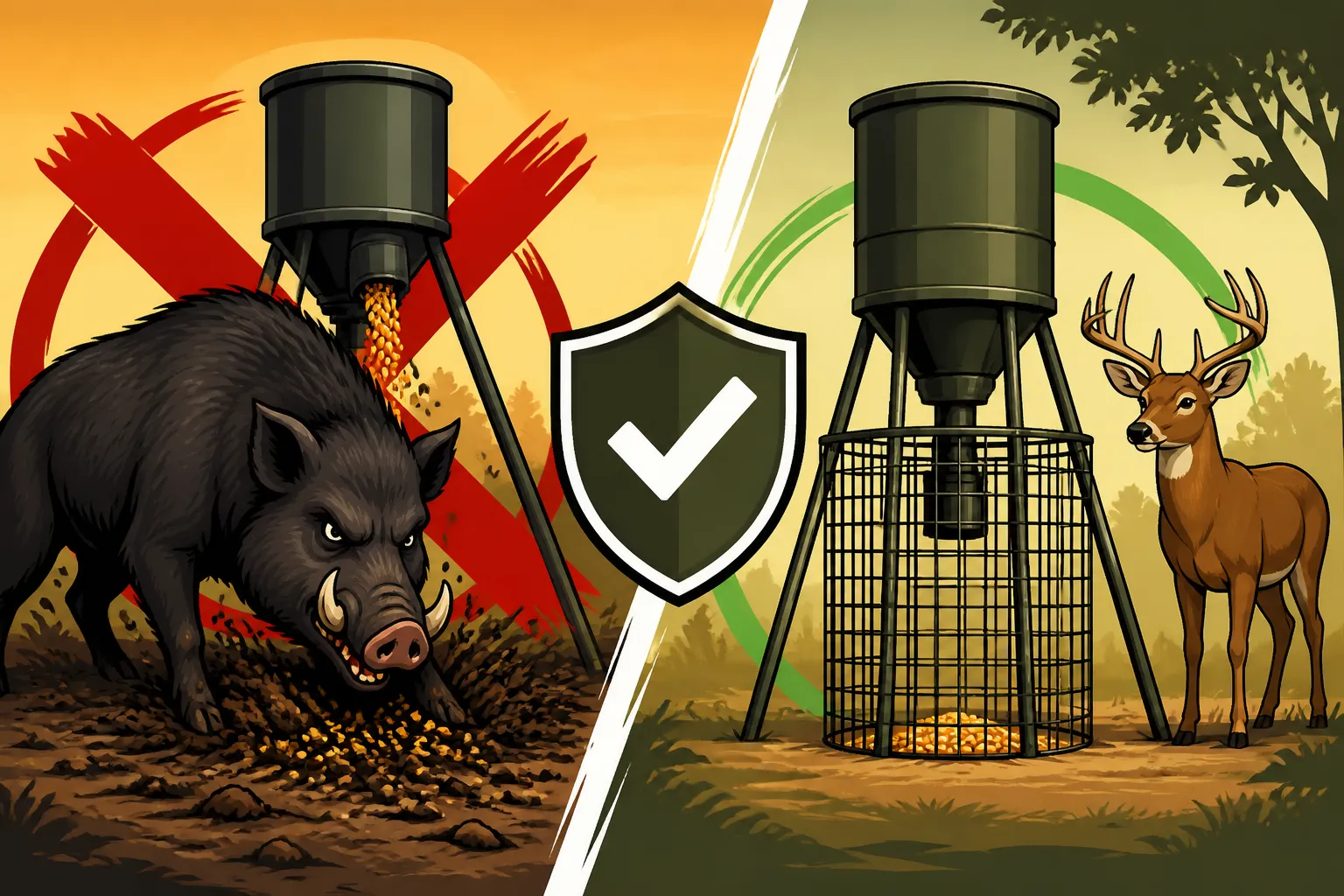
Building a feeder pen is, hands down, one of the most reliable ways to protect your deer feed from hogs. The concept is simple: erect a perimeter around your feeder that deer can easily jump over, but hogs cannot get through or under.
-
Panel Fencing: Livestock panels, especially cattle or hog panels, are fantastic for this. They are typically 4-5 feet tall and come in various lengths, usually 12 or 16 feet. You’ll want panels with openings small enough that hogs can’t squeeze through – 4-inch square or tighter is ideal. The height is critical; whitetail deer can typically jump a 36-inch to 42-inch fence with ease, but hogs, especially mature boars, struggle significantly with anything over 28-30 inches. For safety, many hunters opt for a 34-inch to 36-inch tall pen, which is generally well within a deer's jumping capability but a real barrier for hogs. You can create an enclosure using six 16-foot panels, shaping them into a circle or hexagon around your feeder. Secure the panels together with heavy-duty zip ties, baling wire, or metal clips. The key is to also secure the bottom of the panels to the ground using T-posts or by bending the bottom rung into the soil to prevent hogs from rooting underneath.
-
Hog Wire Fencing: While more labor-intensive to install, hog wire (or woven wire) can also be effective. You'll need sturdy corner posts and line posts, and you'll have to stretch the wire taut. Again, choose a wire with graduated spacing, smaller at the bottom, to prevent smaller hogs from getting through. The downside here is that if not installed perfectly, hogs can still find weak spots to exploit.
When constructing your feeder pen, think about deer access. The pen needs to be large enough for deer to feel comfortable jumping in and moving around the feeder. A common mistake is making the pen too small, which can make deer hesitant. Aim for a diameter of at least 20 feet, though 30 feet or more is even better if space and materials allow. Place your feeder roughly in the center of this enclosure.
Feeder Design Modifications
Sometimes, a complete pen isn’t feasible or desired. In these cases, modifying the feeder itself or its immediate surroundings can deter hogs.
-
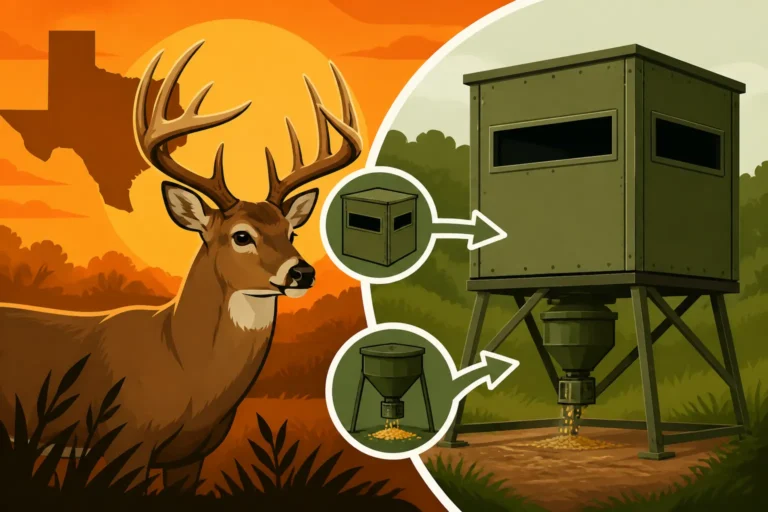
Suspended Feeders: One of the most effective modifications is suspending your feeder. Instead of legs, the feeder hangs from a sturdy tripod or a strong tree limb, high enough off the ground that hogs can’t reach the dispenser mechanism. For this to work, the feeder must be hung high enough that even the largest boar can't jump up and bash the bottom or reach the spinner plate. This often means the bottom of the feeder needs to be at least 4-5 feet off the ground. The challenge here is refilling, which often requires a ladder or a winch system. However, for sheer hog-proofing, it's highly effective as long as there's no way for them to knock it down.
-
Hog Lights: While not a physical barrier, hog lights are a design modification that can act as a deterrent. These are motion-activated lights, often green or red, that come on when an animal approaches the feeder at night. The sudden light can spook hogs, especially those that are primarily nocturnal. Some models, like the Elusive Wildlife Innovations Hog Light, are specifically designed for this purpose, sometimes even incorporating a dim glow that brightens. While they won't stop the most determined hogs, they can make some sounders nervous enough to move on, especially in areas with other food options. They also make nocturnal hunting easier if you decide to take matters into your own hands! For more on hunting at night, check out our guide on how to hunt hogs at night with thermal.
-
Custom Feeder Skirts or Guards: Some hunters construct metal skirts or guards around the bottom of their spin feeders to prevent hogs from accessing the dropped feed or damaging the spinner plate directly. This involves welding or attaching a heavy-gauge metal cone or cylinder that funnels the corn directly into a smaller footprint on the ground, making it harder for hogs to root around the mechanism.
Strategic Management: Tactics Beyond Fencing
While physical barriers are incredibly effective, a truly comprehensive hog management strategy involves more than just fences. Integrating other tactics can significantly reduce hog presence and pressure on your deer feeders.
Feeder Placement and Timing
Where and when you feed can play a surprising role in deterring hogs. Hogs are creatures of habit, and if they learn a feeder is consistently available, they’ll be there.
-
Strategic Placement: Consider placing your feeders in areas that are naturally less accessible or less preferred by hogs. While hogs are everywhere, areas with dense, thick brush might offer them more cover and a sense of security, making them more comfortable. Conversely, an open area with good visibility might make them more hesitant. If you have areas on your property that deer frequent but hogs tend to avoid (perhaps due to terrain or proximity to human activity), those could be prime spots. Also, avoid placing feeders directly on known hog travel corridors or wallows. Sometimes, simply moving a feeder 100 yards can make a difference.
-
Timing is Everything: Most hunters set their deer feeder timer settings in Texas for morning and evening drops to coincide with peak deer movement. However, hogs also capitalize on these times, and are often most active at night or during the cooler parts of the day. One strategy is to use shorter, more frequent drops or even adjust your timing to less conventional hours. For example, some hunters experiment with dropping feed midday, when deer are often bedded down, in the hopes that hogs might find the pickings sparser if they are more active at night. Another approach is to use minimal feed drops, just enough to entice deer, but not enough to sustain a large sounder of hogs. Regularly scouting for signs of hog activity around your feeder can help you adjust.
-
Alternative Feed Sites: If hogs are particularly relentless, consider creating secondary, less accessible feeding stations for deer that are not as heavily relied upon. These might be smaller, gravity-fed feeders tucked away in dense cover, where a hog might be less inclined to root around. This helps keep deer in the area even if your main feeder is under heavy hog pressure.
Trapping and Removal
Let’s be real: sometimes the best way to keep hogs out of your feeder is to remove the hogs entirely. Trapping is one of the most effective, non-hunting methods for reducing hog populations on your property. This proactive approach significantly reduces the number of hogs that can even approach your feeders.
-
Types of Traps: Modern hog traps range from simple corral traps made of hog panels to advanced "smart" traps equipped with cellular connectivity that allows you to monitor and trigger the trap remotely from your phone. Regardless of the type, the principle is the same: bait hogs into an enclosure and then secure them. For detailed information, check out our guide on hog trapping in Texas: methods that work.
-
Baiting Strategies: Pre-baiting is crucial for successful trapping. Get the hogs accustomed to feeding in and around the trap for several nights before you set it to spring. Use the same feed you use in your deer feeder (like corn) mixed with something extra potent like soured corn or a commercial hog attractant. The goal is to draw in as many hogs from a sounder as possible before dropping the gate.
-
Continuous Removal: Trapping isn't a one-and-done solution. Feral hogs reproduce at an alarming rate, and new sounders will move in. Consistent trapping and removal are vital for keeping populations in check and reducing pressure on your deer feeders over the long term. This is an ongoing battle, and staying on top of it is key. You might also consider nocturnal hunting trips, especially if you have the right gear. Many hunters successfully use thermal scopes for hog hunting in Texas to keep their leases clear.
Scent and Sound Deterrents
These methods are often less reliable than physical barriers or trapping, but they can sometimes offer a temporary solution or supplement other strategies, especially for smaller sounders or less habituated hogs.
-
Scent-Based Deterrents: Some commercial products claim to deter hogs using scents they dislike. These often contain ingredients like predator urine (coyote or wolf), creosote, or other strong, unpleasant odors. While some hunters report limited success, hogs are incredibly adaptable, and these often lose effectiveness once the novelty wears off or if the hogs are hungry enough. They might work for a week or two, but don't expect miracles.
-
Sound-Based Deterrents: Similar to scent deterrents, some devices emit ultrasonic sounds or sudden loud noises designed to scare away wildlife. Hogs have excellent hearing, but again, their adaptability means they often become desensitized to these sounds over time, especially if there's a strong food reward (like your corn) involved. Think of it like a car alarm – effective initially, but soon ignored by regular passersby. These might be best used in conjunction with other methods to add an extra layer of confusion for the hogs.
Integrating Hog Control with Deer Management
Keeping hogs out of your deer feeder isn’t just about hog control; it’s about effective deer management. These two aspects are intertwined, and a holistic approach will yield the best results for your property.
Balancing Deer Nutrition and Hog Exclusion
The primary goal of a deer feeder, for many, is to supplement the natural diet of whitetail deer, especially through tough times or to promote antler growth with protein. When you implement hog exclusion methods, it’s crucial to ensure that these measures don’t inadvertently deter the deer you’re trying to attract.
-
Feeder Pen Design for Deer Comfort: As mentioned earlier, the size and height of your feeder pen are paramount. Deer need to feel secure and have ample space to enter, feed, and exit without feeling trapped or exposed. A pen that's too small or feels claustrophobic can make them wary. Observe your deer's behavior around a new pen; if they're hesitant, you might need to adjust the design or increase its size. Over time, deer will become accustomed to jumping into a well-designed pen, associating it with a safe food source.
-
Ensuring Continued Deer Access: While you want to keep hogs out, you still want deer to easily access the feed. If you're using a suspended feeder, ensure the drop zone is easily reachable for deer of all sizes, from fawns to mature bucks. If you're using specialized feeders, make sure their design doesn't make it difficult for deer to get to the feed. For instance, protein feeders designed to be hog-proof often have specific trough heights and openings that might require some deer to adapt, but typically they learn quickly. We also have detailed information on the best corn for deer feeders in Texas, which can help ensure what you are providing is highly attractive to your target species.
The Long-Term Battle
Let’s be honest: hog management in Texas is not a sprint; it’s a marathon. You’re dealing with an animal that reproduces incredibly fast and is highly intelligent. What works perfectly this season might need adjustment next season as hogs adapt.
-
Consistency is Key: Whatever methods you choose—be it feeder pens, trapping, or a combination—consistency is the secret ingredient. Regularly check your feeder pens for breaches, maintain your traps, and remain vigilant for new hog activity. Ignoring the problem for even a short period can lead to a resurgence of hogs and undo all your hard work. Consider mapping hog movements on your lease to identify key areas.
-
Adapt and Overcome: Hogs are smart. If they encounter a barrier, they'll often test it. If they find a weakness, they'll exploit it. You might build a perfect feeder pen, only to find a determined boar has rooted under a section, or a sounder has found a way to squeeze through a gap. Be prepared to adapt. Reinforce weak spots, try new trap locations, or combine methods if one isn't enough. For instance, a feeder pen might keep out most hogs, but adding a hog light might deter the few persistent ones. Hunting over feeders and corn in Texas is a legal and effective tactic, but only if you can protect your feed from these invasive animals.
Table: Hog Exclusion Methods Compared
| Method | Effectiveness | Cost (Initial) | Maintenance | Deer Impact | Pros | Cons |
|---|---|---|---|---|---|---|
| Feeder Pens (Panel) | High | Medium-High | Low-Medium | Low (Deer Adapt) | Very effective, durable, clear deer access | Requires construction, initial material cost |
| Suspended Feeders | High | Medium | Medium | Low (Deer Adapt) | Highly effective, no ground access | Refilling can be challenging, requires strong support |
| Hog Trapping | Very High (Population Control) | Medium-High | High | None directly | Removes problem animals, reduces overall pressure | Labor-intensive, requires consistent effort, ongoing cost |
| Hog Lights | Medium-Low | Low | Low | Low | May deter some hogs, aids night hunting | Hogs can habituate, not a complete solution |
| Scent/Sound Deterrents | Low | Low | Low | Low | Easy to deploy, may offer temporary relief | Hogs habituate quickly, generally ineffective long-term |
Ultimately, managing hogs at your deer feeders is an ongoing commitment, but it's one that pays off. By understanding their behavior, implementing robust physical barriers, and utilizing smart management tactics like trapping, you can significantly reduce their impact and ensure your valuable feed goes to the deer you're truly targeting. Reclaim your feeders, protect your investment, and enjoy more successful hunting seasons in the great state of Texas!
Disclaimer
Hunting regulations and best practices can change. Always consult the latest Texas Parks and Wildlife Department (TPWD) Outdoor Annual for the most current and accurate information before engaging in any hunting or wildlife management activities. This guide is for informational purposes only and does not supersede official regulations.