Bobwhite Quail Hunting Tactics for Texas
Finding a wild covey of Bobwhites in Texas used to be as simple as walking behind the barn, but today, habitat loss and erratic weather have turned this pursuit into a challenging chess match. If you are tired of walking miles of empty pastures and want to actually hear that heart-stopping thrum of wings, this guide breaks down the specific tactics needed to master the Texas brush.
Understanding Texas Bobwhite Habitat and Behavior
To hunt Bobwhites successfully in Texas, you have to stop looking at the landscape as a whole and start looking for "the edge." Quail are creatures of transition. They don't like deep, dark woods, and they can’t survive in a mowed-down golf course of a pasture. They need what we call the "quail house"—a mix of overhead cover to hide from hawks, bunchgrasses for nesting, and open ground where they can run. If you are just starting out, check out our guide on Best Hunting Method for Bobwhite Quail in Texas to get a feel for the basic approach.
In the Rolling Plains, this often looks like a "shinnery" of oak or plum thickets surrounded by native grasses. In South Texas, it’s all about the motts of mesquite and prickly pear. The birds use these thickets as headquarters. They venture out in the morning to feed on seeds and insects, then retreat to the shade of a "quail house" during the heat of the day. If you aren't finding birds, you're likely hunting "clean" land. Quail love the messy parts of a ranch—the fence lines grown over with vines, the corners of center-pivot irrigation fields, and the rocky draws where the tractor can't go.
Understanding the specific Texas Quail Decline: Why & Where to Still Hunt is crucial because it helps you narrow down your search to counties that still have the right moisture levels. Quail are "boom or bust" birds. If a region gets timely spring rains, the population explodes. If it’s a drought year, the birds may not even attempt to nest. Always check the annual roadside counts provided by Texas Parks and Wildlife before you burn a tank of gas driving to a lease that might be a desert.
Regional Hotspots: Rolling Plains vs. South Texas
The Rolling Plains, centered around towns like Childress, Paducah, and Dickens, is legendary for its wide-open vistas and red dirt. Here, you are often hunting "big country." You’ll find birds along the edges of cotton fields and in the deep canyons where the brush provides a break from the wind. This area is home to some of the Rolling Plains Hunting: Quail & Deer opportunities that make Texas a premier destination. The walking can be tough, with rolling hills and loose soil, so your physical conditioning matters just as much as your dog’s.
South Texas is a different beast entirely. Down near Hebbronville or Laredo, the "Brush Country" is a sea of thorns. Everything in South Texas wants to poke, sting, or bite you. The Bobwhites here have adapted to run more than they fly. Because the cover is so thick, many hunters use "quail rigs"—specially modified trucks with high seats—to spot dogs working the edges of mowed strips. It’s a unique style of hunting that allows you to cover vast amounts of territory that would be impossible to hunt on foot.
Weather Patterns and Quail Movement
Weather is the single most important factor in a day's success. On a blue-bird day with no wind, scent doesn't move. Your dogs will struggle to "pin" a covey because the scent molecules stay trapped in the grass. Conversely, if it’s a 30-mph gale, the scent is blown away before the dog can register it. The sweet spot is a cool morning with a light 5-10 mph breeze and enough humidity to keep the ground damp.
Pay attention to the "norther" fronts. Just before a cold front hits, quail often feed heavily, making them easier to find. Once the front passes and the temperature drops, they huddle deep in thick cover to conserve heat. If you’re out there in the midday heat, look for "loafing cover"—thick, shaded areas where birds rest between morning and evening feeding sessions. If you are preparing for a trip, make sure you've looked at the Texas Quail Season Dates & Limit to ensure you're within the legal window.
Essential Gear and Dog Management
You cannot hunt Texas Bobwhites without considering the thorns. Whether you are in the Panhandle or the Rio Grande Valley, the vegetation is unforgiving. I’ve seen many hunters show up in thin canvas pants only to have their legs shredded by the end of the first hour. Investing in a pair of high-quality brush pants or chaps is non-negotiable. You can often find decent deals on these through Amazon if you search for upland hunting gear specifically designed for briars.
Your footwear is equally important. You will be walking miles over uneven ground. While many prefer traditional upland boots, in Texas, you have to worry about rattlesnakes, especially in the early season or during warm spells in December. It’s a very good idea to look into Snake Boots vs Snake Gaiters: Which for Texas? before you head into the tall grass. A snake bite is a quick way to end a season and a bank account.
| Gear Category | Recommended Item | Why It Matters for Texas |
|---|---|---|
| Shotgun | 20-gauge or 28-gauge | Light to carry for miles; fast for quick flushes. |
| Choke | Improved Cylinder or Skeet | Most shots are within 20-25 yards in the brush. |
| Ammo | #7.5 or #8 Lead (or non-toxic) | High pellet count is better for small, fast birds. |
| Dog Safety | E-Collar and GPS Tracker | Essential for keeping dogs off deer and finding them in thick brush. |
| Hydration | 2L+ Water Bladder | Texas heat dehydrates you and the dogs faster than you think. |
Choosing the Right Shotgun and Load
When a covey of fifteen Bobwhites explodes from under your feet, you don't have time to fumble with a heavy gun. Most veteran Texas hunters swear by the 20-gauge. It’s the perfect balance of weight and firepower. Some purists love the 28-gauge for its slim profile and light recoil, which is a joy to carry when you're on mile six of a ten-mile trek.
Regardless of the gauge, your choke selection is key. In the thick South Texas brush, a "Skeet" or "Improved Cylinder" choke is usually best. You want a wide, forgiving pattern because most of your shots will happen within 20 yards as the birds weave through mesquite limbs. For ammunition, #7.5 or #8 shot is the standard. If you're on public land, remember that non-toxic shot might be required, so check the specific WMA rules first.
Working with Pointers and Flushers
The bond between a hunter and their dog is the soul of quail hunting. In Texas, Pointers (English Pointers and Brittanys) are the kings of the field because of their ability to cover large distances and "point" the birds from a distance. This gives the hunter time to walk up to the dog and prepare for the flush. However, don't overlook a good flushing dog like a Labrador or a Springer Spaniel. They are excellent for "mopping up" singles after a covey has scattered.
If you are training a young dog, the Texas heat and the abundance of "trash scent" (deer, javelina, and rabbits) can be a nightmare. Using a high-quality e-collar is standard practice. Many hunters buy their training supplies on Amazon because of the easy access to bird launchers and scent trainers. Just remember, a dog is an athlete; they need high-protein food and constant hydration to perform in the 80-degree "winter" days we often get in South Texas.
Hydration and Safety in the Texas Heat
I cannot stress this enough: the Texas sun is a killer. Even in January, the temperature can spike unexpectedly. You must carry more water than you think you need—not just for yourself, but for your dogs. A dog working at full tilt can overheat in minutes. Watch for signs of heat exhaustion: bright red tongue, staggering, or a refusal to move. If this happens, get them into the shade and pour water on their belly and paws immediately.
Beyond the heat, always carry a basic first aid kit. At a minimum, you need pliers to pull cactus spines out of your dog's paws (and your own shins). It’s also wise to have a bottle of eye wash to clear out seeds and dust from your dog's eyes at the end of the day. Safety also extends to your Texas Hunting License: Cost, Types & How to Buy (2026)—ensure you have your upland game bird endorsement, or you’ll be facing a hefty fine from a Game Warden.
Field Tactics for Finding and Shooting Coveys
Once you’re in the field, the real work begins. Hunting Bobwhites isn’t just about walking; it’s about tactical movement. If you have a group, walk in a line about 20 to 30 yards apart. This "sweep" method ensures you cover the ground effectively and prevents birds from doubling back between hunters. Always keep your eyes on the dogs. When a dog’s tail starts getting "whippy," they’ve found scent. When they go "on point"—standing perfectly still—that is your cue to move in.
The approach to a pointed dog should be done from the side if possible, rather than walking directly up the dog’s tail. This helps "pinch" the birds between you and the dog, often forcing them to fly in a more predictable direction. As you approach, keep your gun at "ready" but with the safety on. Talk to your hunting partners to ensure everyone knows where the "safe zones" are for shooting.
Managing the Break: When the Covey Flushes
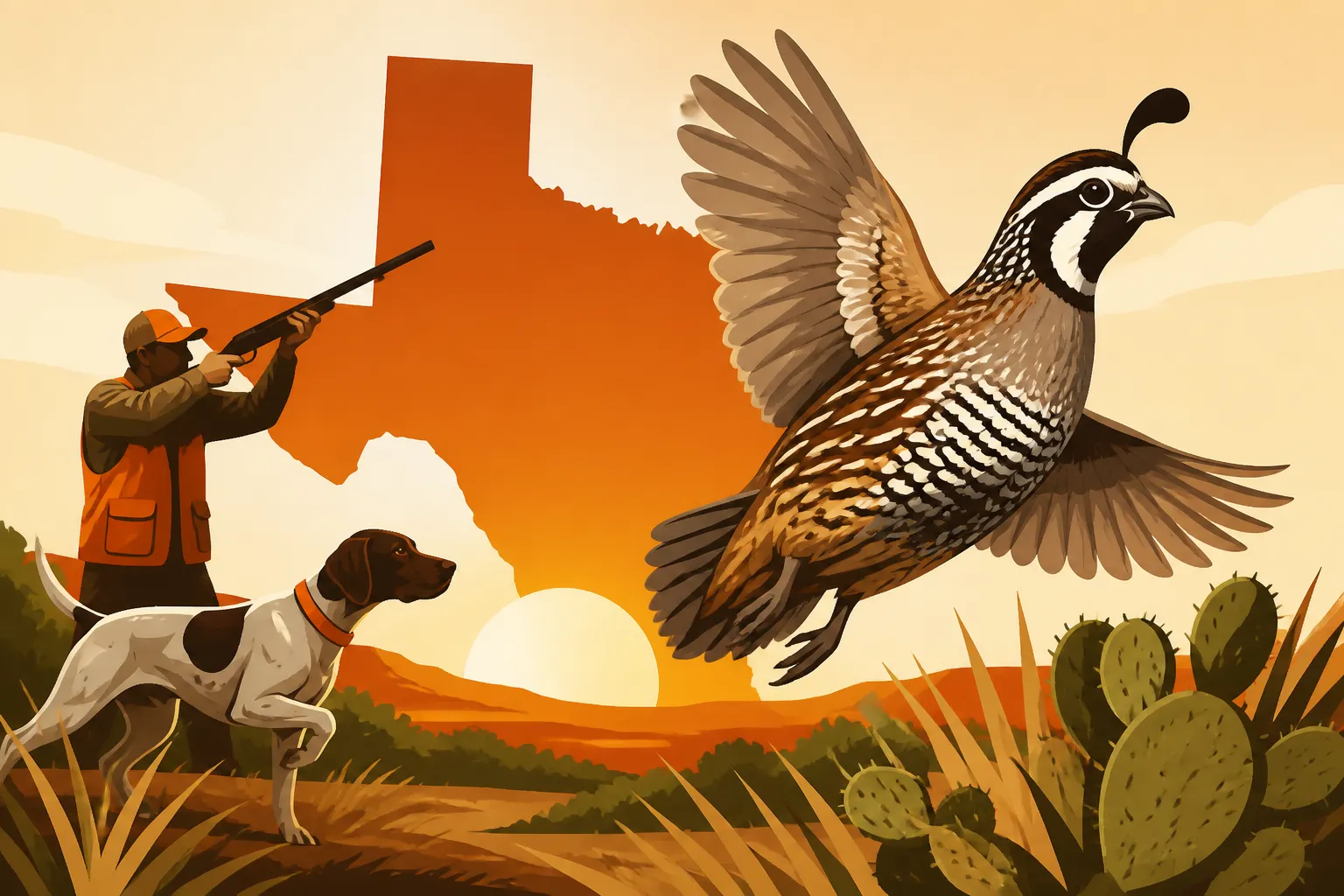
The covey rise is one of the most electric moments in all of hunting. Ten to twenty birds will erupt simultaneously with a noise like a small jet engine. The biggest mistake beginners make is "flock shooting"—aiming at the whole group and hitting nothing. You must pick one bird. Focus on the beak or the white throat patch of a single Bobwhite, follow through with your swing, and pull the trigger.
Once you’ve fired, don't immediately start reloading. Watch where the rest of the covey goes. Bobwhites usually fly a few hundred yards and then drop into the nearest thick cover. Mark that spot! Those "singles" are often much easier to hunt than the original covey because they will hold tighter to the ground, allowing your dog to point them individually. If you're on a lease, make sure you're following the Best Gear for Bobwhite Quail on a Texas Lease recommendations to stay efficient.
Tracking Singles After the Initial Rise
After the initial covey rise, give the birds about ten to fifteen minutes to settle down. If you rush in immediately, they might still be "runny" and flush wild before you get close. By waiting, you allow the birds to start calling to each other to regroup. This "assembly call" is a series of low whistles that can help you (and your dog) pinpoint their exact location.
Working singles is where a good dog really shines. The birds are nervous and will bury themselves deep in the bunchgrass. You might have to literally step on a bird to get it to fly. This is slow, methodical work. It’s also a great time to practice your shooting, as the flushes are usually one at a time. If you’re looking for more ways to improve your bird numbers, consider learning How to Build a Food Plot in Texas to provide that much-needed supplemental nutrition during the lean months.
Planning Your Texas Quail Hunt
Planning a quail hunt in the Lone Star State requires some legwork. Unlike deer hunting, where you can sit in a blind over a feeder, quail hunting is active and land-intensive. If you don't own land, you have two main options: public land or a private lease/outfitter. Public land hunting in Texas is limited but can be rewarding if you’re willing to hike. Places like the Matador WMA or the Chaparral WMA offer "drawn hunts" or "Annual Public Hunting" access.
For many, the best way to get consistent action is through a day hunt or a season lease. If you’re going the private route, it’s essential to know How to Get Permission to Hunt Private Land in Texas. Many ranchers are happy to have someone take a few quail if it means you'll also shoot a few feral hogs while you’re at it. Always be respectful of the land, leave gates as you found them, and never shoot toward livestock or buildings.
Public vs. Private Land Opportunities
Public land hunting requires an Annual Public Hunting (APH) permit. You can purchase this through the same portal where you get your license, or sometimes even through Amazon by purchasing gift cards for sporting goods stores that sell licenses. The key to public land is scouting. Use apps like onX or HuntStand to find areas with the right habitat—look for those transitional edges between brush and grassland.
Private land offers a more controlled environment. Many outfitters in South Texas provide "all-inclusive" packages that include dogs, guides, and specialized vehicles. This is an expensive option, but for someone with limited time, it’s the most effective way to ensure you see birds. If you're looking for a more "DIY" experience, searching for a small acreage lease in the Rolling Plains might be more your speed.
Timing Your Hunt Around Season Dates
The Texas quail season typically runs from late October through February. However, the best hunting usually occurs in December and January. Early in the season (October/November), it can still be brutally hot, which is hard on the dogs. By December, the first few freezes have "knocked down" some of the thickest weeds, making it easier to see your dogs and walk through the brush.
Also, consider the hunting pressure. By late January, the birds have been hunted for months. They become "educated," flushing further away and running longer distances before taking flight. If you want the best "point and flush" action, try to schedule your trip for the mid-season. No matter when you go, make sure you are up to date on all Texas Hunting Regulations Changes for 2026 to stay on the right side of the law.
Texas Bobwhite Quail Hunting Regulations Disclaimer
This guide is intended for informational and educational purposes only. Hunting regulations in Texas, including season dates, bag limits, and legal methods of take, are subject to change annually by the Texas Parks and Wildlife Department (TPWD). Always consult the official Texas Outdoor Annual or the TPWD website before heading into the field. Ensure you possess a valid Texas hunting license with the appropriate upland game bird endorsement. Respect private property rights and always obtain written permission before hunting on private land. Safety should be your top priority; always follow the primary rules of firearm safety and be aware of your surroundings and hunting partners at all times.