How to Hunt Pronghorn on a Texas Lease
Staring out across the shimmering heat waves of the Trans-Pecos or the endless horizons of the Texas Panhandle can be a humbling experience for any hunter. You might have spotted a trophy buck, but he is a mile away, and his binocular-quality vision has already pegged your position. This guide solves the tactical and logistical frustrations of pursuing the fastest land animal in North America on a private Texas lease.
The Logistics of Hunting Pronghorn on Private Land
Hunting pronghorn in Texas is vastly different from chasing whitetail in the brush country. The first hurdle isn't the terrain or the animal's speed—it is the administrative process. In Texas, pronghorn are managed through a specific permit system that ties harvest rights directly to the land. If you are on a lease, you cannot simply show up with a general hunting license and expect to harvest a "speed goat." You must ensure the landowner has been issued permits by the Texas Parks and Wildlife Department.
Navigating the Landowner Permit System
On a private lease, the landowner or the lease manager typically receives a specific number of permits based on biological surveys conducted by state biologists. These permits are physical documents that must be attached to the animal immediately upon harvest. Before you even pack your bags, you need to confirm that your lease has these tags in hand. If you are looking for a lease specifically for this species, you should consult the Texas Pronghorn Season & Permits guide to understand how these allocations work year to year.
Because pronghorn populations fluctuate based on drought and fawning success, the number of tags on your lease might change every season. It is a common frustration for hunters to spend years on a lease only to have the permits pulled due to a population dip. Always stay in close communication with your landowner. If your lease doesn't have permits, you might need to look into the Texas Drawn Hunts: Public Hunt Draw System as an alternative way to secure a tag for the season.
Trans-Pecos vs Panhandle Leases
Texas offers two primary regions for pronghorn, and your tactics will change based on where your lease is located. The Trans-Pecos region, centered around towns like Marfa and Alpine, is rugged, mountainous, and high-desert terrain. Here, you have more topographical advantages for stalking, but the volcanic rock and cactus will tear up your gear and your body.
In contrast, the Panhandle leases near Dalhart or Amarillo are often characterized by rolling grasslands and agricultural fringes. The wind here is a constant factor, often blowing at a steady 20 to 30 miles per hour. While the Panhandle often produces heavier-bodied goats, the lack of vertical cover makes the final approach of a stalk incredibly difficult. Understanding these regional differences is the first step in preparing for the Texas Hunting Seasons: Complete Calendar by Species and ensuring you have the right mindset for the specific dirt you are walking on.
Scouting and Spotting Techniques in Wide-Open Spaces
Once you have your permit secured, the real work begins. Pronghorn are not nocturnal; they are most active during the day, which means you will be hunting in the full glare of the Texas sun. They rely almost entirely on their vision, which is estimated to be equivalent to 8x binoculars. If you can see them, they have likely already seen you.
High-Ground Glassing Strategies
The most effective way to scout your lease is to find the highest point available and stay there. This isn't a "walk and talk" kind of hunt. You need to spend hours behind high-quality glass. Veteran hunters often use a "grid" method, scanning the landscape in small sections rather than swinging the binoculars wildly across the horizon. Pronghorn are often mistaken for white rocks or patches of light-colored grass because their tan and white coats break up their outline perfectly in the desert sun.
Using a tripod for your binoculars is not a luxury; it is a necessity. It eliminates the micro-shakes of your hands, allowing your eyes to pick up the flicker of a tail or the turn of a head a mile away. For those looking to upgrade their setup, checking out the Best Hunting Optics for Texas: Scopes, Binos & Rangefinders will give you a better idea of the clarity needed for this type of long-distance spotting. When you do find a buck, don't rush. Watch his behavior. Is he rutting? Is he heading toward a specific draw? Patience in the scouting phase saves you miles of wasted walking.
Monitoring Water and Fence Crossings
Pronghorn are creatures of habit, especially when it comes to movement. Unlike deer, which will leap over a four-foot barbed wire fence with ease, pronghorn almost always prefer to crawl under. Over time, they create "crawls" or specific spots where the bottom wire is slightly higher or the ground is worn down. If your lease has internal fencing, scouting these crossings is vital.
Additionally, in the arid climate of West Texas, water is a magnet. If your lease has windmills, stock tanks, or even small depressions that hold rainwater, these are prime areas to monitor. You don't necessarily have to sit over the water like you're in a blind, but knowing which tank a buck prefers to use in the heat of the afternoon can help you plan a stalk that intercepts him on his way to drink.
| Feature | Trans-Pecos Region | Panhandle Region |
|---|---|---|
| Terrain | Rugged, volcanic, mountainous | Flat to rolling grasslands, agricultural |
| Primary Cover | Greasewood, Yucca, Ocotillo | Shortgrass prairie, CRP land, corn stalks |
| Typical Range | 200 – 500 Yards | 300 – 600+ Yards |
| Wind Factor | Moderate, swirly in canyons | High, consistent, crosswinds common |
| Stalking Difficulty | Moderate (Use hills for cover) | Extremely High (Lacks vertical cover) |
The Art of the Stalk and the Long-Range Shot
Once you’ve identified a buck and determined he’s worth the effort, the "chess match" begins. Closing the distance from 1,000 yards to 300 yards in a landscape that looks like a pool table is an exercise in frustration and physical endurance.
Utilizing Dead Ground for Concealment
"Dead ground" refers to any dip, wash, or fold in the earth that is not visible from the animal's current perspective. To hunt pronghorn successfully on a lease, you must become a master of reading topography. You might have to walk two miles in a wide circle just to use a small dry creek bed to stay out of the buck's line of sight.
When you are making your move, stay low. This often means "leopard crawling" through cactus and goatheads. This is why many veteran Texas hunters recommend Best Early-Season Camo for Texas Heat that is both breathable and durable enough to withstand being dragged across abrasive soil. If the buck looks in your direction, freeze. Do not try to duck down quickly; the sudden movement will trigger his flight response. Wait until he puts his head back down to graze before you continue your approach.
Managing the Shot in High Winds
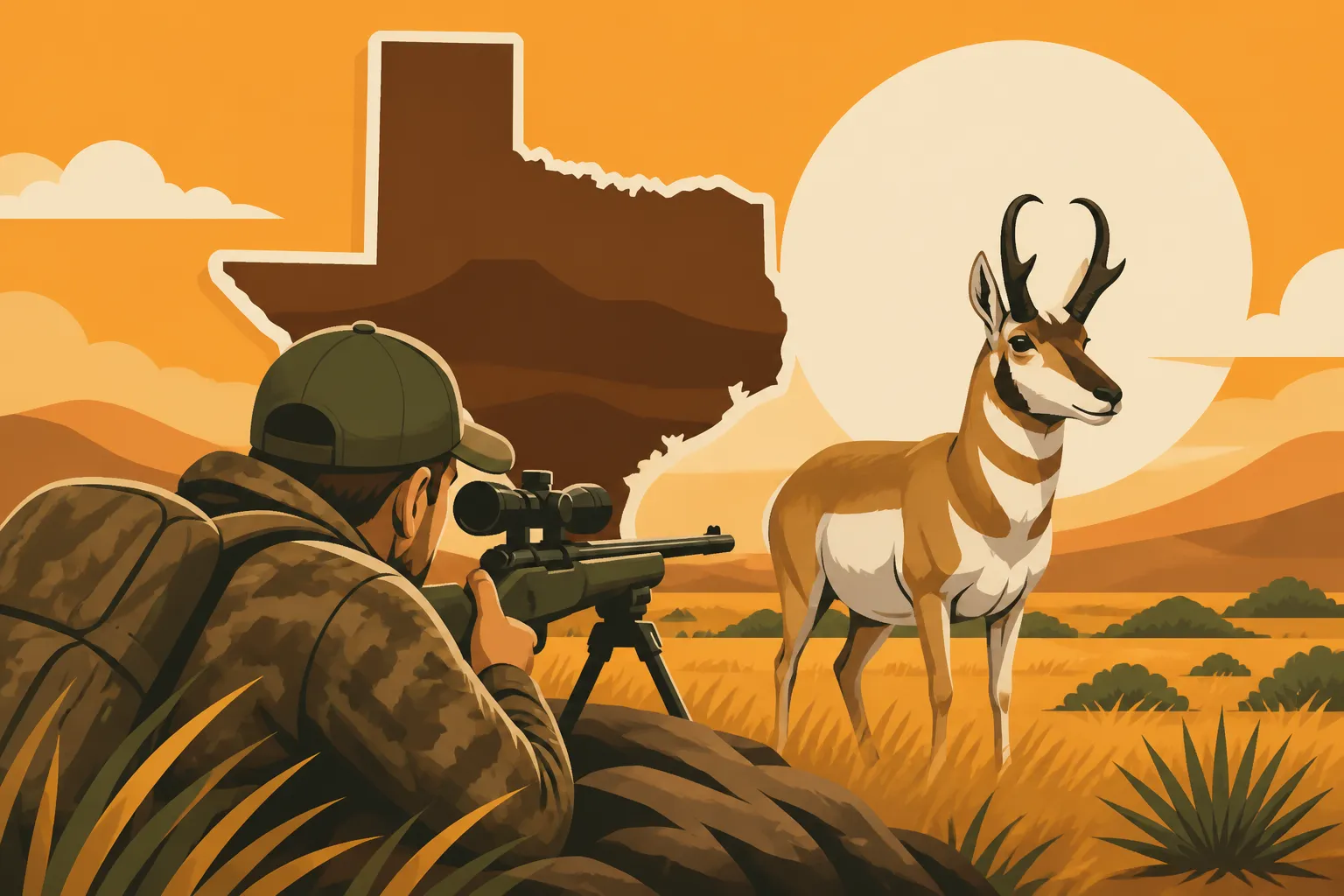
The final moment of a pronghorn hunt often involves a long-distance shot. Because these animals live in the open, getting closer than 200 yards is a rare feat. You must be comfortable shooting from a prone position with a bipod or a steady pack. The biggest challenge, however, isn't the distance—it's the wind. A 20 mph crosswind can push a bullet several inches off target at 300 yards, which is enough to cause a clean miss or, worse, a non-lethal wound.
Pronghorn have a relatively small "kill zone" compared to a large whitetail buck. You should study Best Shot Placement for Whitetail Deer to understand the general anatomy, but remember that a pronghorn's chest cavity is more compact. You need a flat-shooting rifle and a clear understanding of your ballistic holdovers. Utilizing the Best Rifle Scope for Texas Deer Hunting tactics can help you dial in for the specific yardage and windage required to drop a buck cleanly in his tracks. Always range the animal right before the shot; in the wide-open desert, your eyes will play tricks on you regarding distance.
Essential Gear for the Texas High Plains
Your equipment can make or break a pronghorn hunt. This is not the place for heavy insulated boots or bulky jackets. You need gear that is lightweight, technical, and designed for high-exertion movement in the sun.
Rangefinders and Precision Optics
In a world without trees or power lines to use as scale, guessing distance is a fool's errand. You can look at a buck and think he is at 300 yards when he is actually at 450. A high-quality laser rangefinder with angle compensation is arguably the most important tool in your kit. Before you start your stalk, range several landmarks around the buck—a specific yucca plant or a rock outcropping—so you have a mental map of the distances as you move closer. Many hunters find that using the Best Rangefinder for Texas Hunting gives them the confidence needed to take a shot when the pressure is on.
Footwear and Protection from the Elements
You will do more walking on a two-day pronghorn hunt than you might do in an entire month of deer hunting. Your boots need to be broken in and provide excellent ankle support for the uneven, rocky terrain of West Texas. Because you will be crawling, kneepads or pants with reinforced knees are a lifesaver.
Don't forget about hydration and sun protection. The Texas sun is relentless, and the wind will dry you out faster than you realize. A lightweight hydration bladder in your pack is much more efficient than carrying noisy plastic water bottles. For more on the general tactics used in these environments, you can dive into Pronghorn Hunting Tactics for Texas to refine your approach. Finally, always carry a small basic first aid kit specifically for removing cactus spines—because on a pronghorn lease, it's not a matter of if you'll get stuck, but when.
Texas Hunting Regulations Disclaimer
This guide is intended for informational and educational purposes only. Hunting regulations in Texas, particularly regarding pronghorn permits and CWD (Chronic Wasting Disease) zones, are subject to change annually. Always consult the official Texas Parks and Wildlife Outdoor Annual and verify your specific lease's permit status before engaging in any hunting activities. It is the responsibility of the hunter to ensure all state and federal laws are followed, including license requirements and harvest reporting.