How to Scout for Deer Before Season in Texas
There's nothing quite as frustrating as showing up on opening day, pumped and ready to go, only to realize the deer you patterned last season have completely vanished. Or worse, spending half your precious hunting time just trying to figure out where the deer might be. This guide is all about taking the guesswork out of your season by walking you through effective, realistic pre-season scouting strategies tailored for the unique challenges and opportunities of hunting white-tailed deer in Texas.
Why Pre-Season Scouting Isn't Just a Good Idea, It's Essential
Let's be honest, we all dream of that perfect hunt where a mature buck walks right into our shooting lane. But those dreams rarely materialize without some serious legwork beforehand. Pre-season scouting isn't just a suggestion; it's a non-negotiable step if you want to increase your odds and make the most of your time in the woods or brush country.
Avoiding the "Blind Hunt" Frustration
Imagine spending months looking forward to opening weekend, only to sit in a blind or stand for hours, seeing nothing but squirrels and small birds. That's the agony of a "blind hunt," and it’s often a direct result of skipping pre-season scouting. Deer are creatures of habit, but their habits shift with the seasons, food availability, and hunting pressure. What worked last year, or even last month, might be completely different come fall.
By getting out there before the season kicks off, you're not just looking for deer; you're deciphering their current story. You're learning their routes, their hangouts, and what's driving their daily movements. This information is gold. It saves you from wasted sits and allows you to adapt your strategy long before you ever pull back a bowstring or shoulder a rifle. You want to be hunting intelligently, not just hopefully.
Maximizing Your Limited Season Time
For most of us, hunting season is a precious, limited resource. Whether you have a week-long hunt planned or just scattered weekends, every moment counts. If you spend those valuable hunting days trying to find fresh sign, locate new trails, or figure out a buck's bedding area, you're not actually hunting. You're scouting under pressure, with the added disadvantage of potentially spooking game right when you want them to feel safe.
Effective pre-season scouting allows you to arrive on day one with a game plan already in place. You know where the prime food sources are, where the water is holding up, and where the deer are likely to be traveling. This preparation translates directly into more efficient hunting. You can set up your blinds or stands in optimal locations, understand the prevailing winds, and focus entirely on the hunt itself, not on gathering basic intelligence. It's about shifting from reactive hunting to proactive hunting, making every single minute of your season count.
Key Scouting Elements to Focus On
When you're out there hitting the dirt, you're looking for clues, not just deer. Think of yourself as a detective, piecing together the daily lives of the local whitetail population. There are four main pillars of deer activity that you absolutely need to nail down during your pre-season scouting.
Food Sources: Where the Deer Are Dining
Deer, like us, are driven by their stomachs. Finding out what they're eating and where they're eating it is arguably the most critical piece of the scouting puzzle. Texas deer diets can vary wildly depending on the region, from the natural browse of the South Texas brush country to acorns in the Hill Country or agricultural crops in the Panhandle.
Look for areas with heavy browsing on native plants – you'll see clipped twigs and leaves, often with a distinct "browse line" where deer have consistently fed. Pay close attention to oak trees for early acorn drops, as this can be a huge draw for deer. If you're on a lease with Food Plots in Texas: What Works in the Heat, assess their current growth and attractiveness. Are they thriving, or have they withered in the summer sun? In areas with agriculture, like cornfields or milo, identify entry and exit points where deer are feeding. Even if you're using feeders, understanding natural food sources will tell you what they're eating between feeder visits, which is often crucial for patterning mature bucks. When you're considering your feeder strategy, it's wise to think about Best Corn for Deer Feeders in Texas to ensure you're providing something attractive and nutritious.
Water Sources: The Lifeline in Texas
Water is life, especially in the Texas heat. Even during cooler months, deer need a consistent water source. Identifying all available water on your property is paramount. This could be natural tanks, creeks, rivers, seeps, or even man-made stock tanks and troughs. During hot, dry spells, these spots become absolute magnets.
Once you locate water, scout the surrounding areas for trails. Deer often have well-worn paths leading directly to and from water sources. These trails can be fantastic ambush points, especially if they connect bedding areas to food sources. Look for fresh tracks around the edges of tanks or muddy banks, indicating recent visits. The drier the conditions, the more concentrated deer activity will be around reliable water, making these areas high-priority scouting targets.
Bedding Areas: Where They Rest and Feel Safe
Deer spend a significant portion of their day resting and hiding in bedding areas. These are typically dense, thick cover where deer feel secure from predators and hunters. In Texas, this often means thick stands of mesquite, prickly pear, cedar, brushy creek bottoms, or heavy timber. A mature buck might have multiple bedding areas, shifting based on wind direction, time of day, and pressure.
When scouting for bedding, look for flattened areas in the grass or brush, often with droppings nearby. Pay attention to terrain features like hillsides or small knolls that offer a vantage point for deer to see approaching danger. Once you identify potential bedding areas, it's critical to scout them cautiously to avoid spooking deer. The goal is to understand how deer enter and exit these areas, and how those movements relate to nearby food and water. You're trying to figure out their "safe zones" so you can plan your approach and stand placement without alerting them.
Travel Corridors & Funnels: Deer Highways
Think of travel corridors as the deer's highway system, and funnels as the choke points on those highways. These are the routes deer use to move between bedding, feeding, and watering areas. Natural funnels can include narrow strips of timber connecting larger woods, creek beds, drainage ditches, or even changes in terrain that naturally pinch down movement. Man-made funnels might be fence lines, roads, or even senderos cut through dense brush.
Identifying these travel routes and funnels is crucial for stand placement. Look for heavily used trails, fresh tracks, rubs, and scrapes along these paths. A single, distinct trail can indicate consistent travel. Pay special attention to where multiple trails converge or where deer are forced to move through a narrow opening. These pinch points are often prime locations for a stand or blind, as they concentrate deer movement, increasing your chances of an encounter.
Tools and Techniques for Effective Pre-Season Scouting
Scouting isn't just about wandering around; it's about employing smart strategies and the right gear to gather maximum information with minimum disturbance.
Boots on the Ground: The Unbeatable Method
While technology is great, nothing beats boots on the ground for truly understanding a property. Walking your hunting area allows you to observe the subtle nuances that satellite imagery simply can't capture. You'll find fresh tracks, droppings, rubs, and scrapes firsthand. Pay attention to the type of vegetation, the density of cover, and how water flows through the land.
When walking, move slowly and deliberately, constantly scanning for sign. If you find a promising area, spend time observing it. What's the wind direction typically doing here? Where would a deer feel safe moving through? Even pre-season, practice good scent control. You don't want to leave a lingering human odor in prime deer areas. Early mornings or late evenings in cooler weather are often the best times to scout on foot, as deer activity might be higher, and you'll minimize heat and personal discomfort.
Harnessing Technology: Maps and Cameras
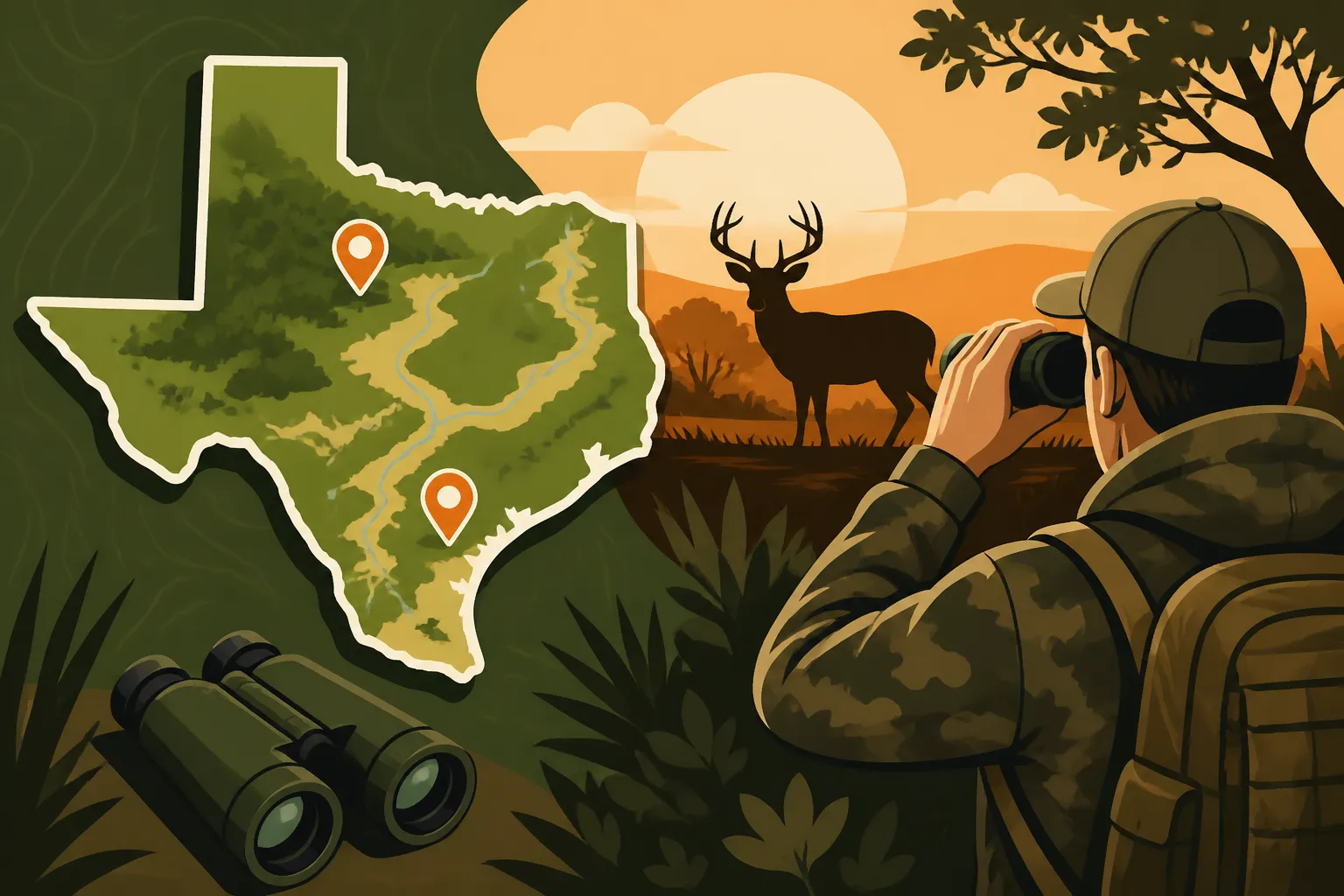
Modern technology has revolutionized how we scout for deer. Satellite mapping applications like onX Hunt vs HuntStand: Best App for Texas? allow you to virtually scout from home, identifying key features like timber lines, fields, water sources, and elevation changes. You can mark potential bedding areas, food plots, and travel corridors, then use those waypoints to guide your boots-on-the-ground scouting. These apps also display property lines, which is invaluable if you're hunting near a boundary.
Trail cameras are another indispensable tool for pre-season scouting. Deploying a few well-placed Best Cellular Trail Cameras for Texas (2027) on trails, near water, or over established Best Deer Feeder Setup for Texas can provide invaluable intelligence. They'll show you exactly what deer are present, their travel times, and even specific bucks. This data allows you to How to Pattern Bucks With Trail Cameras effectively before the season even begins, informing your stand placement and hunting strategy. Remember to check your cameras regularly but efficiently, minimizing disturbance to the area.
Interpreting Deer Sign: What Are They Telling You?
Finding deer sign is only half the battle; knowing how to read it is the other. Each piece of sign tells a part of the deer's story.
- Tracks: Look at the size and freshness. Larger, blunter tracks usually indicate a mature buck. Fresh tracks with sharp edges, especially if the ground is damp, tell you deer have been there recently. Deeply impressed tracks mean the deer was probably moving slowly or stopping to feed.
- Droppings: The appearance of droppings can tell you about their diet and freshness. Piles of firm, pellet-like droppings indicate a browse-heavy diet, while softer, clumped droppings suggest they've been on green forage or acorns. Fresh droppings are typically moist and shiny, while older ones are dry and dull.
- Rubs: These are made by bucks rubbing their antlers on trees. The size of the tree rubbed can indicate the size of the buck. Fresh rubs will have raw, exposed wood. The height of the rub can also offer clues. A series of rubs often indicates a "rub line," a travel route a buck is consistently using.
- Scrapes: Scrapes are areas where a buck paws away the leaves and dirt, often urinating in the exposed soil, and typically has an "overhanging branch" above it that he also rubs and licks. Fresh scrapes will have moist, exposed earth and a strong odor. Primary scrapes are often larger and used year after year, while secondary scrapes are smaller and more numerous. While scrapes are most active during the rut, finding old scrapes pre-season can indicate historical rutting activity and potential buck territory.
Timing is Everything: When to Scout for Maximum Impact
When you scout can be just as important as how you scout. Different times of the year offer unique insights into deer behavior.
Late Spring/Early Summer: Velvet & Patterns
Don't wait until August to start scouting! Getting out in late spring or early summer, say May or June, can provide a fantastic baseline. During this period, bucks are still in bachelor groups, and hunting pressure is non-existent. You can often see bucks in velvet, allowing you to identify potential trophy animals long before the season. They're typically on predictable patterns between food and water as they focus on antler growth.
This is a great time to identify long-term food and water sources that hold deer year-round. It's also an excellent opportunity to walk creek beds, fence lines, and remote parts of your property without fear of spooking deer that will be hunted later. While the patterns might shift slightly closer to hunting season, this early intel helps you understand the overall layout and where deer prefer to be when unpressured. Understanding these general patterns helps when you later refer to official dates, like the Texas Deer Season 2026-2027: Dates by Zone.
Late Summer/Early Fall: Transition & Preparation
As summer wanes and fall approaches, typically August and September, deer patterns will start to transition. Acorns might begin to drop, and green fields mature. This is a critical time for scouting as deer begin to shift from summer feeding patterns to fall patterns. Bucks will start to shed their velvet, and their behavior will become more solitary as they prepare for the rut.
This period is ideal for fine-tuning your scouting efforts. Check your trail cameras frequently (but quickly!) to see how deer movements are changing. Identify new rubs and scrapes as buck activity picks up. This is also the time to make final decisions on stand and blind locations, trim shooting lanes, and ensure your setup is ready to go. While you don't want to over-scout and apply too much pressure, a well-timed, stealthy scouting trip in early fall can confirm your theories and ensure you're in the right spot come opening day. Remember, understanding Best Time of Day to Hunt Whitetail in Texas will only truly come from observing deer movements during this crucial transition. Also, keep the Texas Antler Restrictions: 13-Inch Rule & Counties in mind as you identify potential shooters. For those hunting in specific regions, understanding the unique challenges of South Texas Trophy Whitetail: Brush Country Bucks also means understanding their specific patterns.
Summary of Scouting Indicators
Here's a quick look at the key signs you'll be looking for and what they suggest:
| Deer Sign | What It Looks Like | What It Indicates | When to Look for It |
|---|---|---|---|
| Tracks | Distinct hoof prints in soft ground. | Deer presence, travel direction, relative freshness, size. | Year-round, especially after rain |
| Droppings | Piles of pellets or clumps. | Deer presence, diet, freshness. | Year-round |
| Rubs | Scraped bark on trees, often with antler marks. | Buck presence, antler size, travel routes, territorial marking. | Late Summer/Fall (velvet shed) |
| Scrapes | Bare earth pawed clean, often under an overhanging branch. | Buck presence, communication, pre-rut/rut activity. | Late Summer/Fall (pre-rut/rut) |
| Trails | Worn paths through vegetation or dirt. | Frequent deer movement between key areas (food, water, bedding). | Year-round |
| Browse Lines | Clipped leaves and twigs on vegetation, often at deer height. | Consistent feeding activity in the area. | Year-round |
Disclaimer
Hunting is an inherently dangerous activity. Always prioritize safety, adhere to all local, state, and federal hunting regulations, and obtain proper licenses and permits. The information provided in this guide is for informational purposes only and should not replace professional guidance or personal due diligence.