Best Hunting Method for Coyote in Texas
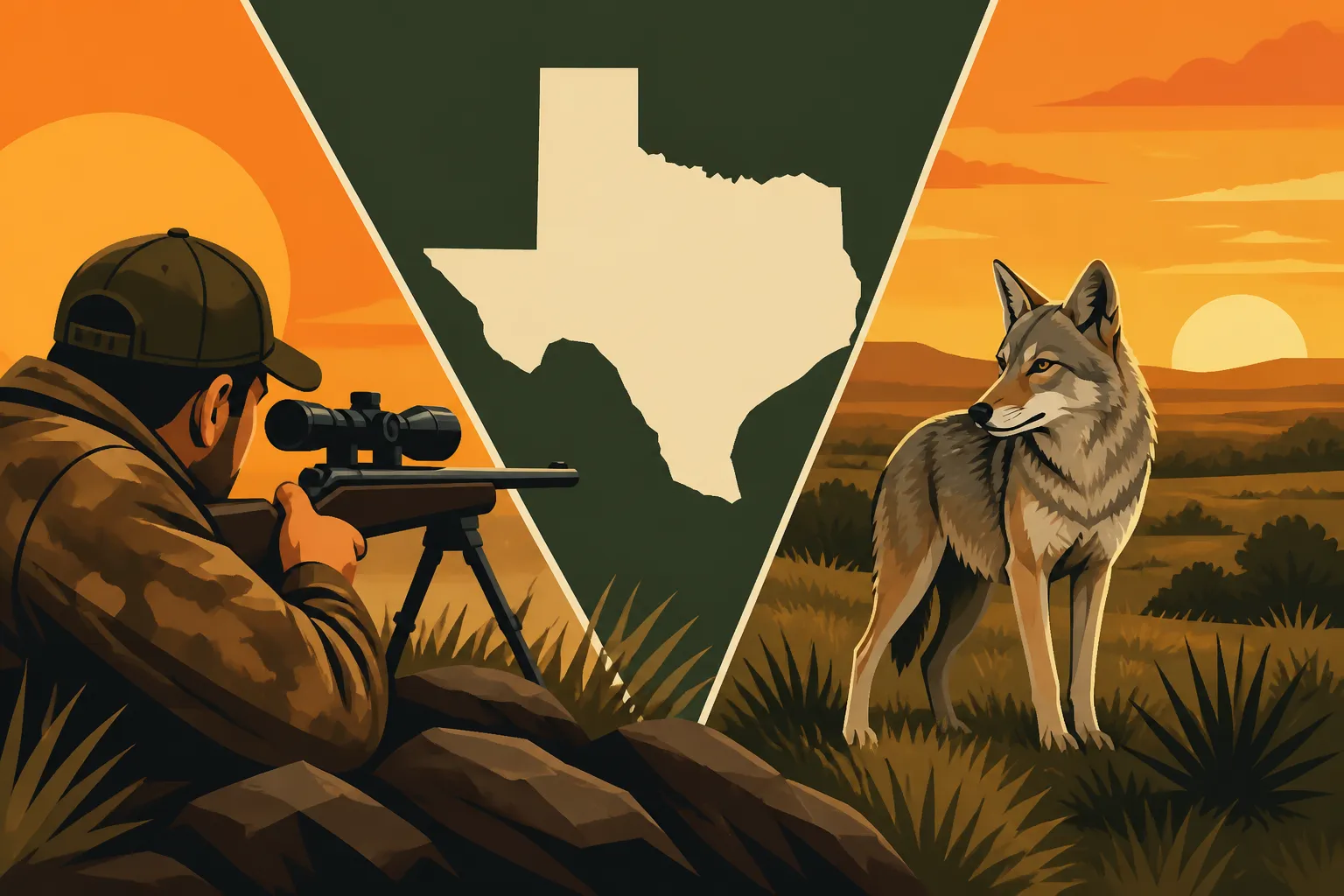
If you’ve ever sat in a dark blind in the South Texas brush or looked out over a moonlit field in the Panhandle, you know the sound. It starts with one yip, then another, until a full-blown chorus of coyotes is echoing through the mesquite. But hearing them and actually getting one into range are two very different things. This guide breaks down the best hunting method for coyote in Texas to help you finally outsmart these incredibly wary predators.
Electronic Calling vs Mouth Calling in the Texas Brush
When we talk about the most effective way to stack up fur in the Lone Star State, the conversation always starts with calling. Coyotes are social, territorial, and almost always hungry, which makes them prime targets for vocalizations. However, the debate between electronic callers (e-callers) and traditional mouth calls is a heated one among veteran predator hunters. In my years spent traversing the Hill Country and the Rolling Plains, I’ve found that while both have their place, your choice depends heavily on your setup and how much "education" the local coyotes have already received.
The Power and Versatility of the E-Caller
For most hunters, especially those just starting out, an electronic caller is the gold standard for Predator Calling for Coyotes in Texas. The primary advantage is the ability to move the sound away from your person. If you place a high-quality e-caller fifty yards upwind or crosswind from your position, the coyote’s focus is entirely on that unit, not on the bush where you’re hiding. This is a massive tactical advantage because a coyote’s eyes are like laser beams when they are coming into a distress sound. They are looking for the exact source of that noise, and if that source is sitting in your lap, you're going to get busted.
E-callers also offer a library of sounds that no human can perfectly replicate. While we all love a good jackrabbit in distress, the ability to switch to a pup distress, a fawns scream, or even a domestic housecat in trouble can be the "secret sauce" that pulls in a stubborn dog. In Texas, where the wind can be brutal, the sheer volume and clarity of a high-end e-caller are hard to beat. You can find plenty of accessories for these units, such as external speakers or long-range remotes, on Amazon to ensure your signal reaches those distant draws where the big males like to hang out.
The Art and Finesse of Hand Calls
Despite the tech, there is a reason many of the best hunters I know still keep a lanyard full of mouth calls. Hand calls offer a level of "soul" and real-time inflection that a digital recording sometimes lacks. If you notice a coyote is coming in but starts to hang up or look suspicious, you can subtly change the pitch, volume, or urgency of a hand call to mimic the dying breaths of a prey animal. It’s a game of chess. You’re reacting to their body language in real-time, which is much harder to do with a remote-controlled unit.
Mouth calls also don’t require batteries, which is a lifesaver when you’re deep in the brush and realize your e-caller died. I always recommend carrying a closed-reed distress call and an open-reed call for more advanced vocalizations like barks and howls. Learning How to Hunt Coyote on a Texas Lease often involves mastering these subtle sounds to entice a coyote that has already been shot at or spooked by a loud, repetitive electronic loop. There is a specific satisfaction in "talking" a coyote into range using nothing but the air in your lungs and a piece of plastic.
Night Hunting and the Thermal Revolution
If you want to know the absolute best hunting method for coyote in Texas, you have to talk about the dark. Coyotes are naturally crepuscular, meaning they are most active at dawn and dusk, but in high-pressure areas, they become almost entirely nocturnal. While you can certainly hunt them during the day, the odds shift dramatically in your favor once the sun goes down. Texas has some of the most hunter-friendly laws in the country regarding night hunting, and taking advantage of them is the fastest way to increase your success rate.
Why Night Hunting is a Game Changer
Coyotes feel a sense of security under the cover of darkness that they simply don't have at noon. They are bolder, they travel further, and they are more likely to commit to a call without circling the downwind side for an hour. When you are learning How to Call Coyotes at Night in Texas, you’ll find that they often come in "hot"—running straight to the caller with very little hesitation. This is especially true on large cattle ranches or sheep country where the coyotes are actively looking for an easy meal under the stars.
The legal landscape in Texas is also a major factor. Unlike many other states, Texas allows the use of artificial light, night vision, and thermal optics for non-game animals like coyotes and hogs. This means you aren't limited by the "golden hour." You can hunt from 10 PM to 4 AM, covering multiple stands and maximizing your time in the field. Understanding the Texas Coyote Hunting Regulations 2026 is crucial, but generally speaking, as long as you have landowner permission and a valid license, the night is yours.
Thermal vs Night Vision vs Scanning Lights
The "holy grail" of modern predator hunting is thermal imaging. If you can afford it, a thermal scope allows you to see the heat signature of a coyote long before he sees you. It cuts through the Texas brush and identifies targets hidden behind light cover that would be invisible to the naked eye. We’ve seen a massive surge in this technology, and many hunters now use Best Thermal Scopes for Hog Hunting in Texas for their coyote rigs as well. The ability to scan a field and see a "hot" white dot at 600 yards gives you a massive head start on your setup.
However, not everyone has five thousand dollars to drop on a scope. Traditional night vision and even high-powered red or green LED scanning lights are still incredibly effective. If you're on a budget, Amazon has a wide variety of red light kits that mount directly to your scope or your headlamp. The key with lights is "haloing" the animal—keeping the coyote in the dim edge of the beam rather than hitting him dead-center with the brightest part of the light, which can spook a "light-shy" predator. Whether you go high-tech or traditional, the night is when the real work gets done.
| Method Component | Best For | Pros | Cons |
|---|---|---|---|
| Electronic Caller | Beginners / Windy Days | Consistent, remote placement | Can sound "robotic" to smart coyotes |
| Mouth Calls | Advanced / Close Range | Infinite variability, portable | Steep learning curve, movement risk |
| Thermal Optics | Maximum Efficiency | See through brush, easy ID | Very expensive |
| Scanning Lights | Budget Night Hunting | Affordable, effective | Can spook educated coyotes |
| Daylight Hunting | Scouting / Casual Stands | Better visibility, no special gear | Coyotes are much more cautious |
Seasonal Tactics and Regional Variations
Texas is a massive state with ecosystems ranging from the damp Pineywoods to the arid Trans-Pecos. A tactic that works in the lush fields of East Texas might fail miserably in the desert. To truly master the best hunting method for coyote in Texas, you have to adapt your strategy to the calendar and the county line. Knowing the Texas Hunting Seasons: Complete Calendar by Species helps you stay legal, but knowing the biological "season" of the coyote is what puts fur on the deck.
Hunting by the Biological Calendar
In the late winter (January and February), coyotes are in their breeding season. This is the best time to use vocalizations rather than prey distress. Howls, barks, and "challenge" calls work wonders because the males are territorial and looking for mates. If you can mimic a lone female or an interloping male, you'll often see a big dog come charging in looking for a fight. This is a high-adrenaline way to hunt that requires a deep understanding of coyote social structure.
By late spring and early summer, the focus shifts to pup distress. Coyotes are fiercely protective of their dens. Using a "pup in distress" sound on your e-caller can trigger a frantic response from the parents. It feels a bit different than the hungry response of winter, but it is undeniably effective. In the heat of the summer, focus your efforts near water sources. Just like us, coyotes can't survive without a drink, and sitting over a stock tank at dusk is a classic Texas tactic that never goes out of style.
Adapting to the Texas Landscape
The "best" method changes depending on where you are standing. In the South Texas brush country, your stands will be tight. You might only have a 50-yard window of visibility. This requires quick reflexes and a shotgun or a fast-handling carbine. Conversely, in the Panhandle, you might be looking across a thousand-yard wheat field. Here, a flat-shooting rifle and a steady tripod are non-negotiable. You can pick up a decent shooting tripod or bipod on Amazon that will help you stabilize those long-range shots when the wind is whipping across the plains.
Regional variations also apply to scent. In the humid East, your scent lingers and swirls. In the dry West, it tends to carry in a more predictable line. Always hunt with the wind in your face or at a "cross-wind" where you expect the coyote to appear. A coyote’s nose is his primary defense, and if he catches a whiff of your morning coffee or your laundry detergent, the game is over before it starts. Using Best Gear for Coyote on a Texas Lease includes investing in decent scent-reduction sprays and paying obsessive attention to the breeze.
Essential Gear and Setup for Texas Coyotes
You can have the best calling technique in the world, but if your gear fails or your setup is sloppy, you’re just giving the coyotes a free education. Success is found in the details—the way you sit, the way you mask your silhouette, and the caliber you choose. Having the Best Hunting Method for Coyote in Texas also means having a rig that is reliable and a setup that is invisible to the sharpest eyes in the woods.
Rifle Selection and Calibers
While you can kill a coyote with almost anything, certain calibers reign supreme in the predator world. The .22-250 Remington is a Texas classic for a reason; it’s incredibly fast and flat-shooting, which is perfect for those "way out there" dogs. The .223 Remington (or 5.56 NATO) is perhaps the most popular due to the prevalence of AR-15 platforms, which allow for quick follow-up shots if you encounter a pair or a pack.
If you are hunting in more timbered areas, don't overlook the 12-gauge shotgun. Using 3-inch Magnums with T-shot or Number 4 Buckshot is a devastating way to handle a coyote that surprises you at twenty yards in the thick stuff. Regardless of your choice, make sure you have a quality cleaning kit and maintenance tools, which are easily available on Amazon, to keep your rifle running in the dusty, gritty conditions that define much of Texas hunting land.
Scent Control and Wind Management
I cannot stress this enough: you will never beat a coyote’s nose. You can only hope to cheat it. Always park your truck far away from your "stand" and walk in quietly, staying downwind of the area you expect the coyotes to be. When you sit down, make sure you have a backrest—a large mesquite tree or a rock—to break up your silhouette. Coyotes are experts at spotting the human shape, and even a slight movement of your head can send them bolting.
Camouflage is important, but staying still is more important. Match your camo to the environment; use "brush" patterns for South Texas and more "grassland" or "arid" patterns for the West. Some hunters even use portable "ghost blinds" or simple camo netting to hide their legs and gear. If you’re hunting a new area, take the time to learn How to Hunt Coyote in Texas by observing the local terrain and picking spots that offer you a wide field of fire while keeping you tucked into the shadows.
Frequently Asked Questions
Is it legal to hunt coyotes year-round in Texas?
Yes, coyotes are classified as non-game animals in Texas. There is no closed season and no bag limit, meaning you can hunt them 365 days a year.
Do I need a hunting license to hunt coyotes on my own land?
In Texas, landowners and their agents are generally exempt from license requirements when hunting "depredating" coyotes that are a threat to livestock or crops. However, for most hunters on leases or public land, a valid Texas hunting license is required.
What is the best time of day to hunt coyotes?
While they can be called in at any time, the first two hours of daylight and the last two hours of daylight are typically the most productive for daytime calling. Night hunting, however, often yields the highest success rates overall.
Texas Hunting Disclaimer
Hunting regulations in Texas are subject to change by the Texas Parks and Wildlife Department (TPWD) and may vary significantly by county or specific property (such as WMAs). Always consult the current Texas Outdoor Annual and verify local ordinances before heading into the field. This guide is for informational purposes and does not replace official state documentation or legal advice. Be sure to obtain explicit permission from landowners before hunting on private property.