How to Hunt White-Winged Dove on a Texas Lease
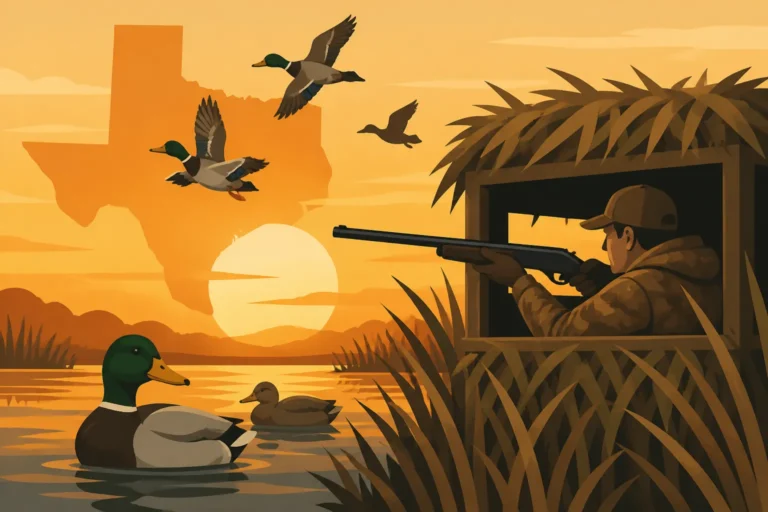
If you have ever stood in a parched South Texas field in early September, sweat stinging your eyes while you watch thousands of white-winged doves fly just out of reach, you know the specific frustration of this hunt. This guide solves that problem by breaking down the precise scouting, setup, and shooting tactics needed to master white-winged dove hunting on a private Texas lease.
Decoding White-Winged Dove Patterns on Your Lease
White-winged doves are not just "mourning doves with white on their wings." They are a entirely different beast with unique behavioral quirks that can make or break your opening weekend. Historically, these birds were confined to the citrus groves of the Rio Grande Valley, but over the last few decades, they have staged a massive northern expansion. Now, whether your lease is in the brush country of Webb County or the rocky hills outside of Austin, you are likely dealing with these hardy, aggressive flyers.
The first thing you have to understand about whitewings is their social nature. Unlike mourning doves, which often travel in pairs or small groups, whitewings are colonial. They like to move in large, noisy flocks. On a lease, this means your "action" will often come in intense, chaotic bursts rather than a steady trickle of birds. You might sit for an hour seeing nothing, only to have five hundred birds drop into the field in a ten-minute window. Validating that frustration is key; if you aren't seeing them, it doesn't mean they aren't there—it just means you haven't found the specific flight path they are using that day.
Another critical behavioral trait is their flight height. Whitewings tend to fly much higher and straighter than mourning doves. While a mourning dove will zig-zag and dive near the tree line, a whitewing often cruises at 40 or 50 yards, seemingly indifferent to the hunters below. This requires a shift in how you think about concealment and shot selection. You aren't just looking for a spot to sit; you are looking for an interception point. To stay legal and prepared, you should always check the Texas White-Winged Dove Hunting Regulations 2026 before heading out, as zones and special areas can shift.
Finally, consider their diet. On a Texas lease, whitewings are highly opportunistic but prefer larger seeds. If your lease has sunflowers, croton (goatweed), or nearby grain fields like sorghum or corn, you are in the money. However, they are also notorious for "rafting" on water. They will often fly to a large stock tank, sit on the bank in massive numbers, and then move to the feeding fields. Understanding this daily cycle—from roost to water to food—is the foundation of a successful hunt.
Scouting Strategies for a Successful Lease Hunt
Scouting a private lease is a different game than public land. You have the advantage of less pressure, but the disadvantage of limited acreage. You have to be surgical. Most hunters make the mistake of showing up Friday night, drinking a beer, and just picking the "same spot we sat last year." That is a recipe for a light bag. Instead, you need to spend the two days before the season opens watching the sky during the first and last three hours of daylight.
Start by identifying the "flyways." On a lease, doves aren't just wandering aimlessly; they are using landmarks. They often follow creek beds, fence lines, or specific gaps in the mesquite brush. If you can find the corner of a field where two flight paths intersect, you’ve found the "X." When scouting, pay attention to the wind. Dove flight patterns change based on wind direction, as they prefer to land into the wind just like ducks. If the wind shifts from the South to the North, your honey hole from last year might be completely empty.
Water is your secret weapon in the Texas heat. During the Texas Dove Season 2026: Zones & Dates, temperatures often soar above 100 degrees. Doves must drink twice a day. If your lease has a tank with a clean, muddy bank (they hate tall grass where predators can hide), that is a prime afternoon spot. Walk the edge of the water and look for feathers and "whitewash." If the bank is covered in droppings, you’ve found their watering hole. This is especially effective if you are trying to figure out How to Hunt Dove Without a Field because water is a universal attractant regardless of the local crops.
Don't forget to look up. Whitewings love to "stage" on high ground or dead timber before dropping into a field or water source. If your lease has an old, dead mesquite or a power line, watch it closely. If birds are landing there to scout the area before feeding, that is where you should set up your blind. Using tools to map these points is essential; many veterans rely on the Best Gear for White-Winged Dove on a Texas Lease to ensure they are positioned perfectly relative to the sun and wind.
Setup and Tactical Shooting for Whitewings
Once you've scouted the birds, the setup is all about playing the sun and the shadows. In the morning, you want the sun at your back. Not only does this make it easier for you to see the white flash on the wings, but it puts the sun directly in the birds' eyes, making your movements harder for them to detect. On a Texas lease, camouflage is less about matching the leaves and more about breaking up your silhouette. Sit against a large bush or use a portable stool with a backrest to stay low.
Decoys are a game-changer for whitewings because of their social nature. While mourning doves might ignore a decoy, whitewings are often drawn to the "party." Using a mix of static decoys and spinning-wing decoys can pull those high-flying birds down into shotgun range. Place your spinning-wing decoy in an open area where it is highly visible from a distance, and cluster your static decoys on a bare patch of ground or a low fence wire nearby. For a deeper dive into this, check out How to Use Decoys for Dove Hunting.
| Feature | Mourning Dove | White-winged Dove |
|---|---|---|
| Flight Pattern | Erratic, low, zig-zagging | Steady, high, straight lines |
| Flock Size | Pairs or small groups | Large, colonial flocks |
| Best Decoy Setup | 1-2 spinners, scattered ground | High-visibility spinners, large clusters |
| Preferred Cover | Tree lines and fence rows | Open fields, high power lines, water |
| Shot Difficulty | High (due to movement) | Medium (due to height/speed) |
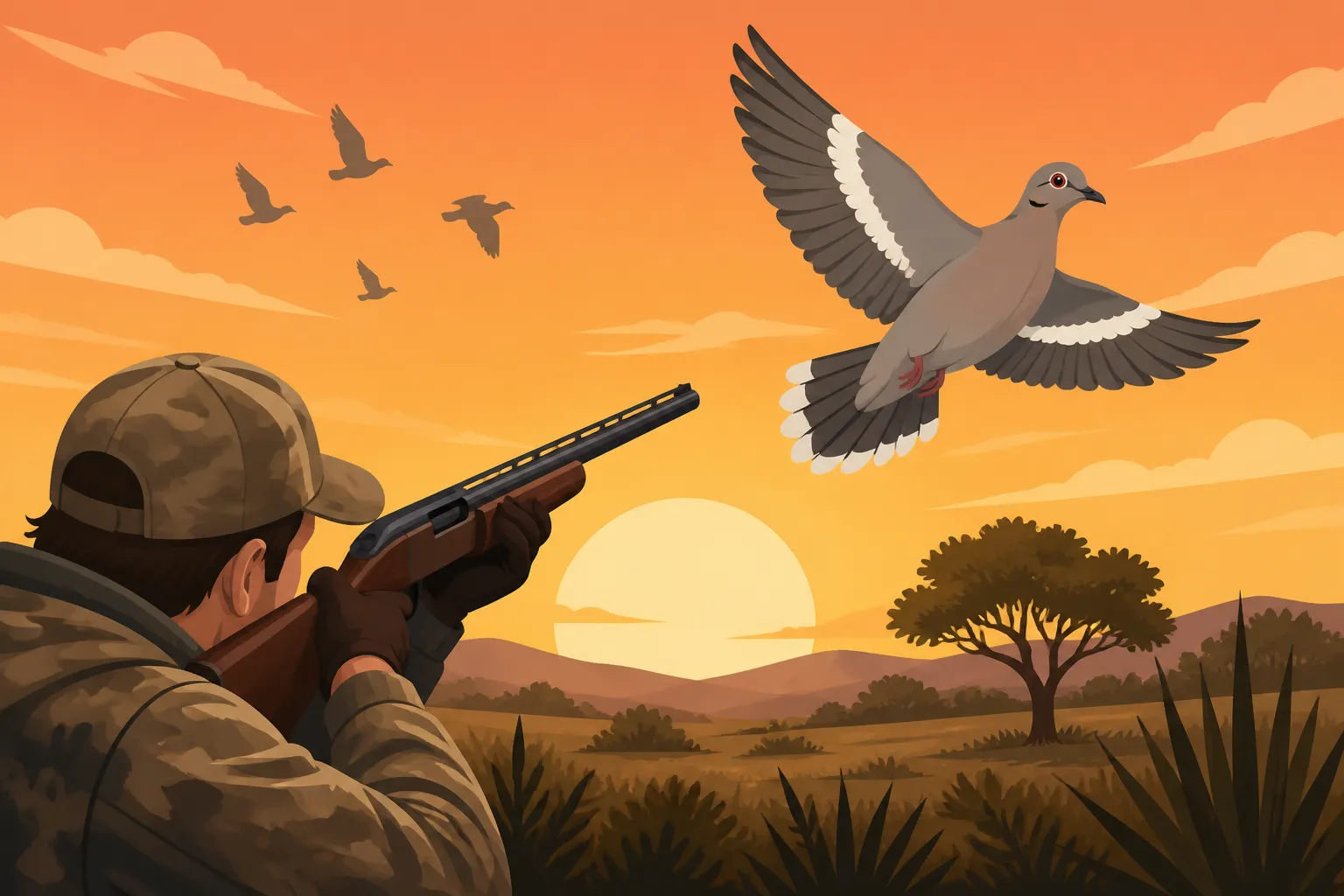
The actual shooting of a whitewing requires a mental adjustment. Because they are larger than mourning doves, they often appear to be flying slower than they actually are. This is a classic optical illusion that leads to "shooting behind the bird." You have to remember that a whitewing is heavy and carries a lot of momentum. You need a consistent lead and a smooth follow-through. Most veteran Texas hunters prefer a 20-gauge or 12-gauge with #7.5 or #8 shot. If the birds are flying particularly high, don't be afraid to move to #6 shot to maintain lethality at distance.
When the flight starts, stay still. Doves have incredible eyesight and will flare at the slightest movement of a shiny watch, a white t-shirt, or the barrel of your gun moving too early. Wait until the bird is well within your "kill zone" before mounting the gun. If you are hunting with a group on a lease, communication is vital. Calling out "bird left" or "high bird" helps everyone stay alert, but ensure you are following the Texas Dove Bag Limit & Possession rules, as it is easy to lose track of your count when the action gets fast and furious.
Essential Gear and Legal Compliance
Hunting on a lease means you are responsible for your own logistics. Unlike a guided hunt, nobody is going to hand you a cold water or a box of shells. You need a "field kit" that can withstand the Texas heat. This includes a bucket or a bag with a built-in cooler, plenty of electrolyte drinks, and a way to keep your birds cool. In September, a dove left in the sun for an hour will start to spoil. Many hunters use the Best Gear for Mourning Dove on a Texas Lease interchangeably for whitewings, but ensure your vest has enough room for the slightly larger birds.
Protection from the elements is non-negotiable. You’re going to be sitting in thorny brush, so snake boots or chaps are highly recommended, especially in South Texas. The Best Lightweight Camo for September Dove Hunting is usually a moisture-wicking, "breathable" fabric in a tan or dry-grass pattern. If you’re hunting over a freshly shredded field, a darker green camo will stick out like a sore thumb.
From a legal standpoint, ensure you have your Texas Hunting License: Cost, Types & How to Buy (2026) fully updated with the migratory bird endorsement. Also, remember that your shotgun must be plugged to hold no more than three shells total (one in the chamber, two in the magazine). Game wardens are very active on opening weekend, and they frequently visit private leases to check for plugs and licenses.
Lastly, be a good steward of the lease. Pick up your spent shells. Not only is it good manners, but the bright colors of empty hulls can actually spook birds on subsequent days. If you are hunting with dogs, keep them hydrated and watch them closely for signs of heat exhaustion or rattlesnakes. A successful lease hunt is measured not just by the limit of birds in your bag, but by the fact that you, your buddies, and your gear all made it home in one piece to hunt another day.
Disclaimer
This guide is provided for informational purposes only. Hunting regulations in Texas, including season dates, bag limits, and legal methods, are subject to change by the Texas Parks and Wildlife Department (TPWD). Always consult the official TPWD Outdoor Annual before your hunt to ensure you are in compliance with the most current state and federal laws. Private leases may also have specific rules and safety protocols that must be followed.